
Cyprus Museum
The Cyprus Museum (Kypriakó Mouseío; Kıbrıs Müzesi), also known as the Cyprus Archaeological Museum (Archaiologikó Mouseío tis Kýprou; Kıbrıs Arkeoloji Müzesi), is the oldest and largest archaeological museum in Cyprus, located on Museum Street in central Nicosia. The museum is home to the most extensive collection of Cypriot antiquities in the world, and houses artifacts discovered during numerous excavations on the island. Its history goes hand in hand with the course of modern archaeology (and the Department of Antiquities) in Cyprus.
Cyprus Museum
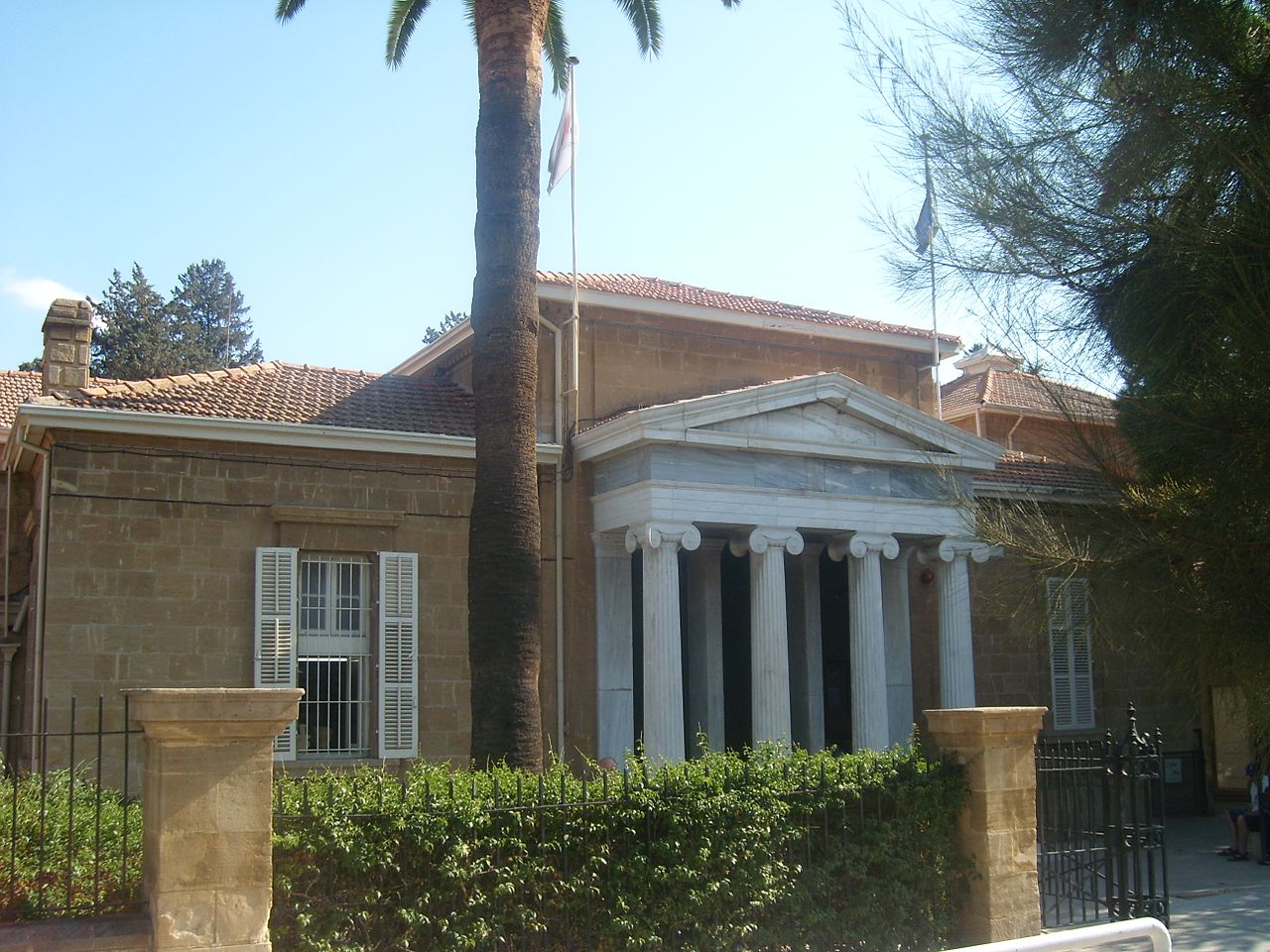
ChristosV · Public domain
- Name
- The Cyprus Museum
- Founded
- 1882
- Headquarters
- Nicosia
VALÉORINE Encyclopedia
VALÉORINE documentary reading
Documentary summary
The Cyprus Museum (Kypriakó Mouseío; Kıbrıs Müzesi), also known as the Cyprus Archaeological Museum (Archaiologikó Mouseío tis Kýprou; Kıbrıs Arkeoloji Müzesi), is the oldest and largest archaeological museum in Cyprus, located on Museum Street in central Nicosia. The museum is home to the most extensive collection of Cypriot antiquities in the world, and houses artifacts discovered during numerous excavations on the island. Its history goes hand in hand with the course of modern archaeology (and the Department of Antiquities) in Cyprus.
Admitted source layer · organised and presented by VALÉORINE
Note VALÉORINE
No house-authored Note is published until its assertions and sources pass the VALÉORINE evidence contract. The documentary article remains available in full while that enrichment is being consolidated.
Documentary enrichment in progress · no unsupported statement published
Reference Check
Propose documentary evidence for Cyprus Museum. A contribution is never written directly as fact: identity, source, rights and evidence gates still decide.
Sign in to contribute
Documentary evidence
Evidence Panel
not yet certified
- Identity
- resolved
- Independent source families
- 0
- Admitted assertions
- 0
- Open conflicts
- 0
Authority files
gnd · 16307006-4 · wikidata · Q1148462 · wikipedia · Cyprus Museum
In this article
Key facts
Key facts
• Name — The Cyprus Museum • Native Name — Κυπριακό Μουσείο Kıbrıs Müzesi • Established — 1882 • Location — 1 Museum Street, Nicosia, Cyprus • Type — Archaeological • Curator — Ms. Eftychia Zachariou • Website — www.mcw.gov.cy/da
History
History
As an institution, the Cyprus Museum was founded in 1882 during the British occupation of the island following a petition by the Cypriot people. The petition was delivered to the British administration by a delegation headed by the religious leaders of both the Christian and Muslim populations. A major catapult for this action were several illicit excavations and the smuggling of antiquities off the island. The most extensive of these had been carried out a few years earlier by the United States Ambassador, Luigi Palma di Cesnola, who had smuggled over 35,000 artefacts off the island, most of which were destroyed in transit. Many of the surviving items ended up in the newly formed Metropolitan Museum of Art in New York and are currently on display in their own galleries on the second floor. The initial museum was funded by private donations and was temporarily housed in existing governmental offices. It moved to its own premises in 1889 on Victoria Street within the medieval walls of the city. Construction of the current building began in 1908 and was completed in 1924. It was funded by public money and private subscriptions. It was originally dedicated to the memory of the British monarch, Queen Victoria. It was designed by the architect N. Balanos of the Archaeological Society of Athens and construction was supervised by George H. Everett Jeffery then curator of the museum. In 1961 a second set of galleries, storerooms and offices was completed. It published the Cyprus Museum Annual Report.
Future
Future
The museum collection has far outgrown the capacity of the existing buildings so much so that only a small fraction is on display at any point in time. With several ongoing excavations and constant new finds, the issue of relocation to more spacious premises has been raised but a suitable site has yet to be decided on. There have been suggestions that the nearby and now demolished building of the Nicosia Old General Hospital be redeveloped, whilst there have also been plans to create a new museum as part of a new larger cultural centre at the site of the old GSP stadium.

Archeological Museum of Cyprus Nicosia
LefkosiaChyprus

Two metal candelabras - the left is made from bronze, the right is from iron. The iron candelabra dates to the 4th - 3rd century B.C. and was found in a tomb at Polis, Cyprus (Polis Chrysochous). The bronze one is without provenance. Archaeological Museum, Nicosia, Cyprus
Молли
Institutional history
Dated record
Institutional history
The full dated record · 2 entries
1882
Cyprus Museum established.
1882
Cyprus Museum is recorded from 1882.
Collections
Collections
• Illustration — Chalcolithic cruciform figurines found in Lemba. These are made from picrolite and on display in Gallery 1. Soon after its inception, the museum started receiving items from the numerous excavations on the island, mainly run by British and European expeditions. Indicative are the annual excavation reports published in The Journal of Hellenic Studies from 1890 onwards. The first organised catalogue was soon compiled and published in 1899 by Sir John Myres and Max Ohnefalsch-Richter. The collections of the museum were greatly augmented by the first large scale systematic excavations carried out by the Swedish Cyprus Expedition between 1927 and 1931 under the direction of professor Einar Gjerstad. Today, the Cyprus Museum remains the principal show-piece for finds preceding independence (1960). It also houses the most important recent acquisitions. Recent years have seen a progressive decentralization of Cyprus's museum collections and most finds from current excavations are deposited in the local district museums. The museum consists of fourteen display halls surrounding a square central area which comprises auxiliary offices, a library, storerooms and laboratories for preserving and studying items in the collection. The displays in each hall follow a chronological and a thematical succession starting from the Neolithic period and ending with the Roman period.
Documents and archives
Primary material
Documents and archives
reference work
- Wikidata, structured authority record Q1148462: Cyprus Museum
Reputable secondary · Wikidata
- “Cyprus Museum”, English Wikipedia, consulted as further reading
Reputable secondary · Wikipedia
authority file
- Gemeinsame Normdatei 16307006-4, Cyprus Museum (Nikosia).
Unverified · Deutsche Nationalbibliothek
Citations
References
Each reference names the institution holding it, so a reader may go to the document itself.
authority file
Gemeinsame Normdatei 16307006-4, Cyprus Museum (Nikosia).Deutsche Nationalbibliothek
Partially resolvedreference work
Partially resolvedreference work
Partially resolved
The Encyclopedia exists whether or not anything is for sale. Corrections are recorded rather than overwritten, and every version of this record is kept. Published 14 August 2026.
Elsewhere in Institutions
3,152 published records in this field, each with its sources named.
- Cummer Museum of Art and GardensOrganisation
- Currier Museum of ArtOrganisation
- Curtius MuseumOrganisation
- Cygnaeus GalleryOrganisation
- Cyrus E. Dallin Art MuseumOrganisation
- Czartoryski MuseumOrganisation
- Dadiani Palaces MuseumOrganisation
- Daejeon Museum of ArtOrganisation
Best supported in this field
For owners
Own an object connected with Cyprus Museum?
A specialist will read what you send and tell you what the house can establish, what it cannot, and whether the object is suited to sale. There is no charge and no obligation. The object stays with you throughout; nothing is shipped to us unless it is arranged in writing beforehand.