
Claus de Werve
Claus or Claux de Werve (c. 1380–1439) was a sculptor active at the Burgundian court under Philip the Bold between 1395 and 1439. He was probably born in the Dutch city of Haarlem around 1380.
Also recorded as Claux de Werve · Claus de Werwe · Claes ven den Verwe · Claes van de Verve
Claus de Werve

Wikipedia Loves Art participant " Random_Variables " · Uploaded from the Wikipedia Loves Art photo pool on Flickr · CC BY 2.5
- Name
- Claus de Werve
- Born
- c. 1380
- Birthplace
- Haarlem
- Died
- 1439
- Place of death
- Dijon
- Occupation
- sculptor
- Languages
- Dutch
VALÉORINE Encyclopedia
VALÉORINE documentary reading
Documentary summary
Claus or Claux de Werve (c. 1380–1439) was a sculptor active at the Burgundian court under Philip the Bold between 1395 and 1439. He was probably born in the Dutch city of Haarlem around 1380.
Admitted source layer · organised and presented by VALÉORINE
Reference Check
Propose documentary evidence for Claus de Werve. A contribution is never written directly as fact: identity, source, rights and evidence gates still decide.
Sign in to contribute
Documentary evidence
Documentary basis
Authority files
wikidata · Q724570 · wikipedia · Claus de Werve
In this article
Biography
Biography
In 1396 he became the assistant to his uncle, Claus Sluter at the Burgundian court in Dijon, France. He helped his uncle carve the mourners on the tomb of Philip the Bold. Upon Sluter's death in 1406 he took over the position of Chief Sculptor at the court.
The recorded working language is Dutch. Places of work recorded in the authority are Dijon. Work by Claus de Werve is recorded in the collections of Metropolitan Museum of Art, Cleveland Museum of Art and Musée des Beaux-Arts de Dijon.
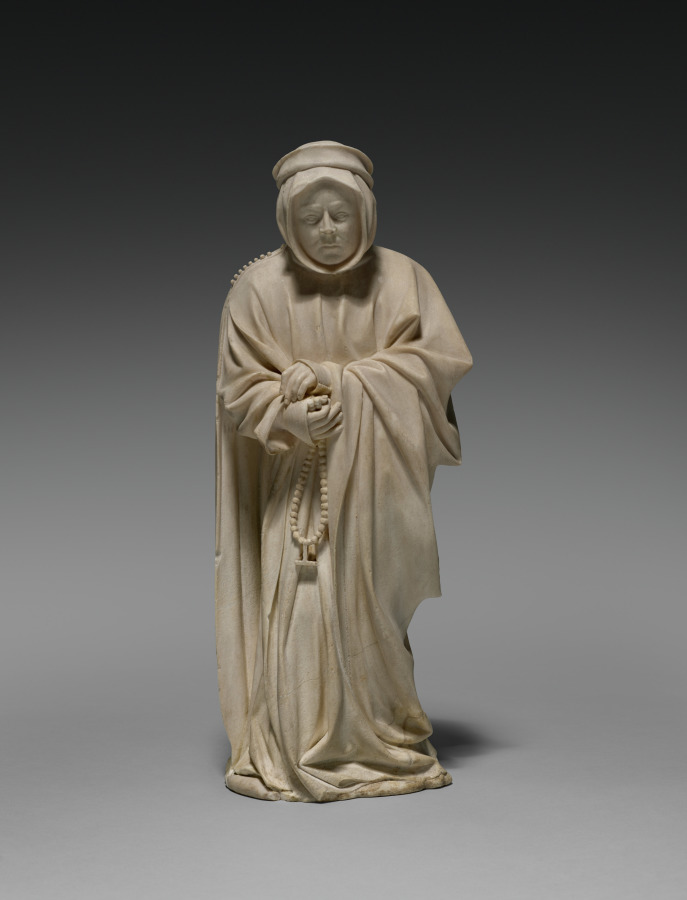
Mourner from the Tomb of Philip the Bold, Duke of Burgundy (1364–1404), 1404–1410, by Claus de Werve
Claus de Werve · The Cleveland Museum of Art · Purchase from the J. H. Wade Fund
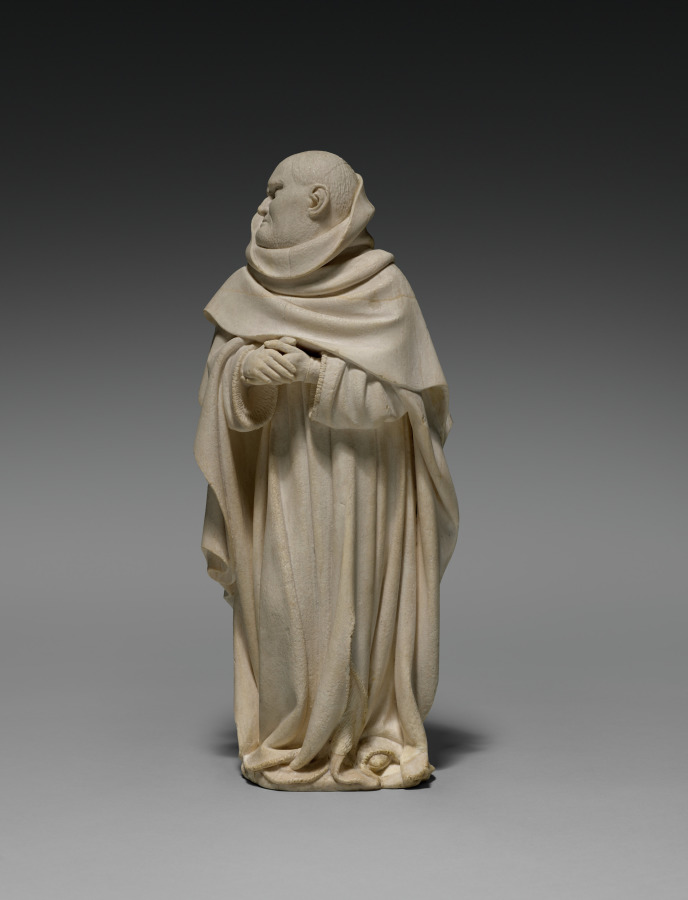
Mourner from the Tomb of Philip the Bold, Duke of Burgundy (1364–1404), 1404–10, by Claus de Werve
Claus de Werve · The Cleveland Museum of Art · Bequest of Leonard C. Hanna Jr.
Key facts
Key facts
• Name — Claus de Werve • Born — c. 1380 • Birthplace — Haarlem • Died — 1439 • Place of death — Dijon • Other Names — Claux de Werve • Occupation — sculptor
Career
Career
Claus de Werve served at uncle Claus Sluter's workshop in Dijon as a sixteen-year-old sculptor's apprentice. There he worked on Sluter's most famous work, the Well of Moses. After Sluter's death in 1406, de Werve served Duke Jean the Good and his son Philip the Bold as "tailleur d'ymages et varlet de chambre". Between 1406 and 1410, he assisted with the completion of the tomb of Philip the Bold in Champmol (now the Musée Archéologique, Dijon), on which the sculptors Jean de Marville and Sluter had earlier worked. He is considered the author of the alabaster figures of Mourners of Dijon. Their conception is characterised by the individualisation of the monks and the expressive rendering of their draperies. De Werve travelled to Savoy in 1408 at the invitation of Duke Amadeus VIII and probably worked at Sainte-Chapelle in Chambéry. He lived in Paris between 1400 and 141. Claus de Werve died in 1439 and was succeeded as court sculptor by Jean de la Huerta (d. 1462).
Workshop or followers
Workshop or followers
• Saint Paul, c. 1420–30, Metropolitan Museum of Art
Workshop or followers
Workshop or followers
• Illustration — Saint Paul, c. 1420–30, Metropolitan Museum of Art • Illustration — Saint Barbara, mid-15th century, Metropolitan Museum of Art
Places
Named by the record
Places
Only places the record itself states, plotted where the house gazetteer settles their coordinates. Nothing is inferred from a name or a nationality.
Haarlem.
Birth place
Dijon.
Death place
Attributed
Attributed
• The Well of Moses (1396-1405), collaboration with Claus Sluter. De Werve particularly sculpted the weeping angels. • The Tomb of Philip the Bold (1406-1410), begun by Jean de Marville and Claus Sluter and completed by de Werve, who sculpted the angels and almost all of the mourners • Virgin and Child of Poligny, c. 1415–17, Metropolitan Museum of Art, New York
Attributed
Attributed
• Illustration — Annunciation, Saint-Seine-l'Abbaye, France • Illustration — Saint Peter, c. 1410-20, Museum Catharijneconvent, Utrecht, Netherlands • Illustration — Virgin and Child, Musée Rolin, Burgundy, France. • Illustration — Virgin and Child of Poligny, c. 1415–17, Metropolitan Museum, NYC • Illustration — Saint Michel, from the funerary monument of Amé de Chalon, abbot of Baume-les-Messieurs
Notes from the source article
Cited by Wikipedia
Notes from the source article
These works are cited by the source article, in its own numbering. They are recorded as its citations, not as sources VALÉORINE has verified.
- 1.Khan Academy. Claus Sluter and Claus de Werve, Mourners, from the Tomb of Philip the Bold. Smarthistory.
- 2.Nash (2005), p. 193
- 3.Nash (2008), p. 802
- 4.Nash (2008), p. 192
- 5."Virgin and Child". Metropolitan Museum of Art, New York. Retrieved 14 March 2026
- 6."Saint Paul, Circle of Claus de Werve, Netherlandish, ca. 1420–30". Metropolitan Museum of Art, New York. Retrieved 14 March 2026
- 7."Saint Barbara, French, mid-15th century. Metropolitan Museum of Art. Retrieved 13 March 2026
Bibliography printed in the source article · 6
- Antoine, Elisabeth. Art from the Court of Burgundy: The Patronage of Philip the Bold and John the Fearless, 1364-1419. Seattle (WA): University of Washington, 2005.
- de Winter, Patrick. "Art from the Duchy of Burgundy". The Bulletin of the Cleveland Museum of Art, volume 74, number 10, 1987. pp. 406-449.
- Forsyth, William. "A Fifteenth-Century Virgin and Child Attributed to Claux de Werve". New York: Metropolitan Museum Journal, volume 21, 1986. pp. 41–63.
- Frish, Teresa Grace. Gothic Art 1140 –c. 1450: Sources and Documents. Toronto: University of Toronto Press, 1987.
- Nash, Susie. Northern Renaissance art. Oxford: Oxford University Press, 2008.
- Nash, Susie. "Claus Sluter's 'Well of Moses' for the Chartreuse de Champmol Reconsidered: Part I". The Burlington Magazine, Dec 2005. Volume 147, issue 1233
References
Citations
References
Each reference names the institution holding it, so a reader may go to the document itself.
reference work
Secondary witnessreference work
Secondary witness
The Encyclopedia exists whether or not anything is for sale. Corrections are recorded rather than overwritten, and every version of this record is kept. Published 16 August 2026.
Elsewhere in Sculpture
6,174 published records in this field, each with its sources named.
- Claudius de Cap BlancArtist
- Claudius MariotonArtist
- Claus BergArtist
- Claus CitoArtist
- Claus SluterArtist
- Claus-Frenz ClaussenArtist
- Clay KetterArtist
- Clearchus of RhegiumArtist
Best supported in this field
For owners
Own a work by Claus de Werve?
A specialist will read what you send and tell you what the house can establish, what it cannot, and whether the object is suited to sale. There is no charge and no obligation. The object stays with you throughout; nothing is shipped to us unless it is arranged in writing beforehand.