
Claude Ferdinand Gaillard
Illustration — Prosper Guéranger; print by Gaillard (c.1875) Claude Ferdinand Gaillard (7 January 1834 – 19 January 1887) was a French engraver and painter, who had been born and died in Paris.
Also recorded as Ferdinand Gaillard · Claude-Ferdinand Gaillard
Claude Ferdinand Gaillard
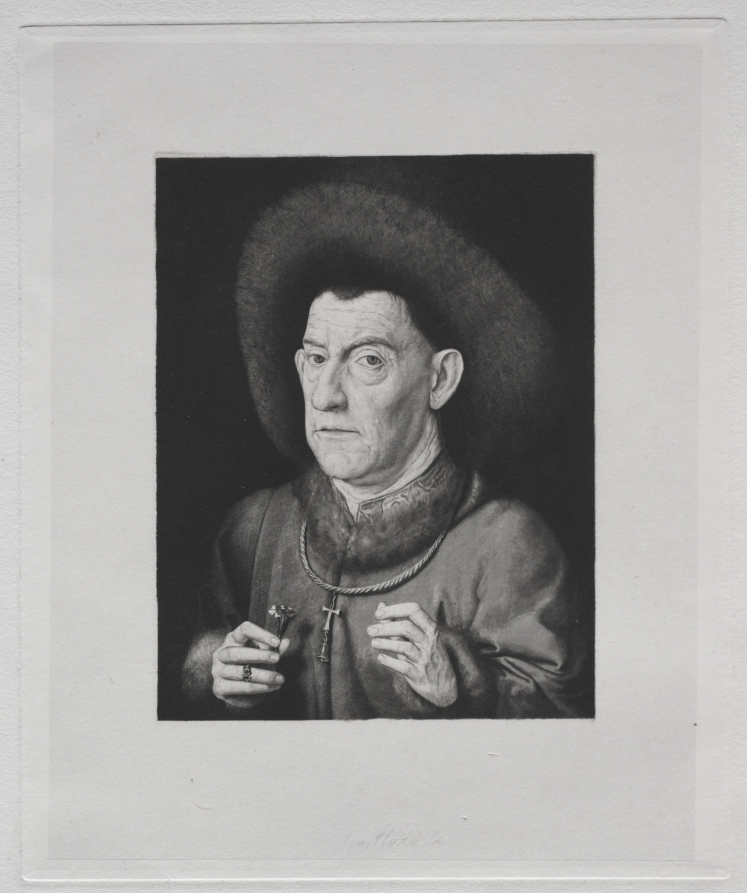
Claude-Ferdinand Gaillard · The Cleveland Museum of Art · Gift of Leonard C. Hanna Jr. · CC0
- Born
- 1834. · Paris.
- Died
- 1887. · 15th arrondissement of Paris.
- Nationality
- France.
- Occupation
- painter, printmaker and artist.
- Fields
- portrait.
- Honours
- Prix de Rome and Officer of the Legion of Honour.
- Languages
- French.
VALÉORINE Encyclopedia
VALÉORINE documentary reading
Documentary summary
Illustration — Prosper Guéranger; print by Gaillard (c.1875) Claude Ferdinand Gaillard (7 January 1834 – 19 January 1887) was a French engraver and painter, who had been born and died in Paris.
Admitted source layer · organised and presented by VALÉORINE
Reference Check
Propose documentary evidence for Claude Ferdinand Gaillard. A contribution is never written directly as fact: identity, source, rights and evidence gates still decide.
Sign in to contribute
World of VALÉORINE
Documentary connections
Only confirmed graph relationships appear here. Images are shown only when their identity and reuse rights both pass the documentary gate.

Documentary evidence
Documentary basis
Authority files
wikidata · Q251292 · wikipedia · Claude Ferdinand Gaillard
In this article
Biography
Biography
François-Eugène Burney is recorded as having studied under Claude Ferdinand Gaillard. The recorded working language is French. Subjects and genres recorded for the work are portrait. Places of work recorded in the authority are Paris and Italy. Work by Claude Ferdinand Gaillard is recorded in the collections of Minneapolis Institute of Art, Museo del Prado, Art Institute of Chicago, The Nelson-Atkins Museum of Art and National Gallery of Canada. Distinctions recorded are Prix de Rome and Officer of the Legion of Honour.
His early studies were probably with James Hopwood and Lecouturier; but his chief master was Leon Cogniet, with whom he began engraving in 1850. In this year, he entered the École des Beaux-Arts. At first he had to engrave fashion-plates to make money enough to live, but his application to his art brought him the Prix de Rome for engraving, in 1856. At his first public showing in 1860, his prints were called laboured, soft, and flaccid, more like Drypoint etchings than burin work, and he was advised to adhere to the established rules of his art. Gaillard had already chosen a new method, and his work was a shock, because not done according to the formulae of that day. He was such an innovator that in 1863 he was among the "Salon des Refusés", but in their exhibition his portrait of Bellini was hailed by Philippe Burty as the work of a master, "who engraved with religious care and showed a high classical talent". Gaillard's new manner was to engrave with soft, delicate lines, drawn closely together but not crossing, and to render every fold, wrinkle, or mark on the skin with care. Henceforth Gaillard was represented by engravings and paintings at every Salon. He was best known for his L'Homme à l'Oeillet, completed in eight days, which brought him only $100. He was the teacher of François-Eugène Burney. His portraits of Pius IX and Leo XIII raised "the insubordinate scholar" to the rank of the reportedly the most celebrated engraver of his day. Another plate is the St. Sebastian, and there is a portrait of Prosper Guéranger. "My aim", he said, "is not to charm, but to be true; my art is to say all." Gaillard was decorated in 1876, became officer of the Légion d'honneur in 1886, and President of the Société des Graveurs au Burin in 1886. Just before his death the government ordered him to engrave Leonardo da Vinci's Last Supper and Mona Lisa.
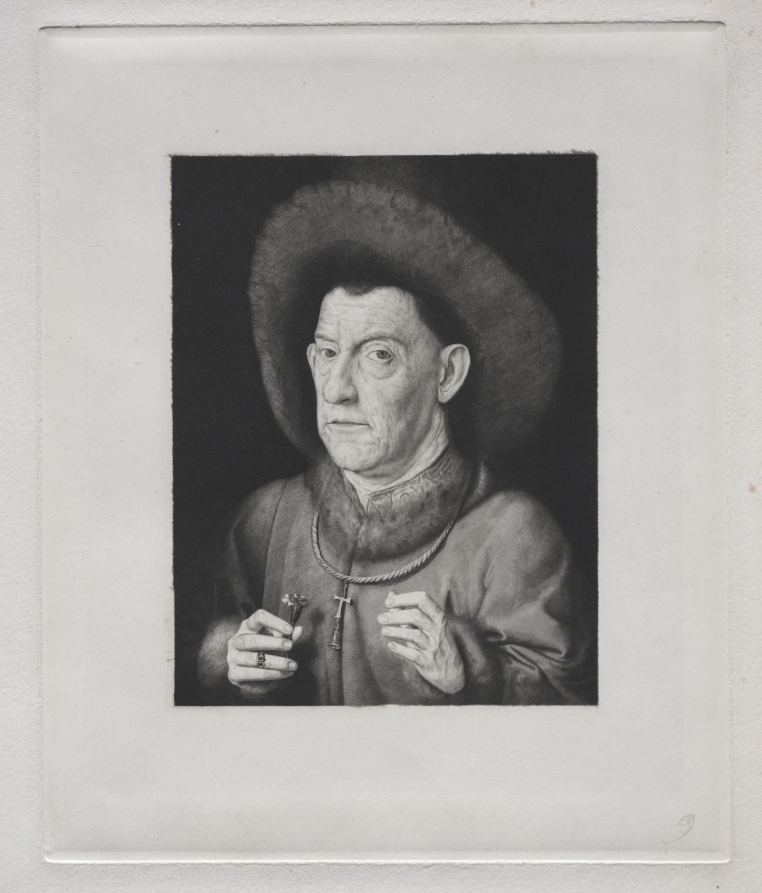
Man with a Pink, 1869, by Claude Ferdinand Gaillard
Claude-Ferdinand Gaillard · The Cleveland Museum of Art · Bequest of James Parmelee
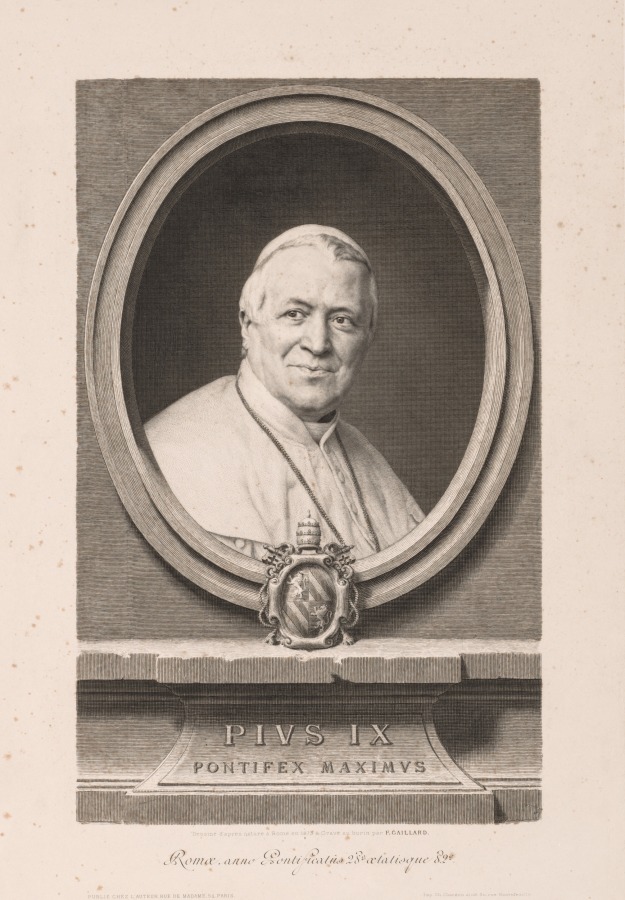
Pius IX, 1873, by Claude Ferdinand Gaillard
Claude-Ferdinand Gaillard · The Cleveland Museum of Art · Gift of Salmon P. Halle
Life and career
Dated record
Life and career
Explore 1834–1887
The full dated record · 3 entries
1834
Claude Ferdinand Gaillard born at Paris.
1859
Odalisque is dated 1859.
1887
Claude Ferdinand Gaillard died at 15th arrondissement of Paris.
Places
Named by the record
Places
Only places the record itself states, plotted where the house gazetteer settles their coordinates. Nothing is inferred from a name or a nationality.
Paris.
Birth place
15th arrondissement of Paris.
Death place
Primary material
Documents and archives
Institutional database
- Wikidata, structured authority record Q251292: Claude Ferdinand Gaillard
Scholarly · Wikimedia Foundation
reference work
- “Claude Ferdinand Gaillard”, English Wikipedia, consulted as further reading
Reputable secondary · Wikipedia
References
Citations
References
Each reference names the institution holding it, so a reader may go to the document itself.
Institutional database
Wikidata, structured authority record Q251292: Claude Ferdinand GaillardWikimedia Foundation
Institutional witnessreference work
Secondary witness
People, houses and institutions
Knowledge graph
People, houses and institutions
Teachers, collaborators, publishers and institutions recorded against this person, each on a stated basis.
Born at
1- ParisPlace
Established from a fact already recorded on a verified source.
The Encyclopedia exists whether or not anything is for sale. Corrections are recorded rather than overwritten, and every version of this record is kept. Published 16 August 2026.
Elsewhere in Prints
4,138 published records in this field, each with its sources named.
- Claude Audran the ElderEngraver
- Claude Audran the YoungerEngraver
- Claude ClarkEngraver
- Claude Du BoscEngraver
- Claude GaracheEngraver
- Claude GillotEngraver
- Claude LefèbvreEngraver
- Claude LorrainEngraver
Best supported in this field
For owners
Own a work by Claude Ferdinand Gaillard?
A specialist will read what you send and tell you what the house can establish, what it cannot, and whether the object is suited to sale. There is no charge and no obligation. The object stays with you throughout; nothing is shipped to us unless it is arranged in writing beforehand.