
Carrara
Carrara (lang; Carara, lang) is a town and comune in Tuscany, in central Italy, of the province of Massa and Carrara, and notable for the white or blue-grey marble quarried there. It is on the Carrione River, some 100 km west-northwest of Florence. Its motto is Latin: "Fortitudo mea in rota" ("My strength is in the wheel"), a reference firstly to the marble shipping industry from Roman times onwards.
Carrara

Adrian Pingstone (Arpingstone) · Public domain
- Name
- Carrara
VALÉORINE Encyclopedia
VALÉORINE documentary reading
Documentary summary
Carrara (lang; Carara, lang) is a town and comune in Tuscany, in central Italy, of the province of Massa and Carrara, and notable for the white or blue-grey marble quarried there. It is on the Carrione River, some 100 km west-northwest of Florence. Its motto is Latin: "Fortitudo mea in rota" ("My strength is in the wheel"), a reference firstly to the marble shipping industry from Roman times onwards.
Admitted source layer · organised and presented by VALÉORINE
Reference Check
Propose documentary evidence for Carrara. A contribution is never written directly as fact: identity, source, rights and evidence gates still decide.
Sign in to contribute
World of VALÉORINE
Documentary connections
Only confirmed graph relationships appear here. Images are shown only when their identity and reuse rights both pass the documentary gate.

Died In · incoming
Aldo Buttini
Artist
Le Foro Italico (Rome)

Born In · incoming
Andrea Calamech
Artist
Flickr . Author: Carlos Reusser , 17 October 2004.

Died In · incoming
Antonio Trentanove
Artist
Own work

Died In · incoming
Bartolomé Ordóñez
Artist
Museu Frederic Marès

Born In · incoming
Carlo Bergamini
Artist
Own work

Born In · incoming
Carlo Nicoli
Artist
Own work
Died In · incoming
Carlo Nicoli
Artist
Own work

Born In · incoming
Enrico Del Debbio
Designer
Own work

Born In · incoming
Eumone Baratta
Artist
Own work
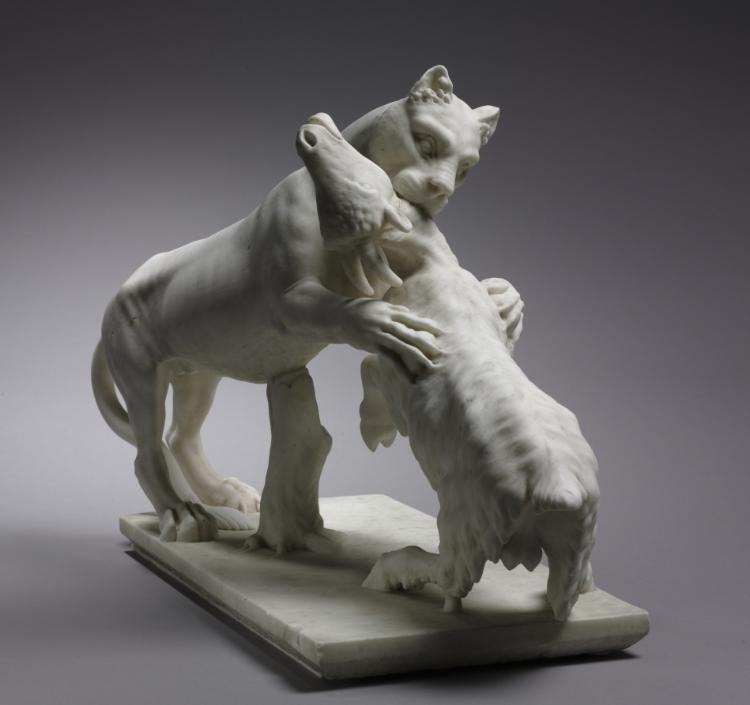
Born In · incoming
Francesco Antonio Franzoni
Artist
Dudley P. Allen Fund

Born In · incoming
Gabriella Giorgelli
Person
Italian magazine Radiocorriere

Born In · incoming
Giovanni Antonio Cybei
Artist
Own work
Died In · incoming
Giovanni Antonio Cybei
Artist
Own work

Died In · incoming
Giovanni Baratta
Artist
Own work
Born In · incoming
Giovanni Baratta
Artist
Own work

Born In · incoming
Giuseppe Franchi
Artist
Own work
In this article
Overview
Overview
During the contemporary era, the city and the surrounding region are closely linked to the history of the anarchist movement, with a significant part of its population being anarchist and many congresses being held there—one of the most notable being the Congress of Carrara (1968), which founded the International of Anarchist Federations (IAF), one of the main anarchist organizations to this day.

Carrara
Sailko
Key facts
Key facts
• Name — Carrara • Official Name — Comune di Carrara • Native Name — Carara • Region — Tuscany • Province — Massa and Carrara (MS) • Frazioni — Avenza, Bedizzano, Bergiola, Bonascola, Castelpoggio, Codena, Colonnata, Fontia, Fossola, Gragnana, Marina di Carrara, Miseglia, Nazzano, Noceto, Sorgnano, Torano • Mayor Party — Centre-left • Mayor — Serena Arrighi • Area Total Km2 — 71 • Population Total — 62923 • Population As Of — 30 June 2016 • Population Demonym — Carraresi, Carrarini • Elevation M — 100 • Saint — San Ceccardo • Day — 16 June • Postal Code — 54033 • Area Code — 0585
Toponymy
Toponymy
The word Carrara likely comes from the pre-Roman (Celtic or Ligurian) element kar (stone), through Latin carrariae meaning 'quarries'.
History
History
• Illustration — View of Carrara There were known settlements in the area as early as the ninth century BC, when the Apuan Ligures lived in the region. The current town originated from the borough built to house workers in the marble quarries created by the Romans after their conquest of Liguria in the early second century BC. Carrara has been linked with the process of quarrying and carving marble since the Roman Age. Marble was exported from the nearby harbour of Luni at the mouth of the river Magra. In the early Middle Ages it was a Byzantine and then Lombard possession, and then, it was under the Bishops of Luni who started to write the city's history when the Emperor Otto I gave it to them. It turned itself into a city-state in the early 13th century; during the struggle between Guelphs and Ghibellines, Carrara usually belonged to the latter party. The Bishops acquired it again in 1230, their rule ending in 1313, when the city was given in succession to the Republics of Pisa, Lucca and Florence. Later it was acquired by Gian Galeazzo Visconti of Milan. After the death of Filippo Maria Visconti of Milan in 1447, Carrara was fought over by Tommaso Campofregoso, lord of Sarzana, and again the Malaspina family, who moved here the seat of their signoria in the second half of the 15th century. Carrara and Massa formed the Duchy of Massa and Carrara from the 15th to the 19th century. Under the last Malaspina, Maria Teresa, who had married Ercole III d'Este, it became part of the Duchy of Modena. After the short Napoleonic rule of Elisa Bonaparte, it was given back to Modena. During the unification of Italy age, Carrara was the seat of a popular revolt led by Domenico Cucchiari, and was a center of Giuseppe Mazzini's revolutionary activity. • Illustration — The Alberto Meschi monument in Carrara. • Illustration — Carrara in 1911 At the end of the 19th century Carrara became the cradle of anarchism in Italy, in particular among the quarry workers. The quarry workers, including the stone carvers, had radical beliefs that set them apart from others. Ideas from outside the city began to influence the Carrarese. Anarchism and general radicalism became part of the heritage of the stone carvers. According to a The New York Times article of 1894 many violent revolutionists who had been expelled from Belgium and Switzerland went to Carrara in 1885 and founded the first anarchist group in Italy. Carrara has remained a continuous 'hotbed' of anarchism in Italy, with several organizations located in the city. The Anarchist marble workers were also the driving force behind organising labour in the quarries and in the carving sheds. They were also the main protagonists of the Lunigiana revolt in January 1894. In 1929, the municipalities of Carrara, Massa and Montignoso were merged in a single municipality, called Apuania. In 1945 the previous situation was restored. In 1968, it was estimated that about 90% of the population of the city and the surrounding region was anarchist, which explains the organization of many congresses there by the Italian Anarchist Federation (FAIt). One of the most notable, the Congress of Carrara (1968), founded the International of Anarchist Federations (IAF) there, one of the main contemporary anarchist organizations.
Title
Title
As a titular Duke of Modena, the current holder of the title of "Prince of Carrara" would be Prince Lorenz of Belgium, Archduke of Austria-Este.
Economy
Economy
Carrara marble has been used since the time of Ancient Rome. The Pantheon and Trajan's Column in Rome are constructed of it, and many sculptures of the Renaissance were carved from it. Carrara-Avenza railway station is the nearest train station.
Culture
Culture
Fortitude Mea in Rota "My strength in the wheel". The wheel of the carriage made to transport marble blocks from quarry to load out during Roman Empire and after, is the symbol of Carrara.
Coat of arms and symbols
Coat of arms and symbols
According to the Grand Orient of Italy, the coat of arms of Carrara contains the Comacina wheel, symbol of the ancient master stonemasons of Como.
Main sights
Main sights
• Cathedral (Duomo, 12th century). • Ducal Palace (also Palazzo Cybo Malaspina, 16th century), now the seat of the Fine Arts Academy. Built over pre-existing Lombard fortification, it dates to the reign of Guglielmo Malaspina, becoming in 1448 the permanent seat of the dynasty. It includes two distinct edifices: the Castello Malaspiniano, dating to the 13th century, and the Renaissance palace, begun by Alberico I in the late 16th century. Under the medieval loggia are exposed several ancient Roman findings. • Baroque church and convent of San Francesco, built in 1623–64 by order of Carlo I Cybo-Malaspina. • Church of the Suffragio, begun in 1686 under design of Innocenzo Bergamini, and refurbished in the 19th century. The façade has a large marble portal in Baroque style, sculpted by Carlo Finelli and surmounted by a bas-relief with the "Madonna and the Souls of the Purgatory". • Palazzo Cybo-Malaspina • Sanctuary of the Madonna delle Grazie alla Lugnola, consecrated in 1676 and designed by Alessandro Bergamini. • Church of Santa Maria Assunta, at Torano. It has a 16th-century façade with a portal from 1554. The interior is on a nave and two aisles. • Illustration — A Carrara marble quarry • Illustration — Façade of the cathedral • Illustration — Palazzo Cybo Malaspina • Illustration — Carrara marble exploitation • Illustration — Monte Sagro and nearby quarries
Sister cities
Sister cities
Carrara is twinned with: • Grasse, France • Ingolstadt, Germany • Kragujevac, Serbia • Opole, Poland • Yerevan, Armenia • Yunfu, China
Notable people
Notable people
• Eumone Baratta (1823~After 1890), sculptor • Federico Bernardeschi (1994–), footballer • Gianluigi Buffon (1978–), footballer • Giorgio Chinaglia (1947–2012), footballer • Hanna Eshel (1926–2023), sculptor • Francesco Gabbani (1982–), singer • Lorenzo Musetti (2002–), tennis player • Pietro Tacca (1577–1640), sculptor • Cristiano Zanetti (1977–), former footballer • Carlo Bergamini (1868–1934), sculptor
Notes from the source article
Cited by Wikipedia
Notes from the source article
These works are cited by the source article, in its own numbering. They are recorded as its citations, not as sources VALÉORINE has verified.
- 1.My Travel in Tuscany. Carrara and its precious white gold. mytravelintuscany.com. 25 February 2017.
- 2.Repetti
- 3.Carrara and its environs, InterScultura
- 4.Haegen, Anne Mueller von der. Art & Architecture: Tuscany. H.F.Ullmann Publishing. 43. 2013. 978-3-8480-0321-1.
- 5.A Stronghold of Anarchists, The New York Times, 19 January 1894
- 6.Poór, Péter. Az 1968-as carrarai nemzetközi anarchista kongresszus és az Anarchista Föderációk Internacionáléjának születése. Aetas. 2025-01-01. 10.14232/AETAS.2025.2.112-138.
- 7.Stories of freemasons, republicans and carbonari / Il Tirreno Massa e Carrara.
- 8.David Chiappuella. A new Masonic lodge will be born under the Apuane mountains. 9 May 2014.
- 9.David Chiappuella. Carrara, the Marmifera and the quarrymen seen from the eyes of Mary Poppins. 15 November 2020.
- 10.Carrara. All'inaugurazione del CARMI presenti anche le delegazioni delle città gemellate con Carrara. web.comune.carrara.ms.it. 2018-06-01.
- 11.Carrara. FESTIVAL – Yerevan Outdoor Advertising Festival. web.comune.carrara.ms.it. 2017-10-26.
Makers, houses and production
Knowledge graph
Makers, houses and production
The people, houses and objects recorded in connection with this place.
Died at
1- Lev MeshbergArtist
Established from a fact already recorded on a verified source.
Born at
1- Pietro TaccaArtist
Established from a fact already recorded on a verified source.
The Encyclopedia exists whether or not anything is for sale. Corrections are recorded rather than overwritten, and every version of this record is kept. Published 27 September 2026.
Elsewhere in General
22,760 published records in this field, each with its sources named.
- CaronaPlace
- CaroraPlace
- CarougePlace
- CarradalePlace
- CarrefourPlace
- Carresse-CassaberPlace
- Carrick-on-SuirPlace
- CarrickfergusPlace
Best supported in this field
For owners
Own an object connected with Carrara?
A specialist will read what you send and tell you what the house can establish, what it cannot, and whether the object is suited to sale. There is no charge and no obligation. The object stays with you throughout; nothing is shipped to us unless it is arranged in writing beforehand.