
Carlo Marochetti
Baron Pietro Carlo Giovanni Battista Marochetti (14 January 1805 – 29 December 1867) was an Italian-born French sculptor who worked in France, Italy and Britain. He completed many public sculptures, often in a neo-classical style, plus reliefs, memorials and large equestrian monuments in bronze and marble. In 1848, Marochetti settled in England, where he received commissions from Queen Victoria.
Also recorded as Pietro Carlo Giovanni Battista Marochetti · Baron Marochetti · Charles, Baron Marochetti · Carlo, Baron Marochetti
Carlo Marochetti
Txllxt · CC BY-SA 4.0
- Name
- Carlo Marochetti
- Birth Name
- Pietro Carlo Giovanni Battista Marochetti
- Born
- 14 January 1805
- Birthplace
- Turin, Italy
- Died
- 29 December 1867
- Place of death
- Passy, France
- Field
- Sculpture, Public monuments
- Training
- École des Beaux-Arts, Paris
- Nationality
- France · Kingdom of Italy
- Occupation
- sculptor · painter
- Fields
- art of sculpture
- Education
- Beaux-Arts de Paris · Lycée Henri-IV
VALÉORINE Encyclopedia
VALÉORINE documentary reading
Documentary summary
Baron Pietro Carlo Giovanni Battista Marochetti (14 January 1805 – 29 December 1867) was an Italian-born French sculptor who worked in France, Italy and Britain. He completed many public sculptures, often in a neo-classical style, plus reliefs, memorials and large equestrian monuments in bronze and marble. In 1848, Marochetti settled in England, where he received commissions from Queen Victoria.
Admitted source layer · organised and presented by VALÉORINE
Note VALÉORINE
No house-authored Note is published until its assertions and sources pass the VALÉORINE evidence contract. The documentary article remains available in full while that enrichment is being consolidated.
Documentary enrichment in progress · no unsupported statement published
Reference Check
Propose documentary evidence for Carlo Marochetti. A contribution is never written directly as fact: identity, source, rights and evidence gates still decide.
Sign in to contribute
World of VALÉORINE
Documentary connections
Only confirmed graph relationships appear here. Images are shown only when their identity and reuse rights both pass the documentary gate.

Documentary evidence
Evidence Panel
not yet certified
- Identity
- resolved
- Independent source families
- 0
- Admitted assertions
- 0
- Open conflicts
- 0
Authority files
wikidata · Q2375473 · wikipedia · Carlo Marochetti
In this article
Biography
Biography
Marochetti received great recognition during his lifetime, being made a baron in Italy and was awarded the Legion of Honour by the French government.
Carlo Marochetti studied at Beaux-Arts de Paris and Lycée Henri-IV. The recorded working language is French. The field of work recorded is art of sculpture. Places of work recorded in the authority are Paris, Rome and France. Works named in the authority record are Richard Coeur de Lion. Work by Carlo Marochetti is recorded in the collections of Musée des Beaux-Arts de Pau and Musée des Beaux-Arts de Rennes. Distinctions recorded are Knight of the Legion of Honour.

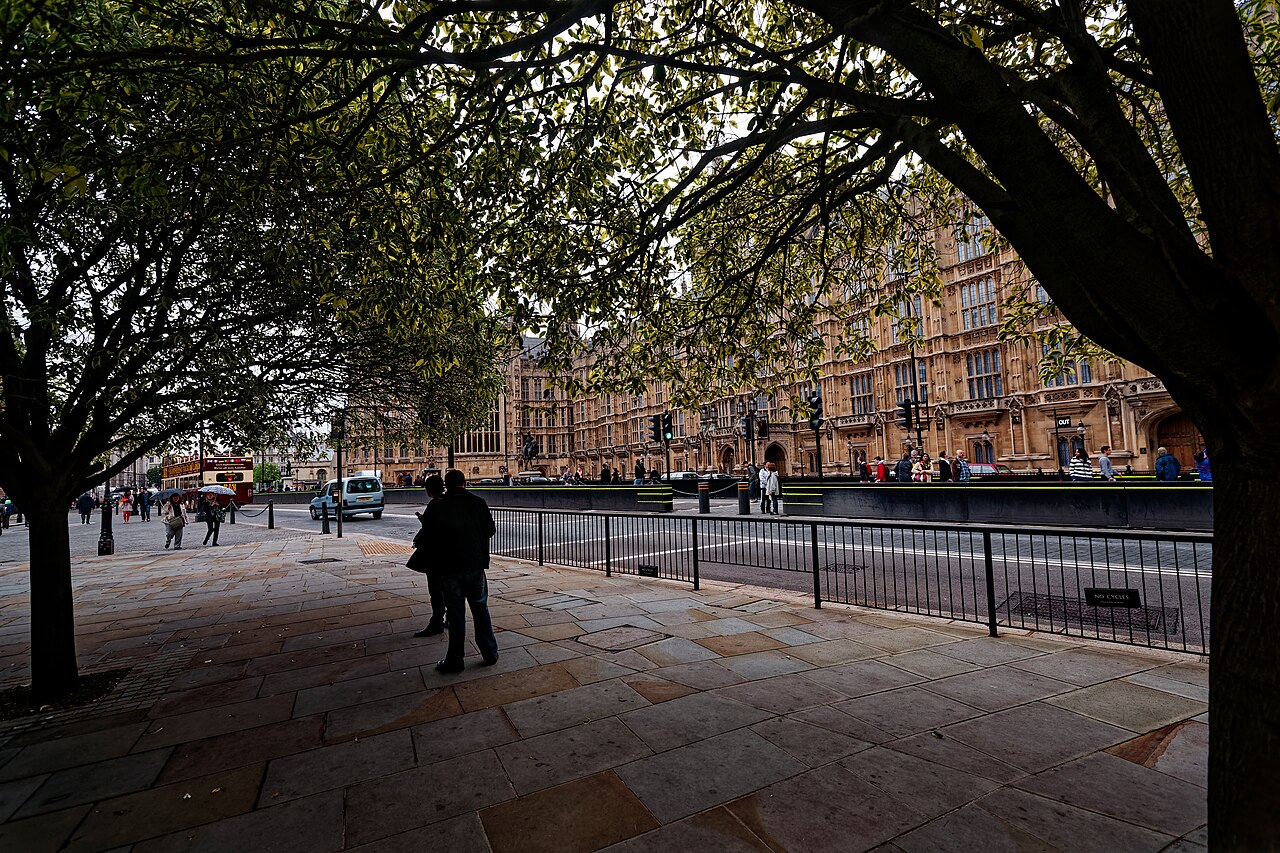
London - Old Palace Yard - Palace of Westminster 1840-70 by Gothic Revival Architects Sir Charles Barry Augustus Welby Northmore Pugin - Equestrian Statue of King Richard I of England 1856 by Baron Carlo Marochetti
Txllxt

London - Old Palace Yard - View SE on Palace of Westminster 1840-70 by Gothic Revival Architects Sir Charles Barry Augustus Welby Northmore Pugin - View on House of Lords - Equestrian Statue of King Richard I of England 1856
Txllxt
Key facts
Key facts
• Name — Carlo Marochetti • Birth Name — Pietro Carlo Giovanni Battista Marochetti • Born — 14 January 1805 • Birthplace — Turin, Italy • Died — 29 December 1867 • Place of death — Passy, France • Field — Sculpture, Public monuments • Training — École des Beaux-Arts, Paris
Early life
Early life
Carlo Marochetti was born in Turin, where his father, Vincenzo, a former priest, was a local government official and professor of eloquence at Turin University, but after the family moved to Paris, Carlo was brought up as a French citizen. He studied at the Lycée Napoléon and then studied sculpture at the École des Beaux-Arts in Paris where his teachers were François Joseph Bosio and Antoine-Jean Gros. At the Paris Salon in 1827 he exhibited a marble statue of A Young Girl playing with a Dog which won a silver medal. Between 1822 and 1830 Marochetti frequently spent long periods in Rome where his mother was resident and where he collaborated with François-Joseph Duret and Antoine Étex and worked briefly at the studio of the Danish sculptor Bertel Thorvaldsen.
Career in France
Career in France
From 1832 to 1848 Marochetti lived in Paris and largely adopted a neo-classical Romantic style of sculpture. He married Camille de Maussion in 1835 and together they had two sons and a daughter. In Paris, Marochetti received two significant commissions. One was for a relief panel of the Battle of Jemappes on the Arc de Triomphe and the other for a large marble statue group, the Elevation of Mary Magdalene for the altar of the Church of La Madeleine. He delayed completing the altar group to create a monumental equestrian statue of Emmanuel Philibert, Duke of Savoy which he donated to the city of Turin. The king of Sardinia, Charles Albert rewarded Marochetti for his gift by making him a baron. Before being sent to Italy the Philibert statue was displayed in the courtyard of the Louvre Palace during 1838. This effectively established Marochetti's reputation for creating equestrian monuments and led to him being commissioned to create such a statue of Ferdinand, Duke of Orleans, which stood in the courtyard of the Louvre for four years. In 1839 the French government awarded him the Legion of Honour. During 1840 Marochetti was competing to win both the commission for a monument to the Duke of Wellington for the city of Glasgow and for the commission to design the tomb of Napoleon for Les Invalides in Paris. Although he won the Glasgow commission, Marochetti's proposal for the tomb attracted widespread public criticism in France and was rejected. When his father died, Marochetti inherited the family château at Vaux-sur-Seine outside of Paris and served as mayor of the town there from 1846. After the fall of the July Monarchy in 1848, and his subsequent failure to win a seat in the National Assembly, Marochetti followed the French king Louis-Philippe into exile in the United Kingdom.
Career in London
Career in London
Marochetti spent the greater part of his time from 1848 until his death, in London. He lived on Onslow Square, and maintained a large studio and his own foundry in the adjacent Sydney Mews. In his studio, Marochetti created an equestrian statue, in plaster, of Richard Coeur de Lion which was displayed at the Great Exhibition during 1851. A public campaign led to a bronze copy being made which was eventually, in 1860, erected in front of the Palace of Westminster on the orders of Prince Albert. • Illustration — Memorial to Viscounts William and Frederick Melbourne, St Paul's Cathedral From his studio and foundry Marochetti, and his workforce, produced numerous statues, memorials and equestrian monuments plus smaller pieces. He also experimented with the use of new materials and the creation of multi-coloured, or polychromic, sculptures. Between 1853 and 1855 Marochetti created three life-size statues, plus busts and garden ornaments, for the Kingston Lacy country mansion in Dorset. His equestrian statues included those of Viscount Combermere in Chester and Sir Mark Cubbon in Bangalore and for Queen Victoria and Prince Albert in Glasgow. Works featuring mourning angels by Marochetti include the monument in St. Paul's Cathedral to Viscounts William and Frederick Melbourne, the Crimean War memorial at the Haydarpaşa Cemetery in Istanbul, dating from 1856 to 1858, and his Angel of the Resurrection for the Cawnpore memorial in India from 1862 to 1865. From 1864 Marochetti collaborated with Sir Edwin Landseer on the four bronze lions to be placed at the base of Nelson's Column in Trafalgar Square, and cast them at his Sydney Mews foundry. He experimented in using coloured marble following the work of John Gibson and a coloured statuette of Queen Victoria was exhibited at a London studio but is now lost. Not all of Marochetti's designs were so successful. His proposed design for the tomb of the Duke of Wellington was rejected. Marochetti's equestrian monument to George Washington for the 1853 World Fair in New York was destroyed by fire. In the 1860s he championed a scheme for a set of statues celebrating British engineers to be erected in the churchyard of St Margaret's, Westminster. The scheme was rejected but three of the statues, of Isambard Kingdom Brunel, Robert Stephenson and Joseph Locke were erected separately elsewhere. His monumental statue of Robert Peel in Parliament Square was melted down and the metal used for the smaller model of Peel by Matthew Noble which replaced it. • Illustration — Busts of Queen Victoria and Prince Albert With the support of the exiled Louis-Philippe of France, Marochetti first met Queen Victoria and Prince Albert in 1849 and subsequently received a number of royal commissions. Marochetti's first royal commission in England was for a marble portrait bust of Prince Albert in 1849, which was commercially reproduced in Parian ware by the Mintons company in 1862. That year Queen Victoria commissioned Marochetti to produce a portrait bust of herself as a birthday gift for Prince Albert and that too was reproduced by Mintons for the retail market. Rather than a crown, he depicted her wearing a headpiece of various flowers, including roses and shamrocks, to represent the nations of the United Kingdom. Marochetti designed Victoria's memorial to Princess Elizabeth and a bust of Prince Albert at Newport Minster on the Isle of Wight. He also created the marble recumbent effigies for the tomb of Queen Victoria and Prince Albert in the Royal Mausoleum at Frogmore in Windsor Great Park. He was commissioned to make the seated figure of Albert for the Albert Memorial in Kensington Gardens. However the first version was rejected by the architect of the monument, Sir George Gilbert Scott, and Marochetti died before a satisfactory second version could be completed. He was elected an associate of the Royal Academy 1861 and a full academician in 1866. Marochetti died, suddenly, at Passy in Paris and was buried at the Vaux-sur-Seine cemetery.
Other works
Other works
• Seated statue in marble of Sir Jamsetjee Jeejeebhoy, 1857, in the Asiatic Society Library, Mumbai Town Hall. Two versions in bronze of the same design, at the entrance to the JJ Institute and on Narriman Road, are also known. • Memorial, in marble and black stone, to Sixteen Officers of the Engineers of 1857-58, c. 1862, in St. Paul's Cathedral, Kolkata. The memorial has a central inscription listing the names of British officers killed in the Indian Rebellion of 1857 with a surround containing their portraits in carved relief above a panel depicting the Siege of Lucknow. • Bust of Queen Victoria, Haddo House, Scotland • East Devonshire Regiment Crimean War memorial, Exeter Cathedral • Memorial plaque, with portrait medallion, to Prince Albert, Sts Thomas Minster, Newport, Isle of Wight • Monument to Princess Elizabeth, 1635–1650, Sts Thomas Minster, Newport, Isle of Wight, 1856 • Tomb of Lady Margaret Leveson Gower, Church of St Mary Magdalene, Castle Ashby, Northamptonshire, c. 1858 • Statue of St Michael, Parish Church of Champmotteux, Essonne • Statue of General Henri Gatien Bertrand, 1773–1844, at Châteauroux, Indre, France • Bronze bust of John Charles Robinson from 1864-65 in the Victoria and Albert Museum, London • Plaster head of George Washington, from 1851-53, in the Victoria and Albert Museum collection
Career and activity
Career and activity
Carlo Marochetti worked in art of sculpture. He belonged to Royal Academy of Arts and Society of Dilettanti. He worked at Paris, Rome, France and London.
Identity
Identity
Carlo Marochetti is recorded as having received Knight of the Legion of Honour.
Life and career
Dated record
Life and career
The full dated record · 2 entries
1805
Carlo Marochetti born at Turin.
1867
Carlo Marochetti died at Paris.
Places
Named by the record
Places
Only places the record itself states, plotted where the house gazetteer settles their coordinates. Nothing is inferred from a name or a nationality.
Turin.
Birth place
Paris.
Death place
Literature
Literature
Literature
Marochetti, Carlo [Charles], Baron, Oxford Art Online, 2003
Marochetti, Carlo (1805–1867), Oxford Dictionary of National Biography, 2017
Marochetti, Carlo (1805–1867)
Scholarly footprint
Literature
Scholarly footprint
A count of publications is evidence of attention, not of standing, and is given here only as a measure.
Notes from the source article
Cited by Wikipedia
Notes from the source article
These works are cited by the source article, in its own numbering. They are recorded as its citations, not as sources VALÉORINE has verified.
- 1.Ward-Jackson, P. Marochetti, (Pietro) Carlo Giovanni Battista, Baron Marochetti in the nobility of Sardinia (1805–1867), sculptor. 2008. 10.1093/ref:odnb/18085.
- 2.University of Glasgow History of Art / HATII. Baron (Pietro) Carlo Giovanni Battista Marochetti. Mapping the Practice and Profession of Sculpture in Britain & Ireland 1851–1951. 2011.
- 3.17. 747.
- 4.Martina Droth, Jason Edwards & Michael Hatt. Sculpture Victorious: Art in the Age of Invention, 1837-1901. Yale Center for British Art, Yale University Press. 2014. 9780300208030.
- 5.Marochetti, Charles or Carlo (Baron) or Marocchetti. Benezit Dictionary of Artists. 31 October 2011. 978-0-19-977378-7.
- 6.Cust, Lionel Henry. 36.
- 7.Ian Chilvers. The Oxford Dictionary of Art. Oxford University Press. 2004. 0-19-860476-9.
- 8.F. H. W. Sheppard. The Smith's Charity Estate: Charles James Freake and Onslow Square Gardens. Survey of London: volume 41: Brompton. Institute of Historical Research. 1983.
- 9.Mary Chisholm. Kingston Lacey: A Civil War Heroine, The Philae Obelisk & Tortoises. Exploring Building History. 18 December 2020.
- 10.Jason Edwards, Amy Harris & Greg Sullivan. Monuments of St Paul's Cathedral 1796-1916. Scala Arts & Heritage Publishers Ltd. 2021. 978-1-78551-360-2.
- 11.George Washington model ca.1851 - ca.1853 (made). Victoria & Albert Museum.
- 12.William Page. A History of the County of Hampshire: Volume 5. Parishes: Newport. Victoria County History of Hampshire. British History Online. 253–265. 1912.
- 13.Jo Darke. The Monument Guide to England and Wales. Macdonald Illustrated. 1991. 0-356-17609-6.
- 14.Albert Memorial: The memorial. British History Online.
- 15.Monument to Vincenzo Bellini. The Courtauld Institute of Art.
- 16.Monument to Emanuele Filiberto, Duke of Savoy. The Courtauld Institute of Art.
- 17.Statue of Theophile Milo Corr, La Tour d'Auvergne. The Courtauld Institute of Art.
- 18.High Altar. The Courtauld Institute of Art.
- 19.Monument to Claude Louis Berthollet. The Courtauld Institute of Art.
- 20.LB32823. Queen Street Duke of Wellington Statue.
- 21.Equestrian Statue of the Duc d'Orleans. The Courtauld Institute of Art.
- 22.Monument to the Duke of Orleans. POP / Ministere De La Culture.
- 23.Monument to P.P. Roger Collard. The Courtauld Institute of Art.
- 24.Monument to Granville Gower Loch. The Courtauld Institute of Art.
- 25.Tomb of the Contesse de Lariboisiere. The Courtauld Institute of Art.
- 26.Diane Bilbey with Marjorie Trusted. British Sculpture 1470 to 2000 A Concise Catalogue of the Collection at the Victoria and Albert Museum. V&A Publications. 2002. 1851773959.
- 27.LB32702. George Square, Queen Victoria Statue.
- 28.Barbara Pezzini. Classical beauty to expressive wisdom: the changing image of Queen Victoria. Art UK. 24 May 2019.
- 29.1375204. Statue of Duke of Wellington on south-east corner of Woodhouse Moor.
- 30.LB32699. George Square, James Oswald Statue.
- 31.1225624. Statue of Richard I.
- 32.John Blackwood. London's Immortels. The Complete Outdoor Commemorative Statues. Savoy Press. 1989. 0951429604.
- 33.Tomb of 1st Earl Brownlow. The Courtauld Institute of Art.
- 34.1298472. Church of Saint Peter and Saint Paul.
- 35.Scutari Obelisk (Crimean War Memorial). The Courtauld Institute of Art.
- 36.1254926. Statue of Lord Clive.
- 37.War Memorials Register: 9th Queens Royal Lancers. Imperial War Museum.
- 38.Monument to the 9th Queens Royal Lancers. The Courtauld Institute of Art.
- 39.Cavalry Division Crimean War memorial. The Courtauld Institute of Art.
- 40.Memorial to Major General Sir Arthur Wellesley Torrens. The Courtauld Institute of Art.
- 41.Coldstream Guards Memorial Commemorating the Battle of Inkerman. The Courtauld Institute of Art.
- 42.Monument to Carlo Alberto of Savoy. The Courtauld Institute of Art.
- 43.Mary Ann Steggles & Richard Barnes. British Sculpture in India: New Views & Old Memories. Frontier Publishing. 2011. 9781872914411.
- 44.Memorial Well. The Courtauld Institute of Art.
- 45.1243322. Statue of Sidney Herbert.
- 46.Monument to Sidney Herbert. The Courtauld Institute of Art.
- 47.Monument to Rossini. The Courtauld Institute of Art.
- 48.Garnett, Richard. 43. 182.
- 49.Aileen Dawson. Portrait Sculpture A Catalogue of the British Museum collection c. 1675-1975. British Museum Press. 1999. 0714105988.
- 50.1196885. Statue of Sir George Cornewall Lewis.
- 51.1117781. The Royal Mausoleum.
- 52.National Monuments Record: Prince Consort tomb, Royal Mausoleum, Frogmore House, Windsor, Berkshire. English Heritage.
- 53.1197697. Equestrian Statue of Stapleton Cotton Viscount Combermere.
- 54.LB20001. Albert, Prince, Statue, Union Terrace.
- 55.William Makepeace Thackeray. Westminster Abbey.
- 56.LB32701. George Square, Prince Albert Statue.
- 57.1092251. Wellington Monument.
- 58.Duke of Wellington Commemorative Column. The Courtauld Institute of Art.
- 59.Case of controversial statue comes to an end. Bangalore Mirror. 30 June 2020.
- 60.1151159. Statue of Joseph Locke and enclosure.
- 61.1273744. Statue of Sir Colin Campbell, Lord Clyde.
- 62.1342041. Statue of Robert Stephenson in Euston Station forecourt.
- 63.1357346. Statue of I K Brunel.
- 64.1331112. Statue of Jonas Webb opposite Chalk Farmhouse.
- 65.Bust of Queen Victoria. The Courtauld Institute of Art.
- 66.East Devonshire Regiment Crimean War Memorial. The Courtauld Institute of Art.
- 67.Memorial. The Courtauld Institute of Art.
- 68.1034494. Church of Saint Thomas.
- 69.Monument to Princess Elizabeth. The Courtauld Institute of Art.
- 70.Tomb of Lady Margaret Leveson Gower. The Courtauld Institute of Art.
- 71.1294095. Church of Saint Mary Magdalen.
- 72.Saint Michael. The Courtauld Institute of Art.
- 73.Statue of General Bertrand. The Courtauld Institute of Art.
References
Citations
References
Each reference names the institution holding it, so a reader may go to the document itself.
reference work
Wikidata, structured authority record Q2375473: Carlo MarochettiWikimedia Foundation
Partially resolvedreference work
Partially resolved
People, houses and institutions
Knowledge graph
People, houses and institutions
Teachers, collaborators, publishers and institutions recorded against this person, each on a stated basis.
Died at
1- ParisPlace
Established from a fact already recorded on a verified source.
The Encyclopedia exists whether or not anything is for sale. Corrections are recorded rather than overwritten, and every version of this record is kept. Published 14 August 2026.
Elsewhere in Sculpture
6,174 published records in this field, each with its sources named.
- Carlo BergaminiArtist
- Carlo BiffiArtist
- Carlo FontanaArtist
- Carlo MarchionniArtist
- Carlo NicoliArtist
- Carlo RomanelliArtist
- Carlo VivarelliArtist
- Carlos AlbertArtist
Best supported in this field
For owners
Own a work by Carlo Marochetti?
A specialist will read what you send and tell you what the house can establish, what it cannot, and whether the object is suited to sale. There is no charge and no obligation. The object stays with you throughout; nothing is shipped to us unless it is arranged in writing beforehand.