
Carl Snoilsky
Illustration — Carl Snoilsky (1841–1903) Count Carl Johan Gustaf Snoilsky (8 September 1841 – 19 May 1903) was a Swedish diplomat and lyricist of probable Slovene descent. He was regarded as an early realist. And was a member of the Swedish Academy.
Also recorded as Carl Johan Gustaf Snoilsky · Count Carl Johan Gustaf Snoilsky
Carl Snoilsky
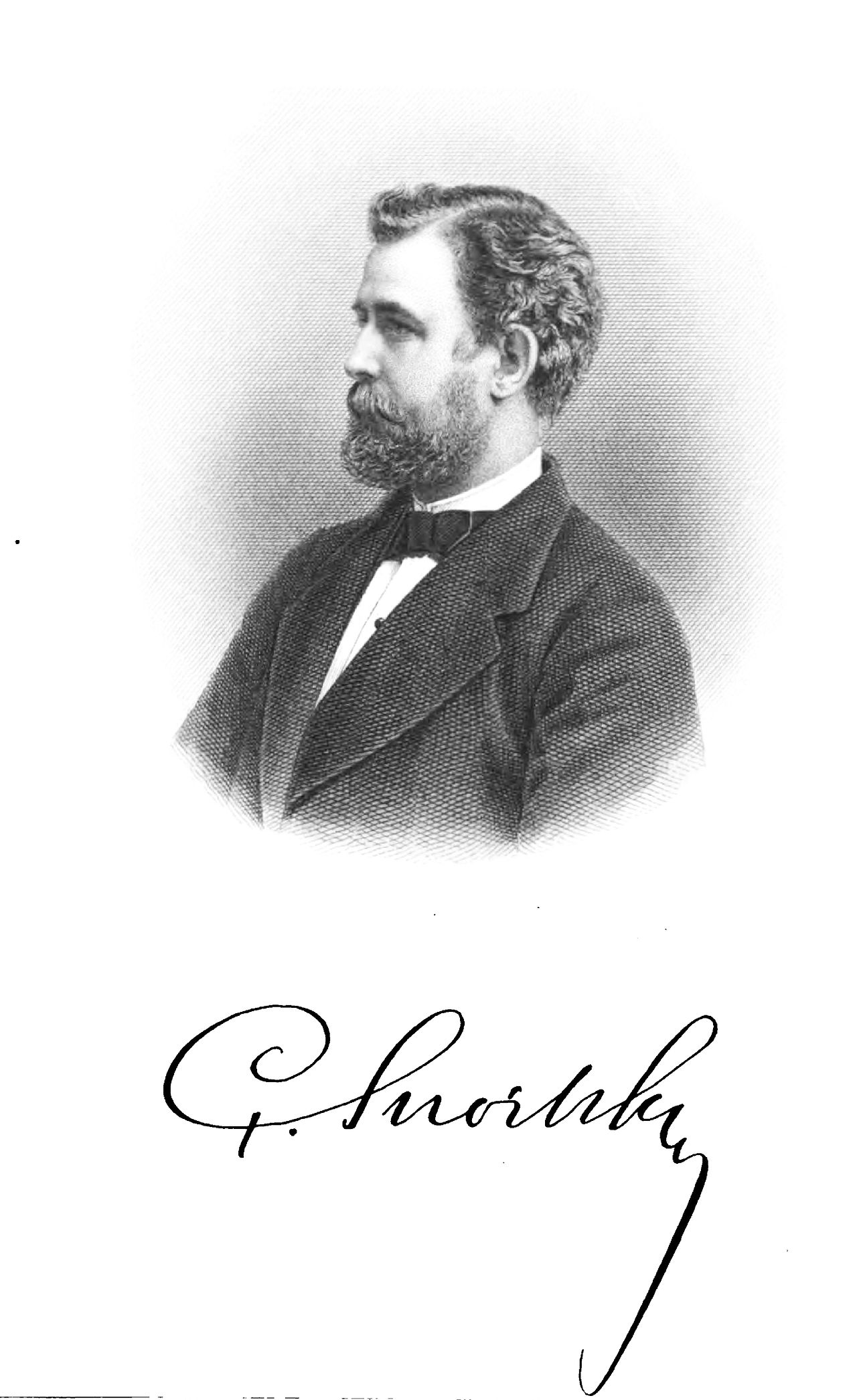
J. Wolf, Leipzig, Germany. · Literärt album. Första årgången (ed. Gustaf Meyer) (Stockholm 1877) · Public domain
- Full name
- Carl Johan Gustaf Snoilsky.
- Born
- 1841. · Klara Church Parish.
- Died
- 1903. · Hedvig Eleonora parish.
- Nationality
- Sweden.
- Occupation
- poet, librarian, writer, diplomat, archivist and draftsperson.
- Fields
- library science and Swedish poetry.
- Education
- Uppsala University.
- Known for
- Minnesteckningar och andra uppsatser, Hattar och mössor, Samlade dikter, Svenska bilder and Liten Karin.
- Languages
- Swedish.
VALÉORINE Encyclopedia
VALÉORINE documentary reading
Documentary summary
Illustration — Carl Snoilsky (1841–1903) Count Carl Johan Gustaf Snoilsky (8 September 1841 – 19 May 1903) was a Swedish diplomat and lyricist of probable Slovene descent. He was regarded as an early realist. And was a member of the Swedish Academy.
Admitted source layer · organised and presented by VALÉORINE
Reference Check
Propose documentary evidence for Carl Snoilsky. A contribution is never written directly as fact: identity, source, rights and evidence gates still decide.
Sign in to contribute
World of VALÉORINE
Documentary connections
Only confirmed graph relationships appear here. Images are shown only when their identity and reuse rights both pass the documentary gate.
Documentary evidence
Documentary basis
Authority files
wikidata · Q1040670 · wikipedia · Carl Snoilsky
In this article
Biography
Biography
His life and work influenced playwright Henrik Ibsen, particularly in Rosmersholm.
Carl Snoilsky studied at Uppsala University. The recorded working language is Swedish. The field of work recorded is library science and Swedish poetry. Positions recorded include chief librarian and seat 10 of the Swedish Academy. Works named in the authority record are Minnesteckningar och andra uppsatser, Hattar och mössor, Samlade dikter, Svenska bilder and Liten Karin. Work by Carl Snoilsky is recorded in the collections of Nationalmuseum.
Snoilsky was born in Stockholm to Sigrid (née Banér), a painter and countess, and Nils Snoilsky, a Justice and Chamberlain Count. He was educated at the Clara School and Stockholms lyceum and in 1860 became a student at the University of Uppsala. He was trained for diplomacy, which he quit for work at the Swedish Foreign Ministry. As early as 1861, under the pseudonym of Sven Tröst, he began to print poems, and he soon became the center of the literary society of the capital. In 1862 he published a collection of lyrics called Orchideer ("Orchids"). During 1864 and 1865 he was in Madrid and Paris on diplomatic missions. It was in 1869, when he first collected his Dikter under his own name, that Snoilsky took rank among the most eminent contemporary poets. His Sonnetter in 1871 increased his reputation. Then, for some years, Snoilsky abandoned poetry, and devoted himself to the work of the Foreign Office and to the study of numismatics. In 1876, however, he published a translation of the ballads of Goethe. Snoilsky had in 1876 been appointed keeper of the records (expeditionssekreterare) and head of the Foreign Ministry`s political department, in 1878 he was raised to deputy director (kansliråd), and succeeded Bishop Paul Genberg as one of the eighteen of the Swedish Academy. But in 1879 he resigned all his posts, and left Sweden abruptly for Florence with the Dowager Countess Ebba Piper, née Baroness Ruuth, whom he married in 1880. Snoilsky sent home in 1881 a volume of Nya Dikter ("New Poems"). Two other volumes of Dikter appeared in 1883 and 1887, and 1897; Savonarola, a poem, in 1883, and Hvita frun ("The White Lady") in 1885. In 1886, he collected his poems dealing with national subjects as Svenska bilder (2nd ed., 1895), which ranks as a Swedish classic. In 1891 he returned to Stockholm and was appointed principal librarian (överbibliotekarie) of the Royal Library. He died at Stockholm on May 19, 1903. His Samlade dikter were collected (Stockholm, 5 vols.) in 1903–1904. Regarding his origins, the slavist Alfred Jensen reported to the Slovenian poet Anton Aškerc that Snoilsky was of Slovene descent. Snoilsky said that his ancestor was a Protestant pastor Snoilshik from Znojile in Carniola who titled himself Labacus (from Ljubljana). The claim, which was popularised in Slovenia by the poet Anton Aškerc, has not been fully proven, but it is plausible. The name has been associated with the Carniolan protestant reformer Johann Snoilshik.
Evaluation
Evaluation
His poetry focused on themes of joy, liberty, and beauty, and in his lyrics, more than in most modern verse, with themes that emphasize youthful enthusiasm. His verse has been noted for its delicacy and melodiousness.
Places
Named by the record
Places
Only places the record itself states, plotted where the house gazetteer settles their coordinates. Nothing is inferred from a name or a nationality.
Klara Church Parish.
Birth place
Hedvig Eleonora parish.
Death place
Citations
References
Each reference names the institution holding it, so a reader may go to the document itself.
reference work
Secondary witnessreference work
Secondary witness
The Encyclopedia exists whether or not anything is for sale. Corrections are recorded rather than overwritten, and every version of this record is kept. Published 15 August 2026.
Elsewhere in Books
38,661 published records in this field, each with its sources named.
- Carl SchøyenAuthor
- Carl SeeligAuthor
- Carl SennhennAuthor
- Carl SigmanAuthor
- Carl SolomonAuthor
- Carl SpitzwegAuthor
- Carl SprengelAuthor
- Carl StålAuthor
Best supported in this field
For owners
Own a work by Carl Snoilsky?
A specialist will read what you send and tell you what the house can establish, what it cannot, and whether the object is suited to sale. There is no charge and no obligation. The object stays with you throughout; nothing is shipped to us unless it is arranged in writing beforehand.