
Carl Marcus Tuscher
Carl Marcus Tuscher (1 June 1705 in Nuremberg – 6 January 1751 in Copenhagen) was a German-born Danish polymath: portrait painter, printmaker, architect, and decorator of the Baroque period.
Also recorded as Marcus Tuscher · Carl Marcus Tüscher · Marcus Discher · Marcus Tüscher
Carl Marcus Tuscher
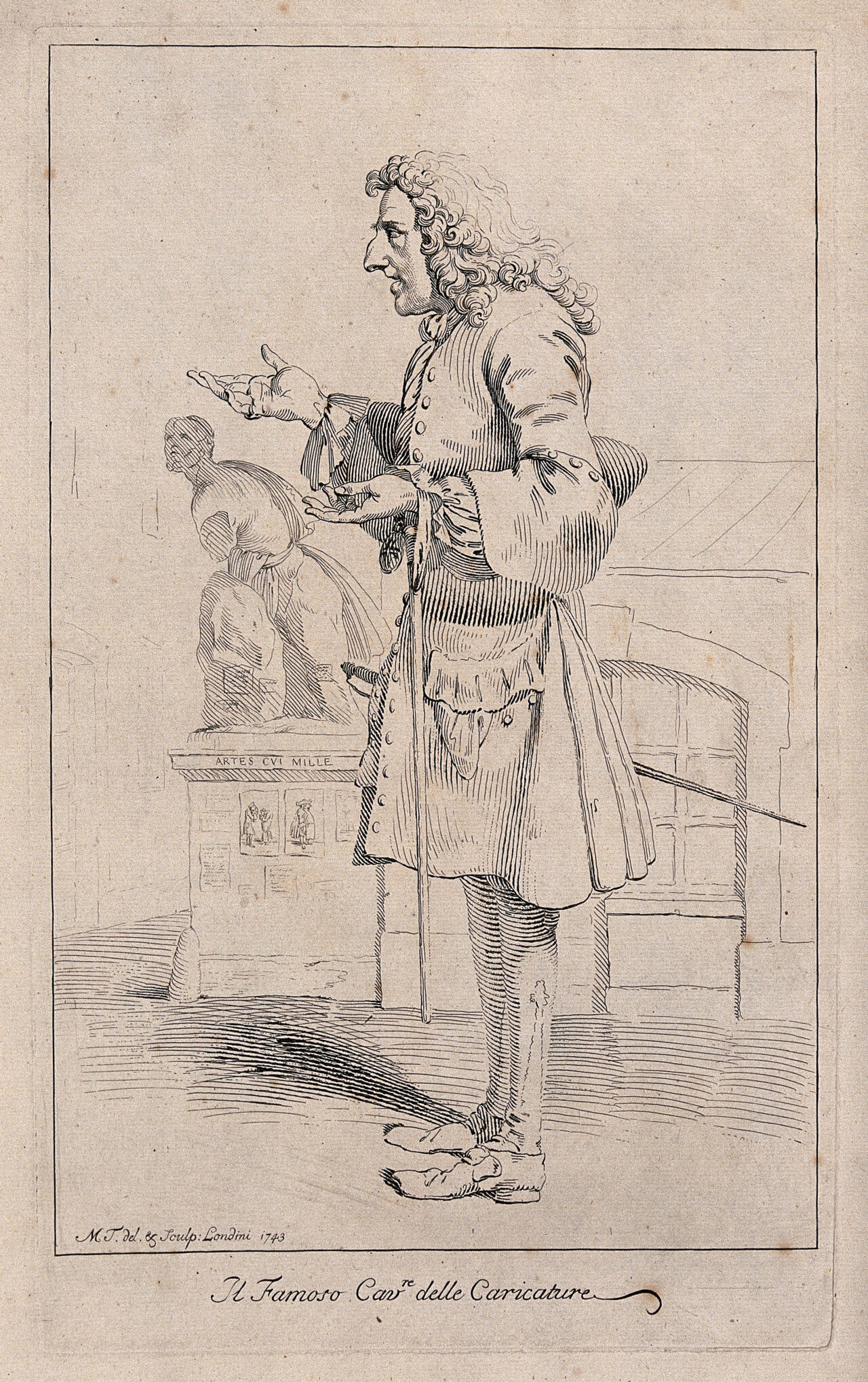
Carl Marcus Tuscher · Wellcome Collection, London · Wellcome Collection · Public Domain Mark
- Name
- Marcus Tuscher
- Born
- 1 June 1705
- Birthplace
- Nuremberg, Holy Roman Empire
- Died
- 6 January 1751
- Place of death
- Copenhagen, Kingdom of Denmark
- Field
- Printmaking, painting, architecture
- Training
- Johan Daniel Preisler
- Nationality
- Germany
- Occupation
- painter · architect
- Fields
- printmaking
- Languages
- German
VALÉORINE Encyclopedia
VALÉORINE documentary reading
Documentary summary
Carl Marcus Tuscher (1 June 1705 in Nuremberg – 6 January 1751 in Copenhagen) was a German-born Danish polymath: portrait painter, printmaker, architect, and decorator of the Baroque period.
Admitted source layer · organised and presented by VALÉORINE
Reference Check
Propose documentary evidence for Carl Marcus Tuscher. A contribution is never written directly as fact: identity, source, rights and evidence gates still decide.
Sign in to contribute
World of VALÉORINE
Documentary connections
Only confirmed graph relationships appear here. Images are shown only when their identity and reuse rights both pass the documentary gate.
Documentary evidence
Documentary basis
Authority files
wikidata · Q479806 · wikipedia · Carl Marcus Tuscher
In this article
Biography
Biography
The recorded working language is German. The field of work recorded is printmaking. Subjects and genres recorded for the work are portrait. Places of work recorded in the authority are Copenhagen. Work by Carl Marcus Tuscher is recorded in the collections of Nationalmuseum, Statens Museum for Kunst, National Portrait Gallery and Yale Center for British Art.
Key facts
Key facts
• Name — Marcus Tuscher • Born — 1 June 1705 • Birthplace — Nuremberg, Holy Roman Empire • Died — 6 January 1751 • Place of death — Copenhagen, Kingdom of Denmark • Field — Printmaking, painting, architecture • Training — Johan Daniel Preisler
Early life and education
Early life and education
Tuscher was born in the Free Imperial City of Nuremberg in 1705 to humble parents. His mother, Ursula Negelin, was single, while his father is said to have been Ferdinand Tuscher, who gave him his name. He was educated at Findelhaus and later as an apprentice to a painter, director of Nuremberg's Academy of Arts, Johan Daniel Preisler, who was the father of engraver Johan Martin Preisler. When his apprenticeship was over (1728), he had made considerable progress and was considered such a promising and accomplished artist that the city gave him a traveling scholarship to Rome, where in addition to studying oil painting, he studied architecture of the period, making drawings for several churches and palaces (his projects for church buildings earned him a Papal Knight's Cross). He was employed by Prussian antiquarian Baron Philipp von Stosch, whose collection contained over 10,000 cameos, intaglios, and antique glass pastes. Tuscher's pay for organizing the Baron's collection was extremely modest, but he profited greatly from his learned patron's guidance in the sciences. He also progressed significantly in his study of the classical languages during this period.
Italy, France and England, 17341743
Italy, France and England, 17341743
Stosch, who was also a British spy, for political reason had to flee from the Papal States to Florence in 1734, taking refuge under the tolerant rule of Gian Gastone de' Medici. Tuscher followed him to live in the grand-duchy. Still employed by v. Stosch for several years, he was also given tasks by the Grand Ducal court and executed a proposal for the façade of the church of S. Lorenzo. After visiting Naples he left Italy in 1741 for France, Holland and England, even though he was aware his scholarship actually demanded that he return to Nuremberg after graduation. In London he reunited with the Danish cartoonist and explorer, Captain Frederik Ludvig Norden, whom he had befriended in Florence. At the time, he was part of the German colony in the British capital, where he was assistant at a drawing academy, led by the goldsmith GM Moser. He painted a portrait of the family of instrument-maker Burkhardt Tschudi (1742, National Portrait Gallery (London)).
Denmark
Denmark
In November 1743 he moved to Copenhagen, where he was made court painter and royal architect invited by King Christian VI and had the counts Danneskiold-Samsøe as his benefactors. He got an apartment and studio at Christiansborg Palace. In Denmark, his first work was a sumptuous decoration for Admiralty College building at the arrival of Princess Louise of Great Britain. In 1748 he made a large plafond portrait of King Christian VI on horseback, surrounded by allegorical figures; it was destroyed when the castle burned in 1794. Many of his other works have been similarly destroyed by the ravages of time and fire. There is a portrait of King Christian VI with family (around 1744, Rosenborg) credited to Tuscher, but it is uncertain whether Tuscher himself made the work or if it was a copy made by JF Gerhard. Among his main surviving paintings are full portraits of Count Johan Ludvig Holstein and his brothers in the great hall at Ledreborg manor. • Illustration — Frederik V's monumental fountain proposal It was probably Tuscher who first proposed the idea of the octagonal square in Frederiksstaden, known today as the Amalienborg Palace Square, and he was the one who suggested a monument at the center. He drew a suggested plan (in Italian, amply illustrated), depicting a large fountain with Frederik V's statue. An equestrian statue of the King was completed in 1750 by J.-F.-J. Saly. Tuscher also made a floor plan for Amalienborg Square, which probably gave idea to Nicolai Eigtved, as it was done at the construction of the four palaces. The monument shows Tuscher's familiarity with the Italian Baroque art and a strong affinity with Bernini's fountains and sculpture sets in Rome. Stylistically, he remained faithful to the Italian baroque and was nicknamed the "Nordic Bernini". Tuscher married Sofie Wahl (ca. 1728-6 December 1798) on 15 May 1747 in Copenhagen. She was the daughter of fellow-painter Johann Salomon Wahl and Marie Sophie Davidson. The couple had a child, Caroline Fredericia Tuscher (4 January 1751 – 15 August 1809). Marcus Tuscher died after a long illness on 6 January 1751 under the reign of Frederik V and was buried at Vor Frelsers Kirke (Our Saviour's Church) in Copenhagen.
Life and career
Dated record
Life and career
The full dated record · 2 entries
1705
Carl Marcus Tuscher born at Nuremberg.
1751
Carl Marcus Tuscher died at Copenhagen.
Places
Named by the record
Places
Only places the record itself states, plotted where the house gazetteer settles their coordinates. Nothing is inferred from a name or a nationality.
Nuremberg.
Birth place
Copenhagen.
Death place
References
Citations
References
Each reference names the institution holding it, so a reader may go to the document itself.
reference work
Wikidata, structured authority record Q479806: Carl Marcus TuscherWikimedia Foundation
Secondary witnessreference work
Secondary witness
Further particulars
Held on the record
Further particulars
Open the remaining particulars
The authorities additionally record the headings Marcus Tuscher, Carl Marcus Tüscher, Marcus Discher, Marcus Tüscher and Karl Markus Tuscher. His recorded language was German. Recorded as painter and architect.
Identity and origins
Recognition and collections
Work by Carl Marcus Tuscher is
Nationalmuseum, Statens Museum for Kunst, National Portrait Gallery and Yale Center for British Art
George Michael Moser and His Wife Mary
1742
The Encyclopedia exists whether or not anything is for sale. Corrections are recorded rather than overwritten, and every version of this record is kept. Published 16 August 2026.
Elsewhere in Design
11,558 published records in this field, each with its sources named.
- Carl Ludvig EngelDesigner
- Carl Ludwig FranckDesigner
- Carl Ludwig WimmelDesigner
- Carl MalmstenDesigner
- Carl MastonDesigner
- Carl MillesDesigner
- Carl MöllerDesigner
- Carl MoritzDesigner
Best supported in this field
For owners
Own a work by Carl Marcus Tuscher?
A specialist will read what you send and tell you what the house can establish, what it cannot, and whether the object is suited to sale. There is no charge and no obligation. The object stays with you throughout; nothing is shipped to us unless it is arranged in writing beforehand.