
Bronisław Malinowski
Bronisław Kasper Malinowski (7 April 1884 – 16 May 1942) was a Polish anthropologist and ethnologist whose writings on ethnography, social theory, and field research have exerted a lasting influence on the discipline of anthropology. Malinowski was born and raised in what was part of the Austrian partition of Poland, Kraków. He graduated from King John III Sobieski 2nd High School.
Also recorded as Bronislaw Malinowski · Bronisław Kasper Malinowski · Bronislaw Kasper Malinowski · Bronislaw K. Malinowski
Bronisław Malinowski
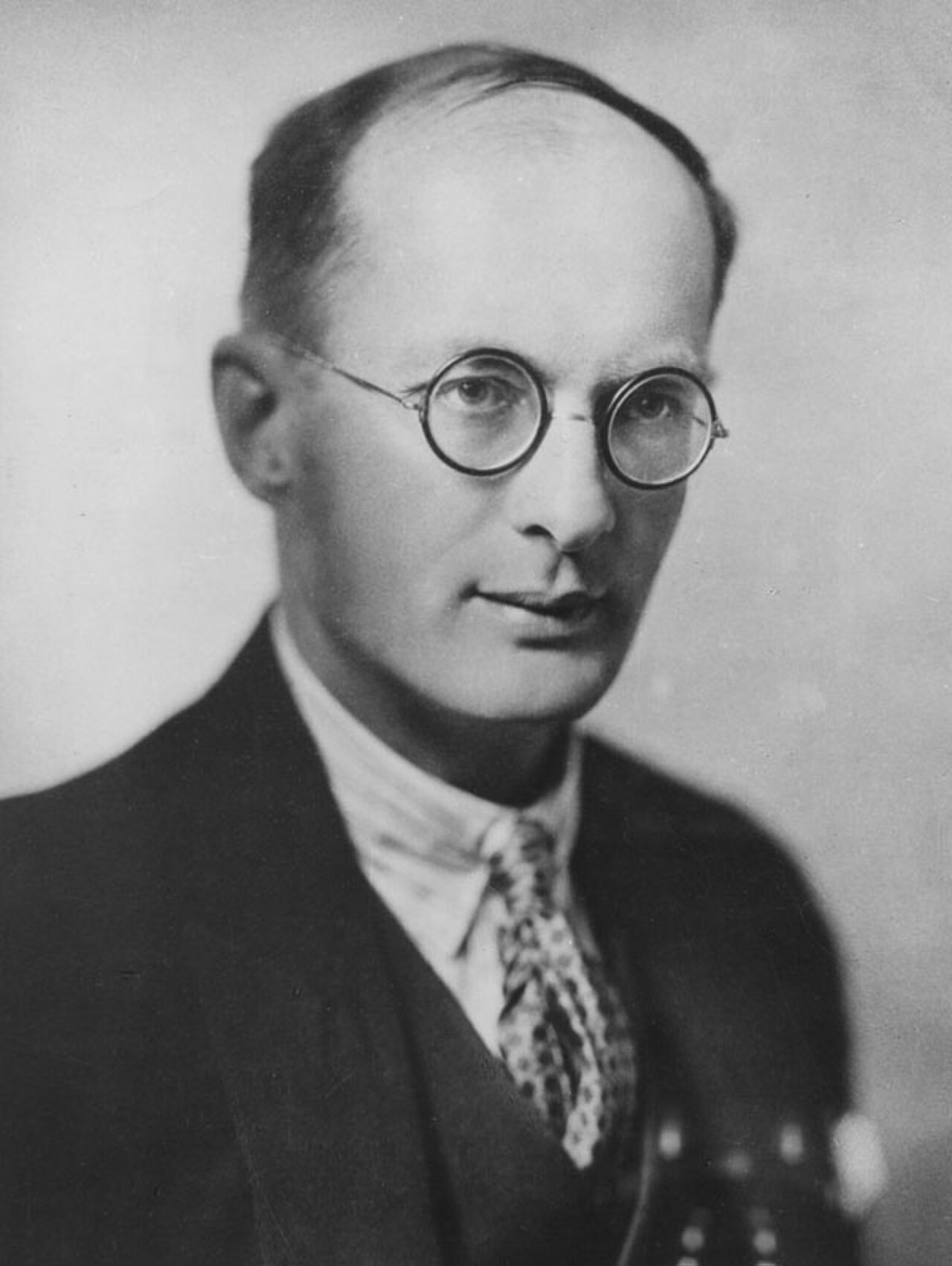
Flickr Commons · No known copyright restrictions
- Name
- Bronisław Malinowski
- Birth Name
- Bronisław Kasper Malinowski
- Born
- 7 April 1884
- Birthplace
- Kraków, Grand Duchy of Kraków, Austria-Hungary
- Died
- 16 May 1942
- Place of death
- New Haven, Connecticut, US
- Education
- * Jagiellonian University (PhD, 1908)
- Known for
- Father of social anthropology, popularizing fieldwork, participatory observation, ethnography and psychological functionalism
- Nationality
- Austria–Hungary · United Kingdom · Second Polish Republic
- Occupation
- anthropologist · university teacher · sociologist · ethnographer · photographer · ethnologist
- Fields
- cultural anthropology
- Teachers
- Wilhelm Wundt
VALÉORINE Encyclopedia
VALÉORINE documentary reading
Documentary summary
Bronisław Kasper Malinowski (7 April 1884 – 16 May 1942) was a Polish anthropologist and ethnologist whose writings on ethnography, social theory, and field research have exerted a lasting influence on the discipline of anthropology. Malinowski was born and raised in what was part of the Austrian partition of Poland, Kraków. He graduated from King John III Sobieski 2nd High School.
Admitted source layer · organised and presented by VALÉORINE
Reference Check
Propose documentary evidence for Bronisław Malinowski. A contribution is never written directly as fact: identity, source, rights and evidence gates still decide.
Sign in to contribute
World of VALÉORINE
Documentary connections
Only confirmed graph relationships appear here. Images are shown only when their identity and reuse rights both pass the documentary gate.
Documentary evidence
Documentary basis
Authority files
wikidata · Q184992 · wikipedia · Bronisław Malinowski
In this article
Biography
Biography
Malinowski worked between 1884 and 1942 across anthropologist, university teacher, sociologist, ethnographer and photographer and 2 further recorded occupations. This article rests on 3 catalogued photographs, 134 published texts, 3 digitised documents and 33 scholarly references drawn from named institutional registers. Every statement below returns to a source shown in the evidence panel; where the record is silent or divided, the article says so instead of resolving it.
Bronisław Malinowski studied at Jagiellonian University, Leipzig University and London School of Economics and Political Science. Training under Wilhelm Wundt is recorded. Fei Xiaotong, Jomo Kenyatta and Raymond Firth are recorded as having studied under Bronisław Malinowski. The recorded working language is English and Polish. The field of work recorded is cultural anthropology. Émile Durkheim is recorded as an influence. Employment is recorded with Cornell University, London School of Economics and Political Science and Yale University. Work by Bronisław Malinowski is recorded in the collections of Netherlands Photo Museum, National Museum of World Cultures and Wereldmuseum Rotterdam. Distinctions recorded are Messenger Lectures and Honorary Fellow of the Royal Society Te Apārangi.
Key facts
Key facts
• Name — Bronisław Malinowski • Birth Name — Bronisław Kasper Malinowski • Born — 7 April 1884 • Birthplace — Kraków, Grand Duchy of Kraków, Austria-Hungary • Died — 16 May 1942 • Place of death — New Haven, Connecticut, US • Citizenship — * Austria-Hungary (until 1918) • Poland (from 1918) • United Kingdom (from 1931) • Education — * Jagiellonian University (PhD, 1908) • London School of Economics (DSc, 1916) • Thesis Title — On the Principle of the Economy of Thought • Thesis Year — 1908 • Fields — * Anthropology • philosophy • economics • Workplaces — * London School of Economics • Yale University • Known for — Father of social anthropology, popularizing fieldwork, participatory observation, ethnography and psychological functionalism • Children — 3 • Father — Lucjan Malinowski
Early life
Early life
Malinowski, a scion of the Polish szlachta (nobility), was born on 7 April 1884 in Kraków, in the Austrian Partition of the former Polish-Lithuanian Commonwealth – then part of the Austro-Hungarian province known as the Kingdom of Galicia and Lodomeria. His father, Lucjan Malinowski, was a professor of Slavic philology at Jagiellonian University, and his mother was the daughter of a landowning family. As a child he was frail, often in ill health, but excelled academically. On 30 May 1902 he passed his matura examinations (with distinction) at the Jan III Sobieski Secondary School, and later that year began studying at the College of Philosophy of Kraków's Jagiellonian University, where he initially focused on mathematics and the physical sciences. While attending the university he became severely ill (possibly with tuberculosis), and while he recuperated his interest turned more toward the social sciences as he took courses in philosophy and education. In 1908 he received a doctorate in philosophy from Jagiellonian University; his thesis was titled On the Principle of the Economy of Thought. During his student years he became interested in travel abroad, and visited Finland, Italy, the Canary Islands, western Asia, and North Africa; some of those travels were at least partly motivated by health concerns. He also spent three semesters at the University of Leipzig (c. 1909–1910), where he studied under economist Karl Bücher and psychologist Wilhelm Wundt, and examined the works of anthropologist Heinrich Schurtz. After reading James Frazer's The Golden Bough, he decided to become an anthropologist. In 1910 he went to England, becoming a postgraduate student at the London School of Economics (LSE), where his mentors included C. G. Seligman and Edvard Westermarck.
Career
Career
In 1911 Malinowski published, in Polish, his first academic paper, "Totemizm i egzogamia" ('Totemism and Exogamy'), in Lud (journal). The following year he published his first English-language academic paper, and in 1913 his first book, The Family among the Australian Aborigines. In the same year he gave his first lectures at LSE, on topics related to psychology of religion and social psychology. • Illustration — Plate I photo, Malinowski's Argonauts of the Western Pacific (1922), showing a village and Malinowski's tent In June 1914 he departed London, travelling to Australia, as the first step in his expedition to Papua (in what would later become Papua New Guinea). The expedition was organised under the aegis of the British Association for the Advancement of Science (BAAS). Initially Malinowski's journey to Australia was supposed to last only about half a year, as he was mainly planning on attending a conference there, and travelled there in the capacity of secretary to Robert Ranulph Marett. Shortly afterward, his situation became complicated due to the outbreak of World War I. Being a subject of Austria-Hungary, which was at war with the United Kingdom, Malinowski risked internment. He nonetheless decided not to return to Europe, and after intervention by a number of his colleagues, including Marett as well as Alfred Cort Haddon, the Australian authorities allowed him to stay in the region and even provided him with new funding. His first field trip, lasting from August 1914 to March 1915, took him to the Toulon Island (Mailu Island) and the Woodlark Island. This field trip was described in his 1915 monograph The Natives of Mailu. Subsequently, he conducted research in the Trobriand Islands in the Melanesia region. He organized two larger expeditions during that time; from May 1915 to May 1916, and October 1917 to October 1918, in addition to several shorter excursions. It was during this period that he conducted his fieldwork on the Kula ring (a ceremonial exchange system conducted by the natives he studied) and advanced the practice of participant observation, which remains the hallmark of ethnographic research today. The ethnographic collection of artifacts from his expeditions is mostly held by the British Museum and the Melbourne Museum. During the breaks in between his expeditions he stayed in Melbourne, writing up his research, and publishing new articles, such as Baloma; the Spirits of the Dead in the Trobriand Islands. In 1916 he received the title of Doctor of Sciences. In 1919, he returned to Europe, staying at Tenerife for over a year before coming back to England in 1920 and finally to London in 1921. He resumed teaching at the LSE, accepting a position as a lecturer, declining a job offer from the Polish Jagiellonian University. The following year, his book Argonauts of the Western Pacific, often described as his masterpiece, was published. For the next two decades, he would establish the LSE as Europe's main centre of anthropology. In 1924 he was promoted to a reader, and in 1927, a full professor (foundation Professor of Social Anthropology). In 1930 he became a corresponding foreign member of the Polish Academy of Arts and Sciences. In 1933, he became a foreign member of the Royal Netherlands Academy of Arts and Sciences. In 1934 he travelled to British East Africa and Southern Africa, carrying out research among several tribes such as the Bemba, Kikuyu, Maragoli, Maasai and the Swazi people. The period 1926-1935 was the most productive time of his career, seeing the publications of many articles and several more books. Malinowski taught intermittently in the United States, which he first visited in 1926 to study the Hopi. In 1932-1933, Malinowski delivered the Messenger Lectures at Cornell University. When World War II broke out during one of his American visits, he stayed there. He became an outspoken critic of Nazi Germany, arguing that it posed a threat to civilization, and he repeatedly urged US citizens to abandon their neutrality; his books duly became banned in Germany. In 1941 he carried out field research among the Mexican peasants in Oaxaca. He took up a position at Yale University as a visiting professor, where he remained until his death. In 1942 he co-founded the Polish Institute of Arts and Sciences of America, of which he became its first president. In addition to his work in academia, he has been described as a "wittily entertaining pundit" who wrote and spoke in media of the day on various issues, such as religion and race relations, nationalism, totalitarianism, and war, as well as birth control and sex education. He was a supporter of the British Social Hygiene Council, Mass-Observation, and the International African Institute. Malinowski died in New Haven, Connecticut on 16 May 1942, aged 58, of a stroke while preparing to resume his fieldwork in Oaxaca. He was interred at Evergreen Cemetery in New Haven.
Works
Works
Except for a few works from the early 1910s, all of Malinowski's research was published in English. His first book, The Family among the Australian Aborigines, published in 1913, was based on materials he collected and wrote in the years 1909–1911. It was well-received not only by contemporary reviewers but also by scholars generations later. In 1963, in his foreword to its new edition, John Arundel Barnes called it an epochal work, and noted how it discredited the previously held theory that Australian Aborigines had no institution of family. Published in 1922, Argonauts of the Western Pacific, about the society and economy of Trobriand people who live on the small Kiriwana island chain northeast of the island of New Guinea, was widely regarded as a masterpiece and significantly boosted Malinowski's reputation in the world of academia. His later books included Crime and Custom in Savage Society (1926), Myth in Primitive Psychology (1926), Sex and Repression in Savage Society (1927), The Father in Primitive Psychology (1927), The Sexual Life of Savages in North-Western Melanesia (1929), and Coral Gardens and Their Magic (1935). The works tackled issues such as reciprocity and quasi-legal sanctions (in Crime...), psychoanalysis of ethnographic findings (in Sex and Repression...) courtship, sex, marriage, and the family (in The Sexual Life...), and perceived connections between agriculture and magic (in Coral Gardens...). Malinowski coined the phatic communion, referring to the usage of language not to convey meaning, but to bind the hearer to the speaker by a tie of social sentiment, in his essay "The Problem of Meaning in Primitive Languages", which appeared in 1923 as a supplementary contribution to The Meaning of Meaning by C. K. Ogden and I. A. Richards. • Illustration — Bronislaw Malinowski with natives on Trobriand Islands; between October 1917 and October 1918. His paper "Psycho-Analysis and Anthropology" (1924) is believed to be the first use of the term "nuclear family". He incorporated the paper into his Sex and Repression in Savage Society (1927). A number of his works were published posthumously or collected in anthologies: A Scientific Theory of Culture and Others Essays (1944), Freedom & Civilization (1944), The Dynamics of Culture Change (1945), Magic, Science and Religion and Other Essays (1948), Sex, Culture, and Myth (1962), the controversial A Diary in the Strict Sense of the Term (1967), and The Early Writings of Bronislaw Malinowski (1993). Malinowski's personal diary, along with several others written in Polish, was discovered in his Yale University office after his death. First published in 1967, covering the period of his fieldwork in 1914–1915 and 1917–1918 in New Guinea and the Trobriand Islands, it set off a storm of controversy and what Michael W. Young called a "moral crisis of the discipline". Writing in 1987, James Clifford called it "a crucial document for the history of anthropology". Many of Malinowski's works entered public domain in 2013.
Ethnography and fieldwork
Ethnography and fieldwork
Malinowski is considered one of anthropology's most skilled ethnographers, especially because of his highly methodical and well-theorised approach to the study of social systems. He is often referred to as the first researcher to bring anthropology "off the verandah" (a phrase that is also the name of André Singer's 1986 documentary about his work), that is, stressing the need for fieldwork enabling the researcher to experience the everyday life of his subjects along with them. Malinowski emphasized the importance of detailed participant observation and argued that anthropologists must have daily contact with their informants if they are to adequately record the "imponderabilia of everyday life" that are so important to understanding a different culture. He stated that the goal of the anthropologist, or ethnographer, is "to grasp the native's point of view, his relation to life, to realize his vision of his world". Because of the influence of his argument, he is sometimes credited, particularly in the United Kingdom, with having invented the field of ethnography. J. I. (Hans) Bakker says that Malinowski "wrote at least two of the 100 most significant ethnographies of all time". • Illustration — Four mwali, one of the two main kinds of objects in Melanesia's Kula ritual. Photo in Malinowski's Argonauts of the Western Pacific (1922). Malinowski in his pioneering research set up a tent in the middle of villages he studied, in which he lived for extended periods of time, weeks or months. His argument was shaped by his initial experiences as an anthropologist in the mid-1910s in Australia and Oceania, where during his first field trip he found himself grossly unprepared for it, due to not knowing the language of the people he set to study, nor being able to observe their daily customs sufficiently (during that initial trip, he was lodged with a local missionary and just made daily trips to the village, an endeavor which became increasingly difficult once he lost his translator). His pioneering decision to subsequently immerse himself in the life of the natives represents his solution to this problem, and was the message he addressed to new, young anthropologists, aiming to both improve their experience and allow them to produce better data. He advocated that stance from his very first publications, which were often harshly critical of those of his elders in the field of anthropology, who did most of their writing based on second-hand accounts. This could be seen in the relation between Frazer - an influential early anthropologist, nonetheless described as the classic armchair scholar - and Malinowski, which was complex; Frazer was one of Malinowski's mentors and supporters, and his work is credited with inspiring young Malinowski to become an anthropologist. At the same time, Malinowski was critical of Frazer from his early days, and it has been suggested that what he learned from Frazer was not "how to be an anthropologist" but "how not to do anthropology". Ian Jarvie wrote that many of Malinowski's writing represented an "attack" on Frazer's school of fieldwork, although James A. Boon suggested this conflict has been exaggerated. His early works also contributed to scientific study of sex, previously restricted due to Euro-American prudery and views on morality. Malinowski's interest in the topic has been attributed to his Slavic background having made him less concerned with "Anglo-Saxon puritanism".
Functionalism and other theories
Functionalism and other theories
Malinowski has been credited with originating, or being one of the main originators of, the school of social anthropology known as functionalism. It has been suggested that he was here inspired by the views of William James. In contrast to Alfred Radcliffe-Brown's structural functionalism, Malinowski's psychological functionalism held that culture functioned to meet the needs of individuals rather than the needs of society as a whole. He reasoned that when the needs of individuals, who comprise society, are met, then the needs of society are met. Malinowski understood basic needs as arising from the necessities of biology; and culture, as group cooperation – as a way of addressing the basic needs. Thus, biological needs include metabolism, reproduction, bodily comforts, safety, movement, growth, and health; and the corresponding cultural responses are a food supply, kinship, shelter, protection, activities, training, and hygiene. The development of Malinowski's theory of psychological functionalism was intimately tied to his focus on the importance of fieldwork: the anthropologist must, via empirical observation, investigate the functions of the customs observed in the present. To Malinowski, people's feelings and motives were crucial to understanding the way their society functioned, which he outlined as follows: Malinowski, in what is considered an important contribution to cross-cultural psychology, challenged the claim, to universality, of Freud's theory of the Oedipus complex. Malinowski initiated a cross-cultural approach in Sex and Repression in Savage Society (1927), demonstrating that specific psychological complexes are not universal. In 1920 he published his first scientific article on the Kula ring. In reference to the Kula ring, he later wrote: • Illustration — Malinowski with Trobriand Islanders, 1918 In these two passages, Malinowski anticipated the distinction between description and analysis, and between the views of actors and analysts. This distinction continues to inform anthropological methods and theories. His research on the Trobriand traditional economy, with its particular focus on magic and magicians, has been described as a substantial contribution to economic anthropology. Overall, Malinowski has been credited with "contesting existing stereotypes", such as dismissals of "primitive economics", through his study of the Kula ring, which demonstrated how economics was embedded in culture. He criticized the term "primitive superstition", demonstrating complex relations among magic, science, and religion. Likewise his study of sexuality undermined simplistic views of "primitive sexuality". Malinowski influenced African studies, serving as academic mentor to Jomo Kenyatta, the father and first president of modern Kenya. Malinowski wrote the introduction to Facing Mount Kenya, Kenyatta's ethnographic study of the Kikuyu. Many of Malinowski's students worked in Africa, likely due to his involvement with the International African Institute.
Teacher
Teacher
Malinowski is considered to have raised the next generation of anthropologists, particularly British. Many of his students adopted his functionalist approach. As a teacher, he preferred lectures to discussions; his seminars have been called "electrifying". He has been praised for his friendly and egalitarian attitude towards women students. Among his students were such future social scientists as Hilda Beemer Kuper, Edith Clarke, Kazimierz Dobrowolski, Raymond Firth, Meyer Fortes, Feliks Gross, Francis L. K. Hsu, Phyllis Kaberry, Jomo Kenyatta, Edmund Leach, Lucy Mair, Z. K. Matthews, Józef Obrębski, Maria Ossowska, Stanisław Ossowski, Ralph Piddington, Hortense Powdermaker, E. E. Evans-Pritchard, Margaret Read, Audrey Richards, Isaac Schapera, Andrzej Jan Waligórski, Camilla Wedgwood, Monica Wilson and Fei Xiaotong.
Personal life
Personal life
In his youth he was a close friend of Stanisław Ignacy Witkiewicz, a Polish artist; this friendship had much impact on Malinowski's early life. They had a romantic triangle with Zofia Romer née Dembowska. Throughout his life he gained the reputation of a philanderer. His other friends from his student times included Maria Czaplicka, the first female lecturer in anthropology at Oxford University. In 1919 Malinowski married Elsie Rosaline Masson, an Australian photographer, writer, and traveler (daughter of David Orme Masson), with whom he had three daughters: Józefa (born 1920), Wanda (born 1922), and Helena (born 1925). Elsie died in 1935, and in 1940 Malinowski married the English painter Valetta Swann. Malinowski's daughter Helena Malinowska Wayne wrote several articles on her father's life and a book about her parents. While Malinowski was brought up in the Catholic faith, after his mother's death he described himself as agnostic.
Early life and training
Early life and training
Bronisław Malinowski was born on 7 April 1884 in Kraków. Malinowski held the nationality of Austria–Hungary, United Kingdom and Second Polish Republic. Malinowski was educated at Jagiellonian University, Leipzig University, London School of Economics and Political Science and Jan III Sobieski High School in Kraków. Malinowski studied under Wilhelm Wundt. Married to: Elsie Masson and Valetta Swann. Recorded father: Lucjan Malinowski.
Career and working life
Career and working life
Malinowski worked as anthropologist, university teacher, sociologist and ethnographer, and the authority record catalogues a further 3 occupations under the same name, among them photographer, social anthropologist and ethnologist. Malinowski was active from 1915 to 1925. Malinowski was employed by Cornell University, London School of Economics and Political Science and Yale University. Malinowski worked in English and Polish.
Last years and death
Last years and death
Malinowski died on 16 May 1942 in New Haven. Malinowski is buried at Connecticut.
Life and career
Dated record
Life and career
Explore 1884–1944
The full dated record · 6 entries
1884
Bronisław Malinowski born.
1923
Bronislaw Malinowski (1884-1942), anthropologist, dated 1923, held by Wellcome Collection.
1932
Receives Messenger Lectures.
1942
Dies at New Haven.
1942
Bronisław Malinowski died.
1944
Freedom and civilization / by Bronislaw Malinowski., dated 1944, held by Wellcome Collection.
Places
Named by the record
Places
Only places the record itself states, plotted where the house gazetteer settles their coordinates. Nothing is inferred from a name or a nationality.
Bronisław Malinowski was born in Kraków.
Birthplace
Bronisław Malinowski died in New Haven.
Deathplace
Kraków.
Birth place
New Haven.
Death place
Selected publications
Selected publications
* * * * * * * * * * * * * * * *
Books and published writings, as catalogued, 1922–1944
Catalogued output
Books and published writings, as catalogued, 1922–1944
These are texts written by the subject, distinct both from writings about the subject and from printed editions of other people's work. The 1920s are the densest part of the run, with 3 titles, and that concentration is a fact about what the registers have catalogued rather than a judgement on the work itself. They belong to a run of 9 titles in all, from 1922 to 1944.
6 texts carry dates between 1922 and 1944
The run opens with Argonauts of the Western Pacific and closes with Freedom & Civilization
Argonauts of the Western Pacific
1922
The Father in Primitive Psychology
1927
The Sexual Life of Savages in North-Western Melanesia
1929
Coral Gardens and Their Magic
1935
A Scientific Theory of Culture and Other Essays
1944
Freedom & Civilization
1944
Books and published writings, as catalogued without a settled date
Catalogued output
Books and published writings, as catalogued without a settled date
3 further texts are catalogued under Malinowski's name without a date the collections agree on, which is why they are set apart from the dated run rather than placed in it.
Sex and Repression in Savage Society
Crime and Custom in Savage Society
The Family among the Australian Aborigines
Writings and published texts, 1760–1995
Catalogued output
Writings and published texts, 1760–1995
The economic aspect of the Intichiuma ceremonies
1912
Stone implements in eastern New Guinea
1900
The natives of Mailu
1915
Wierzenia pierwotne i formy ustroju społecznego
1915
Classificatory particles in the language of Kiriwina
1919
The primitive economics of the Trobriand Islanders
1921
The meaning of meaning
1923
Science, religion and reality, dated 1925. Crime and custom in savage society
1926
Das Geschlechtsleben der Wilden in Nordwest-Melanesien
1929
The Sexual Life of Savages
1929
La vie sexuelle des sauvages du nord-ouest de la Mélanésie
1930
The Frazer lectures, 1922-1932
1932
Culture
1933
The complete catalogue · 60
Stone implements in eastern New Guinea
1900
The economic aspect of the Intichiuma ceremonies
1912
The natives of Mailu
1915
Wierzenia pierwotne i formy ustroju społecznego
1915
Classificatory particles in the language of Kiriwina
1919
The primitive economics of the Trobriand Islanders
1921
The meaning of meaning
1923
Science, religion and reality, dated 1925. Crime and custom in savage society
1926
Das Geschlechtsleben der Wilden in Nordwest-Melanesien
1929
The Sexual Life of Savages
1929
La vie sexuelle des sauvages du nord-ouest de la Mélanésie
1930
The Frazer lectures, 1922-1932
1932
Culture
1933
Essays presented to C. Seligman
1934
The family
1934
Coral Gardens & Their Magic. A Study of the Methods of Tilling the Soil & Agricultural Rites in the Trobriand Islands (2 Vols.)
1935
(2 Vols.) A Study of the Methods of Tilling the Soil and of Agricultural Rites in the Trobriand Islands
1935
The scientific basis of applied anthropology
1940
Freedom and civilization
1944
A scientific theory of culture
1944
The dynamics of culture change
1945
Freedom and civilisation
1947
Eine wissenschaftliche Theorie der Kultur
1949
Crime and custom in savage society (International library of psychology, philosophy and sientific method)
1949
Crime and Custom in Savage Society [1951]
1951
Kultur und Freiheit
1951
Sex and repression in savage society (International library of psychology, philosophy, and scientific method)
1953
Magic, Science and Religion and Other Essays
1954
Marriage, Past and Present
1956
La economía de un sistema de mercados in México
1957
Szkice z teorii kultury
1958
Methods of study of culture contact in Africa
1959
Crime and custom in savage society (International library of psychology, philosophy and scientific method)
1959
Argonauts of tnhe western pacific
1960
Freedom and civilization (Midland book)
1960
Geschlechtstrieb und Verdrängung bei den Primitiven
1962
Family Among Australian Aborigines
1963
Les Agronautes du Pacifique occidental
1963
THE LANGUAGE OF MAGIC AND GARDENING, dated 1965. Soil-tilling and agricultural rites in the trobriand islands
1965
Coral Gardens and Their Magic Volume I
1965
A diary in the strict sense of the term
1967
Dziennik w ścisłym znaczeniu tego wyrazu
1967
Une théorie scientifique de la culture
1968
Trois essais sur la vie sociale des primitifs
1968
Freedom and Civilization (Paperback)
1969
Une théorie scientifique de la culture et autres essais
1970
Sex and Repression
1974
Interpretazioni sociologiche della letteratura
1974
Les Jardins de corail
1974
La sexualité et sa répression dans les sociétés primitives
1976
The foundations of faith and morals
1979
Dzieła
1980
Les argonautes du Pacifique occidental
1983
Zwyczaj i zbrodnia w społeczności dzikich; Życie seksualne dzikich w północno-zachodniej Melanezji
1984
Magia, ciencia y religión
1985
Journal d'ethnographe
1985
Sex, Culture, and Myth
1986
Crimen y costumbre en la sociedad salvaje
1986
Mit, magia, religia
1990
Giornale di un antropologo
1992
A further 3 recorded entries stand behind this article and are held on the record.
Writings and published texts, 2001–2022
Catalogued output
Writings and published texts, 2001–2022
The 2000s are the densest part of the run, with 24 titles, and that concentration is a fact about what the registers have catalogued rather than a judgement on the work itself. They belong to a run of 134 titles in all, from 1760 to 2022. A selection is set out below and the complete run may be opened beneath it.
The run opens with Sex and Repression in Savage Society (Routledge Classics) by Bronislaw Malinowski (2001-06-29) and closes with Magic, Science and Religion Hardcover
49 editions carry dates between 2001 and 2022
Wolnosc i cywilizacja T.10
2001
Argonauten des westlichen Pazifik
2001
Trois essais sur la vie sociale des Prim
2001
La sexualité et sa répression dans le sociétés primitives
2001
Dziennik - W Scislym Znaczeniu Tego Wyrazu
2002
Los Argonautas del Pacifico
2002
No Less Than Greatness
2002
Min ṿe-hadḥaḳah ba-ḥevrah ha-peraʾit
2004
A Diary in the Strictest Sense of the Term
2004
Magic, Science and Religion and Other Essays 1948
2004
Sexual Life of Savages
2006
The complete catalogue · 40
49 editions carry dates between 2001 and 2022
The run opens with Sex and Repression in Savage Society (Routledge Classics) by Bronislaw Malinowski (2001-06-29) and closes with Magic, Science and Religion Hardcover
Wolnosc i cywilizacja T.10
2001
Argonauten des westlichen Pazifik
2001
Trois essais sur la vie sociale des Prim
2001
La sexualité et sa répression dans le sociétés primitives
2001
Dziennik - W Scislym Znaczeniu Tego Wyrazu
2002
Los Argonautas del Pacifico
2002
No Less Than Greatness
2002
Min ṿe-hadḥaḳah ba-ḥevrah ha-peraʾit
2004
A Diary in the Strictest Sense of the Term
2004
Magic, Science and Religion and Other Essays 1948
2004
Sexual Life of Savages
2006
The Sexual Life of Savages in North-Western Melanesia; An Ethnographic Account of Courtship, Marriage and Family Life Among the Natives of the Trobriand Islands, British New Guinea
2006
Crime and Custom in Savage Society - an Anthropological Study of Savagery
2008
Magic Science and Religion
2010
The Father In Primitive Psychology And Myth In Primitive Psychology 1927
2010
Methods of Study of Culture Contact in Afric
2012
Scientific Theory of Culture and Other Essays
2012
Lunar and Seasonal Calendar in the Trobriands
2012
Father in Primitive Psychology
2012
Sex and Repression, in Savage Society (Classic Reprint)
2012
Myth in Primitive Psychology
2013
Diary in the Strictest Sense of the Term
2013
Teoria scientifica della cultura e altri saggi di antropologia
2013
Straty niemieckiej ludności Bobolic w latach 1939-1947
2014
Büyü, Bilim ve Din
2014
Yabanil Toplumda Suc ve Gelenek
2016
Wu shu ke xue zong jiao yu shen hua
2016
Freedom and Civilization (Routledge Revivals)
2016
Baloma, the Spirits of the Dead
2017
Sexual Life of Savages in North-Western Melanesia
2017
Creative Ecologies
2017
Vahsilerin Cinsel Yasami
2018
Bilimsel Bir Kultur Teorisi
2020
Family among the Australian Aborigines
2020
Freedom and Civilization; 1960
2021
Family among the Australian Aborigines; a Sociological Study
2021
Baloma
2022
Magic, Science and Religion Hardcover
2022
Writings and published texts without a settled date
Catalogued output
Writings and published texts without a settled date
1 further edition are catalogued under Malinowski's name without a date the collections agree on, which is why they are set apart from the dated run rather than placed in it.
The deadly issue
Teachers, pupils and circle
Teachers, pupils and circle
Influenced by: Émile Durkheim. Among those Malinowski taught were Fei Xiaotong, Jomo Kenyatta, Raymond Firth, E. Matthews, Meyer Fortes and Hortense Powdermaker.
Teaching
Teaching
Malinowski taught, and is recorded as university teacher. The work is documented at Cornell University, London School of Economics and Political Science, Yale University and Royal Netherlands Academy of Arts and Sciences.
Ideas and influences
Ideas and influences
Already a year after his death Clyde Kluckhohn described his influence in the field as significant if somewhat controversial, noting that to some he "was a major prophet", and that "no anthropologist has ever had so wide a popular audience". In 1974, Witold Armon described many of his works as "classics". Michael W. Young outlined Malinowski's major contributions as the comparative study of concepts of kinship, marriage, the family; magic, mythology, and religion. His work impacted numerous fields such as economic anthropology; comparative law; and pragmatic linguistic theory.
Legacy
Legacy
• Illustration — Portrait of Malinowski by Witkacy, 1930 The Malinowski Memorial Lecture, an annual anthropology lecture series at the LSE, inaugurated in 1959, is named after him. A student-led anthropology magazine at the LSE, The Argonaut, took its name from Malinowski's Argonauts of the Western Pacific. The Society for Applied Anthropology established the Bronislaw Malinowski Award in his honor in 1950. The award was awarded only until 1952, then went on hiatus until being re-established in 1973; it has been awarded annually since. Stanisław Ignacy Witkiewicz based a character, Duke of Nevermore, from his novel The 622 Downfalls of Bungo or The Demonic Woman (written in the 1910s but not published until 1972) on Malinowski. In 1957 Raymond Firth edited a book dedicated to the life and work of Malinowski, Man and Culture. Other works about Malinowski have appeared since, such as Michael W. Young's Malinowski: Odyssey of an Anthropologist, 1884–1920 (2004). He is portrayed by Tom Courtenay in the Young Indiana Jones TV movie Treasure of the Peacock's Eye. The life and work of Malinowski is the subject of a documentary film Tales From The Jungle: Malinowski aired by BBC Four channel in 2007.
Primary material
Documents and archives
scholarly publication
- Malinowski, Bronisław, Theory in Social and Cultural Anthropology: An Encyclopedia, 2013
Scholarly · Crossref registry · 2013
reference work
- “Bronisław Malinowski”, English Wikipedia, consulted as further reading
Reputable secondary · Wikipedia
institutional register
- Wikidata, structured authority record Q184992: Bronisław Malinowski
General reference · Wikimedia Foundation
Where the work is held
Honours and awards
2 honours stand against the name
Honorary Fellow of the Royal Society Te Apārangi
Messenger Lectures
1932
Literature
Further cited scholarship
4 scholarly and reference publications are cited here, each one identified by title and by the publication, publisher or institution that carried it, with its year where the register states one. The cited literature runs from 1999 to 2025, which is a measure of how long Malinowski has been a subject of scholarship rather than of how much has been written. The publications represented include Transfer. The Encyclopedia cites this literature and does not summarise the arguments of works it has not read in full. Malinowski's reading, writing, 1904–1914, The Early Writings of Bronisław Malinowski.
Reception Studies, Anglica
An International Journal of English Studies, Classical Approaches to the Study of Religion and The Early Writings of Bronisław Malinowski
Bronisław Malinowski and his reception in Romania, Transfer
Reception Studies, 2025
“Mixed identity of circumstances”: Bronisław Malinowski in Australia and Melanesia, Anglica
BRONISłAW MALINOWSKI, Classical Approaches to the Study of Religion, 1999
Authority records
Notes from the source article
Cited by Wikipedia
Notes from the source article
These works are cited by the source article, in its own numbering. They are recorded as its citations, not as sources VALÉORINE has verified.
- 1.Thapan, Meenakshi. Anthropological Journeys: Reflections on Fieldwork. Orient Blackswan. 1998. 978-81-250-1221-4.
- 2.Kwilecki, Andrzej. Tradycje socjologii polskiej. Ruch Prawniczy, Ekonomiczny i Socjologiczny. L. 2. 227–262. 1988.
- 3.McGee, R. Jon. Theory in Social and Cultural Anthropology: An Encyclopedia. SAGE Publications. 28 August 2013. 978-1-5063-1461-7.
- 4.Riper, A. Bowdoin Van. A Biographical Encyclopedia of Scientists and Inventors in American Film and TV since 1930. Scarecrow Press. 15 September 2011. 978-0-8108-8129-7.
- 5.Grolier Incorporated. The Encyclopedia Americana: M-Mexico City. 2001. 978-0-7172-0134-1.
- 6.Bronislaw Malinowski. Oxford Reference.
- 7.Athyal, Jesudas M. Religion in Southeast Asia: An Encyclopedia of Faiths and Cultures: An Encyclopedia of Faiths and Cultures. ABC-CLIO. 10 March 2015. 978-1-61069-250-2.
- 8.Murdock, George Peter. Bronislaw Malinowski. American Anthropologist. 45. 3. 441–451. 9 July 1943. 10.1525/aa.1943.45.3.02a00090.
- 9.Calverton, Victor Francis. Revival: The New Generation (1930): The Intimate Problems of Modern Parents and Children. Routledge. 20 April 2018. 978-1-351-33882-0.
- 10.Armon, Witold. Bronisław Malinowski. Polish Biographical Dictionary (Polski słownik biograficzny). National Film Archive - Audiovisual Institute. 19. 332–336. 1974.
- 11.Senft, Günter. 1997. Bronislaw Kasper Malinowski. in Verschueren, Ostman, Blommaert & Bulcaen (eds.) Handbook of Pragmatics Amsterdam/Philadelphia: John Benjamins http://pubman.mpdl.mpg.de/pubman/item/escidoc:64592:3/component/escidoc:468416/Book%20Chapter_Bronislaw%20Kasper%20Malinowski_1999.pdf
- 12.Kuklick, Henrika. New History of Anthropology. John Wiley & Sons. 9 February 2009. 978-0-470-76621-7.
- 13.Thornton, Robert J. The Early Writings of Bronislaw Malinowski. Cambridge University Press. 1 June 2006. 978-0-521-02646-8.
- 14.Malinowski, Bronislaw. Malinowski Among the Magi: The Natives of Mailu. Psychology Press. November 2001. 978-0-415-26244-6.
- 15.Moore, Jerry D. Visions of Culture: An Introduction to Anthropological Theories and Theorists. Rowman Altamira. 25 July 2008. 978-0-7591-1239-1.
- 16.Gaillard, Gerald. The Routledge Dictionary of Anthropologists. Routledge. 2004. 978-1-134-58580-9.
- 17.Malinowski, Bronislaw. Malinowski on Primitive Art: 'Art Notes and Suggestions' of 1921. Pacific Arts. 16. 1. 5–8. 2016. 1018-4252.
- 18.Senft, Gunter. The Trobriand Islanders' Ways of Speaking. Walter de Gruyter. 19 July 2010. 978-3-11-022799-4.
- 19.Weston, Gavin. Anthropological Controversies: The "Crimes" and Misdemeanors that Shaped a Discipline. Routledge. 11 May 2020. 978-0-429-86120-8.
- 20.Royal Netherlands Academy of Arts and Sciences. B.K. Malinowski (1884–1942).
- 21.Cipriani, Roberto. The Blackwell Encyclopedia of Sociology. John Wiley & Sons, Ltd. 2007-02-15. 978-1-4051-2433-1.
- 22.University and Messenger Lectures Archive. deanoffaculty.cornell.edu.
- 23.Srivastava, Vinay Kumar. Malinowski on Freedom & Civilization. Sociological Bulletin. 34. 1–2. 148–182. March 1985. 0038-0229.
- 24.Wayne, Helena. The Story of a Marriage: The Letters of Bronisław Malinowski and Elsie Masson. Routledge. 1995.
- 25.nuclear family. Oxford English Dictionary.
- 26.Skalník, Petr. Malinowski and Philosophy. Bérose. 2021.
- 27.Connolly, Brian. The Nuclear Family. Parapraxis.
- 28.Stanford University Press. A Diary in the Strict Sense of the Term | Bronislaw Malinowski With a New Introduction by Raymond Firth. www.sup.org. 1989. 9780804717076.
- 29.Thompson, Christina A. Anthropology's conrad: Malinowski in the tropics and what he read. The Journal of Pacific History. 30. 1. 53–75. 1 June 1995. 0022-3344.
- 30.Clifford, James. The Predicament of Culture: Twentieth-Century Ethnography, Literature, and Art. Harvard University Press. 18 May 1988. 978-0-674-69843-7.
- 31.Young, Michael W. Writing his Life through the Other: The Anthropology of Malinowski. The Public Domain Review. 2014.
- 32.Kluckhohn, Clyde. Bronislaw Malinowski 1884-1942. The Journal of American Folklore. 56. 221. 208–219. 1943. 0021-8715.
- 33.Young, Michael W. Malinowski, Bronislaw (1884–1942). The International Encyclopedia of Human Sexuality. American Cancer Society. 721–817. 2015. 978-1-118-89687-7.
- 34.Street, Alexander. Off the Verandah: Bronislaw Malinowski (1884-1942). Royal Anthropological Institute of Great Britain and Ireland. 2019.
- 35.Boon, James A. Other Tribes, Other Scribes: Symbolic Anthropology in the Comparative Study of Cultures, Histories, Religions and Texts. CUP Archive. 1982. 978-0-521-27197-4.
- 36.Richards, Diana. Naturalized Methods for Jurisprudence: A Constructive Account. 25 January 2010. 10.2139/ssrn.2000862.
- 37.Crabtree, Andrew. Doing Design Ethnography. Springer Science & Business Media. 5 March 2012. 978-1-4471-2726-0.
- 38.Okely, Judith. Anthropological Practice: Fieldwork and the Ethnographic Method. Routledge. 15 May 2020. 978-1-000-18055-8.
- 39.Argonauts of the Western Pacific, Dutton 1961 edition, p. 25.
- 40.Kelly, William W. The International Encyclopedia of Anthropology. Wiley. 1–6. 2018-10-05. 978-1-118-92439-6.
- 41.Melhuus, Marit. Ethnographic Practice in the Present. Berghahn Books. 2010. 978-1-84545-616-0.
- 42.Bakker, J. I. (Hans). The Encyclopedia of Cross-Cultural Psychology. Wiley. 835–838. 2013-09-24. 978-0-470-67126-9.
- 43.Gosden, Chris. Anthropology and Archaeology: A Changing Relationship. Routledge. 4 January 2002. 978-1-134-71621-0.
- 44.Gluckman, Max. Order and Rebellion in Tribal Africa. Routledge. 5 November 2013. 978-1-136-52849-1.
- 45.Burgess, Robert G. Field Research: A Sourcebook and Field Manual. Routledge. 2 September 2003. 978-1-134-89751-3.
- 46.Clifford, James. Routes: Travel and Translation in the Late Twentieth Century. Harvard University Press. 21 April 1997. 978-0-674-77960-0.
- 47.Langham, K. The Building of British Social Anthropology: W.H.R. Rivers and his Cambridge Disciples in The Development of Kinship Studies, 1898–1931. Springer Science & Business Media. 6 December 2012. 978-94-009-8464-6.
- 48.Frederiks, Martha. Critical Readings in the History of Christian Mission: Volume 4. BRILL. 22 June 2021. 978-90-04-39961-7.
- 49.Morton, John. Review of The Early Writings of Bronislaw Malinowski. The Journal of the Polynesian Society. 104. 2. 229–231. 1995. 0032-4000.
- 50.Jarvie, I. C. The Revolution in Anthropology. Routledge. 28 October 2013. 978-1-135-03466-5.
- 51.Scupin, Raymond. Cultural Anthropology: A Global Perspective. SAGE Publications. 2019-12-10. 978-1-5443-6311-0.
- 52.Green, Thomas A. Folklore: An Encyclopedia of Beliefs, Customs, Tales, Music, and Art. ABC-CLIO. 1997. 978-0-87436-986-1.
- 53.Hancock, Robert L. A. 6. Diamond Jenness's Arctic Ethnography and the Potential for a Canadian Anthropology. Histories of Anthropology Annual. 2. 1. 155–211. 2006. 1940-5138.
- 54.Frayser, Suzanne G. Studies in Human Sexuality: A Selected Guide. Libraries Unlimited. 1995. 978-1-56308-131-6.
- 55.Malinowski B. Kula: the Circulating Exchange of Valuables in the Archipelagoes of Eastern New Guinea. Man. 20. 97–105. 1920. 10.2307/2840430.
- 56.Argonauts of the Western Pacific, Dutton 1961 edition, p. 83-84.
- 57.Angioni, Giulio. Tre saggi sull'antropologia dell'età coloniale. S. F. Flaccovio. 1974.
- 58.Berman, Bruce. Ethnography as Politics, Politics as Ethnography: Kenyatta, Malinowski, and the Making of Facing Mount Kenya. Canadian Journal of African Studies. 30. 3. 313–344. 1996-01-01. 0008-3968.
- 59.Vincent, Joan. Functionalism revisited: An unsettled science. Reviews in Anthropology. 13. 4. 331–339. 1986-09-01. 0093-8157.
- 60.Fortes, Meyer. Religion, Morality and the Person: Essays on Tallensi Religion. CUP Archive. 1987-10-15. 978-0-521-33693-2.
- 61.Kim, Choong Soon. Anthropological Studies of Korea by Westerners. Institute for Modern Korean Studies, Yonsei University. 2000. 978-89-7141-505-4.
- 62.Kaberry, Phyllis Mary. 2004. 10.1093/ref:odnb/63299.
- 63.Free, Alex. Jomo Kenyatta, LSE and the independence of Kenya. Africa at LSE. 2017-10-11.
- 64.Tambiah, Stanley Jeyaraja. Edmund Leach: An Anthropological Life. Cambridge University Press. 2002-02-14. 978-0-521-52102-4.
- 65.White, T. R. H. Formative years : early influences on the career of Z.K. Matthews, (1916-1937). Historia. 37. 2. 70–85. 1992-11-01.
- 66.Borofsky, Robert. Developments in Polynesian Ethnology. University of Hawaii Press. 2019-03-31. 978-0-8248-8196-2.
- 67.The Magazine. The Argonaut.
- 68.Weaver, Thomas. The Dynamics of Applied Anthropology in the Twentieth Century: The Malinowski Award Papers. Society For Applied Anthropology. 2002.
- 69.Bronislaw Malinowski Award:: Society for Applied Anthropology. www.appliedanthro.org.
- 70.Mandelbaum, David. Man and Culture: An Evaluation of the Work of Malinowski . Raymond Firth. American Anthropologist. 61. 6. 1099–1103. December 1959. 0002-7294.
- 71.Kahn, Miriam. Michael W. Young. Malinowski: Odyssey of an Anthropologist 1884–1920. New Haven: Yale University Press, 2004. Comparative Studies in Society and History. 47. 3. 665–667. July 2005. 1475-2999.
- 72.Young Indiana Jones/Treasure of the Peacock's Eye. TVGuide.com.
- 73.Tales from the Jungle.
- 74.BAKER, STUART. Witkiewicz and Malinowski: The Pure Form of Magic, Science and Religion. The Polish Review. 18. 1/2. 77–93. 1973. 0032-2970.
- 75.Skalní, Peter. Bronisław Kasper Malinowski and Stanisław Ignacy Witkiewicz. Science versus art in the conceptualization of culture. Konteksty. 1–04. 52–65. 2000. 1230-6142.
- 76.Wełyczko, Paula. Uczta z Malinowskim i Witkacym. Niedopowiedzenie i namiętność w antropologii. Tematy Z Szewskiej. Errotyzm 2(16)/2015. 52–65. 2015. 1898-3901.
- 77.Kubica, Grazyna. A FORCIBLE VOICE OF DONNA QUERPIA. ZOFIA DEMBOWSKA'S LETTERS TO BRONISLAW MALINOWSKI (Dobitny glos Donny Querpii. Listy Zofii Dembowskiej do Bronislawa Malinowskiego). Pamiętnik Literacki. 4. 99. 185–229. 2008. 0031-0514.
- 78.Rivière, Peter. A History of Oxford Anthropology. Berghahn Books. October 2009. 978-1-84545-699-3.
- 79.Young, Michael W. Helena Paula Wayne Malinowska (1925–2018). Anthropology Today. 34. 4. 26–27. 2018. 1467-8322.
- 80.Helena Malinowska Wayne (17 May 1925 – 31 March 2018). MFEA - Malinowski Forum for Ethnography and Anthropology.
- 81.Wayne, Helena. Bronislaw Malinowski: The Influence of Various Women on His Life and Works. American Ethnologist. 12. 3. 529–540. 1985. 0094-0496.
Bibliography printed in the source article · 2
- Firth, Raymond. Man and culture: an evaluation of the work of Bronislaw Malinowski. Routledge. 1960.
- Vermeulen, Han F. & Frederico Delgado Rosa (eds.). 2022. "Before and After Malinowski: Alternative Views on the History of Anthropology [A Virtual Round Table at the Royal Anthropological Institute, London, 7 July 2022 "] (with the participation of Sophie Chevalier, Barbara Chambers Dawson, Thomas Hylland Eriksen, Michael Kraus, Adam Kuper, Herbert S. Lewis, Andrew Lyons, David Mills, David Shankland, James Urry, and Rosemary Lévy Zumwalt), BEROSE International Encyclopaedia of the Histories of Anthropology, Paris.
References
Citations
References
Each reference names the institution holding it, so a reader may go to the document itself.
scholarly publication
Malinowski, Bronisław, Theory in Social and Cultural Anthropology: An Encyclopedia, 2013Crossref registry
Institutional witnessreference work
Secondary witnessinstitutional register
Wikidata, structured authority record Q184992: Bronisław MalinowskiWikimedia Foundation
General reference
The Encyclopedia exists whether or not anything is for sale. Corrections are recorded rather than overwritten, and every version of this record is kept. Published 16 August 2026.
Elsewhere in Photography
11,392 published records in this field, each with its sources named.
- Brion GysinPhotographer
- Brita Sofia HesseliusPhotographer
- British Journal of PhotographyPhotographer
- Brittany NelsonPhotographer
- Brooke LaurenPhotographer
- Brooke ShadenPhotographer
- Brooklyn BeckhamPhotographer
- Bruce A. BaileyPhotographer
Best supported in this field
For owners
Own a work by Bronisław Malinowski?
A specialist will read what you send and tell you what the house can establish, what it cannot, and whether the object is suited to sale. There is no charge and no obligation. The object stays with you throughout; nothing is shipped to us unless it is arranged in writing beforehand.