
berth
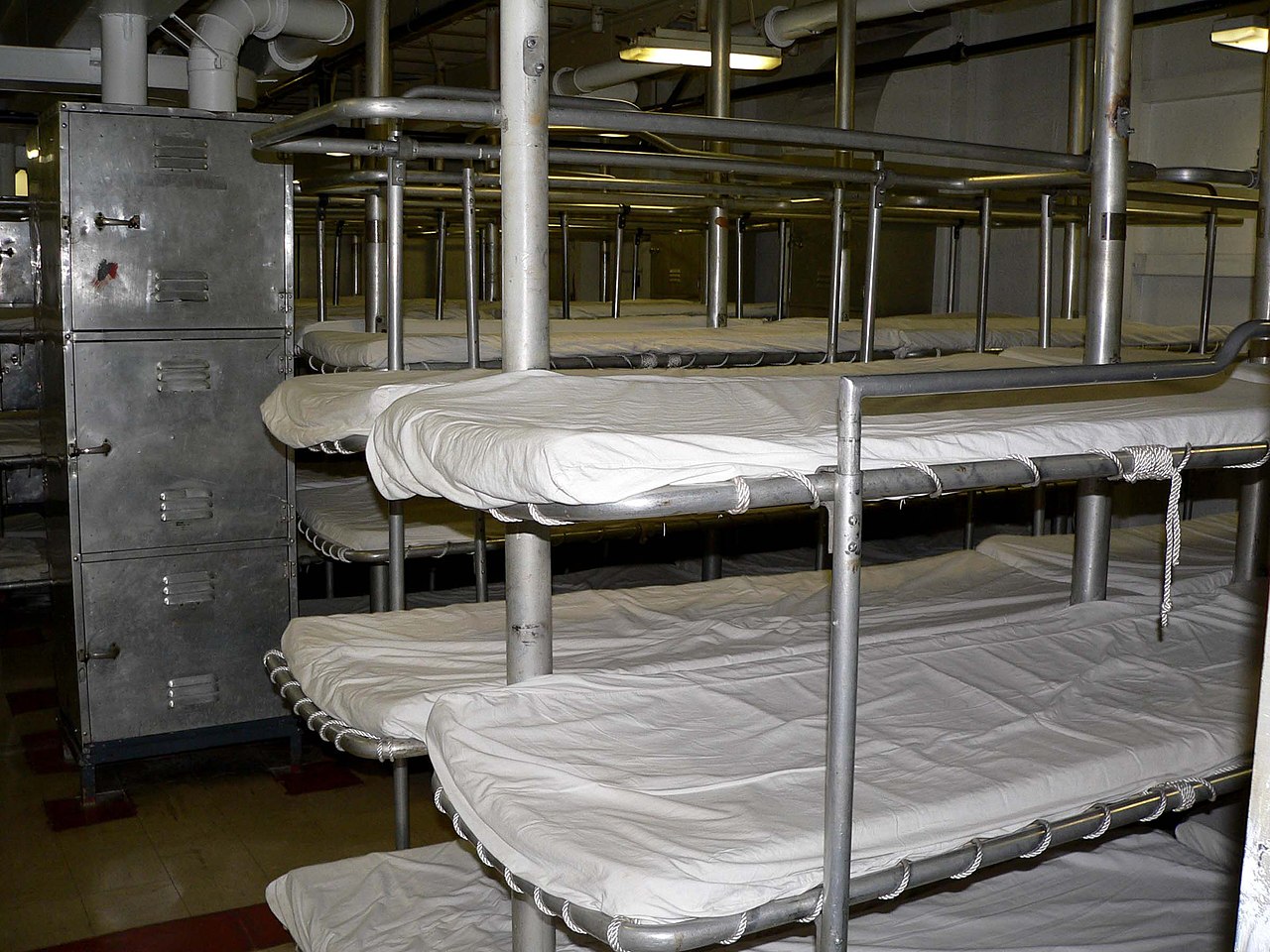
Illustration — A berth on a Royal Navy vessel A sleeping berth is a bed or sleeping accommodation on vehicles. Space accommodations have contributed to certain common design elements of berths.
berth
Stan Shebs · CC BY-SA 3.0
- Field
- bed
VALÉORINE Encyclopedia
VALÉORINE documentary reading
Documentary summary
Illustration — A berth on a Royal Navy vessel A sleeping berth is a bed or sleeping accommodation on vehicles. Space accommodations have contributed to certain common design elements of berths.
Admitted source layer · organised and presented by VALÉORINE
Note VALÉORINE
No house-authored Note is published until its assertions and sources pass the VALÉORINE evidence contract. The documentary article remains available in full while that enrichment is being consolidated.
Documentary enrichment in progress · no unsupported statement published
Reference Check
Propose documentary evidence for berth. A contribution is never written directly as fact: identity, source, rights and evidence gates still decide.
Sign in to contribute
World of VALÉORINE
Documentary connections
Only confirmed graph relationships appear here. Images are shown only when their identity and reuse rights both pass the documentary gate.
Documentary evidence
Evidence Panel
original value insufficient · checked 25 September 2026
- Identity
- resolved
- Independent source families
- 0
- Admitted assertions
- 0
- Open conflicts
- 0
Authority files
wikidata · Q1679791
In this article
Beds in boats or ships
Beds in boats or ships
• Illustration — A bed on a boat is sometimes known as a berth While beds on large ships are little different from those on shore, the lack of space on smaller yachts means that bunks must be fit in wherever possible. Some of these berths have specific names:
V-berth
V-berth
Frequently, yachts have a bed in the extreme forward end of the hull (usually in a separate cabin called the forepeak). Because of the shape of the hull, this bed is basically triangular, though most also have a triangular notch cut out of the middle of the aft end, splitting it partially into two separate beds and making it more of a V shape, hence the name. This notch can usually be filled in with a detachable board and cushion, creating something more like a double bed (though with drastically reduced space for the feet; wide is typical). The term "V-berth" is not widely used in the UK; instead, the cabin as a whole (the forepeak) is usually referred to.
Settee berth
Settee berth
The archetypal layout for a small yacht has seats running down both sides of the cabin, with a table in the middle. At night, these seats can usually be used as beds. Because the ideal ergonomic distance between a seat-back and its front edge (back of the knee) makes for a rather narrow bed, good settee berths will have a system for moving the back of the settee out of the way; this can reveal a surprisingly wide bunk, often running right out to the hull side underneath the lockers. If they are to be used at sea, settee berths must have lee-cloths to prevent the user falling out of bed. Sometimes the settee forms part of a double bed for use in harbor, often using detachable pieces of the table and extra cushions. Such beds are not usually referred to as settee berths. • Illustration — Sailors in their bunks aboard John C. Stennis
Pilot berth
Pilot berth
A narrow berth high up in the side of the cabin, the pilot berth is usually above and behind the back of the settee and right up under the deck. Sometimes the side of this bunk is "walled in" up to the sleeper's chest; there may even be small shelves or lockers on the partition so that the bed is "behind the furniture". The pilot berth is so called because originally they were so small and uncomfortable that nobody slept in them most of the time; only the pilot would be offered it if it were necessary to spend a night aboard the yacht.
Quarter berth
Quarter berth
• Illustration — Quarter berth left of the companionway on an Albin Cirrus This is a single bunk tucked under the cockpit, usually found in smaller boats where there is not room for a cabin in this location.
Pipe berth
Pipe berth
A pipe berth is a canvas cloth laced to a perimeter frame made of pipe. Easily stored due to its flat shape, the pipe berth is often suspended on ropes or fits into brackets when in use. The canvas dries more easily than a mattress.
Root berth
Root berth
A root berth is like a pipe berth but with the pipes on only the long sides. Root berths easily roll up for storage. Some use heavy wooden dowels instead of pipes, again fitting into brackets when in use. Some boats provide multiple bracket options so the canvas can be pulled tight like in a pipe berth, or left looser for a more hammock-like berth, helpful in heeling boats or heavy seas.
Lee cloths
Lee cloths
Lee cloths are sheets of canvas or other fabric attached to the open side of the bunk (very few are open all round) and usually tucked under the mattress during the day or when sleeping in harbour. The lee cloth keeps the sleeping person in the bunk from falling out when the boat heels during sailing or rough weather.
Berths in trains
Berths in trains
Long-distance trains running at night usually have sleeping compartments with sleeping berths. In the case of compartments with two berths, one is on top of the other in a double-bunk arrangement. These beds (the lower bed in a double-bunk arrangement) are usually designed in conjunction with seats which occupy the same space, and each can be folded away when the other is in use. Sleeper trains are common, especially in Europe, India and China. Sleeper trains usually consist of single or double-berth compartments, as well as couchette, which have four or six berths (consisting of a bottom, middle and top bunk on each side of the compartment).
Open section berths
Open section berths
• Illustration — Pullman porter making an upper berth aboard the B&O Capitol Limited bound for Chicago These berths are clustered in compartments, contrasting with the berths in the open sections of Pullman cars in the United States, common until the 1950s. In these cars, passengers face each other in facing seats during the day. Porters pull down the upper berth and bring the lower seats together to create the lower berth. All of these berths face the aisle running down the center of the sleeping car. Each berth has a curtain for privacy away from the aisle.
Berths in air transportation
Berths in air transportation
In the early 1930s, American Airlines offered on its Curtiss Condor 12 sleeping berths, and by the time of the Boeing 377 Stratocruiser, Air France, and British Overseas Airways Corporation were offering respectively the Parisian Special from Paris-New York on Lockheed Strainers, and Monarch Service on Stratocruisers with lower deck lounges and sleeping berths from London-Montreal.
Berths in long-distance trucks
Berths in long-distance trucks
Long-haul truckers sleep in berths known as sleeper cabs contained within their trucks. The sleeper-berth's size and location is typically regulated.
Notes from the source article
Cited by Wikipedia
Notes from the source article
These works are cited by the source article, in its own numbering. They are recorded as its citations, not as sources VALÉORINE has verified.
- 1.Young, Claiborne. Power Cruising: The Complete Guide to Selecting, Outfitting, and Maintaining Your Power Boat. Pelican Publishing. 50–. 1999. 978-1-4556-1064-8.
- 2.Marshall, Roger. The Complete Guide to Choosing a Cruising Sailboat. McGraw Hill Professional. 21 May 1999. 978-0-07-041998-8.
- 3.Dix, Dudley. South Atlantic Capsize. Lulu.com. 92–. 30 April 2015. 978-1-329-07233-6.
- 4.Williams, China. Thailand. Lonely Planet. 769–. 2009. 978-1-74220-385-0.
- 5.Dallen, Timothy. Tourism and the Lodging Sector. Routledge. 202–. 26 October 2009. 978-1-136-43398-6.
- 6.DIANE Publishing. Truck parking areas. 6–. 2000. 978-1-4289-9649-6.
References
Citations
References
Each reference names the institution holding it, so a reader may go to the document itself.
reference work
Partially resolved
The Encyclopedia exists whether or not anything is for sale. Corrections are recorded rather than overwritten, and every version of this record is kept. Published 14 August 2026.
Elsewhere in Furniture
924 published records in this field, each with its sources named.
- benchTerminology
- Bench Around the LakeTerminology
- bench seatTerminology
- BergèreTerminology
- Beyond Junior Y ChairTerminology
- bicycle lockerTerminology
- bicycle parking stationTerminology
- bicycle saddleTerminology
Best supported in this field
For owners
Own an object connected with berth?
A specialist will read what you send and tell you what the house can establish, what it cannot, and whether the object is suited to sale. There is no charge and no obligation. The object stays with you throughout; nothing is shipped to us unless it is arranged in writing beforehand.