
Barbara
Monique Andrée Serf (9 June 1930 – 24 November 1997), known as Barbara, was a French singer. She has been described as "one of the greatest voices in French song". She took her stage name from her grandmother, Varvara Brodsky, a native of Odesa, Ukraine.
Also recorded as Barbara Brodi · Andrée Olga · Monique Andrée Serf
Barbara

Jack de Nijs for Anefo Nationaal Archief, Den Haag, Rijksfotoarchief: Fotocollectie Algemeen Nederlands Fotopersbureau (ANEFO), 1945-1989 - negatiefstroken zwart/wit, nummer toegang 2.24.01.05, bestan · Anefo Nationaal Archief · CC0
- Name
- Barbara
- Birth Name
- Monique Andrée Serf
- Born
- 9 June 1930
- Birthplace
- Paris, France
- Died
- 24 November 1997 (aged 67)
- Place of death
- Neuilly-sur-Seine, France
- Occupation
- * Singer-songwriter
- Nationality
- France
- Fields
- chanson
VALÉORINE Encyclopedia
VALÉORINE documentary reading
Documentary summary
Monique Andrée Serf (9 June 1930 – 24 November 1997), known as Barbara, was a French singer. She has been described as "one of the greatest voices in French song". She took her stage name from her grandmother, Varvara Brodsky, a native of Odesa, Ukraine.
Admitted source layer · organised and presented by VALÉORINE
Note VALÉORINE
No house-authored Note is published until its assertions and sources pass the VALÉORINE evidence contract. The documentary article remains available in full while that enrichment is being consolidated.
Documentary enrichment in progress · no unsupported statement published
Reference Check
Propose documentary evidence for Barbara. A contribution is never written directly as fact: identity, source, rights and evidence gates still decide.
Sign in to contribute
World of VALÉORINE
Documentary connections
Only confirmed graph relationships appear here. Images are shown only when their identity and reuse rights both pass the documentary gate.
Documentary evidence
Evidence Panel
not yet certified
- Identity
- resolved
- Independent source families
- 0
- Admitted assertions
- 0
- Open conflicts
- 0
Authority files
wikidata · Q1804
In this article
Biography
Biography
Barbara worked between 1930 and 1997 across film actor, singer-songwriter, singer, poet and recording artist and 5 further recorded occupations. The registers place that work in chanson. This article rests on 106 catalogued compositions, 25 published texts, 106 issued recordings and 59 scholarly references drawn from named institutional registers. Every statement below returns to a source shown in the evidence panel; where the record is silent or divided, the article says so instead of resolving it.
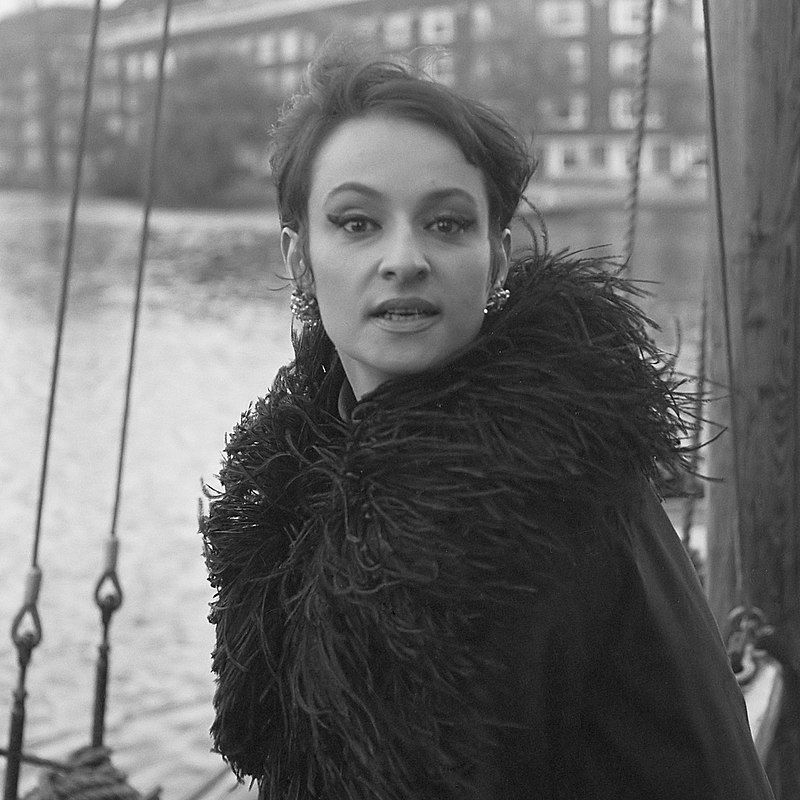
Franse chansonnière Barbara in Amsterdam 19 oktober 1965
Ron Kroon / Anefo · Nationaal Archief
Key facts
Key facts
• Name — Barbara • Birth Name — Monique Andrée Serf • Alias — La Chanteuse de minuit ('the midnight singer') La Dame en noir ('the lady in black') • Born — 9 June 1930 • Birthplace — Paris, France • Died — 24 November 1997 (aged 67) • Place of death — Neuilly-sur-Seine, France • Instrument — * Vocals • piano • Genre — * Chanson • French pop • Occupation — * Singer-songwriter • actress • Years Active — 1958–1996 • Label — Universal Music Group
Early life
Early life
Born on Rue Brochant in Paris to a Jewish family. Her father, Jacques Serf (1904–1959), was a leather salesmen of Alsatian origin and her mother, Ester Brodsky (1905–1967), was a civil servant from Tiraspol. She was the second of four children: Jean (born 1928), Régine (born 1938), and Claude (born 1943). Barbara lived in northwestern Paris as a child. She then lived in Roanne starting in 1938, and in Tarbes starting in 1941. Barbara was 13 years old when she went into hiding during the German occupation of France during World War II. Her family was hidden by the family of conductor Jean-Paul Penin from 1943 to 1945, first in Préaux and then in Saint-Marcellin. After the war ended, Barbara's family came back to Paris in 1946, and settled on Rue Vitruve in the 20th arrondissement. Her childhood dream was to become a pianist, but a problem with her hand made such a career impossible. To console her, her parents agreed to pay for singing lessons. A neighbourhood music professor, who heard her sing, took an interest in helping her develop her talents. She was given vocal lessons and taught to minimally play the piano; eventually she enrolled at the École Supérieure de Musique in 1947. Money was a problem and she gave up her musical studies in 1948. She was first recruited at the Théâtre Mogador, before a stint in Belgium, where she performed under the stage name Barbara Brodi. Late 1951, she returned to Paris to audition at La Fontaine des Quatre Saisons, a popular cabaret in the 7th arrondissement. However, as she failed to become a permanent cast member, she returned to Brussels. In 1955, she returned to Paris; with more luck, she began to sing at various cabarets throughout the capital, with a growing audience. She was deeply scarred by the war and her family's plight. The feelings of emptiness experienced during childhood showed in her songs, particularly "Mon Enfance". She said in her uncompleted autobiography, Il était un piano noir (assembled from notes found after her death), that her father sexually abused her when she was 10 and she hated him for that. He later abandoned the family.
Early career
Early career
• Illustration — The New York Times portrait of Barbara by Reginald Gray A tall person, Barbara dressed in black as she sang melancholy songs of lost love. From 1950 to 1951, after her father's desertion of her family, she lived in Brussels, where she became part of an active artistic community, before visiting Charleroi, where she befriended many artists. Her painter and writer friends took over an old house, converting it into workshops and a concert hall with a piano where she performed the songs of Édith Piaf, Juliette Gréco and Germaine Montero. However, her career evolved slowly and she struggled constantly to eke out a living. Returning to Paris, she met Jacques Brel and became a lifelong friend, singing many of his songs. Later she met Georges Brassens, whose songs she began to use in her act and to record on her first album. In the 1950s, she sang at some of the smaller clubs and began building a fan base, particularly with the young students from the Latin Quarter. In 1957, she went back to Brussels to record her first single, but it was not until 1961 that she got a real break when she sang at the Bobino Music-Hall in Montparnasse. Dressed in a long black robe, she gave a haunting performance, but the Parisian critics said she lacked naturalness and was stiff and formal in her presentation. She continued to perform at small clubs, and two years later at the Théâtre des Capucines she succeeded with the audience and critics alike, singing new material she had written herself. From that point on, her career blossomed and she signed a major recording contract in 1964 with Philips Records.
Middle years
Middle years
She returned to Bobino in 1964 for several sold-out performances. She performed at the Paris Olympia and other important venues in France, becoming one of her country's most beloved stars. In 1964, she released the album Barbara chante Barbara, which became a critical and financial success, winning in 1965 the Grand Prix du Disque of the Charles Cros Academy. At the award ceremony, Barbara tore her award into several pieces, giving a piece to each of her technicians as a sign of her gratitude.
Acting
Acting
In 1969, Moustaki wrote the theme song "Moi, je me balance" for the film La fiancée du pirate that Barbara sings. She announced that she would limit her concert singing, and in 1970 she made her acting début in the stage play Madame that proved to be a commercial flop. In 1971, she co-starred with Jacques Brel in a film he directed titled Franz. Two years later she starred in L'Oiseau rare directed by Jean-Claude Brialy. Her final film role came in 1975 in Je suis né à Venise by choreographer Maurice Béjart. • Illustration — Allée Barbara in Paris
Later years and death
Later years and death
In the 1970s, Barbara made appearances on television variety shows with stars such as Johnny Hallyday and a tour of Japan, Canada, Belgium, Israel, the Netherlands and Switzerland. Through the 1980s, she continued to tour and to write songs; her album Seule was one of France's top grossing releases of 1981. The next year she was awarded the Grand Prix du Disque in recognition of her contribution to French culture. She developed a close working relationship with rising film star Gérard Depardieu and his wife Élisabeth, collaborating on songs for film and records. In 1986, she went to New York City to perform on piano at the Metropolitan Opera with Mikhail Baryshnikov in a song and dance ballet presentation. She co-wrote the music for the stage play Lily Passion with Luc Plamondon, in which she co-starred with Depardieu. It told the story of a killer who murders someone each time he hears her sing. In the latter part of the 1980s, she became active in the fight against AIDS. She recorded SID'Amour à mort and gave out condoms at performances. In 1988 the government of France awarded her the Legion of Honour. Health problems impeded her performing and she began to devote time to the writing of her memoirs. However, she recorded another successful album in 1996 before she died of respiratory problems in Neuilly-sur-Seine (a suburb of Paris), on 24 November 1997. She was interred in the family grave at the Cimetière de Bagneux in southwest Paris. The Paris Métro station Barbara, named in her honour and situated near her gravesite, was opened on 13 January 2022, on a southern extension of Line 4.
Personal life
Personal life
In October 1953, she married Claude John Luc Sluys, a Belgian law student, but they separated in 1956. She wrote many very personal songs, including "Nantes" about her father and "Une petite cantate", which was dedicated to her friend Liliane Benelli, who had died in a car accident earlier in 1965. Later in life, she wrote a song to her public – "Ma plus belle histoire d'amour" – and another about her musicians – "Mes hommes".
Albums
Albums
Philips Records except where noted • 1959: Barbara à l'Écluse (La Voix de son maître) • 1960: Barbara chante Brassens (Odeon) • 1961: Barbara chante Jacques Brel (Odeon) • 1964: Dis, quand reviendras-tu? (CBS) • 1964: Barbara chante Barbara • 1965: Barbara (N°2) • 1967: Barbara Singt Barbara • 1967: Barbara (Ma plus belle histoire d'amour) • 1967: Bobino 1967 • 1968: Le Soleil noir • 1969: Une soirée avec Barbara • 1970: Madame • 1970: L'aigle noir • 1972: La fleur d'amour • 1972: Amours incestueuses • 1973: La Louve • 1974: Enregistrement public au Théâtre Des Variétés • 1978: Enregistrement public à L'Olympia (Les insomnies) • 1981: Seule • 1981: Récital "Pantin 81" • 1986: Lily Passion (with Gérard Depardieu) • 1987: Châtelet 87 • 1994: Châtelet 93 • 1996: Barbara
Singles
Singles
• "L'Aigle noir" • "Göttingen" • "Mon enfance"
Filmography
Filmography
• 1955: Le Toubib, médecin du gang • 1971: Franz • 1973: L'Oiseau rare as singer Alexandra Blitz-Balfour • 1975: Je suis né à Venise by Maurice Béjart
Life and work
Life and work
Barbara was born on 9 June 1930 in 17th arrondissement of Paris. Barbara held the nationality of France. Barbara worked as film actor, singer-songwriter, singer and poet, and the authority record catalogues a further 6 occupations under the same name, among them recording artist, composer, television actor, chansonnier, actor and musician. Active from 1958 to 1997. The fields Barbara worked in include chanson. Barbara played the piano and the voice. Barbara worked in French. Barbara died on 24 November 1997 in Neuilly-sur-Seine. Buried at Cimetière parisien de Bagneux.
Life and career
Dated record
Life and career
Explore 1930–1997
The full dated record · 5 entries
1930
Born at 17th arrondissement of Paris.
1988
Receives Medal of Honor of Göttingen City.
1994
Receives Victoires de la Musique – Female artist of the year.
1997
Receives Victoires de la Musique – Female artist of the year.
1997
Dies at Neuilly-sur-Seine.
Works documented in more than one form
Catalogued output
Works documented in more than one form
9 titles are catalogued under more than one form, which is to say the registers hold them both as a work and as a distinct object, score, recording or edition. Where a title is documented in several forms the evidence behind it is correspondingly wider, and the article treats those forms as separate records of the same work rather than as separate works.
Compositions without a settled date
Catalogued output
Compositions without a settled date
92 further compositions are catalogued under Barbara's name without a date the collections agree on, which is why they are set apart from the dated run rather than placed in it. They belong to a run of 106 titles in all, from 1954 to 1994. A selection is set out below and the complete run may be opened beneath it.
Chanson de Margaret
J’ai ta main
Extrait de "Avant-Premières"
Gueule de nuit. ’t Bloemendaalse bos
De Shanghai à Bangkok
Extrait de "Comme il vous plaira: Maurice Béjart"
Femme piano lunettes
Introduction Olympia 69
Au cœur de la nuit
Il me revient
Extrait de "Rendez-vous à 5 heures"
Ah oui. À chaque fois
The complete catalogue · 49
Chanson de Margaret
J’ai ta main
Extrait de "Avant-Premières"
Gueule de nuit. ’t Bloemendaalse bos
De Shanghai à Bangkok
Extrait de "Comme il vous plaira: Maurice Béjart"
Femme piano lunettes
Introduction Olympia 69
Au cœur de la nuit
Il me revient
Extrait de "Rendez-vous à 5 heures"
Ah oui. À chaque fois
Ce n’est rien
Du bout des lèvres
Eine winzige Kantate
Ah! Ce qu’on s’aimait. Évidemment, bien sûr
Ils étaient cinq
Duo des tarots
C’est un mauvais garçon
Clair de nuit
J’entends sonner les clairons
Je ne sais pas
Fleurs de méninges
Avant de partir
D’elle à lui. À peine
Attendez que ma joie revienne
Au cimetière, op
C’est trop tard
Elle vendait des p’tits gateaux
De jolies putes
Il nous faut regarder
Gauguin. À force de
Extrait de "Quotidien Pluriel"
J’ai tué l'amour
En douce. À Saint Lazare
Il n’y a pas d’amour heureux
En relisant ta lettre
C’est un gigolo
Extrait de "Performances"
Hop là. Églantine
Dans la rue Quincampoix
Au bord de la Loire
"Ich liebe dich", kann ich nicht sagen
Extrait de "Synergie"
Gare de Lyon
Au bois de Saint‐Amand. À l’enseigne de la fille sans cœur
C’est un homme terrible
Chanson pour une absente
Du sommeil à mon sommeil
Writings on music, 1910–2021
Catalogued output
Writings on music, 1910–2021
Story of My Life Part-1 by Dr
Writings on music without a settled date
Catalogued output
Writings on music without a settled date
2 further editions are catalogued under Barbara's name without a date the collections agree on, which is why they are set apart from the dated run rather than placed in it. They belong to a run of 25 titles in all, from 1910 to 2021. Poems to Paint By Barbara Vol.
Small Wonder - Essays
Musical influences
Musical influences
Influenced originally by songwriters Mireille and Pierre MacOrlan, she developed her own style and the writing of her own songs transformed her image into that of a unique singer-songwriter. In the 1960s, she wrote her landmark song, "Ma plus belle histoire d'amour c'est vous" ("My Most Beautiful Love Story Is You"), and others for which she remains famous such as "L'aigle noir", "Nantes", "La solitude", "Göttingen" and "Une petite cantate." These five songs plus "Dis, quand reviendras-tu?" were translated into German by Belgian-German singer-songwriter Didier Caesar. The song "Göttingen" (named after the German city of Göttingen) is said to have contributed more to post-war German–French reconciliation than any speech by a politician. On the 40th anniversary of the Elysée agreement, ex-chancellor Gerhard Schröder quoted from the song in his official speech in the Château de Versailles. • Illustration — Commemorative plaque, 50 Rue Vitruve, Paris
Musical legacy
Musical legacy
Barbara's musical legacy is revealed in the writing of a number of singers, French-speaking and otherwise. A style referred to as "Nouvelle Chanson", or "New Chanson", artists such as Keren Ann, Benjamin Biolay, Coralie Clement, Emilie Simon, Daphné, Vincent Delerm and Tancrède are often cited as exponents of the updated style. One of the few English-speaking artists to cover her work is Marc Almond, whose version of "Amours Incestueuses" ("Incestuous Loves") was released on his 1993 album "Absinthe". The Anglo-French biographer David Bret, a close friend of Barbara, wrote at her behest "Les Hommes Bafoués", a song about AIDS prejudice. Bret also adapted three of her songs, "Ma Plus Belle Histoire D'Amour", "La Solitude", and "Précy Jardin" into English for Barbara. These were taped in 1992, but so far have never been released. In 1971, the Spanish singer Maria del Mar Bonet recorded a cover of L'Aigle Noir in Catalan which was a success in Spanish-language countries. L'Aigle Noir has also been adapted and sung in Spanish, and Swedish (Rikard Wolff), and many times in Japanese, also with great success. Well-known contemporary artists such as New York-based Martha Wainwright and Spanish singer-songwriter Conchita Mendivil (who both recently reprised "Dis, Quand Reviendras-tu?"), and London-based singer-songwriter Ana Silvera have reprised songs sung by Barbara.
Issued recordings
Primary material
Issued recordings
These are published sound issues catalogued under the name. Most postdate the works they carry, and an issue is never counted here as a work of composition. 19 issues carry dates between 1959 and 2015. The run opens with Barbara à L'Écluse and closes with Très souvent, je pense à vous…. The 1960s are the densest part of the run, with 7 titles, and that concentration is a fact about what the registers have catalogued rather than a judgement on the work itself.
Recordings and discography
Primary material
Recordings and discography
The discography assembled here shows how Barbara's work has been published in sound, not what Barbara made. 87 sound issues are catalogued, carrying dates from 1959 to 2025. An issue is a published recording, distinct from the composition it carries, from a printed score of that composition and from any single performance of it; none of the entries below is counted in the catalogue of compositions above, and several of them carry the same work in different readings. 47 issues were published within the subject's lifetime and 40 after 1997, so the greater part of this record is the work of later performers, editors and labels. The 1990s are the densest decade of publication, with 23 issues. The performers and issuing labels are as the discographic register states them; where it names no performer the article names none.
Raretés - Vol
Essential Classics, Vol
Volume 10 · 1974/1981 Mr
La Dame brune – Vol
Where the work is held
Honours and awards
They run from 1988 to 1997.
4 honours stand against the name
Knight of the Legion of Honour
Authority records
References
Citations
References
Each reference names the institution holding it, so a reader may go to the document itself.
institutional register
Wikidata, structured authority record Q1804: BarbaraWikimedia Foundation
Partially resolved
The Encyclopedia exists whether or not anything is for sale. Corrections are recorded rather than overwritten, and every version of this record is kept. Published 14 August 2026.
Elsewhere in Music memorabilia
42,307 published records in this field, each with its sources named.
- Bar/None RecordsOrganisation
- Bára GísladóttirPerson
- Barack AdamaPerson
- Baratos AfinsOrganisation
- Barbara BenaryPerson
- Barbara BonneyPerson
- Barbara BuchholzPerson
- Barbara CookPerson
Best supported in this field
For owners
Own a work by Barbara?
A specialist will read what you send and tell you what the house can establish, what it cannot, and whether the object is suited to sale. There is no charge and no obligation. The object stays with you throughout; nothing is shipped to us unless it is arranged in writing beforehand.