
Asolo
Asolo is a town and comune (municipality) in the Veneto region of northern Italy. It is known as "The Pearl of the province of Treviso", and also as "The City of a Hundred Horizons" for its mountain settings. It is one of I Borghi più belli d'Italia ("The most beautiful villages of Italy").
Asolo
- Name
- Asolo
Reference Check
Propose documentary evidence for Asolo. A contribution is never written directly as fact: identity, source, rights and evidence gates still decide.
Sign in to contribute
World of VALÉORINE
Documentary connections
Only confirmed graph relationships appear here. Images are shown only when their identity and reuse rights both pass the documentary gate.

Died In · incoming
Freya Madeline Stark
Photographer
one or more third parties have made copyright claims against Wikimedia Commons in relation to the work from which this is sourced or a purely mechanical reproduction thereof . This may be due to recog
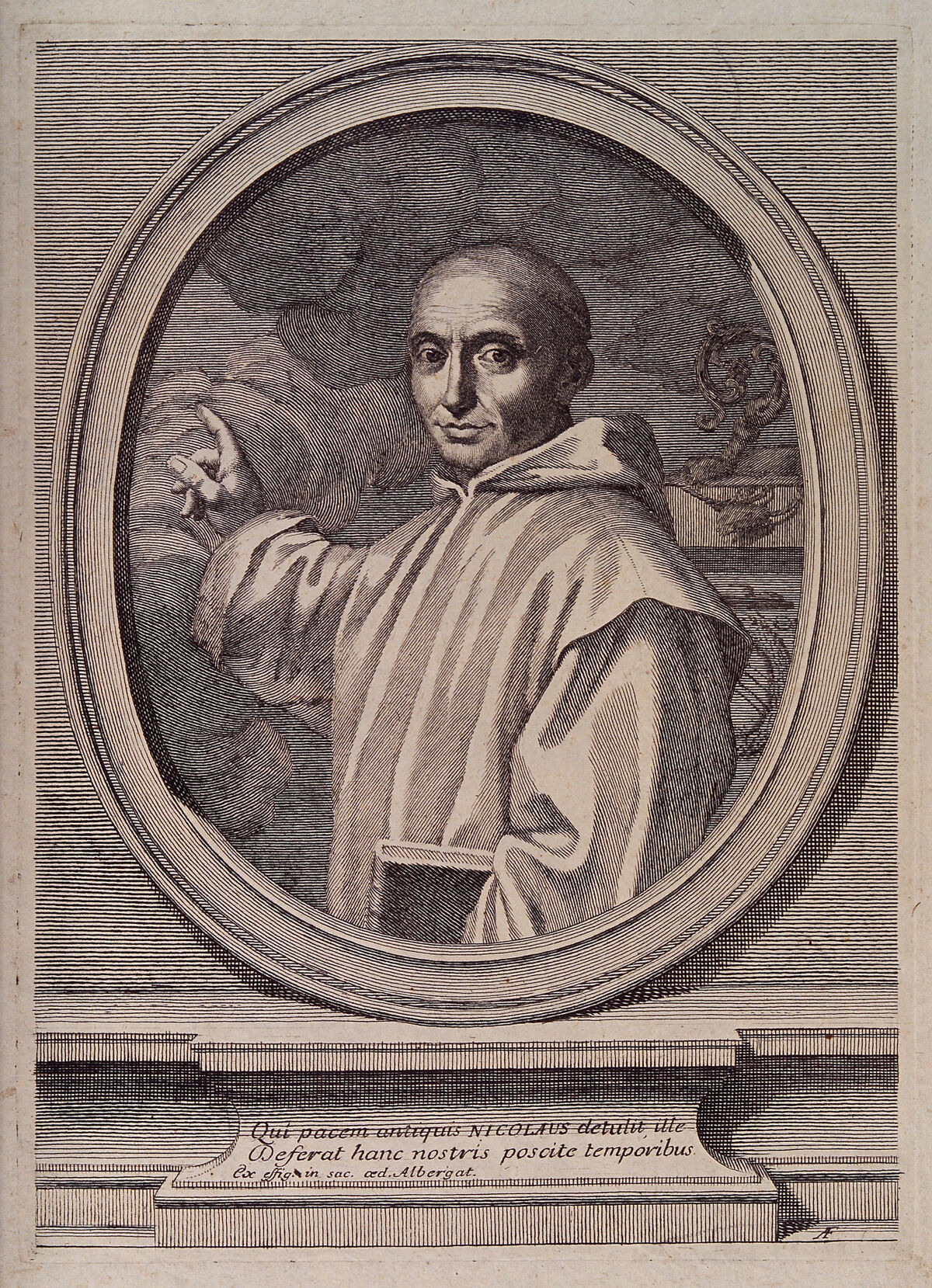
Born In · incoming
Giovanni Antonio Faldoni
Engraver
Wellcome Collection

Born In · incoming
Giuseppe Torretto
Artist
Own work

Died In · incoming
Léon Gurekian
Designer
Own work
Died In · incoming
Sammy Basso
Author
In this article
Overview
Overview
Its frazioni (boroughs or hamlets) include Casella, Pagnano and Villa d'Asolo.
Key facts
Key facts
• Name — Asolo • Official Name — Città di Asolo • Region — Veneto • Province — Treviso (TV) • Frazioni — Casella, Pagnano, Villa d'Asolo • Mayor — Mauro Migliorini • Area Total Km2 — 25.37 • Population Total — 8948 • Population As Of — 31 December 2022 • Population Demonym — Asolani • Elevation M — 210 • Saint — St. Prosdocimus • Day — November 7 • Postal Code — 31010 • Area Code — 0423
History
History
The town was originally a settlement of the Veneti, and was mentioned as Acelum in the works of Pliny. Its citizens were inscribed into the Roman tribe Claudia. It was called Acelum in the acts of a synod held in Marano in 588 or 591, since one of the participants was Agnellus episcopus sanctae Acelinae ecclesiae; the name Asolo was already in use by the time of a synod held in Mantua in 827 (or perhaps 835), at which the participation of Arthemius episcopus Asolensis is noted. In 969, Emperor Otto I assigned the territory of the diocese of Acelum/Asolo to the diocese of Treviso. This action may be related to the destruction caused by the Hungarian raiders who in 899 defeated Berengar I of Italy near the town. However, one of the bishops at a synod at Rome under Pope Leo IX in 1049 was called Ugo of Asolo. No longer a residential bishopric, Acelum is today listed by the Catholic Church as a titular see. In the early Middle Ages Asolo was a possession of the Ezzelini family. Later, it was the capital, and seat of the court, of the fiefdom of Asolo, which was granted by the Republic of Venice (to which it belonged) to Caterina Cornaro, the former Queen of Cyprus; in 1489 it was granted to her for life, but in 1509 when the League of Cambrai conquered and ransacked Asolo, Caterina fled to exile and died in Venice a year later. Under her reign, the painter Gentile Bellini, the poet Andrea Navagero, and the humanist Cardinal Pietro Bembo were part of the court. • Illustration — Portrait of Caterina Cornaro In 1798, the Italian impresario Antonio Locatelli built the Asolo Theatre in the former audience hall of the castle of Caterina Cornaro. The theatre was later purchased by Florida, for the John and Mable Ringling Museum of Art. The theatre was disassembled, shipped to Sarasota, Florida, and reassembled in one of the museum's galleries in 1952. It was then decided that the theatre should be reassembled into a usable theatre, on the museum's grounds in the late 1950s. The Historic Asolo Theater opened in 1958, and is now the home of the museum's Art of Performance program. Additionally, this theater was the birthplace for the Asolo Repertory Theatre and the Florida State University/Asolo Conservatory for Actor Training. The town was also home to the English poet Robert Browning, the actress Eleonora Duse, the explorer Freya Stark, the violinist Wilma Neruda and the composer Gian Francesco Malipiero.
Jewish history
Jewish history
The earliest evidence of Jews in Asolo dates back to the middle of the sixteenth century. At that time, 37 Jews were living in Asolo. The community had owned a cemetery, from which two ancient tombstones are presented in the local gallery. On November 22, 1547, 10 Jews belonging to the community of Asolo, consisted at the time of 7 families and 2 guests, were killed by a mob led by a man called Antonio Parisotto. Five Jewish families’ houses were destroyed. A number of the attackers were put to justice and sentenced to death or exile. One of the survivors was Marco Cohen, who founded the Cantarini family, known for several of its members such as Hayyim Moses Cantarini, and others. Other documentations of the Jewish community of Asolo mentions the prohibition of Jews bearing weapons and obligation to wear the yellow badge. There is evidence of Jewish presence after the 1546 attack, dating from the middle of the 17th century. The Jewish quarter was situated at the turn of Colmarion street, bounded on the north by the old road Colmarion, on the south by Piazza del Pavion and by the last stretch of via s. Caterina and crossed by the short Belvedere alley - this area was called "the Ghetto", housing about six houses.
Main sights
Main sights
• Remains of an amphitheatre (in the Villa Freya) and of an aqueduct. • Rocca (castle, late 12th-early 13th centuries). • The Castle of Caterina Cornaro, now home to the Eleonora Duse theatre. • Illustration — Inner court view of the Castle • Palazzo della Ragione, housing the city's museum. • The cathedral, built in 1747. In the interior is the Assunta altarpiece by Lorenzo Lotto. For many years, the Convento di Santo Pietro (situated just below la Rocca) housed an American university: Consortium International for Management and Business Analysis (CIMBA). Students from all over the world lived, studied, and worked in the converted convent in Asolo while earning their MBA. The CIMBA program has since relocated to a larger campus in nearby Paderno del Grappa. • Chiesa dell'Assunta (Assumption of Our Lady, who is portrayed in the mosaic of the main façade), the cathedral of the former residential see of Acelum or Asolo. • Chiesa di San Gottardo (deconsecrated): it now hosts music concerts. • Chiesa di Santa Caterina, with frescos from the 14th century • Chiesa di Sant'Anna, next to the cemetery where Freya Stark and Eleonora Duse are buried.
Foreign ethnicities and minorities
Foreign ethnicities and minorities
As of December 31, 2022, foreigners residents in the municipality were, i.e. % of the population. The largest groups are shown below: • Romania • Morocco • Kosovo • North Macedonia • Albania • China • Ukraine
Economy
Economy
Asolo is best known for its lace production. and also for one of the largest companies in the Italian and international technical mountaineering and hiking footwear sector: Scarpa. Casella d'Asolo is home to the headquarters of Fashion Box S.p.a., founded in 1981 by Claudio Buziol. Replay is an Italian denim and smart casualwear brand belonging to the industrial group with exports that account for around 92% of the total turnover.
Infrastructure and transport
Infrastructure and transport
Located along the state road 248 Schiavonesca-Marosticana, between 1914 and 1931 Asolo represented the western terminus of the Montebelluna-Asolo tramway, the first element of a never built rail route between Bassano del Grappa and Susegana, which at the time represented an important development tool for the economy of the area. Since 2014 it has been connected to Montebelluna and Treviso by several bus lines of MOM - Mobilità di Marca.
Gallery
Gallery
• Illustration — Aerial view of the castle • Illustration — The imposing bell tower of the Duomo • Illustration — View of the historic center of Asolo from the castle • Illustration — Villa Scotti Pasini, in the center of the city, whose façade overlooks Piazza Garibaldi • Illustration — Fountain in Piazza Garibaldi, with the lion of St. Mark • Illustration — Lorenzo Lotto, the Asolo Altarpiece (1506) • Illustration — Fresco in the loggia of the civic museum • Illustration — Terracotta plaque walled into the façade of the church of Santa Caterina
Text attribution
Licensing
Text attribution
Part of the biographical narrative on this page reuses licensed material. Its origin, revision and licence are recorded here.
The biographical narrative on this page is based on the Wikipedia article Asolo, revision 1374754587 (EN edition), by its contributors. VALÉORINE has edited that text and built its own documentary record around it. The reused material is available under CC BY-SA 4.0, and this page's reuse of it is offered under the same licence. Everything else on this page — the chronology, the holdings, the evidence, the plates and the connections — is VALÉORINE's own record. Sources and licences.
Notes from the source article
Cited by Wikipedia
Notes from the source article
These works are cited by the source article, in its own numbering. They are recorded as its citations, not as sources VALÉORINE has verified.
- 1.Veneto. 10 January 2017.
- 2.Antonio Barzon, Padova cristiana. Dalle origini all'anno 800 (Padova, Tipografia Antoniana, 1955), p. 214
- 3.Annuario Pontificio 2013 (Libreria Editrice Vaticana 2013 ), p. 840
- 4.2. 764.
- 5.Richard Stillwell, ed. Princeton Encyclopedia of Classical Sites, 1976: "Acelum (Asolo), Italy"
- 6.Leslie E. Ellis. "The Early History of the Asolo Theatre" Florida State University, Dissertation.
- 7.Asolo Hebrew inscription image belecaselusa.files.wordpress.com September 2014
- 8.Asolo. Jewish Encyclopedia.
- 9.113. Jewish Thought and Scientific Discovery in Early Modern Europe.
- 10.Cantarini.
- 11.Asolo · ITALIA JUDAICA.
- 12.Asolo · ITALIA JUDAICA.
- 13.Asolo · ITALIA JUDAICA.
- 14.Asolo Festival.
- 15.CIMBA
- 16.ISTAT. Demographic balance and foreign resident population as at 31 December 2022 by gender and citizenship.
- 17.Foreign citizens tuttiitalia.it
- 18.Da Doha all'Australia, le nuove aperture di Replay.
- 19.Servizio extraurbano - MOM.
Bibliography printed in the source article · 1
- Giorgio Fossaluzza. Il Museo civico di Asolo : opere dal Quattrocento al Novecento. Antiga edizioni. 635. 2014. 9788897784395.
Makers, houses and production
Knowledge graph
Makers, houses and production
The people, houses and objects recorded in connection with this place.
Died at
3- Freya Madeline StarkPhotographer
Established from a fact already recorded on a verified source.
- Léon GurekianDesigner
Established from a fact already recorded on a verified source.
- Sammy BassoAuthor
Established from a fact already recorded on a verified source.
The Encyclopedia exists whether or not anything is for sale. Corrections are recorded rather than overwritten, and every version of this record is kept. Published 26 September 2026.
Elsewhere in General
22,760 published records in this field, each with its sources named.
- AskovPlace
- Askov HøjskoleOrganisation
- AsmaraPlace
- Asnières-sur-OisePlace
- Asotin Junior Senior High SchoolOrganisation
- AssamPlace
- Assay officeTerminology
- AsselaPlace
Best supported in this field
For owners
Own an object connected with Asolo?
A specialist will read what you send and tell you what the house can establish, what it cannot, and whether the object is suited to sale. There is no charge and no obligation. The object stays with you throughout; nothing is shipped to us unless it is arranged in writing beforehand.