
Arsênio Fortunato cintra da Silva
Arsênio Cintra da Silva (1833 – 1883) was a Brazilian painter and pioneering photographer.
Arsênio Fortunato cintra da Silva

Arsênio Fortunato cintra da Silva · National Archives of Brazil (Arquivo Nacional) [1] · Public domain
- Born
- 20 April 1833
- Birthplace
- Recife
- Died
- 11 February 1883
- Place of death
- Salvador
- Nationality
- Brazil
- Occupation
- photographer · teacher
- Fields
- portrait
- Languages
- Portuguese
VALÉORINE Encyclopedia
VALÉORINE documentary reading
Documentary summary
Arsênio Cintra da Silva (1833 – 1883) was a Brazilian painter and pioneering photographer.
Admitted source layer · organised and presented by VALÉORINE
Reference Check
Propose documentary evidence for Arsênio Fortunato cintra da Silva. A contribution is never written directly as fact: identity, source, rights and evidence gates still decide.
Sign in to contribute
Documentary evidence
Documentary basis
Authority files
wikidata · Q16494124
In this article
Key facts
Key facts
• Born — 20 April 1833 • Birthplace — Recife • Died — 11 February 1883 • Place of death — Salvador
Biography
Biography
• Illustration — The Environs of Paris He began his art lessons in Recife, after which he continued his studies in Rome, where he stayed for three years. In 1854, his father died, and he was forced to return home. Two years later, his mother died. After settling his family's affairs, probably in 1858, he returned to Europe and settled in Paris, where he was introduced to the gouache painting technique and exposed to Orientalist art. He lived in Paris until 1860. Upon returning to Brazil, he chose to live in Rio de Janeiro and became one of the first Brazilian artists to work in gouache. He also became a popular portraitist and took some students, notably Joaquim José Insley Pacheco, who became a lifelong friend. From 1861 to 1879, he participated in the exhibitions of the Imperial Academy of Fine Arts. In addition to his art, he was one of the first journalistic photographers in Brazil, for he documented the wedding of Princess Isabel and Gaston, Count of Eu in 1864. Many of his photographs were acquired by Emperor Pedro II, an early enthusiast for photography. They are now part of the Thereza Christina Maria Collection at the National Library of Brazil. Despite the quality of his work and his innovative methods, he eventually found himself ostracized from the Brazilian artistic community. According to some respected critics, such as Gonzaga Duque, this was due to the envy aroused among a number of artists who resented his flaunting of European culture. Whatever the cause, he became increasingly isolated. After his death, several sympathetic artists, including the Italian-born Angelo Agostini, attempted to rehabilitate his reputation.

Congada in 1860. Photography ordered by Emperor Dom Pedro II, 18 x 24 cm
Arsênio Fortunato cintra da Silva · http: acervo.bndigital.bn.br/sophia/index.asp?codigo_sophia=80851
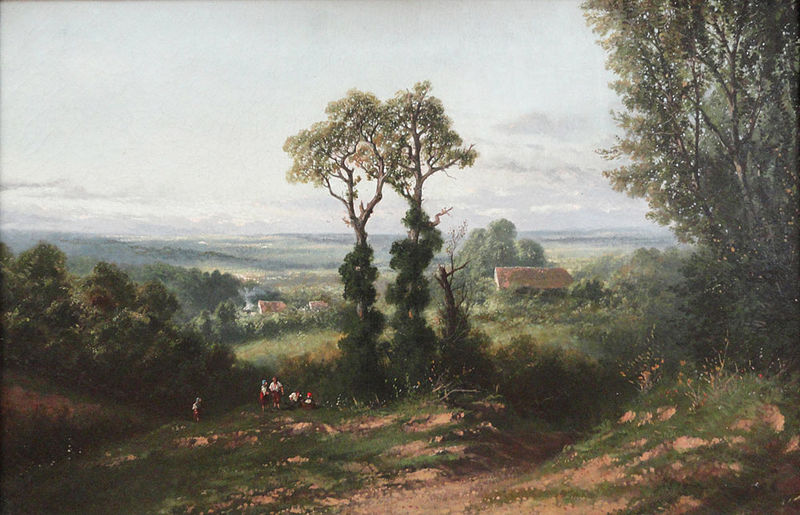
Arsênio Fortunato cintra da Silva, Arsênio da Silva - Arredores de Paris, c., 1860
Arsênio Fortunato cintra da Silva · Scanned from MNBA catalogue (Safra, 1985)
Places
Named by the record
Places
Only places the record itself states, plotted where the house gazetteer settles their coordinates. Nothing is inferred from a name or a nationality.
Recife.
Birth place
Salvador.
Death place
Citations
References
Each reference names the institution holding it, so a reader may go to the document itself.
authority record
Secondary witness
The Encyclopedia exists whether or not anything is for sale. Corrections are recorded rather than overwritten, and every version of this record is kept. Published 17 August 2026.
Elsewhere in Photography
11,392 published records in this field, each with its sources named.
- Arny FreytagPhotographer
- Aron EisenbergPhotographer
- Arsen RevazovPhotographer
- Arsen SavadovPhotographer
- Art HupyPhotographer
- Art KanePhotographer
- Art PlotnikPhotographer
- Art ShayPhotographer
Best supported in this field
For owners
Own a work by Arsênio Fortunato cintra da Silva?
A specialist will read what you send and tell you what the house can establish, what it cannot, and whether the object is suited to sale. There is no charge and no obligation. The object stays with you throughout; nothing is shipped to us unless it is arranged in writing beforehand.