
Armand Point
Illustration — Armand Point, self-portrait Armand Point (23 March 1860 or 23 March 1861 – February 1932 or March 1932) was a French painter, engraver and designer who was associated with the Symbolist movement and was one of the founders of the Salon de la Rose + Croix. Later he formed his own atelier. Sources differ over the details of his birth and death.
Also recorded as A. Point · Point
Armand Point
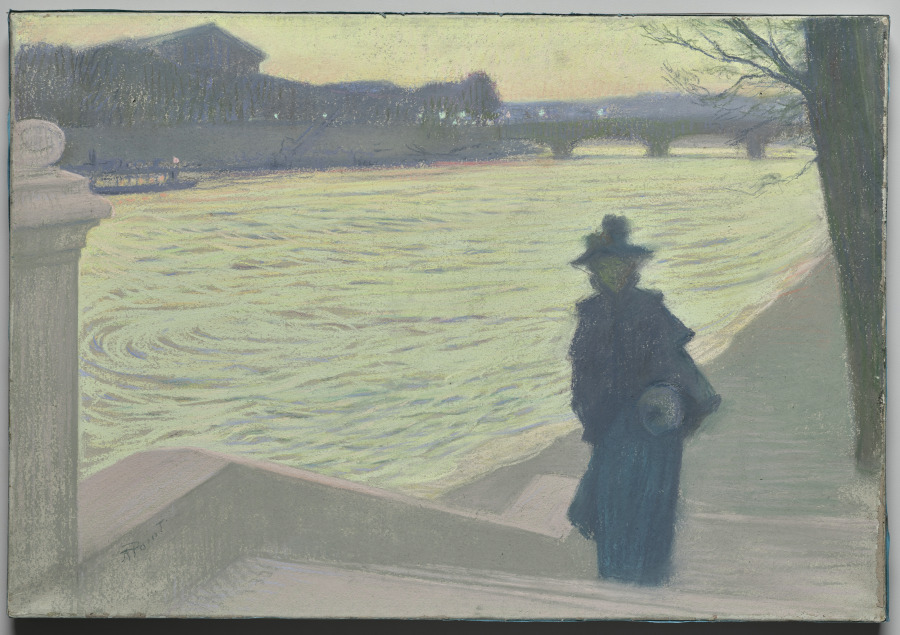
Armand Point · The Cleveland Museum of Art · Purchase from the J. H. Wade Fund · CC0
- Born
- 1861. · Algiers.
- Died
- 1932. · Naples.
- Nationality
- France.
- Fields
- portrait.
- Movements
- Symbolism and École de Murol.
- Languages
- French.
VALÉORINE Encyclopedia
VALÉORINE documentary reading
Documentary summary
Illustration — Armand Point, self-portrait Armand Point (23 March 1860 or 23 March 1861 – February 1932 or March 1932) was a French painter, engraver and designer who was associated with the Symbolist movement and was one of the founders of the Salon de la Rose + Croix. Later he formed his own atelier. Sources differ over the details of his birth and death.
Admitted source layer · organised and presented by VALÉORINE
Reference Check
Propose documentary evidence for Armand Point. A contribution is never written directly as fact: identity, source, rights and evidence gates still decide.
Sign in to contribute
World of VALÉORINE
Documentary connections
Only confirmed graph relationships appear here. Images are shown only when their identity and reuse rights both pass the documentary gate.
Documentary evidence
Documentary basis
Authority files
wikidata · Q732208 · wikipedia · Armand Point
In this article
Personal life
Personal life
The recorded working language is French. Subjects and genres recorded for the work are portrait. Places of work recorded in the authority are Paris. Work by Armand Point is recorded in the collections of National Gallery of Canada, Musée d'Orsay, Cartwright Hall Art Gallery, Museum of Fine Arts of Reims and J. Paul Getty Museum.
Point was born in Algiers, and died in either Naples, or Marlotte, Seine-et-Marne.
Early career
Early career
Point's earliest works were orientalist scenes of markets and musicians and the street life of his youth in Algeria. In 1888 he travelled to Paris where he studied at the Ecole des Beaux-Arts under Auguste Herst and Fernand Cormon. He was linked to Numa Gillet. From 1890 he exhibited at the Société Nationale des Beaux-Arts.
Move towards Idealism
Move towards Idealism
• Illustration — Primavera, Sandro Botticelli, c. 1482. Tempera on panel. Uffizi Gallery, Florence • Illustration — Study for the head of Leda, Leonardo da Vinci, c. 1506–1508. Royal Library, Windsor Point was influenced by Ruskin and the Pre-Raphaelite Brotherhood and was a member of the first Nabis group. In 1894 he made a trip to Italy with Hélène Linder (1867–1955) (later Mme Berthelot) where he saw Sandro Botticelli's Primavera for the first time outside of an engraving. The experience made a deep impression on him and he wrote that his eyes "first opened up" on seeing it, leading soon after to attempts to establish a movement in France to resurrect the art of the 15th and 16th centuries. The influence of Botticelli and Leonardo da Vinci became evident in his work, for instance in the c. 1895 Eternal Chimera. Hélène Linder became an ideal female model for Point who often painted her in a Leonardesque style but dressed like a muse from Botticelli. Leonardo da Vinci's Study for the head of Leda (study for an original painting now lost) seems to have influenced the hair styles that he gave Hélène. Hélène married French diplomat Philippe Berthelot just before the start of the First World War. Philippe Jullian described Point as moving, at this time, from a "dreamy realism to a detailed idealism". • Illustration — Thursday's walk in the fields, 1888. Musée des Augustins Toulouse • Illustration — Ame d’Automne (Autumn Soul). Pastel on brown paper, c. 1890s. Model probably Hélène Linder • Illustration — Hélène Linder, 1893 drawing • Illustration — A Portrait of Madame Berthelot. Charcoal and coloured chalks, 1895. Private collection • Illustration — Remeniscing by the Pond, c. 1900 • Illustration — Woman with cherry blossom, undated
Symbolism
Symbolism
• Illustration — Poster for the fifth Salon de la Rose+Croix, 1896. Designed by Point and Léonard Sarluis. Soon, Point was moving towards fully fledged Symbolism. He made a determined effort to reject the modern world and the realism of Zola and Courbet. He adopted Rosicrucianism and became a friend of "Sâr" Peladan. Edward Lucie-Smith described him as a "medievalizing painter... whose style mingled the influence of Moreau with that of the Pre-Raphaelites". From 1892 to 1896, Point exhibited at the Salon de la Rose+Croix and with Léonard Sarluis he designed the poster for the fifth salon of that group. It depicted the Ideal in the form of Perseus holding the severed head of Émile Zola in reference to the Greek myth in which Perseus decapitated the Gorgon Medusa. For the Symbolists, Zola exemplified in literature the oppressive Naturalism they rejected. Subjects at this time were usually mythological, such as his 1897 The Siren which included a typical Symbolist femme fatale figure luring men to their doom. Also in 1897, Point contributed an original lithograph titled the Golden Legend (Fr. Légende dorée) to the L'Estampe Moderne. The journal included four original prints in each issue and Point's was issued in Number 5, September 1897. Other artists who contributed included Alphonse Mucha, Henri Fantin-Latour and Edward Burne-Jones.
Atelier de Haute-Claire
Atelier de Haute-Claire
• Illustration — The highly ornate Coffret d'Ophélie (Ophelia Box) produced at Atelier de Haute-Claire. From 1896 to 1901 Point lived in Marlotte, where he founded the Atelier de Haute-Claire not far from the home of the Barbizon school. Around the turn of the century, the distinction between the fine and decorative arts was beginning to break down and Point became increasingly interested in the latter. He sought to emulate William Morris in revolting against nineteenth-century materialism and produced applied art, including furniture, jewellery, fabrics, ceramics and wallpaper that harked back to the techniques and styles of the Middle Ages. Everything was hand-made to a very high standard of craftmanship in an effort to avoid the alienating effect of industrial mass production. As a result, however, the products of the atelier were luxury items that could only be purchased by an elite and the project therefore failed to meet one of its key objectives. The Symbolist journal L'Ermitage criticised the works of the Haute-Claire group for amounting to religious icons fit only for reverence in a case in a museum and having little to do with the France of today. One such ornate object was the Coffret d'Ophélie (Ophelia Box), a box in the form of a medieval reliquary, that referred to the Ophelia of Shakespeare much celebrated by the Pre-Raphaelites. The box included bronze, cabochon, champlevé enamelling, cloisonné, ivory, gold and other expensive materials and techniques. A number of similar boxes exist from the atelier, including an alternative Ophelia box (1903) and a Coffret aux serpents (1897–99), both in the Musée d'Orsay. The number of different materials and processes involved in making each box meant that production was complex and a number of different craftsmen were required to make each one, for instance, noted ceramicist Charles Virion. Philippe Jullian described the products of the atelier as more Neo-Byzantine than Art Nouveau. A diverse group of people visited Haute-Claire, including Oscar Wilde just months before his death in 1900. Wilde was in exile in France following imprisonment in Britain.
Early and orientalist works
Early and orientalist works
• Illustration — La Joie des choses. 1884. • Illustration — Market Street. • Illustration — At the Water's Edge. • Illustration — Arab Weaver. 1886.
Symbolist works
Symbolist works
• Illustration — Eternal Chimera. Lead pencil and pastel, c. 1895. • Illustration — Golden legend. (Fr. Légende dorée) Lithograph, 1897. • Illustration — The Siren. 1897. • Illustration — Dance of Salome. Oil on canvas, 1898.
Later works
Later works
• Illustration — Portrait of an Egyptian goddess, probably Isis. Watercolour, 1909. • Illustration — Bust of a woman in a landscape. Pencil on paper, 1910. Walters Art Museum, Baltimore. • Illustration — The Judgement of Paris. Oil on canvas, 1910 or 1911. • Illustration — Apollo and Daphne. Oil on canvas, 1919.
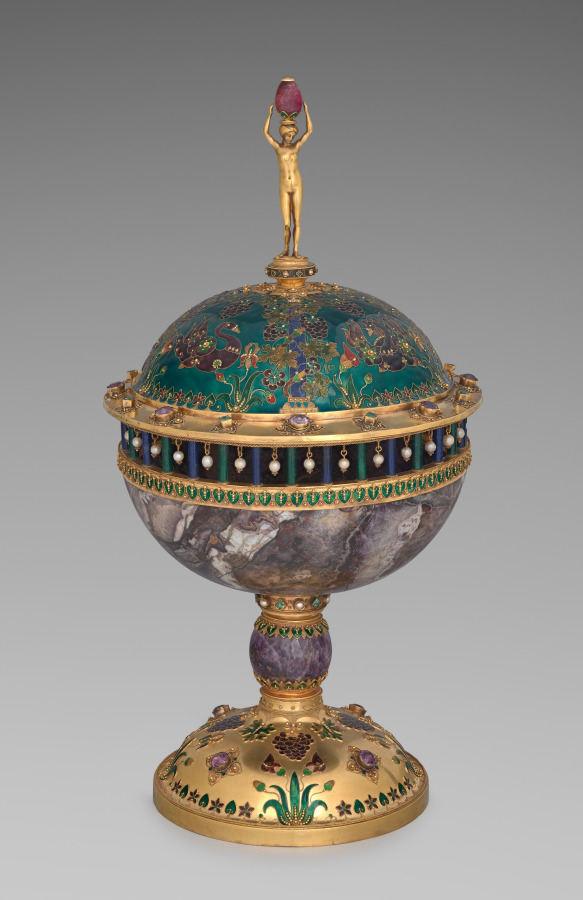
Covered Cup, c. 1897–99, by Armand Point
Armand Point · The Cleveland Museum of Art · John L. Severance Fund
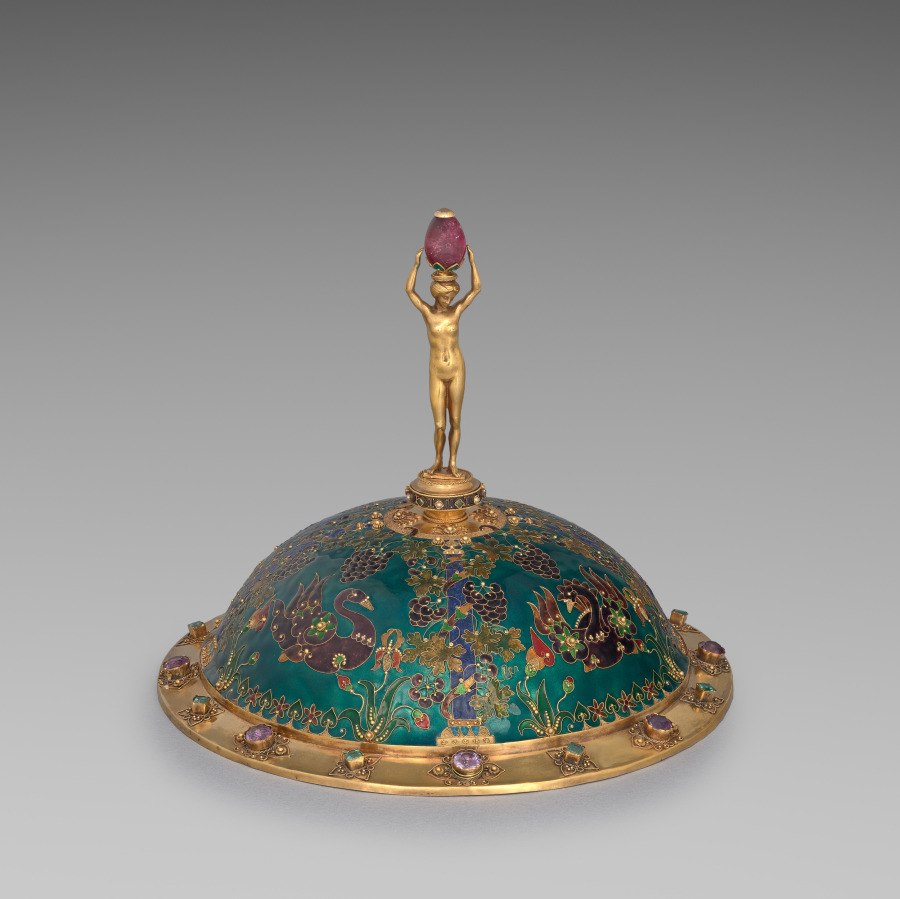
Cover for a Cup, c. 1897–99, by Armand Point
Armand Point · The Cleveland Museum of Art · John L. Severance Fund
Life and career
Dated record
Life and career
The full dated record · 2 entries
1860
Armand Point born at Algiers.
1932
Armand Point died at Naples.
Places
Named by the record
Places
Only places the record itself states, plotted where the house gazetteer settles their coordinates. Nothing is inferred from a name or a nationality.
Algiers.
Birth place
Naples.
Death place
Primary material
Documents and archives
Institutional database
- Wikidata, structured authority record Q732208: Armand Point
Scholarly · Wikimedia Foundation
reference work
- “Armand Point”, English Wikipedia, consulted as further reading
Reputable secondary · Wikipedia
Literature
Literature
Point, Armand, Benezit Dictionary of Artists, 2011
Point, Armand, Oxford Art Online, 2003
Point Scales in Geography, Soviet Geography, 1973
Un art décoratif symboliste, Revue de l'art, 1997
Notes from the source article
Cited by Wikipedia
Notes from the source article
These works are cited by the source article, in its own numbering. They are recorded as its citations, not as sources VALÉORINE has verified.
- 1.Armand Point memoireafriquedunord.net 2014. Retrieved 20 June 2014.
- 2."Point, Armand." Benezit Dictionary of Artists, Oxford Art Online, Oxford University Press. Retrieved 20 June 2014.
- 3."Point, Armand." Colette E. Bidon, Grove Art on Line, Oxford Art Online, Oxford University Press. Retrieved 20 June 2014.
- 4.Sciortino, Cassandra. (2010) "Armand Point's Eternal Chimera and Saint Cecilia: A French Quattrocento Symbolist Aesthetic" in Rosina Neginsky (Ed.) Symbolism, Its Origins and Its Consequences. Newcastle upon Tyne: Cambridge Scholars, 2010.
- 5.Âme d’Automne (Autumn Soul) Stephen Ongpin Fine Art, 2014. Retrieved 2 July 2014. Archived here.
- 6.Lucie-Smith, Edward. (1972) Symbolist Art. London: Thames & Hudson, p. 115.
- 7.Lucie-Smith, 1972, p. 54.
- 8.Mathews, Patricia. Passionate Discontent: Creativity, Gender, and French Symbolist Art. University of Chicago Press. 107. 1999. 978-0-226-51018-7.
- 9.Adventures in the Print Trade Neil Philip, 26 February 2009. Retrieved 22 June 2014.
- 10.Lucie-Smith, 1972, p. 44.
- 11.La colonie d'Haute-Claire: artisanat et nostalgie L’Histoire par l’image, 2014. Retrieved 22 June 2014.
- 12.Armand Point Coffret d'Ophélie vers 1903 Musée d'Orsay, 2014. Retrieved 23 June 2014.
- 13.Armand Point Coffret aux serpents entre 1897 et 1899 Musée d'Orsay, 2014. Retrieved 23 June 2014.
- 14.Jullian, Philippe. (1973) The Symbolists. Translated by Mary Anne Stevens. London: Phaidon Press, p. 234.
- 15.Dorra, Henri. (Ed.). Symbolist Art Theories: A Critical Anthology. University of California Press. 272–5. 1994. 978-0-520-07768-3.
- 16.CNAP. La Joie des choses.
- 17.Arab Weaver by Armand Point BBC Your Paintings, 2014. Retrieved 20 June 2014.
- 18.Bust of a Maiden in a Landscape Walters Art Museum, 2014. Retrieved 17 July 2014.
- 19.Armand Point Le jugement de Pâris Musée d'Orsay, 2014. Retrieved 23 June 2014.
Bibliography printed in the source article · 3
- Doré, Robert. (2010) Armand Point: De l'Orientalisme au Symbolisme: 1861–1932. Paris: B. Giovanangeli.
- Fort, P., C. Mauclair, S. Merrill et al. "Armand Point et son oeuvre", La Plume, special issue, Paris 1901.
- Jumeau-Lafond, Jean-David. (1999) Les Peintres de L'âme, le Symbolisme idéaliste en France. Gent: Snoeck-Ducaju & Zoon.
References
Citations
References
Each reference names the institution holding it, so a reader may go to the document itself.
Institutional database
Wikidata, structured authority record Q732208: Armand PointWikimedia Foundation
Institutional witnessreference work
Secondary witness
The Encyclopedia exists whether or not anything is for sale. Corrections are recorded rather than overwritten, and every version of this record is kept. Published 16 August 2026.
Elsewhere in Prints
4,138 published records in this field, each with its sources named.
- Ariane LarouxEngraver
- Aristide MaillolEngraver
- Armand BertonEngraver
- Armand KohlEngraver
- Armand SeguinEngraver
- Armin LandeckEngraver
- Arnold de JodeEngraver
- Arnold FriedmanEngraver
Best supported in this field
For owners
Own a work by Armand Point?
A specialist will read what you send and tell you what the house can establish, what it cannot, and whether the object is suited to sale. There is no charge and no obligation. The object stays with you throughout; nothing is shipped to us unless it is arranged in writing beforehand.