
Antonio Beato
Antonio Beato (c. 1835–1906), also known as Antoine Beato, was an Italian-British photographer. He is noted for his genre works, portraits, views of the architecture and landscapes of Egypt and other locations in the Mediterranean region.
Also recorded as Antoine Beato · Felice A. Beato · Felice Antonio Beato · A. Beato
Antonio Beato
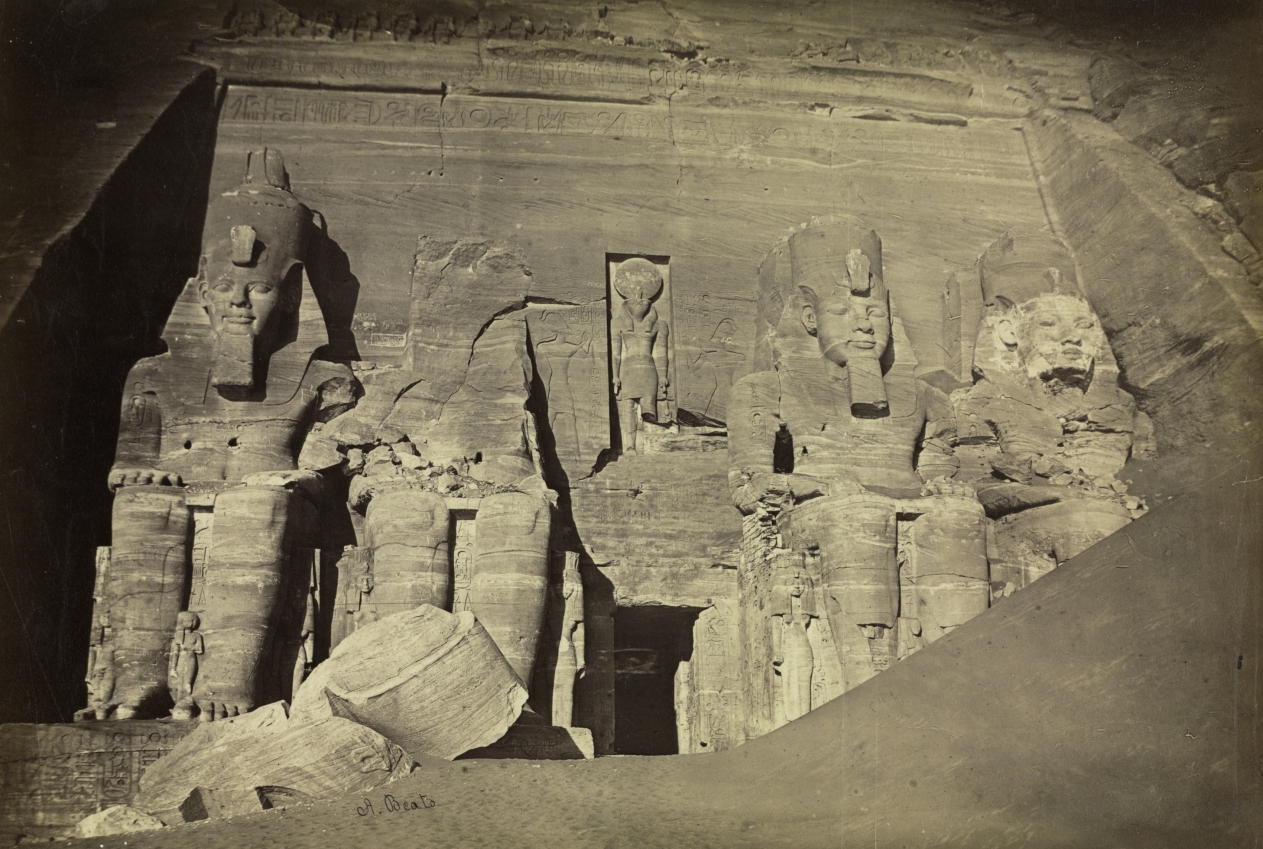
Antonio Beato · The Cleveland Museum of Art · John L. Severance Fund · CC0
- Name
- Antonio Beato
- Born
- c. 1835
- Birthplace
- Austrian Empire
- Died
- 1906 (aged 70)
- Place of death
- Luxor, Egypt
- Occupation
- Photographer
- Known for
- His genre works, portraits, views of the architecture and landscapes of Egypt and the other locations in the Mediterranean region
- Nationality
- Kingdom of Lombardy–Venetia · United Kingdom of Great Britain and Ireland
VALÉORINE Encyclopedia
VALÉORINE documentary reading
Documentary summary
Antonio Beato (c. 1835–1906), also known as Antoine Beato, was an Italian-British photographer. He is noted for his genre works, portraits, views of the architecture and landscapes of Egypt and other locations in the Mediterranean region.
Admitted source layer · organised and presented by VALÉORINE
Reference Check
Propose documentary evidence for Antonio Beato. A contribution is never written directly as fact: identity, source, rights and evidence gates still decide.
Sign in to contribute
Documentary evidence
Documentary basis
Authority files
wikidata · Q2742241 · wikipedia · Antonio Beato
In this article
Biography
Biography
He was the younger brother of photographer Felice Beato (1832–1909), with whom he sometimes worked. Antonio and his brother were part of a small group of commercial photographers who were the first to produce images of the Orient on a large scale.
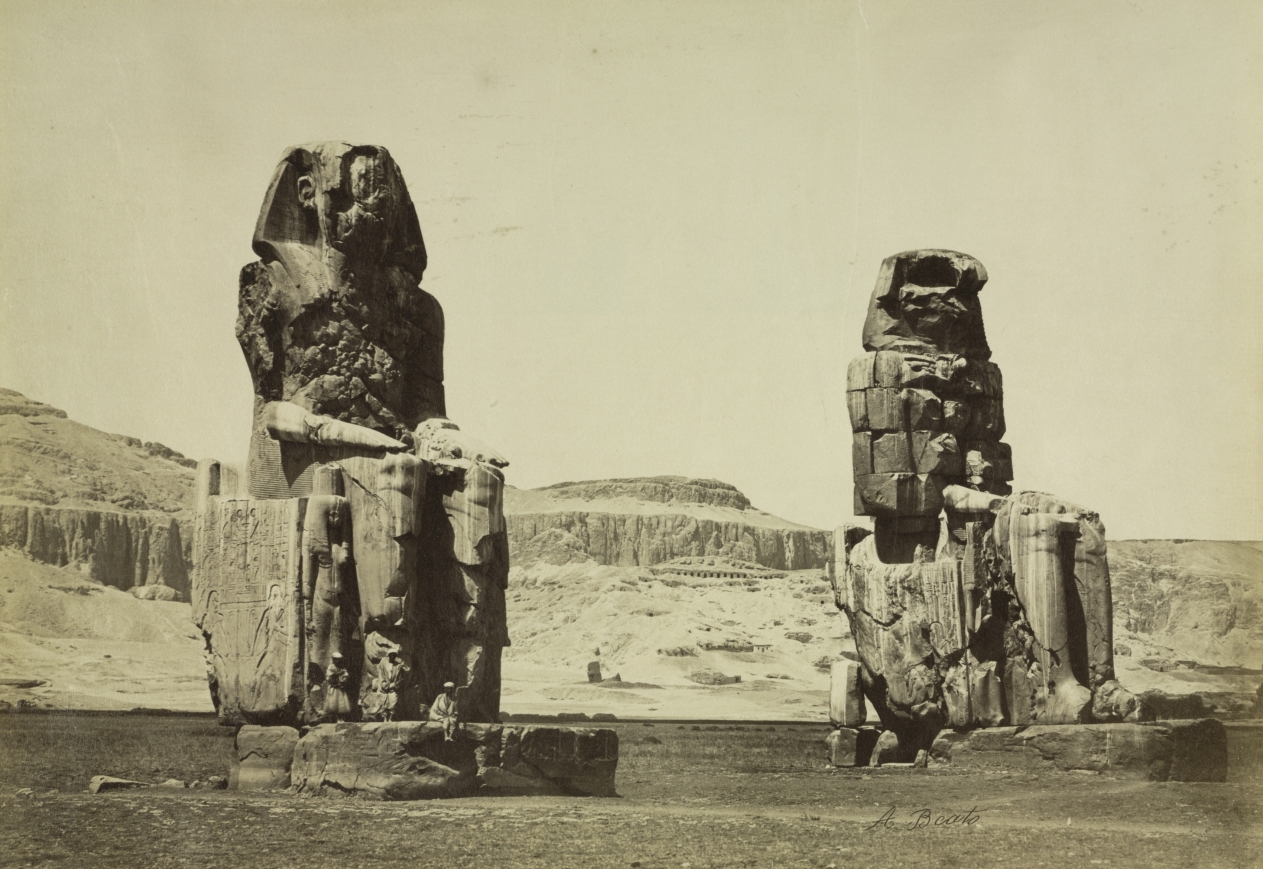
The Colossi of Memnon, Thebes, c. 1860s, by Antonio Beato
Antonio Beato · The Cleveland Museum of Art · John L. Severance Fund
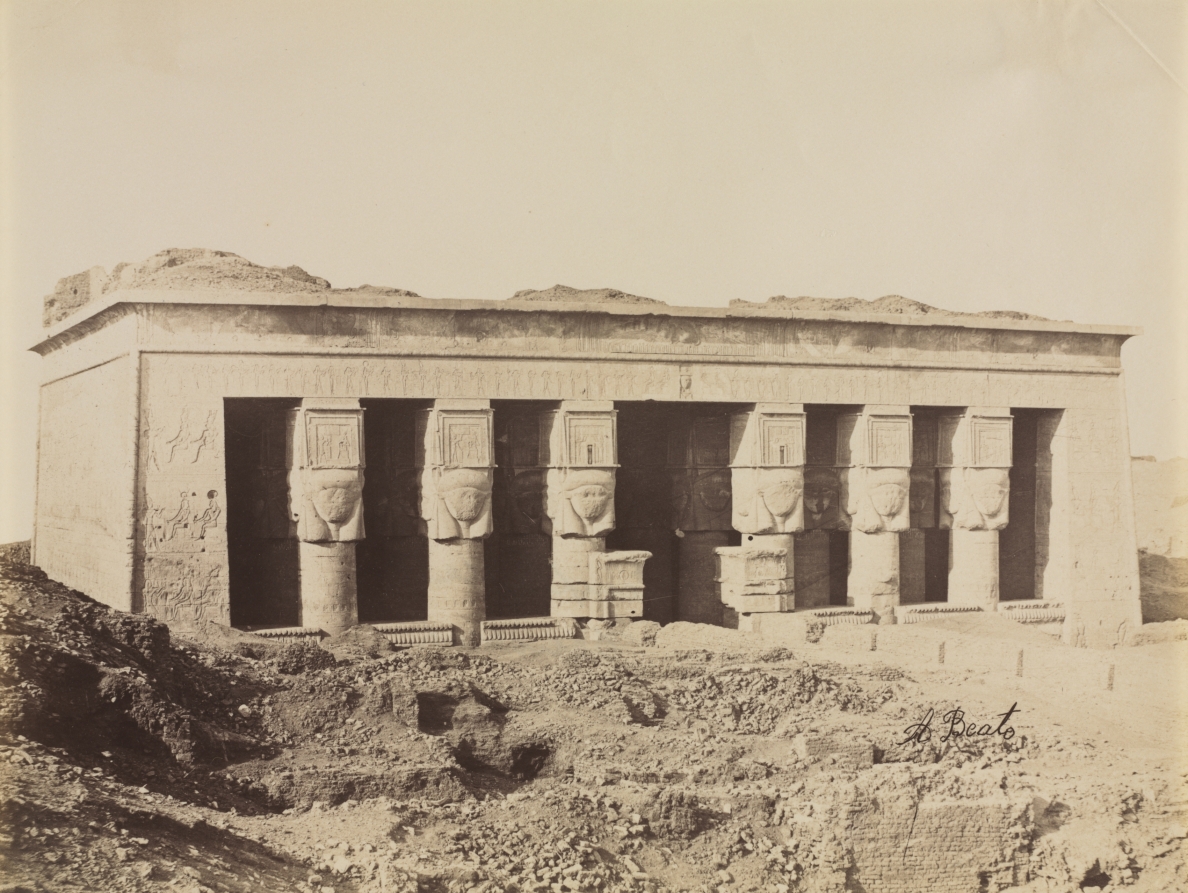
Temple of Dendera, c. 1870s - 1880s, by Antonio Beato
Antonio Beato · The Cleveland Museum of Art · Gift of Virginia M. Zabriskie
Key facts
Key facts
• Name — Antonio Beato • Born — c. 1835 • Birthplace — Austrian Empire • Died — 1906 (aged 70) • Place of death — Luxor, Egypt • Other Names — Antoine Beato • Occupation — Photographer • Known for — His genre works, portraits, views of the architecture and landscapes of Egypt and the other locations in the Mediterranean region • Relatives — Felice Beato (brother); Leonilda Maria Matilda Beato (sister) and James Robertson (photographer) brother-in-law • Illustration — Luxor Temple, Luxor, Egypt. Albumen silver print by Antonio Beato, taken between 1860 and 1889
Life and work
Life and work
Little is known of Antonio Beato's origins and early life. He was probably born in the Austrian Empire territory sometime after 1832, and later became a naturalised British citizen. His elder brother Felice Beato, at least, was born in Venice, but the family may have moved to Corfu, which had been a Venetian possession until 1814 when it was acquired by Britain. Antonio often used the French version of his given name, going by Antoine Beato. It is presumed that he did so because he mainly worked in Egypt, which had a large French-speaking population. The existence of a number of photographs signed "Felice Antonio Beato" and "Felice A. Beato", led many scholars to assume that there was one photographer who somehow photographed at the same time in places as distant as Egypt and Japan. In 1983, it was shown that "Felice Antonio Beato" represented two brothers, Felice Beato and Antonio Beato, who regularly worked together, sharing a signature. The confusion arising from the signatures continues to cause problems in identifying which of the two photographers was the creator of any given image. Virtually nothing is known about his training in photography. He may have become interested in photography through his brother, Felice, who is believed to have met the British photographer James Robertson in Malta in 1850, and purchased photographic equipment in Paris in around 1851, and later that year accompanied Robertson to Constantinople in 1851. Antonio joined his brother and Robertson in Malta in around 1853. A partnership, known as "Robertson & Beato" was formed in late 1853 or early 1854 in Pera, Constantinople. However, it is not entirely clear whether it was Antonio or Felice who was involved in the partnership. Some scholars believe that it was Antonio. By the 1850s, tourist travel to Middle East created strong demand for photographs as souvenirs. Beato, and his brother were part of a group of early photographers who made their way to the East to capitalise on this demand. These pioneering photographers included Frenchmen, Félix Bonfils (1831-1885); Gustave Le Gray (1820-1884) and Hippolyte Arnoux, brothers Henri and Emile Bechard and the Greek Zangaki brothers, many of whom were in Egypt at the same time and entered into both formal and informal working partnerships. These early photographers, including Antonio and his brother, were among the first commercial photographers to produce images on a large scale in the Middle East. In late 1854 or early 1855, the Beato brothers' sister, Leonilda Maria Matilda Beato, married her brothers' business partner, James Robertson. The couple had three daughters, Catherine Grace (b. 1856), Edith Marion Virginie (b. 1859) and Helen Beatrice (Nelly) (b. 1861). A number of the firm's photographs produced in the 1850s are signed Robertson, Beato and Co. and it is believed that "and Co." refers to Antonio. • Illustration — Members of Ikeda Nagaoki's Japanese Mission to Europe in front of the Sphinx, Egypt, 1864. Albumen print. In July 1858 Antonio joined Felice in Calcutta. Felice had been in India since the beginning of the year photographing the aftermath of the Indian Rebellion of 1857. Antonio also photographed in India until December 1859 when he left Calcutta, probably for health reasons, and headed for Malta by way of Suez. Antonio Beato went to Cairo towards the end 1859 or early 1860 and spent two years there before moving to Luxor where he opened a photographic studio in 1862 (until his death in 1906) and began producing tourist images of the people and architectural sites of the area. In the late 1860s, Antonio was in partnership with the French photographer, Hippolyte Arnoux. Beato's images of Egypt were distinctly different from those of other photographers working in the region. Whereas most photographers focussed on the grandeur of monuments and architecture, Beato concentrated on scenes of everyday life. In 1864, at a time when his brother Felice was living and photographing in Japan, Antonio photographed members of Ikeda Nagaoki's Japanese mission who were visiting Egypt on their way to France. Antonio Beato died in Luxor in 1906. His widow published a notice of his death while offering a house and equipment for sale. A Freemason, he was member of a masonic Lodge in Beirut and later joined the Bulwer Lodge' Nr. 1068 in Cairo and was co-petitioner for the foundation of the Grecia Lodge Nr. 1105 in the Egyptian capital.
Life and career
Dated record
Life and career
The full dated record · 2 entries
1825
Antonio Beato born at Venice.
1905
Antonio Beato died at Luxor.
Places
Named by the record
Places
Only places the record itself states, plotted where the house gazetteer settles their coordinates. Nothing is inferred from a name or a nationality.
Venice.
Birth place
Luxor.
Death place
Collections (selection)
Photographs by Antonio Beato are held in the following permanent collections: • American Academy in Rome, Rome • Art Institute of Chicago, Chicago • Brooklyn Museum, New York • Conway Library, The Courtauld Institute of Art, London • J. Paul Getty Museum, Los Angeles • Harvard Art Museums, Mass. • The Metropolitan Museum of Art, New York • Museo Egizio, Turin. • National Gallery of Canada, Ottawa • The Royal Collection, London • Victoria and Albert Museum, London
References
Citations
References
Each reference names the institution holding it, so a reader may go to the document itself.
reference work
Secondary witnessreference work
Secondary witness
Further particulars
Held on the record
Further particulars
Open the remaining particulars
Antonio Beato is recorded as photographer.
Recognition and collections
Work by Antonio Beato is
Art Institute of Chicago, Netherlands Photo Museum, National Museum of World Cultures and Wereldmuseum Rotterdam
The Encyclopedia exists whether or not anything is for sale. Corrections are recorded rather than overwritten, and every version of this record is kept. Published 17 August 2026.
Elsewhere in Photography
11,392 published records in this field, each with its sources named.
- Antonín BečvářPhotographer
- Antonín KratochvílPhotographer
- Antonin PersonnazPhotographer
- Antonino IsordiaPhotographer
- Antonio BriceñoPhotographer
- Antonio BusielloPhotographer
- Antonio Cano GeaPhotographer
- Antonio de LucaPhotographer
Best supported in this field
For owners
Own a work by Antonio Beato?
A specialist will read what you send and tell you what the house can establish, what it cannot, and whether the object is suited to sale. There is no charge and no obligation. The object stays with you throughout; nothing is shipped to us unless it is arranged in writing beforehand.