
Andrés Bello
Andrés Bello was Simón Bolívar's teacher for a short period of time and participated in efforts that led to Venezuelan independence. He lived in London from 1810 to 1829. In 1829, Bello went with his family to Chile.
Andrés Bello
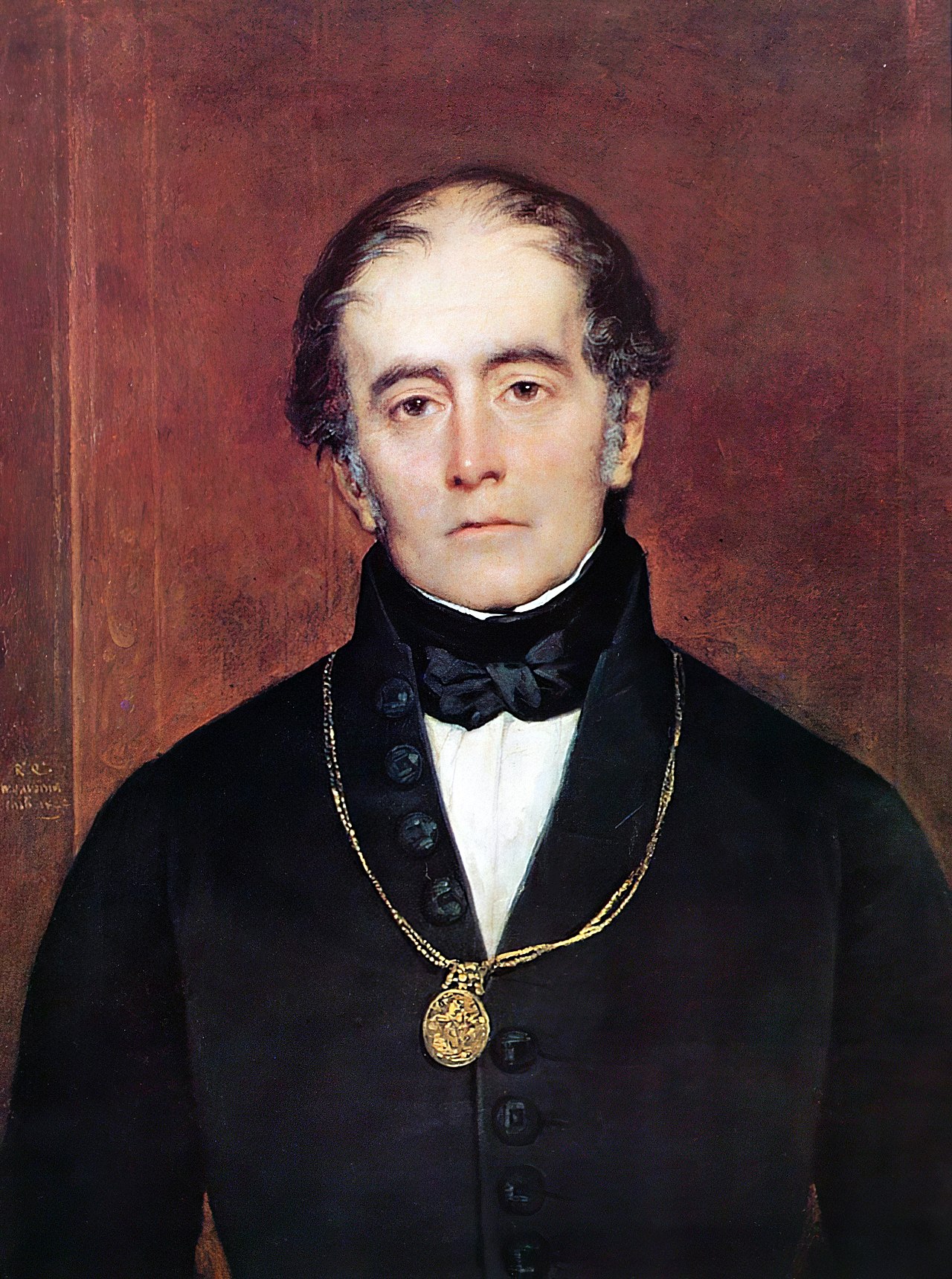
Raymond Monvoisin · Public domain
- Name
- Andrés Bello
- Birth Name
- Andrés de Jesús María y José Bello López
- Born
- 29 November 1781
- Birthplace
- Caracas, Captaincy General of Venezuela, Spanish Empire
- Died
- 15 October 1865
- Full name
- Andrés de Jesús María y José Bello López.
- Nationality
- Chile and Venezuela.
- Occupation
- poet, legislator, philosopher, educator, philologist, diplomat, politician and translator.
- Education
- Central University of Venezuela.
- Teachers
- Simón Rodríguez.
- Languages
- Spanish and English.
VALÉORINE Encyclopedia
VALÉORINE documentary reading
Documentary summary
Andrés Bello was Simón Bolívar's teacher for a short period of time and participated in efforts that led to Venezuelan independence. He lived in London from 1810 to 1829. In 1829, Bello went with his family to Chile.
Admitted source layer · organised and presented by VALÉORINE
Note VALÉORINE
No house-authored Note is published until its assertions and sources pass the VALÉORINE evidence contract. The documentary article remains available in full while that enrichment is being consolidated.
Documentary enrichment in progress · no unsupported statement published
Reference Check
Propose documentary evidence for Andrés Bello. A contribution is never written directly as fact: identity, source, rights and evidence gates still decide.
Sign in to contribute
World of VALÉORINE
Documentary connections
Only confirmed graph relationships appear here. Images are shown only when their identity and reuse rights both pass the documentary gate.
Documentary evidence
Evidence Panel
wikipedia incomplete · checked 25 September 2026
- Identity
- resolved
- Independent source families
- 0
- Admitted assertions
- 0
- Open conflicts
- 0
Authority files
bnf · gnd · loc · wikidata · Q439195 · wikipedia · Andrés Bello
In this article
Biography
Biography
Bello worked between 1781 and 1865 across poet, legislator, philosopher, educator and philologist and 5 further recorded occupations. Every statement below returns to a source shown in the evidence panel; where the record is silent or divided, the article says so instead of resolving it.
Andrés Bello studied at Central University of Venezuela. Training under Simón Rodríguez is recorded. The recorded working language is Spanish and English. Employment is recorded with University of Chile and El Araucano. Positions recorded include senator of Chile. Work by Andrés Bello is recorded in the collections of Memoria Chilena.
Key facts
Key facts
• Name — Andrés Bello • Birth Name — Andrés de Jesús María y José Bello López • Born — 29 November 1781 • Birthplace — Caracas, Captaincy General of Venezuela, Spanish Empire • Died — 15 October 1865 • Place of death — Santiago, Chile Andrés de Jesús María y José Bello López (November 29, 1781 – October 15, 1865) was a Venezuelan humanist, diplomat, poet, legislator, philosopher, educator and philologist, whose political and literary works constitute an important part of Spanish American culture. Bello is featured on the old 1992 50 and 1998 2,000 Venezuelan bolívar notes and the 20,000 Chilean peso notes. In Caracas, where he was born, Andrés Bello was Simón Bolívar's teacher for a short period of time and participated in efforts that led to Venezuelan independence. As a diplomat for the new independent government that he helped establish, he went with Luis López Méndez and Simón Bolívar on their first diplomatic mission to London. He lived in London from 1810 to 1829. In 1829, Bello went with his family to Chile. He was hired by the Chilean government and made great works in the field of law and humanities. In Santiago he held positions as a senator and a professor, as well as directing several local newspapers. As a legislator, he was the main promoter and editor of the Chilean Civil Code, one of the most innovative and influential American legal works of his time. In 1842, under his inspiration and with his decisive support, the University of Chile was created, an institution of which he became the first rector, staying in the post for more than two decades. Due to his contributions, on 17 October 1832 he was given Chilean nationality through a law approved by the Congress.
Life in Venezuela (1781-1810)
Life in Venezuela (1781-1810)
Bello was born in Caracas and grew up studying at the academy of Ramón Vanlonsten. He was the first son of the lawyer don Bartolomé Bello and Ana Antonia López, whose parents descended from residents of the Canary Islands. He also frequented the Convent of las Mercedes, where he studied Latin under Father Cristobal de Quesada. After the monk's death in 1796, Bello translated Book V of the Aeneid. He studied Liberal Arts, Law and Medicine at the University of Caracas and graduated on May 9, 1800, with a degree of Bachelor of Arts. As well as having unfinished studies in law and medicine, he also learned English and French on his own. He gave private classes, with the young Simón Bolívar among his students. His translations and adaptations of classic texts gave him prestige, and in 1802 won, by contest, the rank of officer Second Secretary of the colonial government. During the period 1802–1810, Bello became one of the most intellectually influential people in the society of Caracas, standing in performing political work for the colonial administration, besides gaining notoriety as a poet, translating the tragedy Zulima by Voltaire. He later became known for his early writings and translations, edited the newspaper Gazeta de Caracas and held important offices in the government of the Captaincy General of Venezuela. He accompanied Alexander von Humboldt in a part of his Latin American expedition (1800) and was for a short time Simón Bolívar's teacher. His relationships with both men became a major factor in cultivating his ideas for his intellectual career. Bello spent ten years after his formal education in his homeland of Caracas. He authored two literary works, Calendario manual y guía universal del forastero en Venezuela para el año de 1810 and the Resumen de la historia de Venezuela. Both works became widely accepted in Venezuela, and from this point Bello started his career as a poet. As time progressed, Bello further expanded his notions on humanism and conservatism. From his theories and ideas, Bello was eventually hailed as one of the foremost humanists of his time. On April 19, 1810, Bello participated in events that helped to spark the independence of Venezuela, including the dismissal of Captain General Vicente Emparan by the Cabildo de Caracas. The Supreme Junta of Caracas, the institution that governed the Captaincy General of Venezuela following the forced resignation of Emparan, and immediately named Bello First Officer of the Ministry of Foreign Affairs. On June 10 of that year, he set sail on a diplomatic mission to London as a representative of the new Republic. He was commissioned, together with Simón Bolívar and Luis López Méndez, to obtain British support for the cause of independence. Bello was chosen for his knowledge and command of the English language, which he had acquired predominantly on his own.
Life in Britain (1810-1829)
Life in Britain (1810-1829)
• Illustration — Blue plaque commemorating Bello on 58 Grafton Way, London As First Officer of Venezuela's Foreign Secretariat after the coup on April 19, 1810, he was sent to London with Simón Bolívar and Luis López Méndez serving as Diplomatic Representative to procure funds for the revolutionary effort until 1813. Bello landed at Portsmouth as an attaché to Bolívar's mission in July 1810. Bello had an admittedly hard life throughout his stay in England, though he managed to further develop his ideas and took a particular interest in England's social changes from the industrial and agricultural revolution. In order to earn a living while in London, Bello taught Spanish and tutored Lord Hamilton's children. In London, he met Francisco de Miranda and became a frequent visitor of his library in Grafton Way, as well as of the British Museum. Along with Bello, Bolívar and López also became friends with Miranda and used their opportunity to become known thanks to Miranda's accomplishments. During his lengthy stay in England, he curbed his feelings of homesickness and became contemporaries with thinkers and intellectuals such as José María Blanco White, Bartólome José Gallardo, Vicente Rocafuerte to name a few. He stayed in London for nineteen years acting as a secretary to legations and diplomatic affairs for Chile and Colombia. In his free time he was involved in study, teaching and journalism. An English Heritage blue plaque commemorates Bello at 58 Grafton Way, his Fitzrovia address. In 1812, Andrés Bello suffered economically as he tried to return home to Venezuela. The earthquake that occurred March 26, 1812, prevented Bello's family from helping him financially in his return. The fall of the First Republic ended the mode of financial support he received from Latin America and the arrest of Francisco de Miranda did not make any thing better. In 1814, Andrés Bello married Mary Ann Boyland, a 20-year-old Englishwoman. They had three children, Carlos Bello Boyland (1815–1854), Francisco Bello Boyland (1817–1845), and Juan Pablo Antonio Bello Boyland (1820–1821). His family situation was constantly affected by his financial situation forcing him to always find new work. He worked for the government of Cundinamarca in 1815 and the United Provinces of the Río de la Plata the following year. In 1821, his wife died of tuberculosis and shortly after his son, Juan Pablo died as well. In 1823, Bello published the Biblioteca América with Juan Garcia del Rio which was widely hailed in Europe. Their collaboration included a reform of Spanish orthography that became official in several Spanish American countries, most lastingly in Chile. In 1826 he published the journal Repertorio Americano to which he frequently contributed as both editor and poet. His two epic poems by which he was made famous, entitled Las Silvas Americanas, were originally published during his time in London around 1826 and documented the emerging culture of the New World. The second of the poems La agricultura de la zona tórrida is the most famous of the two, and is a poetic description of South America's tropical lands in a style reminiscent of Virgil, a poet of great influence for Bello. His situation temporarily got better in 1822 when Antonio José de Irisarri, a Chilean minister in London, named Bello interim secretary of the legation. On February 24, 1824, Bello remarried Isabel Antonia Dunn, with whom he had 12 children (three born in London and the rest in Chile). Bello was able to become interim secretary again but for Colombia and took charge on February 7, 1825. This job was not what he expected as he was paid irregularly due to the financial crisis in Latin America. In December 1826, Bello wrote a letter to Bolívar asking him to help out with his financial situation in London. Not only did he write because of his economic crisis, but because he believed that his friendship with Bolívar had disappeared. In April 1827, Bello wrote to Bolívar again but his situation did not get any better. Their friendship eventually came to an end when Bolívar gave Bello's position to someone else and Bello had to find another job. In 1828, the government of Chile offered Bello a job in the Ministry of Finance and on February 14, 1829, he finally left the United Kingdom. • Illustration — Statue of Andrés Bello in the Dehesa de la Villa, Madrid (Spain).
Life in Chile (1829-1865)
Life in Chile (1829-1865)
• Illustration — Andrés Bello and his wife Isabel Dunn in 1862 In 1829 he accepted a post in the Chilean Ministry of Foreign Affairs in Santiago, Chile under the administration of Chilean minister Diego Portales. While a surprising candidate considering his Venezuelan birth, he gladly accepted the post and was later named Senator of Santiago. As Senator, Bello founded the University of Chile in 1843 and held a position as Rector for the remainder of his life. Until his death at the age of eighty-three, Bello worked tirelessly to train the young minds of the new republic. Such brilliant thinkers and writers as José Victorino Lastarria and Francisco Bilbao were influenced by their time with Bello. The Gramática de la lengua castellana destinada al uso de los americanos, or Castilian Grammar Intended for the Use by Americans (Americans referring to Castilian- or Spanish-speaking inhabitants of the Americas), finished in 1847, was the first Spanish-American Grammar, with many original contributions, a product of long years of study. Republished over the years with many revisions, the most significant of which are by Rufino José Cuervo, this is still a valuable reference work. Bello was accepted in the Royal Spanish Academy as Correspondent Member in 1861.
Prose
Prose
• Complete works from Santiago, Chile • I. Philosophy of the Understanding. • II. Poem of the Cid • III. Poetry • IV. Grammar of the Castilian Language • V. Grammatical Tracts • VI. Literary and Critical Booklets • VII. Literary and Critical Booklets • VIII. Literary and Critical Booklets • IX. Legal Brochures • X. International Law • XI. Project of Civil Code • XII. Draft Civil Code • XIII. Unpublished Project of Civil Code • XIV. Scientific Booklets • XV. Miscellaneous • Complete works from Caracas, Venezuela • I. Poetry • II. Drafts of Poetry • III. Philosophy of Understanding and Other Philosophical Writings • IV. Grammar of the Castilian Language Destined to the Use of the Americans • XVIII. Legal and Social Issues • XIX. Texts and Government Messages • XX. Labor in the Senate of Chile (Speeches and Writings) • XXIII. Topics of History and Geography • XXIV. Cosmography and Other Writings of Scientific Divulgation • XXV. Epistolario • XXVI. Epistolario
Poems
Poems
• El romance a un samán [English: The Romance of a Samán (Caracas)] • A un Artista [English: To an Artist (Caracas)] • Oda al Anauco [English: Ode to Anauco, 1800] • Oda a la vacuna [English: Ode to the Vaccine, 1804] • Tirsis habitador del Tajo umbra [English: Tirsis Inhabitant of the Shady Tagus, 1805] • Los sonnets a la victoria de Bailén [English: The Sonnets to the Victory of Bailén, 1808] • A la nave (imitation de Horacio) [English: To the Ship (Imitation of Horace), 1808] • Alocución a la Poesía, Londres [English: Speech to Poetry (London), 1823] • El incendio de la Compañía (canto elegíaco), Santiago de Chile, Imprenta del Estado [English: The Fire of the Company (Elegiac Song) Santiago, Chile, 1841] • La agricultura de la zona tórrida (in Las Cien Mejores Poesías de la Lengua Castellana) [English: The agriculture of the torrid zone (in The Hundred Best Poems in the Castilian Language)]
Accomplishments
Accomplishments
One of Bello's most famous accomplishments was his promulgation of the 1852 Civil Code of Chile, passed by Chilean Congress in 1855. It served primarily as a governing code similar to Europe's Napoleonic Code. He worked on this Code for twenty years, and it was later adopted by both Colombia and Ecuador.
Descendants
Descendants
• Illustration — Emilio Bello Codesido, Chilean diplomat, deputy and President of the government junta (1868–1963) • Illustration — Joaquín Edwards Bello, Chilean writer (1887–1968) • Illustration — Ernesto Balmaceda Bello, Chilean diplomat (1887–1906) • Illustration — Clarisa Bello Guzmán, granddaughter • Illustration — Inés Echeverría Bello Chilean writer (1868–1949) • Illustration — Rebeca Matte Bello Chilean sculptor (1875–1929) • Illustration — María Emilia Vargas Bello (1896–1978), great-granddaughter • Illustration — Eugenio Cruz Vargas, Chilean painter and poet (1923–2014)
Life and work
Life and work
Andrés Bello was born on 29 November 1781 in Caracas. Bello held the nationality of Chile and Venezuela. Bello was educated at Central University of Venezuela. Bello studied under Simón Rodríguez. Recorded child: Carlos Bello. Bello worked as poet, legislator, philosopher and educator, and the authority record catalogues a further 6 occupations under the same name, among them philologist, diplomat, politician, translator, historian and writer. Bello held the posts of senator of Chile. Bello was employed by University of Chile and El Araucano. Bello worked in Spanish and English. Bello died on 15 October 1865 in Santiago. Bello is buried at Santiago General Cemetery.
Places
Named by the record
Places
Only places the record itself states, plotted where the house gazetteer settles their coordinates. Nothing is inferred from a name or a nationality.
Caracas.
Birth place
Santiago.
Death place
Works, 1810–1881
Catalogued output
Works, 1810–1881
These are texts written by the subject, distinct both from writings about the subject and from printed editions of other people's work. 3 works carry dates between 1810 and 1881. They belong to a run of 4 titles in all, from 1810 to 1881.
The run opens with gloria al bravo pueblo and closes with Poem of the Cid
Poem of the Cid
1881
Works without a settled date
Catalogued output
Works without a settled date
1 further work are catalogued under Bello's name without a date the collections agree on, which is why they are set apart from the dated run rather than placed in it.
Chilean Civil Code
Books and published writings, 1799–1979
Catalogued output
Books and published writings, 1799–1979
These are catalogued publications carrying the name — editions and printings, distinct from the works they contain and from writing about the subject. The 1950s are the densest part of the run, with 19 titles, and that concentration is a fact about what the registers have catalogued rather than a judgement on the work itself. They belong to a run of 116 titles in all, from 1799 to 2020. A selection is set out below and the complete run may be opened beneath it.
Colección de poesías originales de Andrés Bello
1881
82 editions carry dates between 1799 and 1979
The run opens with Orlando innamorato composto dal signor Matteo Maria Bojardo.. E rifatto da Francesco Berni and closes with Obra literaria
The entries follow Open Library
Orlando innamorato composto dal signor Matteo Maria Bojardo.. E rifatto da Francesco Berni
1799
Cancion patriotica de Caracas
1810
Suplemento a la Gazeta de Caracas
1810
Prospecto del Colejio de Santiago
1830
Principios de derecho de gentes
1832
El incendio de la "Compañía"
1841
Instituciones de derecho romano
1843
Compendio de la historia de la literatura
1850
Opúsculos literarios i críticos: Publicados en diversos periódicos desde el año de 1834 hasta
1850
The complete catalogue · 60
82 editions carry dates between 1799 and 1979
The run opens with Orlando innamorato composto dal signor Matteo Maria Bojardo.. E rifatto da Francesco Berni and closes with Obra literaria
The entries follow Open Library
Orlando innamorato composto dal signor Matteo Maria Bojardo.. E rifatto da Francesco Berni
1799
Cancion patriotica de Caracas
1810
Suplemento a la Gazeta de Caracas
1810
Prospecto del Colejio de Santiago
1830
Principios de derecho de gentes
1832
El incendio de la "Compañía"
1841
Instituciones de derecho romano
1843
Compendio de la historia de la literatura
1850
Opúsculos literarios i críticos: Publicados en diversos periódicos desde el año de 1834 hasta
1850
Gramatica castellana para el uso de las escuelas
1851
Compendio de la gramática castellana
1860
Biblioteca de autógrafos chilenos
1861
Coleccion de poesias originales
1870
Principios de derecho internacional
1873
Gramatica de la lengua castellana, destinada al uso de los americanos
1875
Principios de la ortolojía i métrica de la lengua castellana
1876
Los 50 artículos del código civil esplicados por su autor
1878
A la memoria de Andres Bello en su centenario
1881
Colección de poesías originales de Andrés Bello
1881
Centenario de Andres Bello, 29 de noviembre de 1881
1881
Obras completas de don Andrés Bello, dated 1881. [Obras de Andrés Bello]
1882
Analisis ideologíca de los tiempos de la conjugación castellana
1883
Derecho internacional
1886
Opúsculos gramaticales
1890
Grammatica de la lengua castellana destinada al uso de los Americanos
1896
Nuevo Compendio de la gramática castellana de don Andrés Bello
1903
Literatura castellana
1914
Historia de las literaturas de Grecia y Roma
1916
Gramática de la lengua castellana destinad a al uso de los Americanos
1921
Obras completas de Andrés Bello
1930
Opusculos juridicos
1932
Derecho international
1932
Antología poética
1945
Gramática de la lengua castellana
1946
El pensamiento vivo Andrés Bello
1946
El pensamiento vivo de Andrés Bello
1946
Filosofía del entendimiento
1948
Estudio gramaticales
1951
Filosofía
1951
Gramática
1951
Obras completas
1951
Estudios gramaticales
1951
Poesias
1952
Antología
1953
Antología de Andrés Bello
1954
A georgic of the tropics
1954
Estudios filologicos
1955
Advertencias sobre el uso de la lengua castellana
1956
Temas de critica literaria
1956
Temas de historia y geografía
1957
Cosmografía y otros escritos de divulgación científica / Andrés Bello; prólogo y notas a la Cosmografía por F. Duarte
1957
Labor en el Senado de Chile
1958
Gramatica latina y escritos complementarios
1958
Interpretación y comentario analítico de la "Oración por todos" de Andrés Bello
1959
Derecho romano
1959
Calendario manual y guía universal de forasteros en Venezuela para el año 1810
1959
Borradores de poesía
1962
A further 19 recorded entries stand behind this article and are held on the record.
Books and published writings, 1981–2020
Catalogued output
Books and published writings, 1981–2020
The 1980s are the densest part of the run, with 15 titles, and that concentration is a fact about what the registers have catalogued rather than a judgement on the work itself.
34 editions carry dates between 1981 and 2020
The run opens with Las Naciones Unidas rinden homenaje a Andrés Bello con motivo del bicentenario de su nacimiento and closes with Las Profecías De Nostradamus
Las Naciones Unidas rinden homenaje a Andrés Bello con motivo del bicentenario de su nacimiento
1981
Antología general
1981
Dibujos de aves y flores
1981
Discurso de instalación de la Universidad de Chile
1981
Anthology of Andrés Bello
1981
Andrés Bello, jurisperito de America
1982
Homenaje a Andrés Bello en el bicentenario de su nacimiento (1781-1981)
1982
Bicentenario de su nacimiento. --
1982
Fundamentos lingüísticos para una política idiomática en la comunidad hispanohablante
1983
Pensamientos de Andrés Bello, libertador espiritual
1983
The complete catalogue · 33
34 editions carry dates between 1981 and 2020
The run opens with Las Naciones Unidas rinden homenaje a Andrés Bello con motivo del bicentenario de su nacimiento and closes with Las Profecías De Nostradamus
Las Naciones Unidas rinden homenaje a Andrés Bello con motivo del bicentenario de su nacimiento
1981
Antología general
1981
Dibujos de aves y flores
1981
Discurso de instalación de la Universidad de Chile
1981
Anthology of Andrés Bello
1981
Andrés Bello, jurisperito de America
1982
Homenaje a Andrés Bello en el bicentenario de su nacimiento (1781-1981)
1982
Bicentenario de su nacimiento. --
1982
Fundamentos lingüísticos para una política idiomática en la comunidad hispanohablante
1983
Pensamientos de Andrés Bello, libertador espiritual
1983
La eterna juventud de Andrés Bello
1984
Philosophy of the understanding
1984
Principios de derecho de jentes
1985
Poesías de Andrés Bello
1987
Obras
1989
Siete poemas fundamentales
1992
La Universidad de Chile, 1842-1992
1993
Antología esencial
1993
Selected writings of Andrés Bello
1997
Venezuela en Oxford
1999
Gramática de la lengua Casteliana
2001
Silvas Americanas y Otros Poemas (Coleccion Nuestros Poetas)
2001
Diez poetas venezolanos del siglo XIX
2001
Andrés Bello digital
2002
Primer Diccionario
2004
Gramatica de la lengua Castellana/ Grammer of the Castilian Language (Autoaprendizaje)
2004
Discurso de instalación de la
2005
Alocución a la poesía
2012
Gramática de la libertad
2013
Estudios de crítica histórica
2014
Las Profecías De Nostradamus
2020
Memorials
* • Illustration — Universidad de Chile Bello is also revered by the María Lionza cult of Venezuela. • In 1953 the Andrés Bello Catholic University (Universidad Católica Andrés Bello) was founded and named in his honour. • Chile's Andrés Bello Diplomatic Academy (Academia Diplomática de Chile Andrés Bello) was named after Bello. • Illustration — Andrés Bello National University • A raised bust was erected in Bello's honour at St Antony's College, Oxford, with an inscription that reads: 'Poet, Jurist, Philosopher, Philologist, Educator: Born Caracas 1781. Died Santiago de Chile 1865. From 1810 to 1829 he served the cause of South American Independence'. • Bello is featured on the old 2,000 Venezuelan bolívar and the 20,000 Chilean peso notes. There is also a decoration, the Venezuelan Order of Andrés Bello. • In 1981, for the commemoration of the bicentennial of his birth, Bello's name was used in the naming of the asteroid 2282 Andrés Bello. • In 1988, Andrés Bello National University, a private university in Chile, adopted his name. • In 2001, the Andrés Bello Chair in Latin American Cultures and Civilizations was established at New York University’s King Juan Carlos I of Spain Center. • In 2008, the University of Chile created "Public Bello" magazine, named in honour of Bello, covering popular themes about society. • In 2014, a column in The Economist covering Latin America was named "Bello" in his honour. • A building on the Rinconada de los Poetas in Mexico City is named Andrés Bello.
Primary material
Documents and archives
institutional register
- Bibliothèque nationale de France authority file 12003052d
Unverified · Bibliothèque nationale de France
- FAST authority file 46309
Unverified · FAST
- GND (German National Library) authority file 118658069
Unverified · GND (German National Library)
- IdRef (French universities) authority file 028135881
Unverified · IdRef (French universities)
- ISNI authority file 0000000110224057
Unverified · ISNI
- Library of Congress authority file n79137108
Unverified · Library of Congress
reference work
- “Andrés Bello”, English Wikipedia, consulted as further reading
Reputable secondary · Wikipedia
Authority records
References
Citations
References
Each reference names the institution holding it, so a reader may go to the document itself.
institutional register
Bibliothèque nationale de France authority file 12003052dBibliothèque nationale de France
Partially resolvedinstitutional register
Partially resolvedinstitutional register
GND (German National Library) authority file 118658069GND (German National Library)
Partially resolvedinstitutional register
IdRef (French universities) authority file 028135881IdRef (French universities)
Partially resolvedinstitutional register
Partially resolvedinstitutional register
Library of Congress authority file n79137108Library of Congress
Partially resolvedinstitutional register
Partially resolvedinstitutional register
Wikidata, structured authority record Q439195: Andrés BelloWikimedia Foundation
Partially resolved
Every cited source · 9
- 01
Bibliothèque nationale de France authority file 12003052d
institutional register · Unverified · Bibliothèque nationale de France
Consult the source - 02
- 03
GND (German National Library) authority file 118658069
institutional register · Unverified · GND (German National Library)
Consult the source - 04
IdRef (French universities) authority file 028135881
institutional register · Unverified · IdRef (French universities)
Consult the source - 05
- 06
Library of Congress authority file n79137108
institutional register · Unverified · Library of Congress
Consult the source - 07
- 08
Wikidata, structured authority record Q439195: Andrés Bello
institutional register · Unverified · Wikimedia Foundation
Consult the source - 09
“Andrés Bello”, English Wikipedia, consulted as further reading
reference work · Reputable secondary · Wikipedia
Consult the source
The Encyclopedia exists whether or not anything is for sale. Corrections are recorded rather than overwritten, and every version of this record is kept. Published 14 August 2026.
Elsewhere in Books
38,558 published records in this field, each with its sources named.
- Andrejs PumpursAuthor
- Andrejs UpītsAuthor
- Andreo CsehAuthor
- Andrés AnwandterAuthor
- Andrés CaicedoAuthor
- Andrés de UrdanetaAuthor
- Andres EhinAuthor
- Andrés Eloy BlancoAuthor
Best supported in this field
For owners
Own a work by Andrés Bello?
A specialist will read what you send and tell you what the house can establish, what it cannot, and whether the object is suited to sale. There is no charge and no obligation. The object stays with you throughout; nothing is shipped to us unless it is arranged in writing beforehand.