
Andrea da Firenze
Andreas de Florentia (also known as Andrea da Firenze, Andrea de' Servi, Andrea degli Organi and Andrea di Giovanni; died 1415) was a Florentine composer and organist of the late medieval era. Along with Francesco Landini and Paolo da Firenze, he was a leading representative of the Italian ars nova style of the Trecento, and was a prolific composer of secular songs, principally ballate.
Also recorded as Andreas da Florentia · Andreas de Florentia · Andrea
Andrea da Firenze
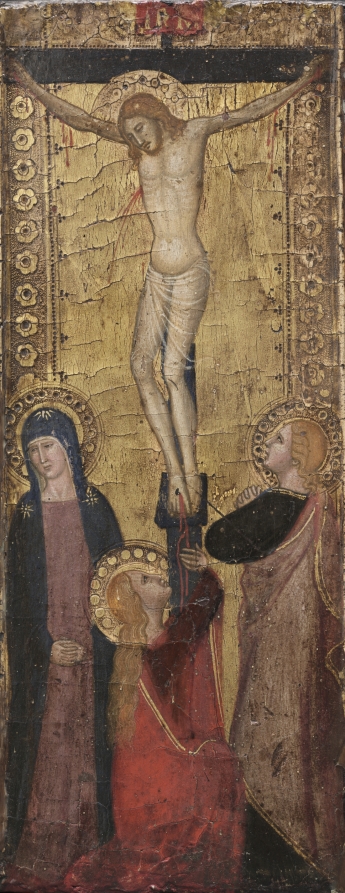
Andrea da Firenze · The Cleveland Museum of Art · Holden Collection · CC0
- Born
- 1350.
- Died
- 1415. · Florence.
- Nationality
- Republic of Florence.
- Occupation
- composer and organist.
- Fields
- music and medieval music.
- Movements
- medieval music.
- Languages
- Italian.
VALÉORINE Encyclopedia
VALÉORINE documentary reading
Documentary summary
Andreas de Florentia (also known as Andrea da Firenze, Andrea de' Servi, Andrea degli Organi and Andrea di Giovanni; died 1415) was a Florentine composer and organist of the late medieval era. Along with Francesco Landini and Paolo da Firenze, he was a leading representative of the Italian ars nova style of the Trecento, and was a prolific composer of secular songs, principally ballate.
Admitted source layer · organised and presented by VALÉORINE
Note VALÉORINE
No house-authored Note is published until its assertions and sources pass the VALÉORINE evidence contract. The documentary article remains available in full while that enrichment is being consolidated.
Documentary enrichment in progress · no unsupported statement published
Reference Check
Propose documentary evidence for Andrea da Firenze. A contribution is never written directly as fact: identity, source, rights and evidence gates still decide.
Sign in to contribute
World of VALÉORINE
Documentary connections
Only confirmed graph relationships appear here. Images are shown only when their identity and reuse rights both pass the documentary gate.

Documentary evidence
Evidence Panel
not yet certified
- Identity
- resolved
- Independent source families
- 0
- Admitted assertions
- 0
- Open conflicts
- 0
Authority files
getty · 500000705 · gnd · 131335774 · wikidata · Q1151313 · wikipedia · Andreas de Florentia
In this article
Life
Life
Since Andreas was a member of the Servite religious order, whose records have largely survived intact, more is known about his life than is usually the case for fourteenth-century composers. He entered the order in 1375, though at what age is not known. One of his first activities within the order was to carry out a commission to build an organ for the Servite house in Florence, for which he hired Francesco Landini as a consultant. Among the surviving records are the receipts for the wine that the two consumed during the three days it took to tune the instrument. Evidently he and Landini were successful, for in 1387 Andreas received a similar commission to build an organ for Florence Cathedral. A commission recorded in 1382 for a "Maestro Andrea" to build an organ in Rieti, between Florence and Rome, may have been his as well, but has not been conclusively identified. The two men were evidently close friends, from the evidence of their time together, as well as the references found in their music. Andreas was also active within his order as an administrator. In 1380 he became prior of the Florentine Servite monastery, SS Annunziata; in 1393 he took on the additional role of prior of the monastery in Pistoia. From 1407 to 1410 he led the entire Servite order in Tuscany.
Music
Music
All of Andreas's surviving music with reliable attribution is in the genre of the ballata. Thirty are known, with eighteen being for two voices and twelve for three; in addition, one ballade in French may be his work, based on stylistic similarities and a contemporary attribution of it to a name similar to his. The main source for his work is the Squarcialupi Codex, which also includes, in the section containing Andreas's music, a colorful illustration of a man playing an organ, probably Andreas himself. The two-voice ballate are usually for two singing voices; two of them include an instrumental tenor. Not all of the three-voice ballate have text in all three voices, and the third voice sometimes may have been played on an instrument. Compared to Landini's music, in which refinement, elegance, and a memorable melodic line were the clear goals of the composer, Andreas's music is dramatic, restless, and sometimes disjunct, and includes sharp dissonances to highlight certain passages in the text. One of his ballate includes a melodic leap of an augmented octave, highlighting the word maledetto (accursed), causing it to leap out from the rest of the music.
Life and career
Dated record
Life and career
The full dated record · 1 entries
1415
Andrea da Firenze died at Florence.
Primary material
Documents and archives
authority file
- Getty Union List of Artist Names 500000705, Andrea da Firenze.
Unverified · The Getty Research Institute
authority record
- Wikidata, structured authority record Q1151313: Andrea da Firenze
Unverified · Wikidata
reference work
- “Andreas de Florentia”, English Wikipedia, consulted as further reading
Reputable secondary · Wikipedia
Citations
References
Each reference names the institution holding it, so a reader may go to the document itself.
authority file
Getty Union List of Artist Names 500000705, Andrea da Firenze.The Getty Research Institute
Partially resolvedauthority record
Partially resolvedreference work
Partially resolved
A further 1 witness is held back from this article because the person or object named in it is not yet resolved to this record. They are kept, not discarded, and return once the identity is established.
The Encyclopedia exists whether or not anything is for sale. Corrections are recorded rather than overwritten, and every version of this record is kept. Published 14 August 2026.
Elsewhere in Music memorabilia
42,307 published records in this field, each with its sources named.
- Andrea BruschiPerson
- Andrea CaccesePerson
- Andrea CeraPerson
- Andrea CorrPerson
- Andrea FalconieriPerson
- Andrea FarriPerson
- Andrea FerrantePerson
- Andrea FigalloPerson
Best supported in this field
For owners
Own a work by Andrea da Firenze?
A specialist will read what you send and tell you what the house can establish, what it cannot, and whether the object is suited to sale. There is no charge and no obligation. The object stays with you throughout; nothing is shipped to us unless it is arranged in writing beforehand.