
Ana María Shua
Ana María Shua (born 22 April 1951) is an Argentine writer. She is particularly well known for her work in microfiction. Shua has published over eighty books in numerous genres including novels, short stories, microfiction, poetry, drama, children's literature, books of humor and Jewish folklore, anthologies, film scripts, journalistic articles, and essays.[1] She has received numerous national and international awards, including a Guggenheim Fellowship, and is one of Argentina's premier living writers.[2][3] She has been referred to as the "Queen of the Micro-Story" in the world of Spanish-language literature.[5]
Also recorded as Ana Maria Shua
Ana María Shua

Secretaría de Cultura de la Nación · Ana María Shua · CC BY-SA 2.0
- Name
- Ana María Shua
- Birth Name
- Ana María Schoua
- Born
- 22 April 1951
- Birthplace
- Buenos Aires, Argentina
- Occupation
- Writer, illustrator
- Education
- University of Buenos Aires
- Spouse
- Silvio Fabrykant
- Awards
- Guggenheim Fellowship
- Nationality
- Argentina
- Fields
- fiction
- Known for
- La muerte como efecto secundario
- Honours
- Guggenheim Fellowship · honorary doctorate
VALÉORINE Encyclopedia
VALÉORINE documentary reading
Documentary summary
Ana María Shua (born 22 April 1951) is an Argentine writer. She is particularly well known for her work in microfiction. Shua has published over eighty books in numerous genres including novels, short stories, microfiction, poetry, drama, children's literature, books of humor and Jewish folklore, anthologies, film scripts, journalistic articles, and essays.[1] She has received numerous national and international awards, including a Guggenheim Fellowship, and is one of Argentina's premier living writers.[2][3] She has been referred to as the "Queen of the Micro-Story" in the world of Spanish-language literature.[5]
Admitted source layer · organised and presented by VALÉORINE
Note VALÉORINE
No house-authored Note is published until its assertions and sources pass the VALÉORINE evidence contract. The documentary article remains available in full while that enrichment is being consolidated.
Documentary enrichment in progress · no unsupported statement published
Reference Check
Propose documentary evidence for Ana María Shua. A contribution is never written directly as fact: identity, source, rights and evidence gates still decide.
Sign in to contribute
World of VALÉORINE
Documentary connections
Only confirmed graph relationships appear here. Images are shown only when their identity and reuse rights both pass the documentary gate.
Documentary evidence
Evidence Panel
not yet certified
- Identity
- resolved
- Independent source families
- 0
- Admitted assertions
- 0
- Open conflicts
- 0
Authority files
wikidata · Q434280 · wikipedia · Ana María Shua
In this article
Biography
Biography
Ana María Shua studied at National School of Buenos Aires and Facultad de Filosofía y Letras de la Universidad de Buenos Aires. The recorded working language is Spanish. Subjects and genres recorded for the work are fiction. Employment is recorded with University of Buenos Aires. Works named in the authority record are La muerte como efecto secundario. Distinctions recorded are Guggenheim Fellowship and honorary doctorate.
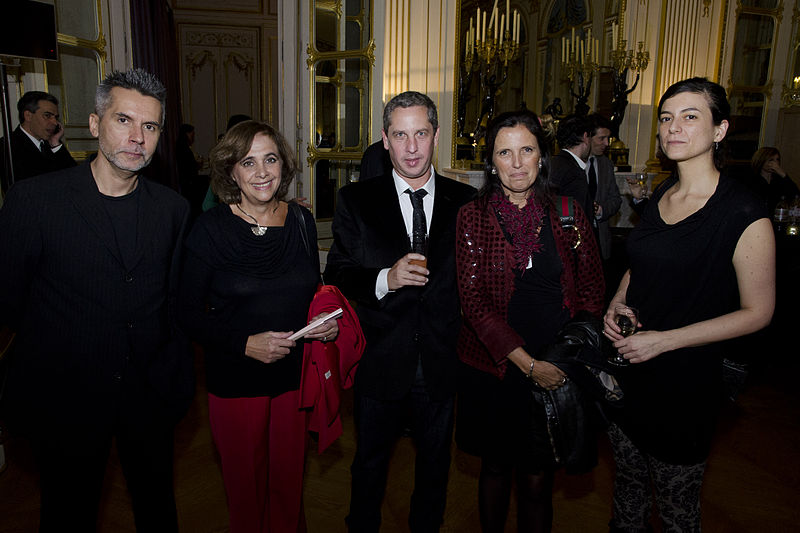
Paris, March 20, 2014. As a parallel to the Paris Book Fair 2014 activity, the Secretary of Culture of Argentina, Jorge Coscia, and the Minister of Culture and Communication of France, Aurélie Filippetti inaugurated this afternoon "Land of Light. Culture and Franco- Argentina solidarity ", an exhibition that pays tribute to this generous nation in the Ministry of Culture and Communication of Fran
Secretaría de Cultura de la Presidencia de la Nación · Escritores argentinos en la inauguración de Tierra de Luz. Una muestra que celebra la cultura y solidaridad franco-argentina
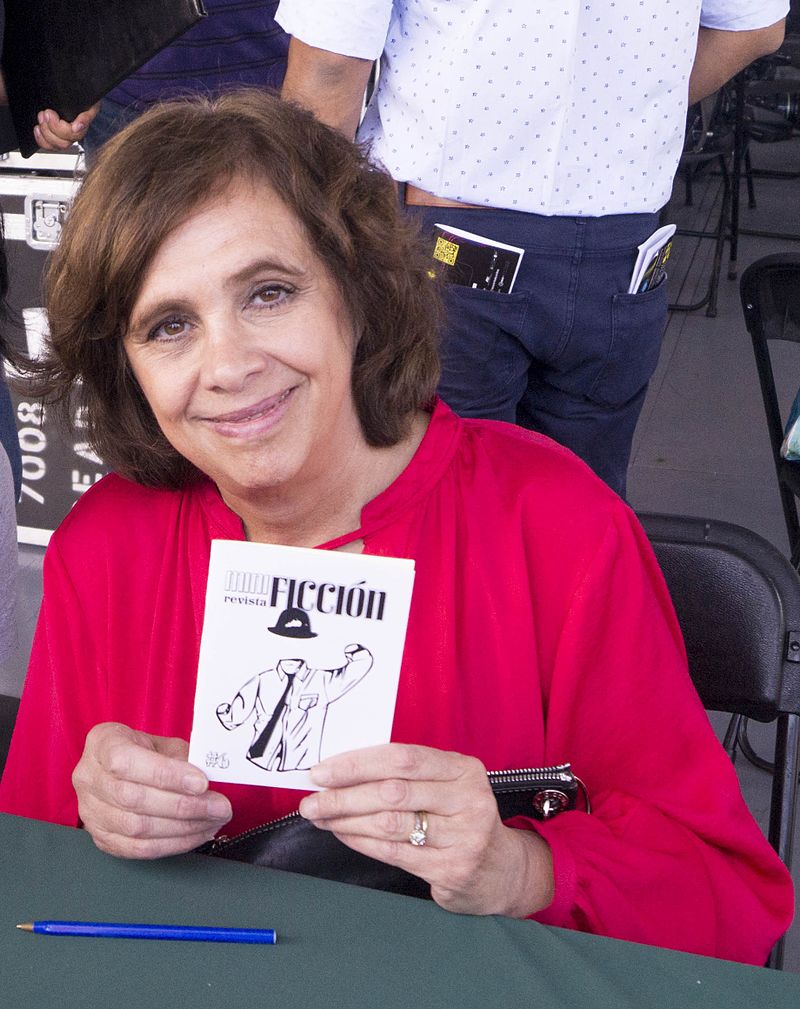
Ana María Shua con Revista Minificción en el I Encuentro Iberoamericano de Minificción, Ciudad de México.
Jesús Toledo
Key facts
Key facts
• Name — Ana María Shua • Birth Name — Ana María Schoua • Born — 22 April 1951 • Birthplace — Buenos Aires, Argentina • Occupation — Writer, illustrator • Education — University of Buenos Aires • Genre — Fiction • Spouse — Silvio Fabrykant • Children — Gabriela Fabrykant Paloma Fabrykant Vera Fabrykant • Awards — Guggenheim Fellowship
Early life and education
Early life and education
Born Ana María Schoua (the original spelling for her surname) in Buenos Aires in 1951,[6] Shua became interested in writing at a young age, inspired by books such as Black Beauty.[7] She published her first book on poetry, El sol y yo, in 1967 when she was only a sixteen-year-old student at the Colegio Nacional de Buenos Aires,[8] having won a prize from the Fondo Nacional de las Artes that paid for the printing of 1,000 copies. The collection won the "Faja de Honor" award given by the Argentine Society of Writers.[9][10] Shua studied at the University of Buenos Aires and obtained a degree in education, specializing in literature.[11][12]
Exile
Exile
During the last military dictatorship in Argentina, often called the National Reorganization Process, Shua took a boat to Europe and went into exile in France, part of a wave of exiled political figures and intellectuals. Her sister and her two cousins were also exiled. She lived in Paris from 1976 to 1977, working for the Spanish magazine Cambio 16.[13][14]
Return to Argentina and literary success
Return to Argentina and literary success
Once back in Argentina, Shua published her first novel: Soy paciente, released in 1980, for which she won an award given by the Losada publishing house.[15] The book is often read as a metaphor for the military dictatorship, which was still in power at the time.[16] The following year she published her first short-story collection, Los días de pesca, followed in 1984 by her first commercial success, the novel Los amores de Laurita.[17] That same year, she published La sueñera, her first collection of microfiction—the extremely short stories that would become her signature, also sometimes known in English as "flash fiction."[18] Shua had been working on La sueñera for 10 years before it was published.[19] Since then, she has published the works of microfiction Casa de Geishas, Botánica del caos, Temporada de fantasmas, Cazadores de letras (a compilation that includes her first four microfiction collections), and Fenómenos de circo. In explaining her affection for the genre, Shua has said: "I really like to feel that I am inside a text in which every word is essential, in which rhythm and sound are as important as meaning and cannot be separated." She has also described the super-short format as requiring authors "to work with the knowledge of the reader, like in martial arts, where you take advantage of the force of your opponent."[20] In 1994, she was granted a Guggenheim Fellowship to write her novel El libro de los recuerdos, which tells the story of a Jewish family in Argentina, somewhat based on her own family's history. Shua has worked as a journalist, a publicist, and a screenwriter, adapting some of her writings, including Los amores de Laurita, directed by Antonio Ottone.[21] She also co-wrote the script for the Juan José Jusid's film Where Are You My Love, That I Cannot Find You[22]? Shua has also written books for children and works of humor and folklore, including El pueblo de los tontos, the first Spanish-language telling of the traditional Jewish Chełm stories. A complete collection of her stories was published in 2009 under the title Que tengas una vida interesante,[23] and an English translation of some of her stories was published the same year under the title Microfictions.[24] Other English translations include The Book of Memories, Quick Fix, and Circus Freaks.[25]
Personal life
Personal life
Shua's parents were Jewish, of Polish and Lebanese origin,[31] although her father was a militant atheist and she was raised largely without religion. But, Shua has said, "To be Jewish you don't have to study, nor believe, nor know anything in particular: it is not something that you choose," and Jewish themes have appeared occasionally in her work. As a fiction writer, Shua has said she avoids reading nonfiction, including reviews and literary criticism of her own work. She is married to the architect and photographer Silvio Fabrykant, whom she wed in 1975.[32] The couple has three children: Gabriela, Vera, and Paloma Fabrykant.[33]
Novels
Novels
• Soy paciente (translated as Patient, 1980) • Los amores de Laurita (1984) • El libro de los recuerdos (The Book of Memories, 1994) • La muerte como efecto secundario (Death as a Side Effect, 1997) • El peso de la tentación (2007) • Nemo (2003)
Humorous fiction
Humorous fiction
• El marido argentino promedio (1991) • Risas y emociones en la cocina judía (2003)
Movie scripts
Movie scripts
• Soy paciente (1986) • Los amores de Laurita (1986) • ¿Dónde estás amor de mi vida que no te puedo encontrar? (1992)
Documentary
Documentary
• En el nombre del padre. Contrakultura Films, 2002. Produced by Eduardo Montes-Bradley[34]
Life and career
Dated record
Life and career
The full dated record · 1 entries
1951
Ana María Shua born.
Children's books
• La batalla de los elefantes y los cocodrilos (1988) • La fábrica del terror (1991) • La puerta para salir del mundo (1992) • Cuentos judíos con fantasmas y demonios (1994) • Ani salva a la perra Laika (1996) • Historia de un cuento (1998) • Cuentos con magia (1999) • La luz mala (2000) • Los monstruos del Riachuelo (2001) • Planeta miedo (2002) • Su primera zanahoria (2005) • Un ciervo muy famoso (2005)
Short story collections
Short story collections
• Los días de pesca (1981) • Viajando se conoce gente (1988) • Como una buena madre (2001) • Historias verdaderas (2004) • Los devoradores (2005)
Microfiction collections
Microfiction collections
• La sueñera (1984) • Casa de geishas (1992) • Botánica del caos (2000) • Temporada de fantasmas (Ghost Season, 2004) • Quick fix (2008) • Cazadores de Letras (2009) • Microfictions (2009) • Fenómenos de circo (Circus Freaks, 2011)
Poetry collections
Poetry collections
• El sol y yo (1967)
Holdings and surviving copies
Where the work is held
Holdings and surviving copies
Where material relating to Ana María Shua is held.
Awards and recognition
• Illustration — Ana María Shua being interviewed for the documentary film En el nombre del padre. Among Shua's honors include her two awards for El sol y yo, her award for Soy paciente, and the Guggenheim Fellowship. She also received honors from the Banco del Libro and International Board on Books for Young People for her children's book La fábrica del terror,[26][27] and first place in the stories category for her book Fenómenos de circo from the Argentine Ministry of Culture.[28] Her 1997 novel La muerte como efecto secundario was included on the International Congress of the Spanish Language's list of the 100 best Spanish novels of the quarter-century.[29] Shua was the recipient of the first Juan José Arreola Ibero-American Prize for Mini-Fiction in 2016.[30]
Literature
Scholarly footprint
A count of publications is evidence of attention, not of standing, and is given here only as a measure.
Notes from the source article
Cited by Wikipedia
Notes from the source article
These works are cited by the source article, in its own numbering. They are recorded as its citations, not as sources VALÉORINE has verified.
- 1.Words Without Borders. Ana María Shua.
- 2.Imaginaria.com.ar. Ana María Shua - Imaginaria No. 31 - 9 de agosto de 1999.
- 3.Bio: Ana María Shua. The International Literary Quarterly.
- 4.Anamariashua.com.ar. Ana María Shua.
- 5.Clarín.com. Ana María Shua, la reina del microrrelato. www.clarin.com. 25 September 2017.
- 6.Ruiz-Bravo, Coral Cenizo. Entrevista a Ana María Shua. Microtextualidades: Revista Internacional de microrrelato y minificción. 3. 2018.
- 7.Ana María Shua. Imaginaria. 2000-08-09.
- 8.Ana María Shúa será jurado de la primera edición de los Premios María Elena Walsh. Asociación de Ex Alumnos del Colegio Nacional de Buenos Aires.
- 9.Shua, Ana María, 1951-. La fábrica del terror 1. August 2016. 978-950-07-5633-4.
- 10.Cook, Alyce. Review: All Facets of Ana María Shua's Creative World Reviewed Work: El río de los sueños: Interamer. 70. Organización de los Estados Americanos by Rhonda Dahl Buchanan. Confluencia. University of Northern Colorado. 19. 1. 191–193. 2003. 27922969.
- 11.Shua, Ana María. www.jewishvirtuallibrary.org.
- 12.Agins Lincow, Jamie. La distopía en las novelas de Ana María Shua. 2018. 978-84-946301-8-7.
- 13.Buchanan, Rhonda Dahl. Narrating Argentina's "Epoca del Miedo" in Ana María Shua's "El libro de los recuerdos". Confluencia. 13. 2. 84–91. 1998. 0888-6091.
- 14.The Short Fiction of Ana María Shua: A Bilingual Reading and Conversation.
- 15.Sadow, Stephen. An Interview with Ana Maria Shua. Northeastern University Library. 2012.
- 16.Friera, Silvina. "No hay nada que parezca más trágico que un cómico" Ana María Shua y Florencia Bendersky hablan de Soy paciente. PAGINA12. 2017-06-26.
- 17.RADIO 5. Ana María Shua, escritora. RTVE.es. 2015-12-24.
- 18.Escritores.org. Shua, Ana María. www.escritores.org. April 2011.
- 19.FERRERO, ADRIÁN. Ana María Shúa. Hispamérica. 45. 135. 73–82. 2016. 0363-0471.
- 20.Gallego-Díaz, Soledad. La minificción tiene posibilidades infinitas. El País. 2009-04-10. 1134-6582.
- 21.Los amores de Laurita (1986) - Ficha técnica, Sinopsis, Imágenes, Trailer, Actores, Cast cinenacional.com.
- 22.Jusid, Juan José. ¿Dónde estás amor de mi vida que no te puedo encontrar?. 1992-08-06.
- 23.El prólogo de Que tengas una vida interesante. Eterna Cadencia.
- 24.Book Page : Nebraska Press. www.nebraskapress.unl.edu.
- 25.Results for 'ana maria shua' > 'Ana María Shua' > 'English' [WorldCat.org]. www.worldcat.org.
- 26.Grafemas Diciembre 2008: Entrevista. people.wku.edu.
- 27.ANA MARÍA SHUA ALIBRATE. www.alibrate.com.
- 28.Se entregaron los Premios Nacionales a la producción cultural 2010-2013. www.telam.com.ar.
- 29.Campos Acero, Carlos. Píldoras literarias. Hoy, con "100", de Ana María Shu. La Provincia.
- 30.Ana María Shua gana el primer oro de la cortísima distancia. ELMUNDO. 2016-10-14.
- 31.Silvia G. Dapía, "Polish and Jewish Identities in the Narratives of Ana María Shua", Polish American Studies Vol. 65, No. 2 (Autumn, 2008), University of Illinois Press pp. 53-69.
- 32.Clarín.com. Mundos íntimos: ¿Cuántas neuronas pierde mi hija en cada pelea?. www.clarin.com. 9 May 2015.
- 33.Soy inocente en literatura, pero no en la vida. La Capital.
- 34.Anamariashua.com.ar. Ana María Shua.
References
Citations
References
Each reference names the institution holding it, so a reader may go to the document itself.
reference work
Partially resolvedreference work
Wikidata, structured authority record Q434280: Ana María ShuaWikimedia Foundation
Partially resolved
Further particulars
Held on the record
Further particulars
Open the remaining particulars
Ana María Shua is recorded as writer and film screenwriter.
The Encyclopedia exists whether or not anything is for sale. Corrections are recorded rather than overwritten, and every version of this record is kept. Published 15 August 2026.
Elsewhere in Books
38,960 published records in this field, each with its sources named.
- Ana Maria MachadoAuthor
- Ana María MatuteAuthor
- Ana María MoixAuthor
- Ana María RodasAuthor
- Ana Martins MarquesAuthor
- Ana Mercedes PérezAuthor
- Ana MerinoAuthor
- Ana MilánAuthor
Best supported in this field
For owners
Own a work by Ana María Shua?
A specialist will read what you send and tell you what the house can establish, what it cannot, and whether the object is suited to sale. There is no charge and no obligation. The object stays with you throughout; nothing is shipped to us unless it is arranged in writing beforehand.