
Alice Bradley Sheldon
Alice Bradley Sheldon, better known as James Tiptree Jr. (born Alice Hastings Bradley; August 24, 1915 – May 19, 1987), was an American science fiction and fantasy author. It was not publicly known until 1977 that James Tiptree Jr.
Also recorded as Raccoona Sheldon · Alice Sheldon · James Tiptree Jr. · James Tiptree, Jr.
Alice Bradley Sheldon
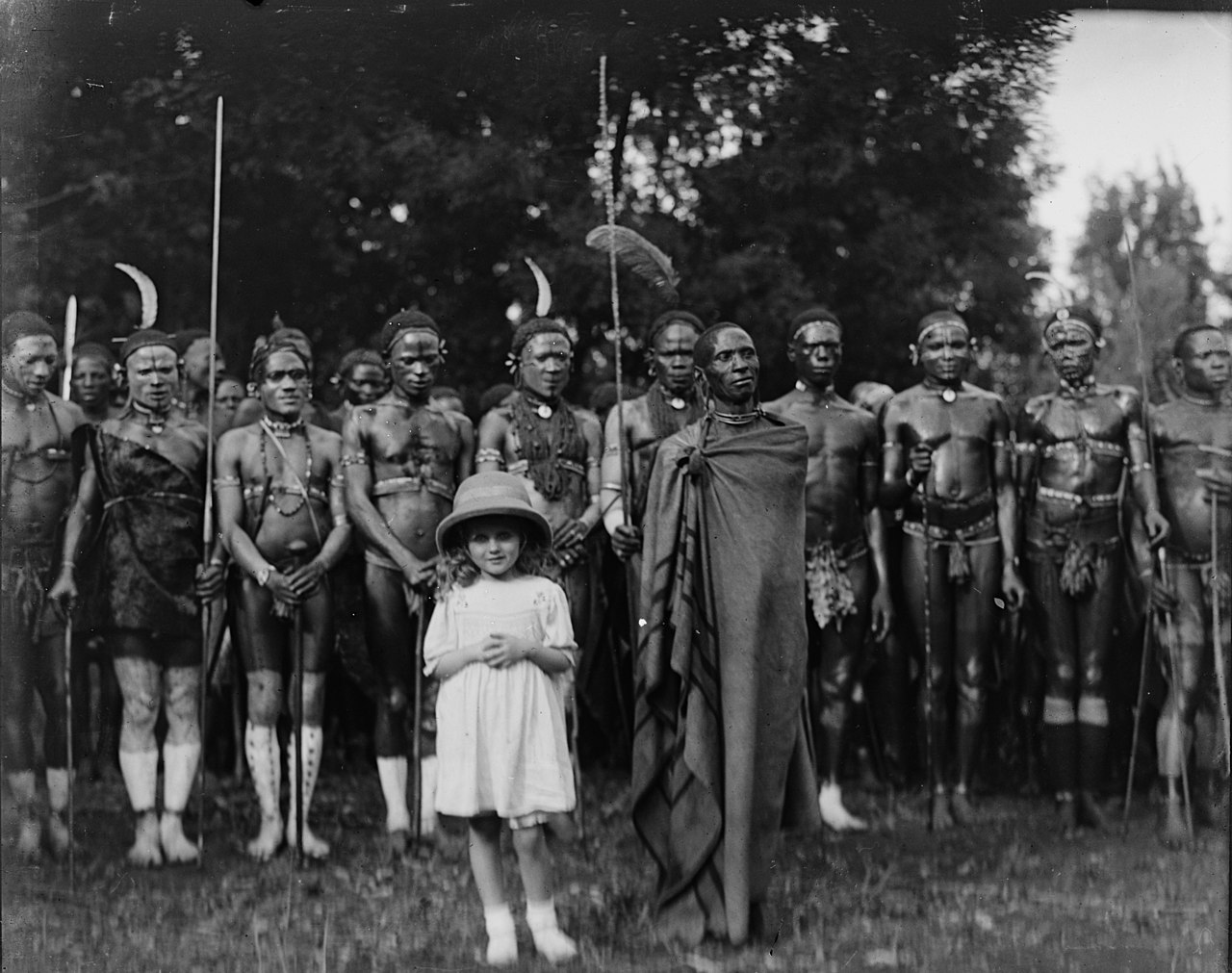
Probably one of her parents · Julie Phillips had it (probably Jeffrey D. Smith, Tiptrees old friend, gave it to her) First published in the US in 1922 in On the Gorilla Trail by Mary Hastings Bradley · Public domain
- Name
- James Tiptree Jr.
- Birth Name
- Alice Hastings Bradley
- Born
- 24 August 1915
- Birthplace
- Chicago, Illinois, U.S.
- Died
- 19 May 1987
- Place of death
- McLean, Virginia, U.S.
- Education
- * American University, BA
- Occupation
- * Artist
- Awards
- * 1973 Nebula Award for Best Short Story
- Spouse
- * William Davey (1934–1941)
- Full name
- Alice Hastings Bradley.
- Nationality
- United States.
VALÉORINE Encyclopedia
VALÉORINE documentary reading
Documentary summary
Alice Bradley Sheldon, better known as James Tiptree Jr. (born Alice Hastings Bradley; August 24, 1915 – May 19, 1987), was an American science fiction and fantasy author. It was not publicly known until 1977 that James Tiptree Jr.
Admitted source layer · organised and presented by VALÉORINE
Note VALÉORINE
No house-authored Note is published until its assertions and sources pass the VALÉORINE evidence contract. The documentary article remains available in full while that enrichment is being consolidated.
Documentary enrichment in progress · no unsupported statement published
Reference Check
Propose documentary evidence for Alice Bradley Sheldon. A contribution is never written directly as fact: identity, source, rights and evidence gates still decide.
Sign in to contribute
World of VALÉORINE
Documentary connections
Only confirmed graph relationships appear here. Images are shown only when their identity and reuse rights both pass the documentary gate.

Documentary evidence
Evidence Panel
not yet certified
- Identity
- resolved
- Independent source families
- 0
- Admitted assertions
- 0
- Open conflicts
- 0
Authority files
wikidata · Q234928 · wikipedia · James Tiptree Jr.
In this article
Biography
Biography
Was a pen name of a woman, which she used from 1967 until her death. From 1974 to 1985, she also occasionally used the pen name Raccoona Sheldon. Tiptree was inducted into the Science Fiction Hall of Fame in 2012. Tiptree's debut story collection, Ten Thousand Light-Years from Home, was published in 1973 and her first novel, Up the Walls of the World, was published in 1978. Her other works include the 1973 novelette "The Women Men Don't See", the 1974 novella "The Girl Who Was Plugged In", the 1976 novella "Houston, Houston, Do You Read?", the 1985 novel Brightness Falls from the Air, and the 1974 short story "Her Smoke Rose Up Forever".
Alice Bradley Sheldon studied at George Washington University, Sarah Lawrence College and American University. The recorded working language is American English and English. The field of work recorded is speculative fiction and intelligence agency. Subjects and genres recorded for the work are science fiction and feminist science fiction. Works named in the authority record are Ten Thousand Light-Years from Home, Warm Worlds and Otherwise, Star Songs of an Old Primate, Out of the Everywhere and Other Extraordinary Visions, Houston, Houston, Do You Read? And The Starry Rift. Distinctions recorded are Nebula Award for Best Short Story, Hugo Award for Best Novella, Nebula Award for Best Novella and Nebula Award for Best Novelette.

Alice Sheldon at the river
Probably one of her parents · Julie Phillips had it (probably Jeffrey D. Smith, Tiptrees old friend, gave it to her)

Alice Sheldon (birth name Bradley) at a ceremonial dance of the Kikuyu, Kenya, 1922. Published in Julie
Probably one of her parents · American Museum of Natural History Library (Source given by Phillips) First published in the book "On the gorilla trail" by Mary Hastings Bradley in 1922
Key facts
Key facts
• Name — James Tiptree Jr. • Birth Name — Alice Hastings Bradley • Pen Name — * James Tiptree Jr. • Raccoona Sheldon • Born — 24 August 1915 • Birthplace — Chicago, Illinois, U.S. • Died — 19 May 1987 • Place of death — McLean, Virginia, U.S. • Education — * American University, BA • George Washington University, PhD • Occupation — * Artist • intelligence analyst • research psychologist • writer • Period — 1968–1988 (new fiction) • Genre — Science fiction • Awards — * 1973 Nebula Award for Best Short Story • 1977 Nebula Award for Best Novella • 1978 Nebula Award for Best Novelette • 1987 World Fantasy Award—Collection • Spouse — * William Davey (1934–1941) • Huntington D. Sheldon (1945–1987, their deaths) • Relatives — * Mary Hastings Bradley (mother) • Herbert Edwin Bradley (father)
Early life, family and education
Early life, family and education
Alice Hastings Bradley came from a family in the intellectual enclave of Hyde Park, a university neighborhood in Chicago. Her father was Herbert Edwin Bradley, a lawyer and naturalist, and her mother was Mary Hastings Bradley, a prolific writer of fiction and travel books. From an early age she traveled with her parents, and in 1921–22, the family made their first trip to central Africa. During these trips, she played the role of the "perfect daughter, willing to be carried across Africa like a parcel, always neatly dressed and well behaved, a credit to her mother." This later contributed to her short story, "The Women Men Don't See". • Illustration — Alice Sheldon with the Kikuyu people, 1920s She is the title character in two non-fiction accounts by her mother of their travels: Alice in Jungleland (1927) and Alice in Elephantland (1929). These were both travel books for children which included photos of young Alice visiting parts of Africa not yet fully discovered by Westerners. The illustrated cover of Alice in Jungleland is credited to Alice Hastings Bradley. Between trips to Africa, Bradley attended school in Chicago. At the age of ten, she went to the University of Chicago Laboratory Schools, which was an experimental teaching workshop with small classes and loose structure. When she was fourteen, she was sent to finishing school in Lausanne in Switzerland, before returning to the US to attend boarding school in Tarrytown in New York.
Adulthood and early career: 1934–1967
Adulthood and early career: 1934–1967
Bradley was encouraged by her mother to seek a career, but her mother also hoped that she would get married and settle down. In 1934, at age 19, she met William (Bill) Davey and eloped to marry him. She dropped out of Sarah Lawrence College, which did not allow married students to attend. They moved to Berkeley, California, where they took classes and Davey encouraged her to pursue art. The marriage was not a success; he was an alcoholic and irresponsible with money and she disliked keeping house. The couple divorced in 1940. Later on, she became a graphic artist, a painter, and—still under the name "Alice Bradley Davey"—an art critic for the Chicago Sun between 1941 and 1942. After the divorce, Bradley joined the Women's Army Auxiliary Corps where she became a supply officer. In 1942 she joined the United States Army Air Forces and worked in the Army Air Forces photo-intelligence group. She later was promoted to major, a high rank for women at the time. In the army, she "felt she was among free women for the first time." As an intelligence officer, she became an expert in reading aerial intelligence photographs. In 1945, at the close of the war, while she was on assignment in Paris, she married her second husband, Huntington D. Sheldon, known as "Ting". She was discharged from the military in 1946, at which time she set up a small business in partnership with her husband. The same year, a non-fiction piece about Polish refugees working in Germany (entitled "The Lucky Ones") was published in the November 16, 1946 issue of The New Yorker, and credited to "Alice Bradley" in the magazine. In 1952 she and her husband were invited to join the CIA, which she accepted. At the CIA, she worked as an intelligence officer, but she did not enjoy the work. She resigned her position in 1955 and returned to college. She studied for her bachelor of arts degree at American University (1957–1959). She received a doctorate from George Washington University in Experimental Psychology in 1967. She wrote her doctoral dissertation on the responses of animals to novel stimuli in differing environments. During this time, she wrote and submitted a few science fiction stories under the name James Tiptree Jr., in order to protect her academic reputation.
Art career
Art career
Bradley began illustrating when she was nine years old, contributing to her mother's book, Alice in Elephantland, a children's book about the family's second trip to Africa, appearing in it as herself. She later had an exhibit of her drawings of Africa at the Chicago Gallery, arranged by her parents. Although she illustrated several of her mother's books, she only sold one illustration during her lifetime, in 1931, to The New Yorker, with help from Harold Ober, a New York agent who worked with her mother. The illustration, of a horse rearing and throwing off its rider, sold for ten dollars. In 1936, Bradley participated in a group show at the Art Institute of Chicago, to which she had connections through her family, featuring new American work. This was an important step forward for her painting career. During this time she also took private art lessons from John Sloan. Bradley disliked prudery in painting. While examining an anatomy book for an art class, she noticed that the genitals were blurred, so she restored the genitals of the figures with a pencil. In 1939, her nude self-portrait titled Portrait in the Country was accepted for the "All-American" biennial show at the Corcoran Gallery in Washington, D.C., where it was displayed for six weeks. While these two shows were considered big breaks, she disparaged these accomplishments, saying that "only second rate painters sold" and she preferred to keep her works at home. By 1940, Bradley felt she had mastered all the techniques she needed and was ready to choose her subject matter. However, she began to doubt whether she should paint. She kept working at her painting techniques, fascinated with the questions of form, and read books on aesthetics in order to know what scientifically made a painting "good". She stopped painting in 1941. As she was in need of a way to support herself, her parents helped her find a job as an art critic for the Chicago Sun.
Science fiction career: 1967–1987
Science fiction career: 1967–1987
Bradley discovered science fiction in 1924, when she read her first issue of Weird Tales, but she did not write any herself until years later. Unsure what to do with her new degrees and her careers, she began to write science fiction. She adopted the pseudonym of James Tiptree Jr. in 1967. The name "Tiptree" came from a variety of marmalade produced by Wilkin & Sons, and the "Jr." was her husband's idea. In an interview, she said: "A male name seemed like good camouflage. I had the feeling that a man would slip by less observed. I've had too many experiences in my life of being the first woman in some damned occupation." She also made the choice to start writing the type of science fiction she was interested in and "was surprised to find that her stories were immediately accepted for publication and quickly became popular." Her first published short story was "Birth of a Salesman" in the March 1968 issue of Analog Science Fact & Fiction, edited by John W. Campbell. Three more followed that year in If and Fantastic. She continued to work as James Tiptree, Jr, keeping the identity a closely guarded secret, never attending book signings, science fiction conventions, or having in-person or even telephone contact with agents or editors. For close to a decade, Tiptree worked exclusively in the field of science fiction short stories, publishing several stories each year in various magazines, usually to acclaim within the industry. In 1974, Sheldon also started submitting stories to various outlets as "Raccoona Sheldon", but was not successful getting published until her other alter ego until Tiptree, wrote to publishers to intervene. After that, for a short time, the two personas were both selling work to various magazines. The Tiptree pseudonym was successfully maintained until late 1977. Although "Tiptree" was widely known to be a pseudonym, it was generally understood its use was intended to protect the professional reputation of an intelligence community official, a career then strongly associated with men. Readers, editors and correspondents were permitted to assume the author's sex, and they generally but not invariably assumed Tiptree was male. For example, Harlan Ellison had introduced Tiptree's story "The Milk of Paradise" in the 1972 anthology Again, Dangerous Visions with the opinion that "[Kate] Wilhelm is the woman to beat this year, but Tiptree is the man". There was speculation Tiptree was a woman, however, based partially on the themes in her stories. In 1975, in the introduction to Warm Worlds and Otherwise, a collection of Tiptree's short stories, Robert Silverberg wrote: "[i]t has been suggested that Tiptree is female, a theory that I find absurd, for there is to me something ineluctably masculine about Tiptree's writing." Silverberg also likened Tiptree's writing to Ernest Hemingway's, arguing there was a "prevailing masculinity about both of them—that preoccupation with questions of courage, with absolute values, with the mysteries and passions of life and death as revealed by extreme physical tests, by pain and suffering and loss." Tiptree never made any public appearances, but she did correspond regularly with fans and other science fiction authors through the mail. When asked for biographical details, Tiptree/Sheldon was forthcoming in everything but her sex. According to her biographer, Julie Phillips, "No one had ever seen or spoken to the owner of this voice. He wrote letters, warm, frank, funny letters, to other writers, editors, and science fiction fans". In her letters to fellow writers such as Ursula K. Le Guin and Joanna Russ, she would present herself as a feminist man; however, Sheldon did not present herself as male in person. Writing was a way to escape what she felt was a male-dominated society, themes Tiptree explored in the short stories later collected in Her Smoke Rose Up Forever. One story in particular offers an excellent illustration of these themes. "Houston, Houston, Do You Read?" follows a group of astronauts who discover a future Earth whose male population has been wiped out; the remaining females have learned to get along just fine in their absence. In 1976, Tiptree mentioned in a letter that "his" mother, also a writer, had died in Chicago. This detail led inquiring fans to find the obituary, with its reference to Alice Sheldon; soon all was revealed. Once the initial shock was over, Sheldon wrote to Le Guin, one of her closest friends, confessing her identity. She wrote, "I never wrote you anything but the exact truth, there was no calculation or intent to deceive, other than the signature which over 8 years became just another nickname; everything else is just plain me. The thing is, I am a 61-year-old woman named Alice Sheldon—nickname Alli—solitary by nature but married for 37 years to a very nice man considerably older [Huntington was 12 years her senior], who doesn't read my stuff but is glad I like writing". After Sheldon's identity was revealed, several prominent science fiction writers suffered some embarrassment. Robert Silverberg, who had argued Tiptree could not be a woman from the evidence of her stories, added a postscript to his introduction to the second edition of Tiptree's Warm Worlds and Otherwise, published in 1979. Only after her identity was exposed did she complete her first full-length novel, Up the Walls of the World, which was a Doubleday Science Fiction Book Club selection. Before that she had worked on and built a reputation only in the field of short stories. After the revelation of her real identity, Sheldon continued to use the Tiptree name on her fiction for the rest of her life, with the exception of one further short story credited to "Raccoona Sheldon".
Themes
Themes
A constant theme in Sheldon's work is gender; she was influenced by the rise of second-wave feminism. A strong example is "The Women Men Don't See" (1973), where Sheldon, as in most of her stories, devises a convincing male point of view. We see the two women in the story (Ruth Parsons and her daughter) through the eyes of Don Fenton, who assesses them critically as possible sexual partners and is also concerned to protect them. He is confused when Ruth shows courage and common sense, failing to "fulfill stereotypical female roles", according to Anne Cranny-Francis. Ruth tries to explain the alienation of women in general and herself in particular, but to Fenton it seems nonsense. The Parsons' decision to leave Earth on an alien spaceship jars him into, if not understanding, at least remembering Ruth's words. The title of the short story itself reflects the idea that women are invisible during Sheldon's time. As Cranny-Francis states, The Women Men Don't See' is an outstanding example... of the subversive use of genre fiction to produce an unconventional discursive position, the feminist subject."
Sexual orientation
Sexual orientation
Sheldon was attracted to women throughout her life and described herself as a lesbian in the years before her death. In 1980 she wrote to Joanna Russ and stated "I am a Lesbian [...] I like some men a lot, but from the start, before I knew anything it was always girls and women who lit me up". Sheldon had affairs with men and "passionate crushes" on women during her first marriage, and later remarked "the 2 or 3 great loves of my life were girls".
Novels
Novels
• Up the Walls of the World (1978) • Brightness Falls from the Air (1985)
Adaptations
Adaptations
• "The Man Who Walked Home" (1977): comic book adaptation in Canadian underground comic Andromeda Vol. 2, No. 1; September; Silver Snail Comics, Ltd.; Toronto; pp. 6–28. Pencils by John Allison, inks by Tony Meers. • "Houston, Houston, Do You Read?" (1990): radio drama for the National Public Radio series Sci-Fi Radio. Originally aired as two half-hour shows, February 4 and 11. • "Yanqui Doodle" (1990): half-hour radio drama for the National Public Radio series Sci-Fi Radio. Aired March 18. • Weird Romance (1992): Off-Broadway musical by Alan Menken. Act 1 is based on "The Girl Who Was Plugged In". • "The Girl Who Was Plugged In" (1998): television film: episode 5 of the series Welcome to Paradox • The Screwfly Solution (2006): television film: season 2, episode 7 of the series Masters of Horror • Xenophilia (2011): based on the lives and works of Tiptree and Connie Converse; arranged and choreographed by Maia Ramnath; produced by the aerial dance and theater troupe Constellation Moving Company, performed at the Theater for the New City, presented November 10–13, 2011. Reviewer Jen Gunnels writes, "The performance juxtaposed some of Tiptree's short stories with Converse's songs, mixing in biographical elements of both women while kinesthetically exploring both through dance and aerial work on trapeze, lyra (an aerial ring), and silks (two lengths of fabric which the artist manipulates to perform aerial acrobatics). The result was elegant, eerie, and deeply moving."
Identity and origins
Identity and origins
Alice Bradley Sheldon was recorded at birth as Alice Hastings Bradley. She also worked under the names James Tiptree Jr. And Raccoona Sheldon. Her recorded languages were American English and English. She was the child of Herbert Edwin Bradley and Mary Hastings Bradley. She married Huntington D.
Work and production
Work and production
Works recorded as notable number 8: Ten Thousand Light-Years from Home, Warm Worlds and Otherwise, Star Songs of an Old Primate, Out of the Everywhere and Other Extraordinary Visions, Houston, Houston, Do You Read?, The Starry Rift, Tales of the Quintana Roo and Crown of Stars. Her recorded genres are science fiction and feminist science fiction.
Identity
Identity
Alice Bradley Sheldon is recorded as having studied at George Washington University, Sarah Lawrence College and American University.
Life and career
Dated record
Life and career
The full dated record · 2 entries
1915
Alice Bradley Sheldon born at Chicago.
1987
Alice Bradley Sheldon died at McLean.
Places
Named by the record
Places
Only places the record itself states, plotted where the house gazetteer settles their coordinates. Nothing is inferred from a name or a nationality.
Chicago.
Birth place
McLean.
Death place
Death and legacy
Sheldon continued writing under the Tiptree pen name for another decade. In the last years of her life, she suffered from depression and heart trouble, while her husband began to lose his eyesight, becoming almost completely blind in 1986. In 1976, then 61-year-old Sheldon wrote to Silverberg expressing her desire to end her own life while she was still able-bodied and active; she said that she was reluctant to act upon this intention, as she did not want to leave her husband behind and could not bring herself to kill him. Later, she suggested to her husband that they make a suicide pact when their health began to fail. On July 21, 1977, she wrote in her diary: "Ting agreed to consider suicide in 4–5 years". Ten years later, on May 19, 1987, Sheldon shot her husband and then herself; she telephoned her attorney after the first shooting to announce her actions. They were found dead, hand-in-hand in bed, in their Virginia home. According to biographer Julie Phillips, the suicide note Sheldon left was written in September 1979 and saved until needed. Although the circumstances surrounding the Sheldons' deaths are not clear enough to rule out caregiver murder–suicide (in that perhaps her husband was not ready to die), testimony of those closest to them suggests a suicide pact.
Short story collections
Short story collections
• Ten Thousand Light-Years from Home (1973) • Warm Worlds and Otherwise (1975) • Star Songs of an Old Primate (1978) • Out of the Everywhere and Other Extraordinary Visions (1981) • Byte Beautiful: Eight Science Fiction Stories (1985) • The Starry Rift (1986) (linked stories) • Tales of the Quintana Roo (1986) (linked stories) • Crown of Stars (1988) • Her Smoke Rose Up Forever (omnibus collection) (1990) • The Voice That Murmurs in the Darkness (omnibus collection) (2023) The abbreviation(s) after each title indicate its appearance in one or more of the following collections: • Collection title — Year of publication — Abbreviation • Ten Thousand Light-Years from Home — 1973 — LYFH • Warm Worlds and Otherwise — 1975 — WWO • Star Songs of an Old Primate — 1978 — SSOP • Out of the Everywhere and Other Extraordinary Visions — 1981 — OE • Byte Beautiful: Eight Science Fiction Stories — 1985 — BB • Tales of the Quintana Roo (linked stories) — 1986 — QR • The Starry Rift (linked stories) — 1986 — SR • Crown of Stars — 1988 — CS • Her Smoke Rose Up Forever (omnibus collection) — 1990 — SRU • Meet Me at Infinity (fiction, essays & other non-fiction) — 2000 — MM • The Voice That Murmurs in the Darkness (omnibus collection) — (2023) — VNM • 1968 • "The Mother Ship" (later retitled "Mamma Come Home") (novelette): LYFH • "Pupa Knows Best" (later retitled "Help"; novelette): LYFH • "Birth of a Salesman" (short story): LYFH • "Fault" (short story): WWO, VNM • "Happiness Is a Warm Spaceship" (short story): MM • "Please Don't Play With the Time Machine" (very short story): MM • "A Day Like Any Other' (very short story): MM • 1969 • "Beam Us Home" (short story): LYFH, BB, VNM • "The Last Flight of Doctor Ain" (short story): WWO, SRU • "Your Haploid Heart" (novelette): SSOP • "The Snows Are Melted, The Snows Are Gone" (novelette): LYFH, VNM • "Parimutuel Planet" (later retitled "Faithful to Thee, Terra, in Our Fashion") (novelette): LYFH • 1970 • "The Man Doors Said Hello To" (short story): LYFH, VNM • "I'm Too Big But I Love to Play" (novelette): LYFH • "The Nightblooming Saurian" (short story): WWO • "Last Night and Every Night" (short story): CS • 1971 • "The Peacefulness of Vivyan" (short story): LYFH, BB • "I'll Be Waiting for You When the Swimming Pool Is Empty" (short story): LYFH, BB • "And So On, and So On" (short story): SSOP, SRU • "Mother in the Sky with Diamonds" (novelette): LYFH • 1972 • "The Man Who Walked Home" (short story): LYFH, BB, SRU • "And I Have Come Upon This Place by Lost Ways" (novelette): WWO, SRU • "And I Awoke and Found Me Here on the Cold Hill's Side" (short story): LYFH, SRU • On the Last Afternoon (novella): WWO, SRU • "Painwise" (novelette): LYFH • "Forever to a Hudson Bay Blanket" (short story): LYFH • "Filomena & Greg & Rikki-Tikki & Barlow & the Alien" (later retitled "All the Kinds of Yes") (novelette): WWO, VNM • "The Milk of Paradise" (short story): WWO • "Amberjack" (short story): WWO • "Through a Lass Darkly" (short story): WWO • "The Trouble Is Not in Your Set" (short story): MM (previously unpublished) • "Press Until the Bleeding Stops" (short story): MM • 1973 • "Love Is the Plan the Plan Is Death" (short story): WWO, BB, SRU • "The Women Men Don't See" (novelette): WWO, SRU • "The Girl Who Was Plugged In" (novelette): WWO, SRU • 1974 • "Her Smoke Rose Up Forever" (novelette): SSOP, SRU • "Angel Fix" (novelette, under the name "Raccoona Sheldon"): OE • 1975 • A Momentary Taste of Being (novella): SSOP, SRU • 1976 • "Your Faces, O My Sisters! Your Faces Filled of Light!" (short story, under the name Raccoona Sheldon): OE, BB, SRU • "Beaver Tears" (short story, under the name Raccoona Sheldon): OE • "She Waits for All Men Born" (short story): SSOP, SRU • Houston, Houston, Do You Read? (novella): SSOP, SRU (Hugo award winner; Nebula award winner) • "The Psychologist Who Wouldn't Do Awful Things to Rats" (novelette): SSOP, VNM • 1977 • "The Screwfly Solution" (novelette, under the name Raccoona Sheldon): OE, SRU • "Time-Sharing Angel" (short story): OE, VNM • 1978 • "We Who Stole the Dream" (novelette): OE, SRU • 1980 • Slow Music (novella): OE, SRU • "A Source of Innocent Merriment" (short story): OE • 1981 • "Excursion Fare" (novelette): BB, VNM • "Lirios: A Tale of the Quintana Roo" (later retitled "What Came Ashore at Lirios") (novelette): QR, VNM • "Out of the Everywhere" (novelette): OE, VNM • With Delicate Mad Hands (novella): OE, BB, SRU • 1982 • "The Boy Who Waterskied to Forever" (short story): QR • 1983 • "Beyond the Dead Reef" (novelette): QR • 1985 • "Morality Meat" (novelette, under the name Racoona Sheldon): CS • The Only Neat Thing to Do (novella): SR, VNM • "All This and Heaven Too" (novelette): CS • "Trey of Hearts" (short story): MM (previously unpublished) • 1986 • "Our Resident Djinn" (short story): CS • "In the Great Central Library of Deneb University" (short story): SR • Good Night, Sweethearts (novella): SR • Collision (novella): SR • The Color of Neanderthal Eyes (novella): MM • 1987 • "Second Going" (novelette): CS • "Yanqui Doodle" (novelette): CS, VNM • "In Midst of Life" (novelette): CS, VNM • 1988 • "Come Live with Me" (novelette): CS • Backward, Turn Backward (novella): CS • "The Earth Doth Like a Snake Renew" (novellette): CS [written in 1973]
Other collections
Other collections
• Neat Sheets: The Poetry of James Tiptree Jr. (Tachyon Publications, 1996) • Meet Me at Infinity (a collection of previously uncollected and unpublished fiction, essays and other non-fiction, with much biographical information, edited by Tiptree's friend Jeffrey D. Smith) (2000)
James Tiptree Jr. Award
James Tiptree Jr. Award
The James Tiptree Jr. Award, honoring works of science fiction and fantasy that expand or explore the understanding of gender, was created by authors Karen Joy Fowler and Pat Murphy in February 1991. Works of fiction such as Half Life by Shelley Jackson and Light by M. John Harrison have received the award. Due to controversy over the circumstances of her and her husband's deaths, the name of the award was changed to the Otherwise Award in 2019.
Awards and honors
Awards and honors
The Science Fiction Hall of Fame inducted Tiptree in 2012. She also won several annual awards for particular works of fiction (typically the preceding calendar year's best): • Hugo Awards: 1974 novella, The Girl Who Was Plugged In; 1977 novella, Houston, Houston, Do You Read? • Nebula Awards: 1973 short story, "Love Is the Plan the Plan Is Death"; 1976 novella, Houston, Houston, Do You Read?; 1977 novelette, "The Screwfly Solution" (published as by Raccoona Sheldon) • World Fantasy Award: 1987 collection, Tales of the Quintana Roo • Locus Award: 1984 short story, "Beyond the Dead Reef"; 1986 novella, The Only Neat Thing to Do • Science Fiction Chronicle Award: 1986 novella, The Only Neat Thing to Do • Jupiter Award: 1977 novella, Houston, Houston, Do You Read? Japanese-language translations of her fiction also won two Hayakawa Awards and three Seiun Awards as the year's best under changing designations (foreign, overseas, translated). The awards are voted by magazine readers and annual convention participants respectively: • Hayakawa's S-F Magazine Reader's Award, short fiction: 1993, "With Delicate Mad Hands" (1981); 1997, "Come Live with Me" (1988) • Seiun Award, short and long fiction: 1988, "The Only Neat Thing to Do" (1985); 2000, "Out of the Everywhere" (1981); 2008, Brightness Falls from the Air (1985) She was awarded a 2010 Solstice Award (since renamed the Kate Wilhem Solstice Award) by the SFWA.
General and cited bibliography
• Cranny-Francis, Anne. Feminist Fiction. New York: St. Martin's Press, 1990. • Elms, A.C. "Painwise in space: The psychology of isolation in Cordwainer Smith and James Tiptree Jr." in G. Westfahl (Ed.), Space and Beyond: The Frontier Theme in Science Fiction. Westport, Connecticut: Greenwood Press, 2000.. • Fowler, Karen Joy with Pat Murphy, Debbie Notkin and Jeffrey D. Smith (eds.). The James Tiptree Award Anthology 1: Sex, the Future, and Chocolate Chip Cookies. San Francisco, California: Tachyon Publications, 2004.. • Fowler, Karen Joy with Pat Murphy, Debbie Notkin and Jeffrey D. Smith (eds.). The James Tiptree Award Anthology 2. San Francisco, California: Tachyon Publications, 2005.. • Fowler, Karen Joy with Pat Murphy, Debbie Notkin and Jeffrey D. Smith (eds.). The James Tiptree Award Anthology 3: Subversive Stories about Sex and Gender. San Francisco, California: Tachyon Publications, 2007.. * • Notkin, Debbie and The Secret Feminist Cabal (eds.). Flying Cups and Saucers: Gender Explorations in Science Fiction and Fantasy. Covina, California: Edgewood Press, 1998 (2nd edition Lulu.com, 2008).. • Phillips, Julie. "Dear Starbear: Letters Between Ursula K. Le Guin and James Tiptree Jr." The Magazine of Fantasy & Science Fiction, September 2006. • A thorough biography, with insight into Sheldon's life and work. Extensive quotation from her correspondence, journals, and other papers. Times Literary Supplement review The Times & The Sunday Times • Phillips, Julie. "James Tiptree Jr.: The Double Life of Alice B. Sheldon" (jamestiptreejr.com).: the biographer's website dedicated to Tiptree/Sheldon
Notes from the source article
Cited by Wikipedia
Notes from the source article
These works are cited by the source article, in its own numbering. They are recorded as its citations, not as sources VALÉORINE has verified.
- 1.(ISFDB). Retrieved April 18, 2013.
- 2.Science Fiction Hall of Fame: EMP Museum Announces the 2012 Science Fiction Hall of Fame Inductees.
- 3.Speller, Maureen Kincaid. James Tiptree, Jr. Magill's Literary Annual 2007. 1–3. 2007.
- 4.Phillips, Julie. "Alice Bradley Sheldon, 1915–1987". James Tiptree Jr.: The Double Life of Alice B. Sheldon. October 23, 2011. Retrieved October 31, 2011.
- 5.Holmes, John R. James Tiptree, Jr. Guide to Literary Masters & Their Works. 1. 2007.
- 6.ASI_1983_04.pdf. Google Docs.
- 7.Profile in April 1983 issue of Isaac Asimov's Science Fiction Magazine.
- 8.Doubleday. Again, Dangerous Visions. 814. 1972.
- 9.The Secret Sci-Fi Life of Alice B. Sheldon. (Transcript). NPR.org.
- 10.Quoted in Tiptree Jr., James. Brightness Falls from the Air. Open Road Media, 2014. Ebook.
- 11.Phillips, Julie. "Dear Starbear: Letters Between Ursula K. Le Guin and James Tiptree Jr." The Magazine of Fantasy & Science Fiction (2006).
- 12.Publication: Warm Worlds and Otherwise. www.isfdb.org.
- 13.Cranny-Francis, Anne. Feminist Fiction. New York: St. Martin's Press. 1990. pp. 30, 38.
- 14.Davis, Patricia. Bullets End 2 'Fragile' Lives. The Washington Post. May 20, 1987.
- 15.Osgood, N.J. Suicide in Later Life: Recognizing the Warning Signs. Lexington Books. 7. 1992. 9780669212143.
- 16.Lothian, Alexis. Alice Sheldon and the name of the Tiptree Award. James Tiptree, Jr. Literary Award. September 2, 2019.
- 17.Russ, Joanna. Letters. Extrapolation. 31. 1. 83–88. January 4, 1990. 10.3828/extr.1990.31.1.83.
- 18.Our History. Otherwise Award. December 22, 2019.
- 19.From Tiptree to Otherwise. Otherwise Award. October 13, 2019.
- 20.Gunnels, Jen. Xenophilia, based on the works of James Tiptree Jr. and Connie Converse. The New York Review of Science Fiction. 24. 5. 1, 8–11. January 2012.
- 21.Roberts, Lauren. Aerial Dance Theater Show Features Draper's Maia Ramnath. Draper Program. November 1, 2011.
- 22."Tiptree, James Jr." . The Locus Index to SF Awards: Index of Literary Nominees. Locus Publications. Retrieved April 18, 2013.
- 23.Nebula Awards Nominees and Winners: Kate Wilhelm Solstice Award.
References
Citations
References
Each reference names the institution holding it, so a reader may go to the document itself.
reference work
Wikidata, structured authority record Q234928: Alice Bradley SheldonWikimedia Foundation
Partially resolvedreference work
Partially resolved
Further particulars
Held on the record
Further particulars
Open the remaining particulars
Formation and teaching. Sheldon studied at George Washington University, Sarah Lawrence College and American University. The record notes the qualification doctorate. Sheldon received Nebula Award for Best Short Story, Hugo Award for Best Novella, Nebula Award for Best Novella, Nebula Award for Best Novelette, Locus Award for Best Short Story and Science Fiction and Fantasy Hall of Fame. Connected to 1 other published record in the VALÉORINE Encyclopedia.
Recognition and collections
Within the Encyclopedia
The Encyclopedia exists whether or not anything is for sale. Corrections are recorded rather than overwritten, and every version of this record is kept. Published 14 August 2026.
Elsewhere in Books
38,960 published records in this field, each with its sources named.
- Alice AlbiniaAuthor
- Alice ArlenAuthor
- Alice Babette ToklasAuthor
- Alice Becker-HoAuthor
- Alice BrownAuthor
- Alice CantonAuthor
- Alice CaryAuthor
- Alice Clare MacDonellAuthor
Best supported in this field
For owners
Own a work by Alice Bradley Sheldon?
A specialist will read what you send and tell you what the house can establish, what it cannot, and whether the object is suited to sale. There is no charge and no obligation. The object stays with you throughout; nothing is shipped to us unless it is arranged in writing beforehand.