
Alexander Munro
Alexander Munro (26 October 1825 – 1 January 1871) was a British sculptor of the Pre-Raphaelite movement. He concentrated on portraiture and statues, but is best known for his Rossetti-influenced figure-group Paolo and Francesca (1852), which has often been identified as the epitome of Pre-Raphaelite sculpture. Lionel Cust described his work as "sketchy and wanting in strength, but full of refinement and true feeling."
Alexander Munro
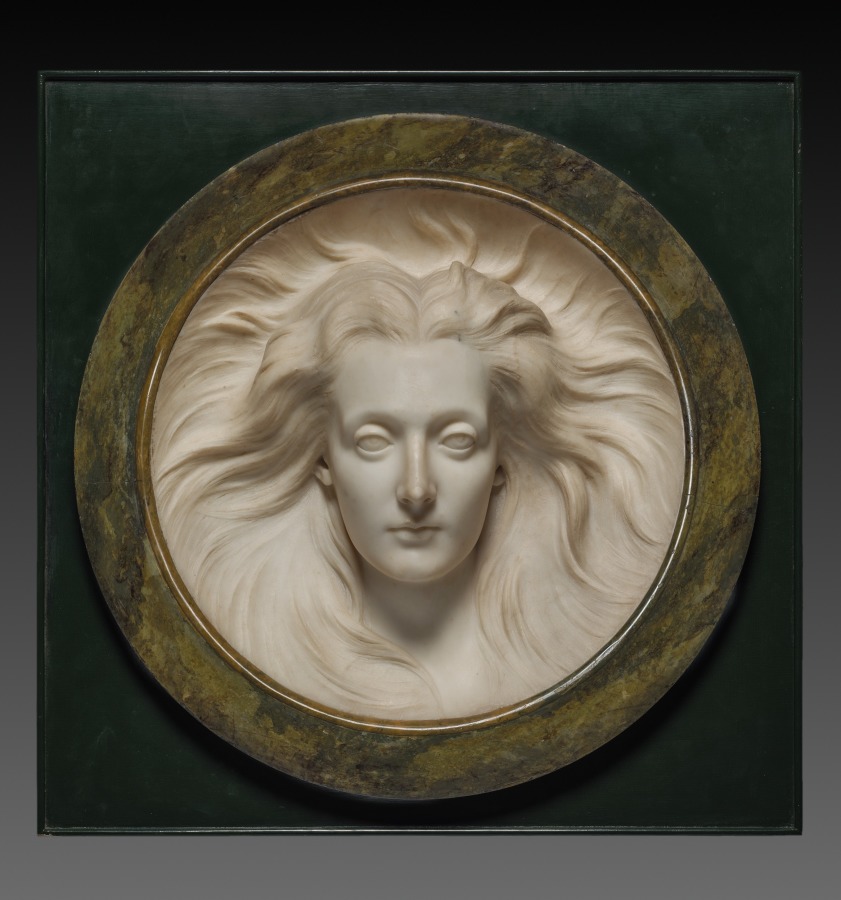
Alexander Munro · The Cleveland Museum of Art · Norman O. Stone and Ella A. Stone Memorial Fund · CC0
- Name
- Alexander Munro
- Born
- 26 October 1825
- Birthplace
- Sutherland, Scotland
- Died
- 1871
- Place of death
- Cannes, France
- Occupation
- sculptor
- Nationality
- United Kingdom of Great Britain and Ireland.
- Movements
- Pre-Raphaelite Brotherhood.
- Languages
- English.
Reference Check
Propose documentary evidence for Alexander Munro. A contribution is never written directly as fact: identity, source, rights and evidence gates still decide.
Sign in to contribute
World of VALÉORINE
Documentary connections
Only confirmed graph relationships appear here. Images are shown only when their identity and reuse rights both pass the documentary gate.
Documentary evidence
Documentary basis
Authority files
wikidata · Q2764919
In this article
Key facts
Key facts
• Name — Alexander Munro • Born — 26 October 1825 • Birthplace — Sutherland, Scotland • Died — 1871 • Place of death — Cannes, France • Occupation — sculptor • Illustration — Munro's sculpture of Humphry Davy in the Oxford Museum of Natural History • Illustration — Elizabeth Blakeway by Alexander Munro, 1859
Life
Life
Munro was born at Sutherland in Scotland. He was the son of a stonemason, and his talents were supported by financial assistance from his father's employer, the Duchess of Sutherland. From 1842 he assisted and trained in the Edinburgh studio of the sculptor Alexander Handyside Ritchie. He came to London in 1848 to study sculpture and, under Charles Barry, to work as a mason on the new Palace of Westminster. He exhibited at the Royal Academy from 1849 to 1870, and in the Great Exhibition of 1851. Between 1853 and 1865 Munro created a number of portrait busts of children for society families. Munro was a close associate of Thomas Woolner, the only sculptor to be a member of the original Pre-Raphaelite Brotherhood. He was also friendly with Dante Gabriel Rossetti. Munro is significant in the history of the movement since he is often cited as a contributor to the controversy over Pre-Raphaelitism in 1850, when he "leaked" the information that the group formed a secret brotherhood. In 1854, with Thomas Woolner, Dante Gabriel Rossetti, Ford Madox Brown, Edward Burne-Jones, Lowes Cato Dickinson and John Ruskin, Munro began teaching at the newly established Working Men's College. Munro's sculptures were noted for their formal simplicity. His most famous work was Paolo and Francesca, which was exhibited at the 1851 exhibition. It depicted the lovers as languid, dreamy and genteel, contributing to the popular image of the Pre-Raphaelite movement. The final marble version is in Birmingham Museum and Art Gallery. The original plaster version of the sculpture is currently on display in Wallington Hall, which also contains a portrait relief bust of Pauline, Lady Trevelyan created by Munro. He later created public sculptures for Berkeley Square and Hyde Park Corner, as well as several memorial statues. Six of the seventeen statues of scientists in the Oxford University Museum of Natural History are his work, all produced circa 1860. Munro suffered from ill health, and was struck down by a lung disease which slowly undermined his constitution. In his last years he and his wife lived in Cannes, France, for his health, and this is where he died on New Year's Day 1871.
Family
Family
Munro married one of the daughters of the journalist Robert Carruthers, editor of the Inverness Courier. By her he had two sons, for one of whom John Ruskin was godfather. His son John Arthur Ruskin Munro, was later Rector of Lincoln College, Oxford.
Chronological list of principal works
Chronological list of principal works
• Illustration — Bust of Josephine Butler • Bust of Mrs Banks exhibited at Royal Academy (1849) • Chimney-pieces for Dunrobin Castle for the Duke of Sutherland (1849) • Bust of John Loch at Stoke College, Suffolk (1850) • Statue of Francesca da Rimini for William Gladstone (1852) • Medallion of Lady Constance Grosvenor, exhibited at Royal Academy (1853) • Sculpture group of The Ingram Children for Herbert Ingram (1853) • Bust of Sir Robert Peel at Oldham (1854) • Medallion of Lady Alwyne Compton exhibited at Royal Academy (1854) • Medallion of John Everett Millais for the Ashmolean Museum, Oxford (1854) • Bust of William Gladstone exhibited at Royal Academy (1855) • Medallion of Henry Wellesley for the Ashmolean Museum, Oxford (1856) • Sculpture group of The Gladstone Children at Hawarden, home of William Ewart Gladstone (1856) • Bust of Henry Acland at Bodleian Library, Oxford (1857) • Statue of Undine exhibited at Art Treasures Exhibition, Manchester (1857) • Bust of Adelaide Ristori exhibited at Royal Academy (1858) • Sculpture group of The Gathorne Hardy Children (1859) • Medallion of Mrs Tom Hughes exhibited at the Royal Academy (1859) • Bust of Louis Huth exhibited at the Royal Academy (1860) • Bust of Helen Huth exhibited at the Royal Academy (1860) • Medallion of Benjamin Woodward for Oxford University's University Museum (1860) • Bust of Lord Ashburton exhibited at Royal Academy (1860) • Bust of William Armstrong, 1st Baron Armstrong for Literary and Philosophical Society of Newcastle upon Tyne (1860) • Bust of Frederick Robb for Major Eustace Robb (1861) • Sculpture group of The Matheson Children (1861) • Statue entitled Mother's Joy exhibited at the Royal Academy (1861) • Statue of Herbert Ingram at Boston, Lincolnshire (1862) • Statue of Mary II for the Houses of Parliament now the Central Criminal Court (1863) • Statues of James Watt, Gottfried Wilhelm Leibniz, Hippocrates, Sir Isaac Newton, Galileo and Sir Humphry Davy for the Oxford Museum, (1863) • Sculpture group of The Crompton Roberts Children for Charles Henry Crompton-Roberts (1865) • Fountain in Berkeley Square London (1865) • Illustration — Boy with a Dolphin • Statue of Boy and Dolphin for Grosvenor Gate, Hyde Park (1865) • Statue of James Watt in Birmingham (1866) • Bust of Sir James Fitzjames Stephen exhibited at Royal Academy (1866) • Bust of Monsieur Victor Cousin for Napoleon III (1867) • Statue of Ronald Munro Ferguson exhibited at the Royal Academy (1868) • Medallion of the Duchess of Valembrossa exhibited at the Royal Academy (1869) • Bust of Richard Quain for the Town Hall in Gravesend, Kent (date unknown) • Medallion of George MacDonald at the Scottish National Portrait Gallery (date unknown) • Statuary group of The Hardy Children at Chilham Church, Kent (date unknown)

James Watt. Wood engraving by [M. W.] after A. Munro., by Alexander Munro
Alexander Munro · Wellcome Collection, London · Wellcome Collection
Life and career
Dated record
Life and career
The full dated record · 2 entries
1825
Alexander Munro born at Inverness.
1871
Alexander Munro died at Cannes.
Places
Named by the record
Places
Only places the record itself states, plotted where the house gazetteer settles their coordinates. Nothing is inferred from a name or a nationality.
Inverness.
Birth place
Cannes.
Death place
Text attribution
Licensing
Text attribution
Part of the biographical narrative on this page reuses licensed material. Its origin, revision and licence are recorded here.
The biographical narrative on this page is based on the Wikipedia article Alexander Munro (sculptor), revision 1370872068 (EN edition), by its contributors. VALÉORINE has edited that text and built its own documentary record around it. The reused material is available under CC BY-SA 4.0, and this page's reuse of it is offered under the same licence. Everything else on this page — the chronology, the holdings, the evidence, the plates and the connections — is VALÉORINE's own record. Sources and licences.
Notes from the source article
Cited by Wikipedia
Notes from the source article
These works are cited by the source article, in its own numbering. They are recorded as its citations, not as sources VALÉORINE has verified.
- 1.Benedict Read, "Was There a Pre-Raphaelite Sculpture?", Pre-Raphaelite Papers, Tate Gallery, 1984, 97-110.
- 2.James Mackay. The Dictionary of Western Sculptors in Bronze. Antique Collectors' Club. 1977. 0902028553.
- 3.Cust, Lionel. 39.
- 4.Benedict Read, Victorian Sculpture, New Haven: Yale University Press, 1982.
- 5.The Long Engagement — Compositional Sketch and Sketch of Clasped Hands / Study of a reclining Woman , Pre-Raphaelite Online Resource .
References
Citations
References
Each reference names the institution holding it, so a reader may go to the document itself.
authority record
General reference
Further particulars
Held on the record
Further particulars
Open the remaining particulars
Alexander Munro is recorded with the occupation sculptor.
The Encyclopedia exists whether or not anything is for sale. Corrections are recorded rather than overwritten, and every version of this record is kept. Published 17 August 2026.
Elsewhere in Sculpture
6,174 published records in this field, each with its sources named.
- Alexander LibermanArtist
- Alexander MatveyevArtist
- Alexander Milne CalderArtist
- Alexander MilovArtist
- Alexander OpekushinArtist
- Alexander Pavlovich KibalnikovArtist
- Alexander Phimister ProctorArtist
- Alexander PolzinArtist
Best supported in this field
For owners
Own a work by Alexander Munro?
A specialist will read what you send and tell you what the house can establish, what it cannot, and whether the object is suited to sale. There is no charge and no obligation. The object stays with you throughout; nothing is shipped to us unless it is arranged in writing beforehand.