
Alessandro Varotari
Alessandro Leone Varotari (4 April 1588 – 20 July 1649), also commonly known as Il Padovanino, was a Venetian painter of the late-Mannerist and early-Baroque Venetian school, best known for having mentored Pietro Liberi, Giulio Carpioni, and Bartolommeo Scaligero. He was the son of Dario Varotari the Elder and the brother of painter Chiara Varotari, who accompanied him on his travels and assisted with his work.
Also recorded as il Padovanino · Paduvanijn · Padunino · Padua Nino
Alessandro Varotari
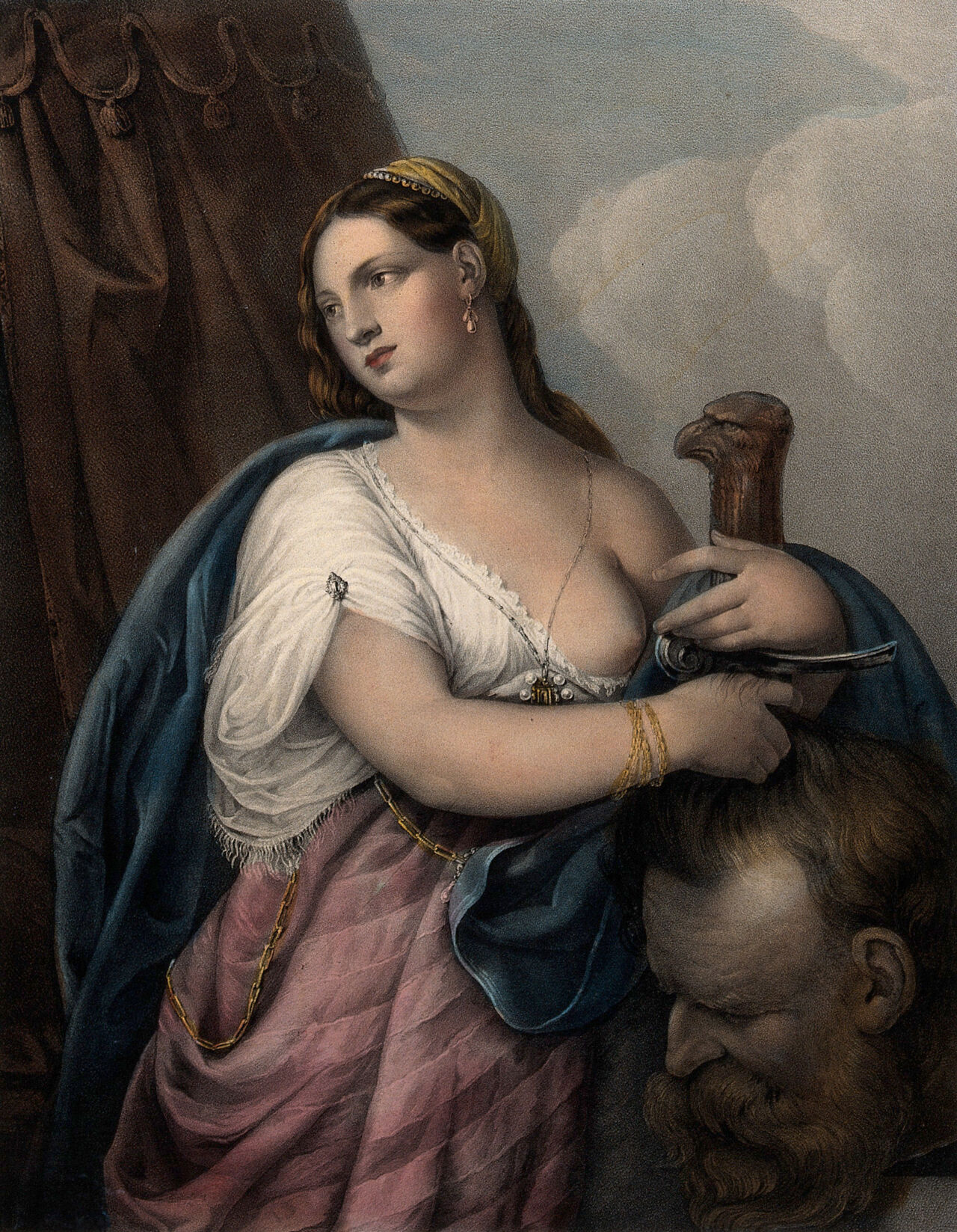
Alessandro Varotari · Wellcome Collection, London · Wellcome Collection · Public Domain Mark
- Birth Name
- Alessandro Leone Varotari
- Born
- 4 April 1588
- Birthplace
- Padua, Republic of Venice
- Died
- 20 July 1649
- Place of death
- Venice, Republic of Venice
- Known for
- Painting
- Movement
- Mannerism
- Full name
- Alessandro Leone Varotari.
- Nationality
- Republic of Venice.
- Occupation
- painter.
- Fields
- painting, Italian painting and visual arts.
- Movements
- Mannerism.
VALÉORINE Encyclopedia
VALÉORINE documentary reading
Documentary summary
Alessandro Leone Varotari (4 April 1588 – 20 July 1649), also commonly known as Il Padovanino, was a Venetian painter of the late-Mannerist and early-Baroque Venetian school, best known for having mentored Pietro Liberi, Giulio Carpioni, and Bartolommeo Scaligero. He was the son of Dario Varotari the Elder and the brother of painter Chiara Varotari, who accompanied him on his travels and assisted with his work.
Admitted source layer · organised and presented by VALÉORINE
Note VALÉORINE
No house-authored Note is published until its assertions and sources pass the VALÉORINE evidence contract. The documentary article remains available in full while that enrichment is being consolidated.
Documentary enrichment in progress · no unsupported statement published
Reference Check
Propose documentary evidence for Alessandro Varotari. A contribution is never written directly as fact: identity, source, rights and evidence gates still decide.
Sign in to contribute
Documentary evidence
Evidence Panel
not yet certified
- Identity
- resolved
- Independent source families
- 0
- Admitted assertions
- 0
- Open conflicts
- 0
Authority files
wikidata · Q1727824
In this article
Biography
Biography
Training under Dario Varotari the Elder is recorded. Pietro Liberi, Giulio Carpioni and Pietro della Vecchia are recorded as having studied under Alessandro Varotari. The recorded working language is Italian. The field of work recorded is painting, Italian painting and visual arts. Subjects and genres recorded for the work are mythological. Titian and Paolo Veronese are recorded as an influence. Places of work recorded in the authority are Venice. Works named in the authority record are Allegory of Astrology, Cornelia mother of the Gracchi and Venus with a cupid. Work by Alessandro Varotari is recorded in the collections of Museo del Prado, Nationalmuseum, Niedersächsisches Landesmuseum für Kunst und Kulturgeschichte, Hermitage Museum and Kunsthistorisches Museum.
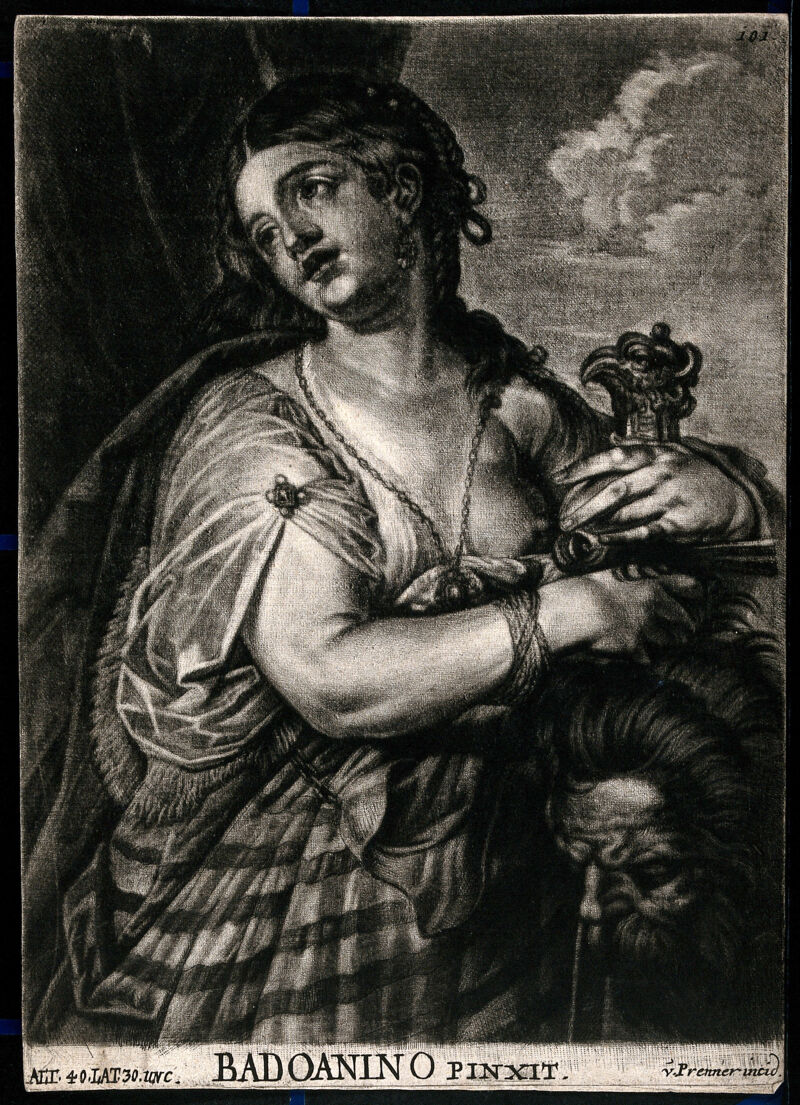
Judith with a sword holding the head of Holofernes. Mezzotint by A. von Prenner after A. Varotari, il Padovanino, ca. 1720., 1720, by Alessandro Varotari
Alessandro Varotari · Wellcome Collection, London · Wellcome Collection
Key facts
Key facts
• Birth Name — Alessandro Leone Varotari • Born — 4 April 1588 • Birthplace — Padua, Republic of Venice • Died — 20 July 1649 • Place of death — Venice, Republic of Venice • Known for — Painting • Movement — Mannerism
Biography
Biography
Born in Padua, from which his nickname derives, he was the son of the local painter and architect Dario Varotari the Elder, who most probably provided his earliest training. Early paintings such as The incredulity of St. Thomas, Virgin and Child, and the Pentecost show the influence of Titian. Padovanino married Caterina Mesa 1612 in Padua. He moved to Venice in 1614. He is known to have traveled to Rome twice (in the mid-1610s and in 1625), where he was much employed in producing copies of major paintings by major Renaissance artists of the prior generation. In 1619, he worked on the mosaics of the Basilica of San Marco. In the following years he worked on decorating the interior of the Church of Santa Maria Maggiore. In 1625 he made another trip to Rome. He painted a major battle canvas entitled The victory of the Carnuti (Celts) over the Normans. His pupils included Pietro Liberi, Bartolommeo Scaligero, Pietro della Vecchia, Giulio Carpioni and his own son, Dario Varotari the Younger. His sister Chiara Varotari was a well known portraitist. Among his students was Caterina Tarabotti.
Style
Style
Padovanino was a highly respected artist in his time. Although he had earned much of his fame due to his talents as a copyist, he still deserves a place in the history of painting. He had learned painting in the style of Titian, to whose spirit and style he was faithful throughout his career. His career lasted well into the seventeenth century. His paintings are characterized for their narrative ability and their sensuality. • Illustration — Venus and Cupid • Illustration — Venus and Mars Surprised by Vulcan • Illustration — Rape of Europa • Illustration — Venus sleeping with angels • Illustration — Orfeus • Illustration — Mars and Venus playing Chess
Identity and origins
Identity and origins
Alessandro Varotari was recorded at birth as Alessandro Leone Varotari. The authorities additionally record the headings il Padovanino, Paduvanijn, Padunino, Padua Nino and Padwanino. His recorded language was Italian. He was the child of Dario Varotari the Elder.
Life and career
Dated record
Life and career
The full dated record · 2 entries
1588
Alessandro Varotari born at Padua.
1649
Alessandro Varotari died at Venice.
Places
Named by the record
Places
Only places the record itself states, plotted where the house gazetteer settles their coordinates. Nothing is inferred from a name or a nationality.
Padua.
Birth place
Venice.
Death place
Notes from the source article
Cited by Wikipedia
Notes from the source article
These works are cited by the source article, in its own numbering. They are recorded as its citations, not as sources VALÉORINE has verified.
- 1.Martin Eidelberg. Watteau et la fête galante: Musée des beaux-arts de Valenciennes, 5 mars-14 juin 2004. Varotari, Alessandro. 279. Réunion des musées nationaux. 2004.
- 2.Travestissement féminin et liberté(s) De Guyonne Leduc, Christine Bard, p. 307.Bartolommeo Scaligero
- 3.École vénitienne. Vve. Jules Renouard, Librairie-Editeur. 1868.
- 4.*Pinacothèque de Brera, Milan
- 5.Getty Museum entry.
- 6.Santa Caterina rifiuta di adorare gli idoli. Gallerie dell'Accademia di Venezia.
- 7.Parabola delle Vergini sagge e delle vergini stolte. Gallerie dell'Accademia di Venezia.
- 8.Orfeo e Euridice - Gallerie dell'Accademia di Venezia. Gallerie dell'Accademia di Venezia.
Bibliography printed in the source article · 1
- Cornelis de Bie, Het Gulden Cabinet, 1662, p. 150
References
Citations
References
Each reference names the institution holding it, so a reader may go to the document itself.
Institutional database
Wikidata, structured authority record Q1727824: Alessandro VarotariWikimedia Foundation
Verified
Further particulars
Held on the record
Further particulars
Open the remaining particulars
He trained under Dario Varotari the Elder. His recorded influences include Titian and Paolo Veronese. Each of those relationships is stated by the authority record rather than inferred from style.
Alessandro Varotari worked in painting, Italian painting and visual arts. His work is associated with Mannerism. He worked at Venice. Work and production. Works recorded as notable number 3: Allegory of Astrology, Cornelia mother of the Gracchi and Venus with an Amor. His recorded genre is mythological.
Career and activity
Recognition and collections
Work by Alessandro Varotari is
Museo del Prado, Nationalmuseum, Niedersächsisches Landesmuseum für Kunst und Kulturgeschichte and Hermitage Museum
The Encyclopedia exists whether or not anything is for sale. Corrections are recorded rather than overwritten, and every version of this record is kept. Published 14 August 2026.
Elsewhere in Paintings
18,717 published records in this field, each with its sources named.
- Alessandro RinaldiArtist
- Alessandro RosiArtist
- Alessandro SalucciArtist
- Alessandro TurchiArtist
- Alessandro VitaliArtist
- Alessandro ZaffonatoArtist
- Alessio de MarchisArtist
- Alessio IssupoffArtist
Best supported in this field
For owners
Own a work by Alessandro Varotari?
A specialist will read what you send and tell you what the house can establish, what it cannot, and whether the object is suited to sale. There is no charge and no obligation. The object stays with you throughout; nothing is shipped to us unless it is arranged in writing beforehand.