
Alejandro Colina
Illustration — María Lionza, 1951, Caracas, Venezuela Alejandro Colina (8 February 1901 – 1976) was a Venezuelan sculptor.
Alejandro Colina
Guillermo Ramos Flamerich · CC BY-SA 3.0
- Born
- Alejandro Colina was born on 8 February 1901. · Caracas.
- Died
- Alejandro Colina died in 1976.
- Nationality
- Venezuela
- Occupation
- sculptor · painter
VALÉORINE Encyclopedia
VALÉORINE documentary reading
Documentary summary
Illustration — María Lionza, 1951, Caracas, Venezuela Alejandro Colina (8 February 1901 – 1976) was a Venezuelan sculptor.
Admitted source layer · organised and presented by VALÉORINE
Reference Check
Propose documentary evidence for Alejandro Colina. A contribution is never written directly as fact: identity, source, rights and evidence gates still decide.
Sign in to contribute
World of VALÉORINE
Documentary connections
Only confirmed graph relationships appear here. Images are shown only when their identity and reuse rights both pass the documentary gate.
Documentary evidence
Documentary basis
Authority files
wikidata · Q4714508 · wikipedia · Alejandro Colina
In this article
Biography
Biography
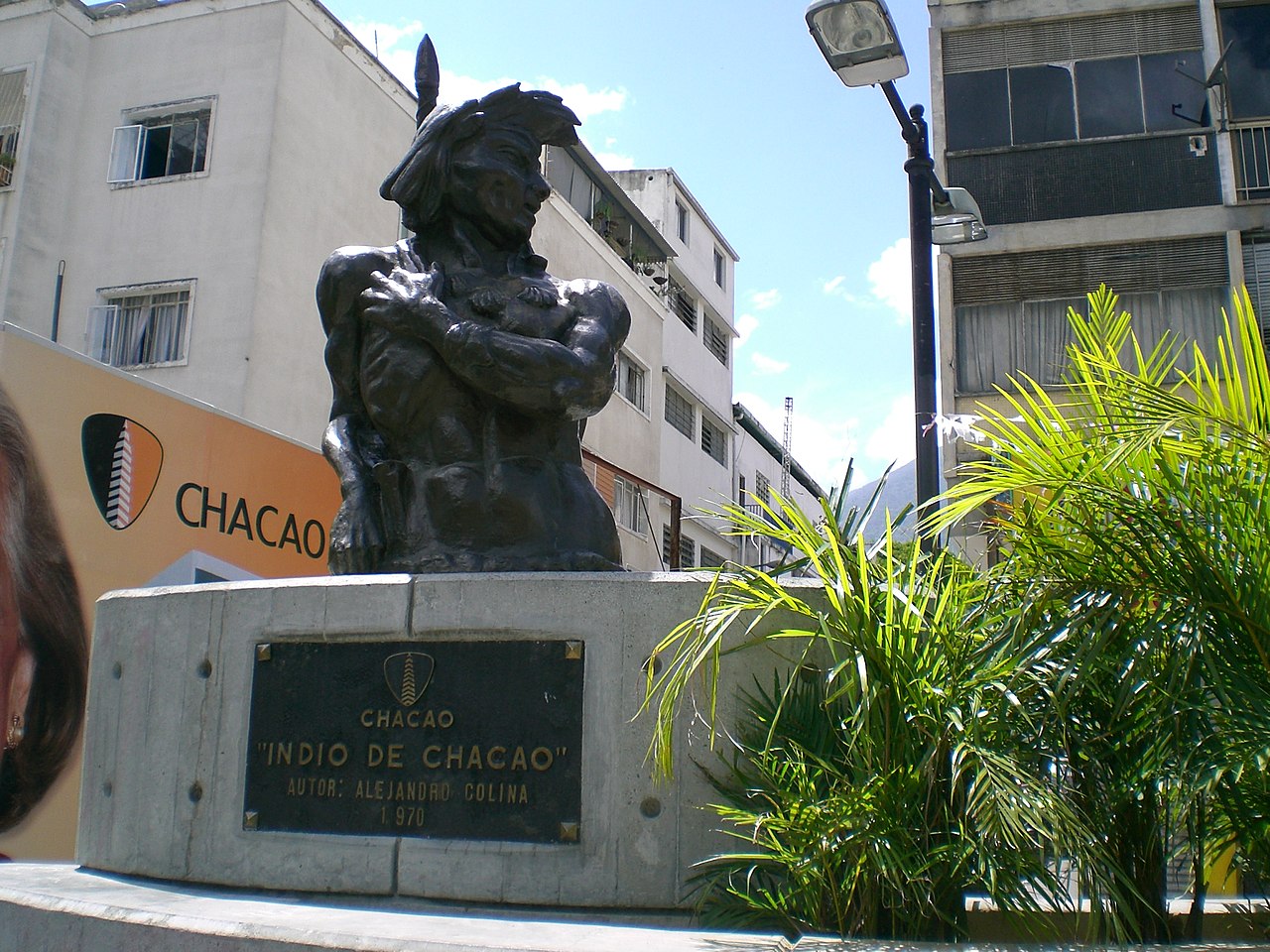
Alejandro Colina, a Venezuelan sculptor, was born in Caracas on February 8, 1901. Colina is one of the greatest exponents of Venezuelan monumental sculpture and framed much of his work within the cultural heritage of indigenous communities, with their sculptures celebrating the myths, legends, gods and chieftains of the tribes in Venezuela. He died in 1976 at the age of 75 years. His most famous work is the 1951 statue depicting the goddess Maria Lionza. Alejandro Colina's parents were Alejandro Torcuato Colina, from Falcón State; and Fermina Viera, a Spanish lady originally from Santa Cruz de Tenerife. Colina began his artistic development at the Academy of Fine Arts in Caracas at 13 years old. For seventeen years he worked as a mechanic for merchant ships, and as such, traveled for more than a decade. In 1919, he returned to Caracas and began to study at the School of Arts and Crafts in Caracas, where his works were exhibited and he became the deputy director of the institute. In 1920, Colina decided to leave Caracas and moved to La Guajira, in Zulia State, where he coexisted with the indigenous peoples of the West of the country for eight years. During this time, he was devoted to taking notes and studying the ways, customs and legends of the local communities. Colina returned to Caracas, powerfully influenced by his long cohabitation with the indigenous peoples, who were to become the main themes for his work. Once back in the capital, Colina married Alejandrina Issa, who gave birth to his two sons. At the end of the 1920s, Colina began to develop the Monument to the Liberator: the sculptural work to which he would devote much of his life. In 1931, Colina became the assistant to the Venezuelan architect, Alejandro Chataing. In 1933, Colina created the sculpture Tacarigua Plaza, located in the Mariscal Sucre Air Base in the city of Maracay. Colina later faced accusation of being a Communist by the then president Juan Vicente Gómez, and was held at the Libertador Castle, Puerto Cabello, where in 1936 the poet Andrés Eloy Blanco was going to give a speech in occasion of the liberation of all political prisoners held by the Gómez dictatorship. As the poet got aware of the presence of Alejandro Colina among the prisoners, he immediately took contact with his brother-in-law Pedro Sotillo, also a poet, and asked him to talk with the Venezuelan President López Contreras in order to transfer Colina to a Health Center, being that the Psychiatric Hospital of Caracas, managed at that moment by Dr. González Rincones who offered Colina posterior to his treatment the use a room in the same Psychiatric Hospital, where he could continue develop his art to overcome his depression. In that same room he created the mural "Arts, Science and Psychiatry" and twelve busts portraying patients neighbors, each representing a particular disease. In 1936 he married Emilia Heredia Hurtado, with whom he had three children. Colina continued to work, this time on the statue of the Cacique Guacamaya, located at the Military School in Caracas, and the presentation of the model of the Monument to the Liberator, which he worked on for over twenty-five years and which would be located in top of Cerro Avila, a mountain overlooking the valley of Caracas. In 1951 he created the famous sculpture of Maria Lionza, a goddess originating in the indigenous state of Yaracuy, who appears in the statue as a beautiful Venezuelan woman riding a tapir. Colina portrayed her as naked and voluptuous, with wide hips and strong musculature, seated on the tapir which is standing on a snake. Maria Lionza offers, in arms outstretched toward the sky, a female pelvis, representing fertility. Also created in the 1950s were the matte black statues and busts of Caciques Tiuna, Manaure, and Yaracuy. In 1964 Colina finished the statue of San Juan de Los Morros, and in 1967 the famous statue of the chief Caricuao, which marks the entrance to the crowded residential area of the same name, West of Caracas. At the time of his death, Colina left unfinished the sculpted torso of Cacique Chacao, intended for the Plaza del Indio in the Chacao municipality, also in Caracas.

HOMENAJE A LOS TACARIGUAS. Maracay. Aragua. Venezuela (Indios Tacariguas)
xolkanf
Places
Named by the record
Places
Only places the record itself states, plotted where the house gazetteer settles their coordinates. Nothing is inferred from a name or a nationality.
Alejandro Colina was born at Caracas.
Birthplace
Caracas.
Birth place
Primary material
Documents and archives
reference work
- “Alejandro Colina”, English Wikipedia, consulted as further reading
Reputable secondary · Wikipedia
authority record
- Wikidata, structured authority record Q4714508: Alejandro Colina
General reference · Wikidata
Notes from the source article
Cited by Wikipedia
Notes from the source article
These works are cited by the source article, in its own numbering. They are recorded as its citations, not as sources VALÉORINE has verified.
References
Citations
References
Each reference names the institution holding it, so a reader may go to the document itself.
reference work
Secondary witnessauthority record
General reference
People, houses and institutions
Knowledge graph
People, houses and institutions
Teachers, collaborators, publishers and institutions recorded against this person, each on a stated basis.
Born at
1- CaracasPlace
Established from a fact already recorded on a verified source.
The Encyclopedia exists whether or not anything is for sale. Corrections are recorded rather than overwritten, and every version of this record is kept. Published 17 August 2026.
Elsewhere in Sculpture
6,174 published records in this field, each with its sources named.
- Aldo ChaparroArtist
- Aldo TambelliniArtist
- Alejandra RuddoffArtist
- Alejandro CarniceroArtist
- Alejandro LozanoArtist
- Aleksandar SrnecArtist
- Aleksandr ShevchenkoArtist
- Aleksandra BriedeArtist
Best supported in this field
For owners
Own a work by Alejandro Colina?
A specialist will read what you send and tell you what the house can establish, what it cannot, and whether the object is suited to sale. There is no charge and no obligation. The object stays with you throughout; nothing is shipped to us unless it is arranged in writing beforehand.