
Agostino Cornacchini
Illustration — Equestrian statue of Charlemagne by Agostino Cornacchini (1725), St. Peter's Basilica, Vatican, Italy. Agostino Cornacchini (27 August 1686–1754) was an Italian sculptor and painter of the Rococo period, active mainly in Rome.
Also recorded as Augustinus Cornacchini · Cornacchini · Agostino Cornacchino
Agostino Cornacchini
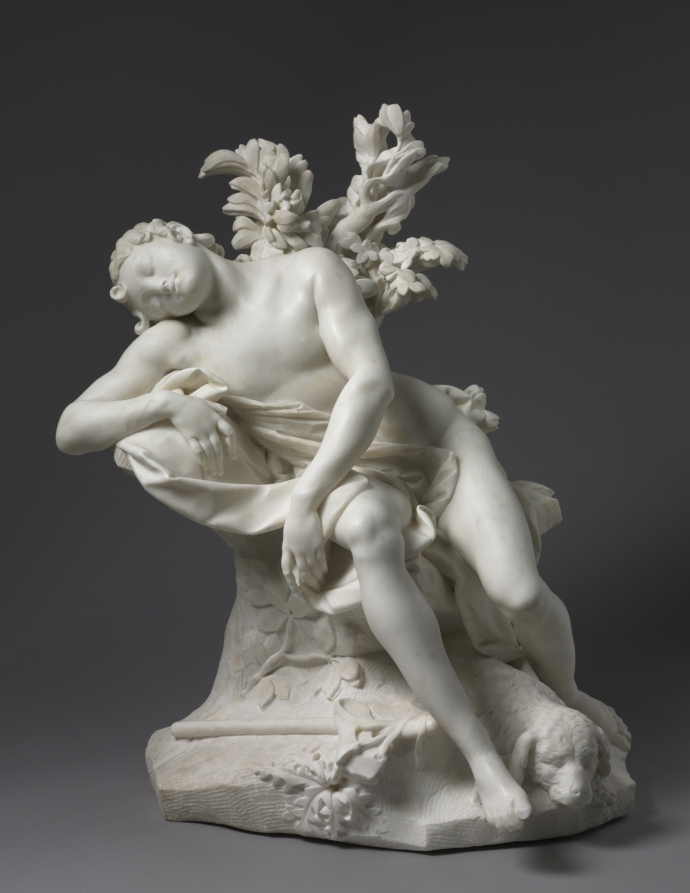
Agostino Cornacchini · The Cleveland Museum of Art · Gift of Grace Rainey Rogers in memory of her father, William J. Rainey · CC0
- Born
- 1686. · Pescia.
- Died
- 1754. · Rome.
- Occupation
- painter and sculptor.
VALÉORINE Encyclopedia
VALÉORINE documentary reading
Documentary summary
Illustration — Equestrian statue of Charlemagne by Agostino Cornacchini (1725), St. Peter's Basilica, Vatican, Italy. Agostino Cornacchini (27 August 1686–1754) was an Italian sculptor and painter of the Rococo period, active mainly in Rome.
Admitted source layer · organised and presented by VALÉORINE
Reference Check
Propose documentary evidence for Agostino Cornacchini. A contribution is never written directly as fact: identity, source, rights and evidence gates still decide.
Sign in to contribute
World of VALÉORINE
Documentary connections
Only confirmed graph relationships appear here. Images are shown only when their identity and reuse rights both pass the documentary gate.
Documentary evidence
Documentary basis
Authority files
wikidata · Q674857 · wikipedia · Agostino Cornacchini
In this article
Early career
Early career
His masterpiece is the equestrian statue of Charlemagne.
He was born in Pescia and died in Rome. In 1712, Cornacchini established himself in the household of his uncle, Cardinal Carlo Agostino Fabroni, who until 1720 provided Cornacchini with a studio, lodgings and an income. During his period in Fabroni's household Cornacchini executed two marble groups for the Cardinal: an Adoration of the Shepherds and a Deposition (both Pistoia, Biblioteca Fabroniana).
Equestrian statue of Charlemagne
Equestrian statue of Charlemagne
His career reached a peak in the early 1720s with the commission for the colossal marble equestrian statue of Charlemagne (1720–25) at the base of the Scala Regia on the entrance to the Apostolic Palace, which sits opposite Bernini's Vision of Constantine. The Charlemagne, in a stunning perspectival setting of stucco decoration and mosaic scenery, is both Baroque and Rococo. Its combination of exuberance and intimacy is typical of early 18th-century sculpture in Rome. The asymmetry and misdirection of the line of sight by which the work must be approached call attention to its decorative qualities: the crinkled patterns in Charlemagne's cape, the drill holes in his beard and hair and the way the hair on the horse's mane and tail curls back on itself, like a volute.
Later career
Later career
During the 1720s, among other works, Cornacchini completed a marble statuary group of Hope (1721–4) for the chapel of the Monte di Pietà in Rome, as well as a marble putto holding a holy water stoup (1724–5) and a marble statue of Elijah (1725–7), both for St. Peter's. He sent a number of works abroad, among them a marble statue of St. Francis de Regis for the church of the Descalzas Reales in Madrid. He also shared in the major Roman projects of the 1730s, most notably Pope Clement XII’s Corsini family chapel in San Giovanni in Laterano; Cornacchini's contribution was the life-size marble group of Prudence with Two Putti and a marble relief of the Battle of Anghiari. In 1734 he was given an honorarium of 50 scudi for a model of angels. By 1737 he had finished a seated marble statue of Clement XII (Ancona, Piazza del Plebiscito), after which no further work is known until 1754, when he received payment for a travertine statue of St. Ursula for the top of the colonnade outside St. Peter's. In addition to his work as a sculptor and draughtsman, he is known to have executed at least one painting in coloured wax on slate (London, Victoria and Albert Museum).
Gallery
Gallery
• Illustration — Sleeping Endymion, 1716, Cleveland Museum of Art • Illustration — Nativity, 1712–20, Biblioteca Fabroniana, Pistoia • Illustration — Archangel Michael, 1729, Orvieto Cathedral • Illustration — Statue of St. Elijah in Saint Peter's Basilica
Life and career
Dated record
Life and career
The full dated record · 2 entries
1686
Agostino Cornacchini was born on 27 August 1686.
1754
Agostino Cornacchini died on 1 January 1754.
Places
Named by the record
Places
Only places the record itself states, plotted where the house gazetteer settles their coordinates. Nothing is inferred from a name or a nationality.
Pescia.
Birth place
Rome.
Death place
Primary material
Documents and archives
reference work
- “Agostino Cornacchini”, English Wikipedia, consulted as further reading
Reputable secondary · Wikipedia
authority record
- Wikidata, structured authority record Q674857: Agostino Cornacchini
General reference · Wikidata
Literature
Scholarly footprint
A count of publications is evidence of attention, not of standing, and is given here only as a measure.
Citations
References
Each reference names the institution holding it, so a reader may go to the document itself.
reference work
Secondary witnessauthority record
Secondary witness
The Encyclopedia exists whether or not anything is for sale. Corrections are recorded rather than overwritten, and every version of this record is kept. Published 16 August 2026.
Elsewhere in Sculpture
6,174 published records in this field, each with its sources named.
- Agostino BonalumiArtist
- Agostino BugiardiniArtist
- Agostino BustiArtist
- Agostino CarliniArtist
- Agostino da SienaArtist
- Agustí Querol SubiratsArtist
- Agustín CárdenasArtist
- Agustín Drake AldamaArtist
Best supported in this field
For owners
Own a work by Agostino Cornacchini?
A specialist will read what you send and tell you what the house can establish, what it cannot, and whether the object is suited to sale. There is no charge and no obligation. The object stays with you throughout; nothing is shipped to us unless it is arranged in writing beforehand.