
57 55 J
The 57 55 J or 57 mm, 55 caliber length model Jokinen coastal gun is a Finnish light coastal gun designed during the Continuation War. It the first coastal gun designed and manufactured completely in Finland and was intended to replace the older 57 mm Nordenfelt and Hotchkiss guns, but the design was found faulty and only 11 pieces were constructed. They were used for training after World War II until retired in the mid–1960s.
57 55 J
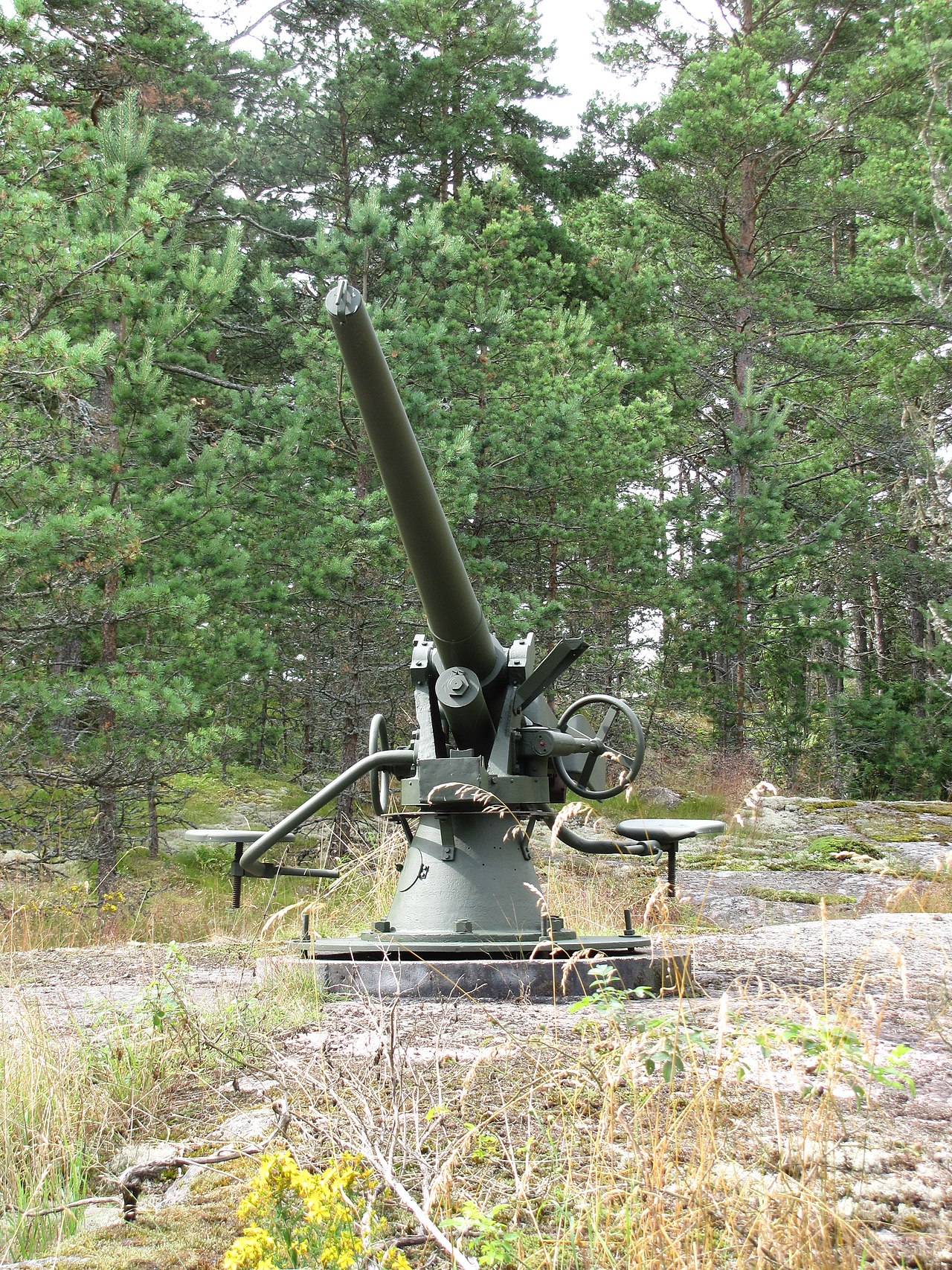
MKFI · CC BY-SA 3.0
- Name
- 57 55 J
- Field
- 57 mm gun
- Region
- Finland
VALÉORINE Encyclopedia
VALÉORINE documentary reading
Documentary summary
The 57 55 J or 57 mm, 55 caliber length model Jokinen coastal gun is a Finnish light coastal gun designed during the Continuation War. It the first coastal gun designed and manufactured completely in Finland and was intended to replace the older 57 mm Nordenfelt and Hotchkiss guns, but the design was found faulty and only 11 pieces were constructed. They were used for training after World War II until retired in the mid–1960s.
Admitted source layer · organised and presented by VALÉORINE
Reference Check
Propose documentary evidence for 57 55 J. A contribution is never written directly as fact: identity, source, rights and evidence gates still decide.
Sign in to contribute
World of VALÉORINE
Documentary connections
Only confirmed graph relationships appear here. Images are shown only when their identity and reuse rights both pass the documentary gate.
Documentary evidence
Documentary basis
Authority files
wikidata · Q4640805 · wikipedia · 57 55 J
In this article
Key facts
Key facts
• Name — 57 55 J • Origin — Finland • Type — Light coastal gun • Is Ranged — yes • Is Artillery — yes • Service — 1950–1965 • Designer — Antero Jokinen • Design Date — 1941 • Manufacturer — Valtion Tykkitehdas • Production Date — 1944–1945 • Number — 11 • Weight — 955 kg • Part Length — Total: 3.151 m Bore: 2.53 m • Caliber — 57 mm • Velocity — Actual: 660 m/s Planned: 900 m/s • Max Range — Actual: 9 km Planned: 12.8 km • Feed — Semi-automatic • Breech — Vertical sliding-block • Carriage — Fixed cone mount • Elevation — −10° to +32°
Background
Background
The gun was developed to replace the older 57 mm Nordenfelt and Hotchkiss guns which, while still usable, were getting old and only had iron sights for aiming. The desire of the Finnish Navy headquarters operational section to begin domestic manufacturing of coastal and naval guns also influenced the decision to develop 57 55 J. The prototype, partially based on the older Nordenfelt and Hotchkiss guns, was designed by Engineering Lieutenant Colonel Antero Albert Jokinen and was finished in 1941 in the Helsinki naval base. A series of 50 guns was ordered from Valtion Tykkitehdas (VTT, State Artillery Factory) in Jyväskylä at the turn of 1941 and 1942, but only 10 guns were built in 1944–1945. With the prototype included, the final number was 11 complete pieces.
Design flaws
Design flaws
When the guns were test-fired in Jyväskylä, it was found that the slide of the semi-automatic mechanism was not strong enough and could bend. The second serious flaw was ammunition. The gunpowder ordered from Valtion Ruutitehdas (State Gunpowder Factory) was designed to produce a barrel pressure of 2800 atm resulting in muzzle velocity of 900 m/s. But when the same gunpowder batch was tested two years later, it produced a barrel pressure of 3500 atm, resulting in unacceptable barrel wear. At first Jokinen intended to settle for a muzzle velocity of 800 m/s, but in the end the muzzle velocity was reduced to 660–670 m/s, no better than the older 57 mm guns. Antero Jokinen was later criticized for attempting to build a "too good" gun, without considering the abilities of the Finnish industry at the time.
Service use
Service use
The 57 55 J was accepted for use as a training weapon in the 1950s because of a lack of suitable training guns and no funds to buy new ones. The old 57 mm Nordenfelt and Hotchkiss guns were worn-out, and 76 mm guns were kept in reserve, so the 57 55 J units, among other old guns, were used as training pieces. Some of the guns were converted for sub-caliber training for the 234/50 Be and 305/52 O guns. The guns were refurbished at the beginning of the 1960s and sub-caliber guns were converted back to the normal configuration, but the guns were removed from use and placed into storage in 1965–1966.
Places
Named by the record
Places
Only places the record itself states, plotted where the house gazetteer settles their coordinates. Nothing is inferred from a name or a nationality.
- Finland
Notes from the source article
Cited by Wikipedia
Notes from the source article
These works are cited by the source article, in its own numbering. They are recorded as its citations, not as sources VALÉORINE has verified.
- 1.Enqvist, Ove. Itsenäisen Suomen rannikkotykit 1918-1998. Sotamuseo. 95–97. 1999. 951-25-1033-2.
References
Citations
References
Each reference names the institution holding it, so a reader may go to the document itself.
reference work
Secondary witnessreference work
Secondary witness
The Encyclopedia exists whether or not anything is for sale. Corrections are recorded rather than overwritten, and every version of this record is kept. Published 17 August 2026.
Elsewhere in Militaria
6,095 published records in this field, each with its sources named.
- 5"/38 caliber gunTerminology
- 5"/51 caliber gunTerminology
- 5"/54 caliber Mark 16 gunTerminology
- 55 S 55Terminology
- 5mm BergmannTerminology
- 5mm ClementTerminology
- 6 cm S-Bts K L/21Terminology
- 6 inch siege gun M1877Terminology
Best supported in this field
For owners
Own an object connected with 57 55 J?
A specialist will read what you send and tell you what the house can establish, what it cannot, and whether the object is suited to sale. There is no charge and no obligation. The object stays with you throughout; nothing is shipped to us unless it is arranged in writing beforehand.