
Willoughby Wallace Hooper
Willoughby Wallace Hooper (1837 in Kennington, south London – 21 April 1912 in Kilmington near Axminster, England) was an English military officer and photographer, serving for near to forty years in the colonial army in southern India and British-Burma during the second half of the 19th century. He is known for his photographs of ethnic groups, military and domestic scenes from the 1860s onwards. Among other photographers, he contributed to the ethnographic survey The People of India (8 vols, 1868–75).
Also recorded as Colonel William Willoughby Hooper · William Willoughby Hooper
Willoughby Wallace Hooper
Willoughby Wallace Hooper · Wellcome Collection, London · Wellcome Collection · Public Domain Mark
- Occupation
- Military photographer
- Known for
- ethnographic photographs of native people in colonial India and Burma
- Born
- 1837 · Kennington.
- Died
- 1912 · Kilmington.
VALÉORINE Encyclopedia
VALÉORINE documentary reading
Documentary summary
Willoughby Wallace Hooper (1837 in Kennington, south London – 21 April 1912 in Kilmington near Axminster, England) was an English military officer and photographer, serving for near to forty years in the colonial army in southern India and British-Burma during the second half of the 19th century. He is known for his photographs of ethnic groups, military and domestic scenes from the 1860s onwards. Among other photographers, he contributed to the ethnographic survey The People of India (8 vols, 1868–75).
Admitted source layer · organised and presented by VALÉORINE
Note VALÉORINE
Willoughby Wallace Hooper (1837–1912) was a photographer. Born in Kennington, the photographer died in Kilmington. Works by Willoughby Wallace Hooper are held at Photography Collection and Yale Center for British Art.
Composed from admitted, traceable facts · 27 September 2026
VALÉORINE
Reference Check
Propose documentary evidence for Willoughby Wallace Hooper. A contribution is never written directly as fact: identity, source, rights and evidence gates still decide.
Sign in to contribute
World of VALÉORINE
Documentary connections
Only confirmed graph relationships appear here. Images are shown only when their identity and reuse rights both pass the documentary gate.
Documentary evidence
Documentary basis
Authority files
wikidata · Q23661890 · wikipedia · Willoughby Wallace Hooper
In this article
Biography
Biography
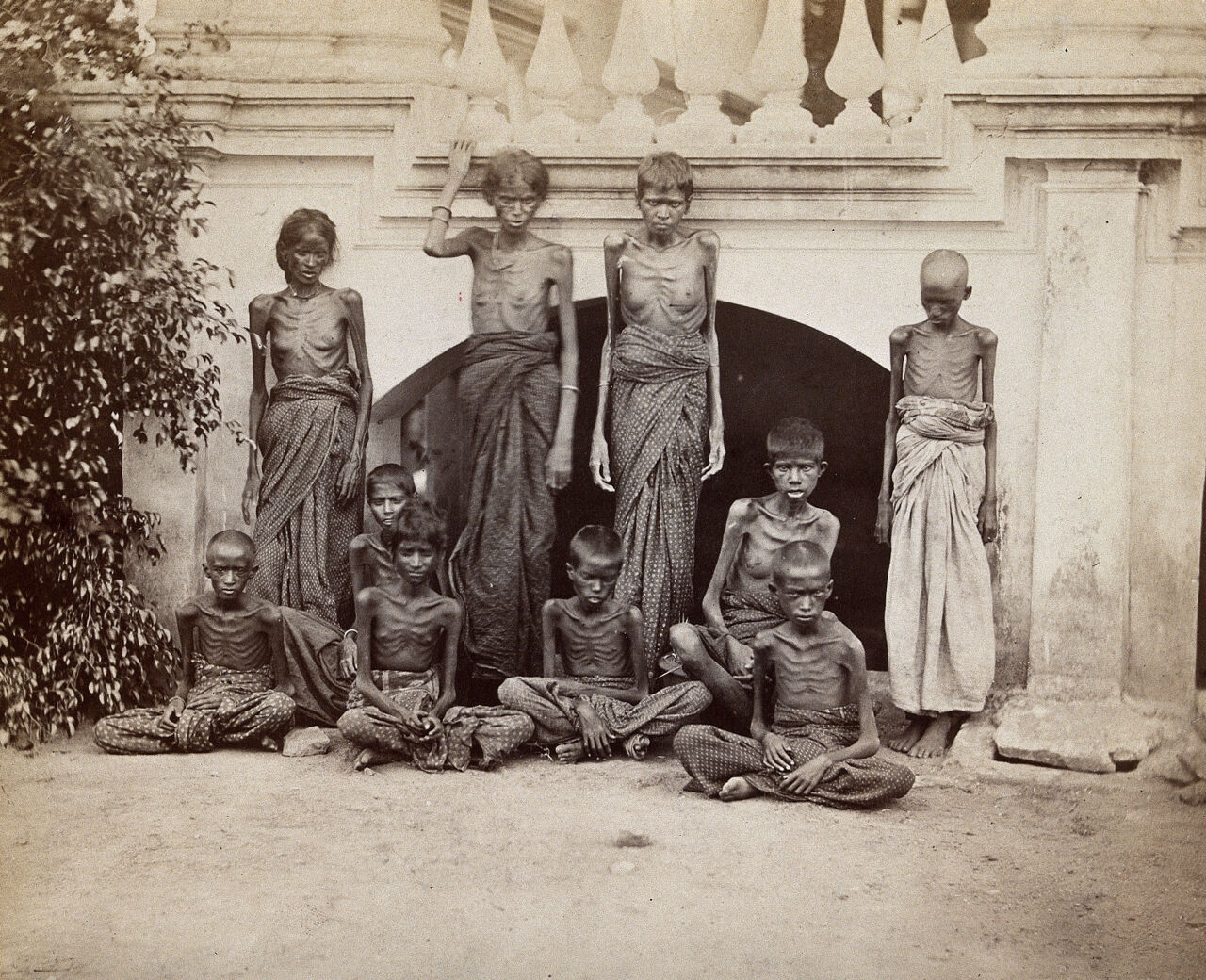
His photographs of victims of the Madras famine of 1876-8 and of Burmese prisoners facing execution by a firing squad have raised concerns about the ethical behaviour of photographers during his lifetime, as well as later on.
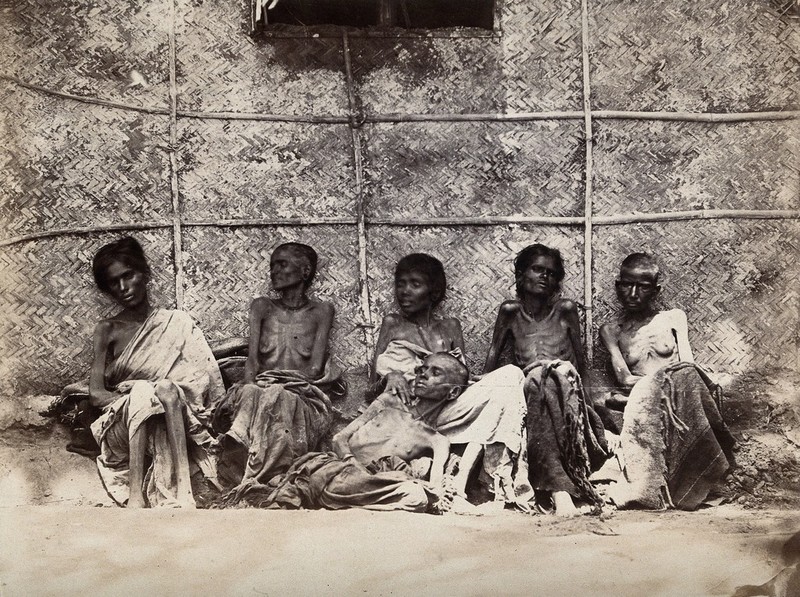
Famine in Mysore,
Willoughby Wallace Hooper · Wellcome Collection, London · Wellcome Collection
Key facts
Key facts
• Occupation — Military photographer • Known for — ethnographic photographs of native people in colonial India and Burma • Notable Works — The People of India (1868–1875), Burmah: a series of one hundred photographs 1887
Life and work
Life and work
After finishing school in Ramsgate, Hooper took up a position in 1853 as secretary at East India House. In 1858, he was commissioned into the 7th Madras Light Cavalry and subsequently seconded from his military duties in order to produce ethnographic photographs in the Central Provinces of British India and later, in British Burma. A self-trained and enthusiastic photographer, Hooper contributed over 450 photographic plates of native Indian people to the eight volumes of the ethnographic publication The People of India, published from 1868 until 1875. In a letter to the Chief Commissioner of the Central Provinces of British India of November 1862, he reported about the circumstances of taking photographs of a remote hill tribe: "The photographs which I took of them, I had the greatest difficulty in procuring, as having never seen a European before, they were naturally very much alarmed, more specially as it was very difficult to make them understand what I was doing with them." • Illustration — The Tiger Hunt, ca. 1872 Around 1872, he published a series of staged photographs titled "Tiger Shooting", which he sold to hunters as proof and souvenirs, and edited again in 1887 as Lantern readings: Tiger shooting in India. • Illustration — A Burmese police guard at Mandalay In 1885, he participated as Provost Marshal in the Third Anglo-Burmese War, which led to the end of the last Burmese monarchy under King Thibaw and to the establishment of British rule all over the country. Hoopers photographs of the fighting during this war are considered as “one of the most accomplished and comprehensive records of a nineteenth-century military campaign”. They were published in 1887 as ‘Burmah: a series of one hundred photographs illustrating incidents connected with the British Expeditionary Force to that country, from the embarkation at Madras, 1st Nov, 1885, to the capture of King Theebaw, with many views of Mandalay and surrounding country, native life and industries’. There were two editions, one with albumen prints, one with autotypes, and a set of lantern slides was issued. In 1896, Hooper retired from military service in the grade of colonel and lived in England until his death in 1912. – A number of his photographs are collected in the archives of the British Museum and the J. Paul Getty Museum.
Controversies
Controversies
• Illustration — Inmates of a relief camp during the Madras famine, 1876-1878 Around 1878, Hooper had taken a series of arranged photographs showing emaciated bodies of men, women and children, who were among the millions of victims of the Madras Famine. Having been published in Britain under the title Secundarabad, and with captions such as "Deserving Objects of Gratuitous Relief", they were caricatured by the satirical magazine Punch, criticizing Hooper for not having given any help to the people he was about to depict. In 2021, articles in the journal History of Photography and the Indian magazine Scroll.in, cited these pictorial documents of atrocities as historical examples for questions about the photographer's ethical responsibility and their effects on the general public. • Illustration — Burmese prisoners readied for execution, 1880s Some of his pictures showing the execution of Burmese prisoners became notable for the investigation following allegations that Hooper had them treated cruelly and inhumanely by delaying the firing squad for the time necessary to take the photographs. The subsequent court of inquiry concluded that he had behaved in a “callous and indecorous” way, and his pay was temporarily reduced. Shortly afterwards, the affair also raised issues over the ethical role of the photographer in documenting human suffering and the moral justification of carrying out executions against "a conquered people". In a more general sense, contemporary art historian Ariella Aïsha Azoulay wrote in her article The Captive Photograph: "Photographs taken under circumstances of violence are not reducible to what is recorded in them, since the violence that enabled their creation does not disappear after the camera’s shutter clicks."
Places
Named by the record
Places
Only places the record itself states, plotted where the house gazetteer settles their coordinates. Nothing is inferred from a name or a nationality.
Kennington.
Birth place
Kilmington.
Death place
References ==== External links
References ==== External links
• W.W. Hooper on Google Arts & Culture • 98 photographs by W.W. Hooper in the British Library online gallery • Cover and photographs of the book Secunderabad. Scenes of the Madras famine. at J. Paul Getty Museum online archive
Notes from the source article
Cited by Wikipedia
Notes from the source article
These works are cited by the source article, in its own numbering. They are recorded as its citations, not as sources VALÉORINE has verified.
- 1.Howe, Cathleen. Encyclopedia of nineteenth-century photography: A-I, index. Routledge. 713. 2013. 978-0-415-97235-2.
- 2.Letter from Lieutenant W. W. Hooper to Assistant Secretary to the Chief Commissioner, Central Provinces, dated 3 November 1862. Public Proceedings (General), Foreign Department, Government of India, IOR/P/205/13.
- 3.Lacoste, Anne. Felice Beato : a photographer on the Eastern road. J. Paul Getty Museum. 2010. 978-1-60606-035-3.
- 4.Willoughby Wallace Hooper. www.luminous-lint.com.
- 5.Wright, Colin. King Theebaw's State Barge on the moat, Mandalay. www.bl.uk. British Library online gallery.
- 6.Explore the British Library Search - Hooper, Willoughby Wallace (1837-1912). explore.bl.uk.
- 7.Willoughby Wallace Hooper (English, 1837 - 1912) (Getty Museum). The J. Paul Getty in Los Angeles.
- 8.The J. Paul Getty Museum, Los Angeles. Secunderabad. Scenes of the Madras famine.
- 9.Twomey, Christina. Framing Atrocity: Photography and Humanitarianism. History of Photography. 36. 3. 255–264. 2012. 0308-7298.
- 10.Mukherjee, Sujaan. Who was the photographer who took these dehumanising images of the Madras famine?. Scroll.in.
- 11.The Times: The Charges Against Colonel Hooper, 8 September 1886, p. 3
- 12.Grattan Geary (1886), Burma, after the conquest: viewed in its political, social, and commercial aspects, from Mandalay (London: Sampson Low, Marston, Searle & Rivington), p. 241-243
- 13.Azoulay, Ariella Aïsha. The captive photograph. Boston Review. 2021-09-23.
Bibliography printed in the source article · 1
- John Falconer, ‘Willoughby Wallace Hooper: “A craze about photography”’, The Photographic Collector, 4:3 (winter 1983), pp. 258–86.
References
Citations
References
Each reference names the institution holding it, so a reader may go to the document itself.
reference work
Secondary witnessreference work
Secondary witness
The Encyclopedia exists whether or not anything is for sale. Corrections are recorded rather than overwritten, and every version of this record is kept. Published 17 August 2026.
Elsewhere in Photography
11,392 published records in this field, each with its sources named.
- Willie DohertyPhotographer
- Willie MiddlebrookPhotographer
- Willim WelsynPhotographer
- Willis E. BellPhotographer
- Willy FleckhausPhotographer
- Willy GoldbergerPhotographer
- Willy LindwerPhotographer
- Willy MatheislPhotographer
Best supported in this field
For owners
Own a work by Willoughby Wallace Hooper?
A specialist will read what you send and tell you what the house can establish, what it cannot, and whether the object is suited to sale. There is no charge and no obligation. The object stays with you throughout; nothing is shipped to us unless it is arranged in writing beforehand.