
Wilhelm Lindenschmit the Younger
Wilhelm Lindenschmit (the Younger) (June 20, 1829 – June 8, 1895) was a German history painter who was a native of Munich. He was the son of painter Wilhelm Lindenschmit the Elder (1806–1848).
Also recorded as Wilhelm II von Lindenschmit · Wilhelm Lindenschmidt · Wilhelm von Lindenschmit II · Wilhelm von Lindenschmit
Wilhelm Lindenschmit the Younger
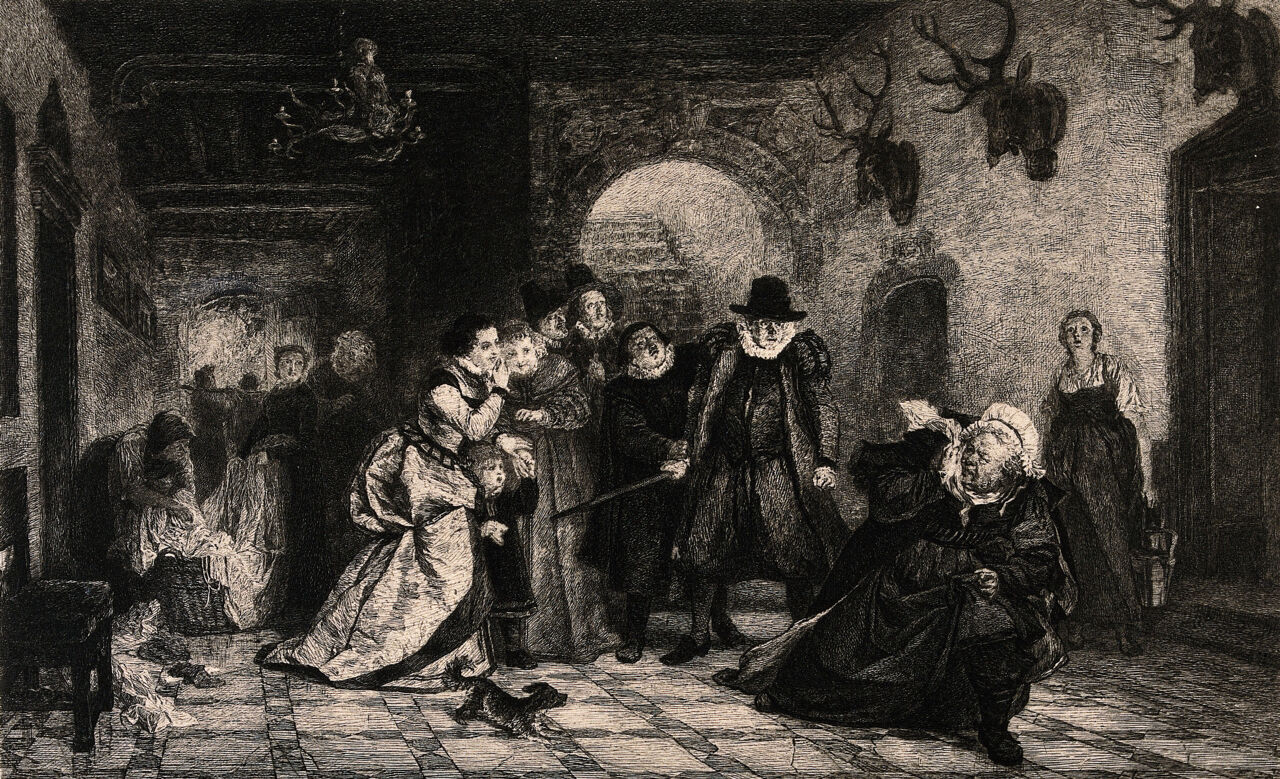
Wilhelm Lindenschmit the Younger · Wellcome Collection, London · Wellcome Collection · Public Domain Mark
- Name
- Wilhelm Lindenschmit
- Birth Name
- Wilhelmm Ludwig Lindenschmit
- Born
- 20 June 1829
- Birthplace
- Munich, Kingdom of Bavaria
- Died
- 8 June 1895
- Place of death
- Munich, Kingdom of Bavaria, German Empire
- Education
- Städel
- Movement
- Munich school
- Nationality
- Germany
- Occupation
- painter · teacher
- Languages
- German
VALÉORINE Encyclopedia
VALÉORINE documentary reading
Documentary summary
Wilhelm Lindenschmit (the Younger) (June 20, 1829 – June 8, 1895) was a German history painter who was a native of Munich. He was the son of painter Wilhelm Lindenschmit the Elder (1806–1848).
Admitted source layer · organised and presented by VALÉORINE
Reference Check
Propose documentary evidence for Wilhelm Lindenschmit the Younger. A contribution is never written directly as fact: identity, source, rights and evidence gates still decide.
Sign in to contribute
World of VALÉORINE
Documentary connections
Only confirmed graph relationships appear here. Images are shown only when their identity and reuse rights both pass the documentary gate.
Documentary evidence
Documentary basis
Authority files
wikidata · Q551260 · wikipedia · Wilhelm Lindenschmit the Younger
In this article
Biography
Biography
Wilhelm Lindenschmit the Younger studied at Academy of Fine Arts, Munich. Bertha Wegmann, Konrad Weigand and Hugo König are recorded as having studied under Wilhelm Lindenschmit the Younger. The recorded working language is German. Places of work recorded in the authority are Munich and Frankfurt. Employment is recorded with Academy of Fine Arts, Munich. Work by Wilhelm Lindenschmit the Younger is recorded in the collections of Städel Museum, Bavarian State Painting Collections, Hungarian National Gallery, Museum of Fine Arts, Budapest and Lenbachhaus.
Key facts
Key facts
• Honorific Prefix — Ritter • Name — Wilhelm Lindenschmit • Honorific Suffix — the Younger • Birth Name — Wilhelmm Ludwig Lindenschmit • Born — 20 June 1829 • Birthplace — Munich, Kingdom of Bavaria • Died — 8 June 1895 • Place of death — Munich, Kingdom of Bavaria, German Empire • Education — Städel • Movement — Munich school • Father — Wilhelm Lindenschmit • Relatives — Ludwig Lindenschmit (uncle)
Biography
Biography
Lindenschmit studied art in Mainz with his uncle, Ludwig Lindenschmit (1809–1893), and afterwards studied at the Academy of Munich, at the Städel Institute in Frankfurt am Main, in Antwerp, and later in Paris, where he created Ernte and Herzog Alba bei der Gräfin von Rudolstadt (Duke of Alba with the Countess of Rudolstadt). These two paintings are now housed at the Kunsthalle Hamburg. • Illustration — Klosterszene (1887) From 1853 to 1863, Lindenschmit painted in Frankfurt, later relocating to Munich, where he eventually became a professor to the Academy (1875). During this period of time, he created paintings from the age of the Protestant Reformation as well as works on other subjects from roughly the same time frame. • Stiftung des Jesuitenordens (Institution of the Order of Jesuits), 1868. • Ulrich von Hutten im Kampf mit französischen Adligen (Ulrich von Hütten fighting French nobles), 1869. • Luther und Kardinal Cajetan in Augsburg (Martin Luther and Cardinal Cajetan in Augsburg). • Der junge Luther bei Andreas Proles (The young Luther with Andreas Proles), 1869. • Knox und die schottischen Bilderstürmer (John Knox and the Scottish iconoclast). • Die Ermordung Wilhelms von Oranien (The assassination of William of Orange), 1872. • Sir Walter Raleigh im Tower von Verwandten besucht (Walter Raleigh in the Tower visited by relatives), 1873. • Illustration — The Temple of Antoninus and Faustina in Rome Beginning in the mid-1870s, Lindenschmit's works gradually became more luminous in color, being associated with the modern Munich school of painting. A few of these paintings include: • Narziß (Narcissus). • Einzug Alarichs in Rom (Entry of Alaric into Rome). • Venus an der Leiche des Adonis (Venus by the body of Adonis); on display at the Neue Pinakothek in Munich.
Primary material
Documents and archives
reference work
- “Wilhelm Lindenschmit the Younger”, English Wikipedia, consulted as further reading
Reputable secondary · Wikipedia
authority record
- Wikidata, structured authority record Q551260: Wilhelm Lindenschmit the Younger
General reference · Wikidata
Notes from the source article
Cited by Wikipedia
Notes from the source article
These works are cited by the source article, in its own numbering. They are recorded as its citations, not as sources VALÉORINE has verified.
- 1.Taufbuch Sankt Peter 269.
- 2.NDB 14 600 Lindenschmit, Wilhelm Ritter von Norbert Suhr 117036080
- 3.Suhr, Norbert. Lindenschmit, Wilhelm Ritter von. Neue Deutsche Biographie 14 (1985), S. 600 [Online-Version].
- 4.Brigitte Huber. Neues und Altes Münchner Rathaus.
References
Citations
References
Each reference names the institution holding it, so a reader may go to the document itself.
reference work
Secondary witnessauthority record
General reference
The Encyclopedia exists whether or not anything is for sale. Corrections are recorded rather than overwritten, and every version of this record is kept. Published 17 August 2026.
Elsewhere in Paintings
18,717 published records in this field, each with its sources named.
- Wilhelm LeiblArtist
- Wilhelm LeopolskiArtist
- Wilhelm LichtenheldArtist
- Wilhelm Lindenschmit the ElderArtist
- Wilhelm LucasArtist
- Wilhelm MarstrandArtist
- Wilhelm MorgnerArtist
- Wilhelm OstwaldArtist
Best supported in this field
For owners
Own a work by Wilhelm Lindenschmit the Younger?
A specialist will read what you send and tell you what the house can establish, what it cannot, and whether the object is suited to sale. There is no charge and no obligation. The object stays with you throughout; nothing is shipped to us unless it is arranged in writing beforehand.