
Watkin Tench
Lieutenant-General Watkin Tench (6 October 1758 – 7 May 1833) was a British military officer who is best known for publishing two books describing his experiences in the First Fleet, which established the first European settlement in Australia in 1788. His two accounts, Narrative of the Expedition to Botany Bay and Complete Account of the Settlement at Port Jackson provide an account of the arrival and first four years of the colony.
Watkin Tench
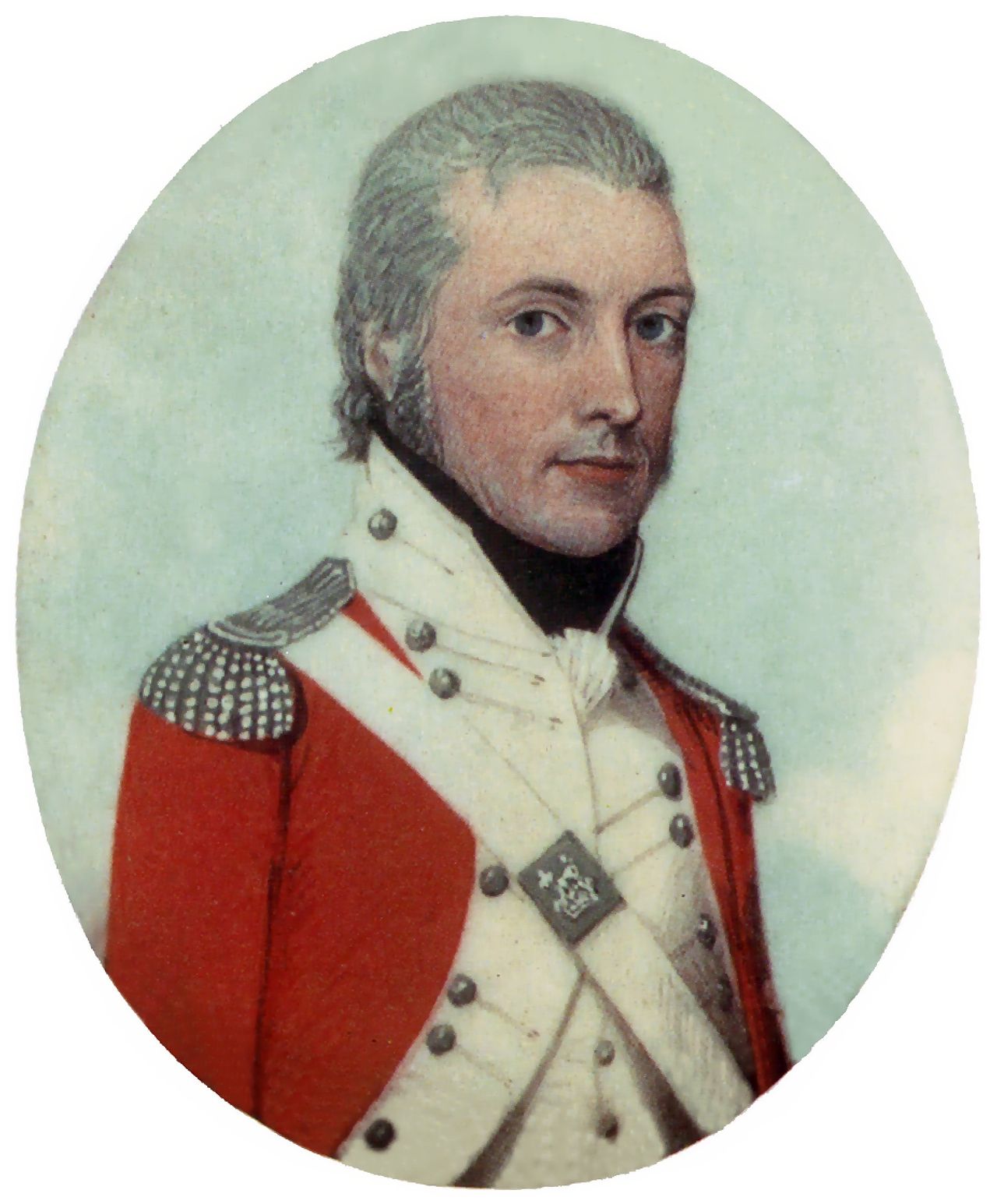
attributed to Frederick Buck · State Library of New South Wales · Public domain
- Name
- Watkin Tench
- Born
- 6 October 1758
- Birthplace
- Chester, Cheshire
- Died
- 7 May 1833
- Place of death
- Devonport, England
- Nationality
- United Kingdom of Great Britain and Ireland · Kingdom of Great Britain
- Occupation
- explorer · writer · naval officer
- Languages
- English
VALÉORINE Encyclopedia
VALÉORINE documentary reading
Documentary summary
Lieutenant-General Watkin Tench (6 October 1758 – 7 May 1833) was a British military officer who is best known for publishing two books describing his experiences in the First Fleet, which established the first European settlement in Australia in 1788. His two accounts, Narrative of the Expedition to Botany Bay and Complete Account of the Settlement at Port Jackson provide an account of the arrival and first four years of the colony.
Admitted source layer · organised and presented by VALÉORINE
Note VALÉORINE
Watkin Tench (1758–1833) was an explorer, naval officer and writer, of British and British nationality. The explorer was born in Chester and died in Plymouth.
Languages used include English. Works are held at Australian National Maritime Museum.
Composed from admitted, traceable facts · 01 October 2026
VALÉORINE
Reference Check
Propose documentary evidence for Watkin Tench. A contribution is never written directly as fact: identity, source, rights and evidence gates still decide.
Sign in to contribute
World of VALÉORINE
Documentary connections
Only confirmed graph relationships appear here. Images are shown only when their identity and reuse rights both pass the documentary gate.
Documentary evidence
Documentary basis
Authority files
wikidata · Q3566721 · wikipedia · Watkin Tench
In this article
Key facts
Key facts
• Honorific Prefix — Lieutenant-General • Name — Watkin Tench • Born — 6 October 1758 • Birthplace — Chester, Cheshire • Died — 7 May 1833 • Place of death — Devonport, England • Allegiance — Great Britain United Kingdom • Branch — Royal Marines • Service Years — 1776–1827 • Rank — Lieutenant-general • Battles — American War of Independence French Revolutionary Wars Napoleonic Wars • Other Work — Writer
Early life and career
Early life and career
Tench was born on 6 October 1758 at Chester in the county of Cheshire, England, a son of Fisher Tench, a dancing master who ran a boarding school in the town and Margaritta Tarleton of the Liverpool Tarletons. Watkin was a cousin to the soldier and politician Banastre Tarleton. His father appears to have named Watkin after a wealthy local landowner, Watkin Williams Wynn, whose family probably assisted in starting Tench's military career. Tench joined His Majesty's Marine Forces, Plymouth division, as a second lieutenant on 25 January 1776, aged 17. He was promoted to first lieutenant on 25 January 1778 at the age of 19 years and 3 months. He fought against the American forces in their War of Independence. He was captured when Mermaid was driven ashore on the Maryland coast at Assateague Island near the then extant Sinepuxent Inlet on the morning of 8 July 1778, by the French under Comte d'Estaing. Tench was in command of the Marine unit on board HMS Mermaid. He and the other officers were transported to Philadelphia, imprisoned and exchanged in October 1778.
Colonial career
Colonial career
Little more is known of him until he sailed as part of the First Fleet in 1787, although he records in Chapter 13 of the Account that he had spent time in the West Indies, and his service record shows that he was promoted to captain lieutenant in September 1782 and went on half-pay in May 1786.
Aboard the First Fleet
Aboard the First Fleet
The retirement did not last long, as in October 1786 the Admiralty called for volunteers for a three-year tour with the newly forming New South Wales Marine Corps for service at Botany Bay. In December 1786, Tench's offer to re-enter the corps was accepted. In May 1787, he sailed on the transport ship.
In the colony of New South Wales
In the colony of New South Wales
Before sailing with the fleet, Tench arranged with the London publishing firm of Debrett's to write a book, describing his experience of the journey and the first few months of the colony. In July 1788, his manuscript was taken back by John Shortland and published as the Narrative of the Expedition to Botany Bay by Debrett's in 1789. It ran to three editions and was quickly translated into French, German, Dutch and Swedish. The Dutch translation was published in Amsterdam, by Martinus De Bruijn. Unlike the French and German translations, De Bruijn’s edition contained an extensive commentary on the colony from a Dutch perspective. In October 1788, Robert Ross made a list of marines who wanted to stay in Australia, either as soldiers or settlers. Tench headed the list as "a soldier for one tour more of three years." Among his achievements in the fledgling colony of New South Wales Tench was being the first European to encounter the Nepean River. Tench's accounts were influenced by the liberalism of Jean-Jacques Rousseau and the idea of the noble savage. He ridicules Rousseau's notion of the noble savage and details the colonists' treatment of Aboriginal people. His writings include much information about the Aborigines of Sydney, the Gadigal and Cammeraygal, whom he referred to as "Indians". He was friendly with Bennelong, Barangaroo and several others. He stayed in Sydney until December 1791 when he sailed home on Gorgon, arriving in Plymouth in July 1792. In 1791 he studied the progress of the colony as research for his second book, visiting, among others, the farm of the convict Thomas William Parr, whom he found to have made improvements as required by the terms of the grant, and was a hard worker, but not satisfied with farming work.
Back in England
Back in England
In October 1792, Tench married Anna Maria Sargent, who was the daughter of Robert Sargent, a Devonport surgeon. In 1793, he published his Account of the Settlement at Port Jackson, which was as well-received as his first book. He joined Alexander as a brevet major, serving under Admiral Richard Rodney Bligh in the Channel fleet's blockade of Brest.
Napoleonic Wars
Napoleonic Wars
In November 1794, Bligh surrendered HMS Alexander after the action of 6 November 1794, a hard-fought battle with three French ships. The crew were initially imprisoned on ships in Brest harbour. Later Tench and Bligh were moved to Quimper and imprisoned on parole. Bligh kept Tench close by because Tench was fluent in French. During this time, Tench wrote, but probably did not send, the letters that formed the basis of his third book, Letters written in France to a Friend in London. He was exchanged in May 1795 after being held prisoner for six months. After returning to service, Tench served four years on Polyphemus, escorting convoy ships in the Atlantic and the Channel. In 1801, he rejoined the Channel blockade fleet on Princess Royal and remained there until his career at sea ended in 1802. After this, he appears to have taken shore posts at Chatham, Plymouth and Woolwich until he retired with the rank of major general at the end of 1815.
Later years and death
Later years and death
In October 1819, Tench was reactivated as commandant in the Plymouth division at the age of 61. Although he and his wife had no children of their own, in 1821 they took responsibility for three nephews and a niece when the four children were orphaned. At the time, Watkin Tench was 63 and his wife was 56. Watkin Tench resided in Chapel Street, Penzance, in the house constructed by Richard Oxnam's grandfather. He lived there from 1818 until 1828. In July 1827, Tench retired with the rank of lieutenant general. He died on 7 May 1833, in Devonport, near Plymouth, Devon, England, aged 74.
In popular culture
In popular culture
• The Watch on the Headland (1940) - radio play • Eleanor Dark, The Timeless Land (1941 novel) • Kate Grenville, The Lieutenant (novel) as Captain Silk • Timberlake Wertenbaker, Our Country's Good (1988 play). Tench is portrayed as an unsympathetic character who does not believe in any hope of redemption or rehabilitation for any of the transported English convicts of the First Fleet. Tench Reserve in Penrith, New South Wales, is named after him, as is Watkin Tench Parade in Pemulwuy, New South Wales.
Places
Named by the record
Places
Only places the record itself states, plotted where the house gazetteer settles their coordinates. Nothing is inferred from a name or a nationality.
Chester.
Birth place
Plymouth.
Death place
Primary material
Documents and archives
reference work
- “Watkin Tench”, English Wikipedia, consulted as further reading
Reputable secondary · Wikipedia
authority record
- Wikidata, structured authority record Q3566721: Watkin Tench
General reference · Wikidata
Notes from the source article
Cited by Wikipedia
Notes from the source article
These works are cited by the source article, in its own numbering. They are recorded as its citations, not as sources VALÉORINE has verified.
- 1.Flannery, T. (ed.), 1788 Watkin Tench, The Text Publishing Co., 1996,
- 2.Parish Register of Saint Mary on the Hill, Chester.
- 3.https://www.gutenberg.org/ebooks/3534 A Complete Account of the Settlement at Port Jackson by Watkin Tench.
- 4.A Narrative of the Expedition to Botany-Bay by Watkin Tench
- 5.Design and Art Australia Online. Parr, Thomas William. Trove.
- 6.Design and Art Australia Online. Parr, Thomas William. Trove.
- 7.Fitzhardinge, L. F. Tench, Watkin (1758–1833).
References
Citations
References
Each reference names the institution holding it, so a reader may go to the document itself.
reference work
Secondary witnessauthority record
General reference
The Encyclopedia exists whether or not anything is for sale. Corrections are recorded rather than overwritten, and every version of this record is kept. Published 20 August 2026.
Elsewhere in Books
39,529 published records in this field, each with its sources named.
- Wassyla TamzaliAuthor
- Wasyl CiapińskiAuthor
- Watchman NeeAuthor
- Watcyn ClywedogAuthor
- Watriquet de CouvinAuthor
- Watse CuperusAuthor
- Watts S. HumphreyAuthor
- Waverley Turner CarmichaelAuthor
Best supported in this field
For owners
Own a work by Watkin Tench?
A specialist will read what you send and tell you what the house can establish, what it cannot, and whether the object is suited to sale. There is no charge and no obligation. The object stays with you throughout; nothing is shipped to us unless it is arranged in writing beforehand.