
Väinö Linna
Väinö Valtteri Linna (20 December 1920 – 21 April 1992) was a Finnish author and a former soldier who fought in the Continuation War (1941–44). Linna gained literary fame with his third novel, Tuntematon sotilas (The Unknown Soldier, published in 1954), and consolidated his position with the trilogy Täällä Pohjantähden alla (Under the North Star, published in 1959–1963 and translated into English by Richard Impola). Both have been adapted to a film format on several occasions; The Unknown Soldier was first adapted into a film in 1955 and Under the North Star in 1968 as Here, Beneath the North Star, both directed by Edvin Laine.
Also recorded as Väinö Valtteri Linna · Vaino Linna
Väinö Linna
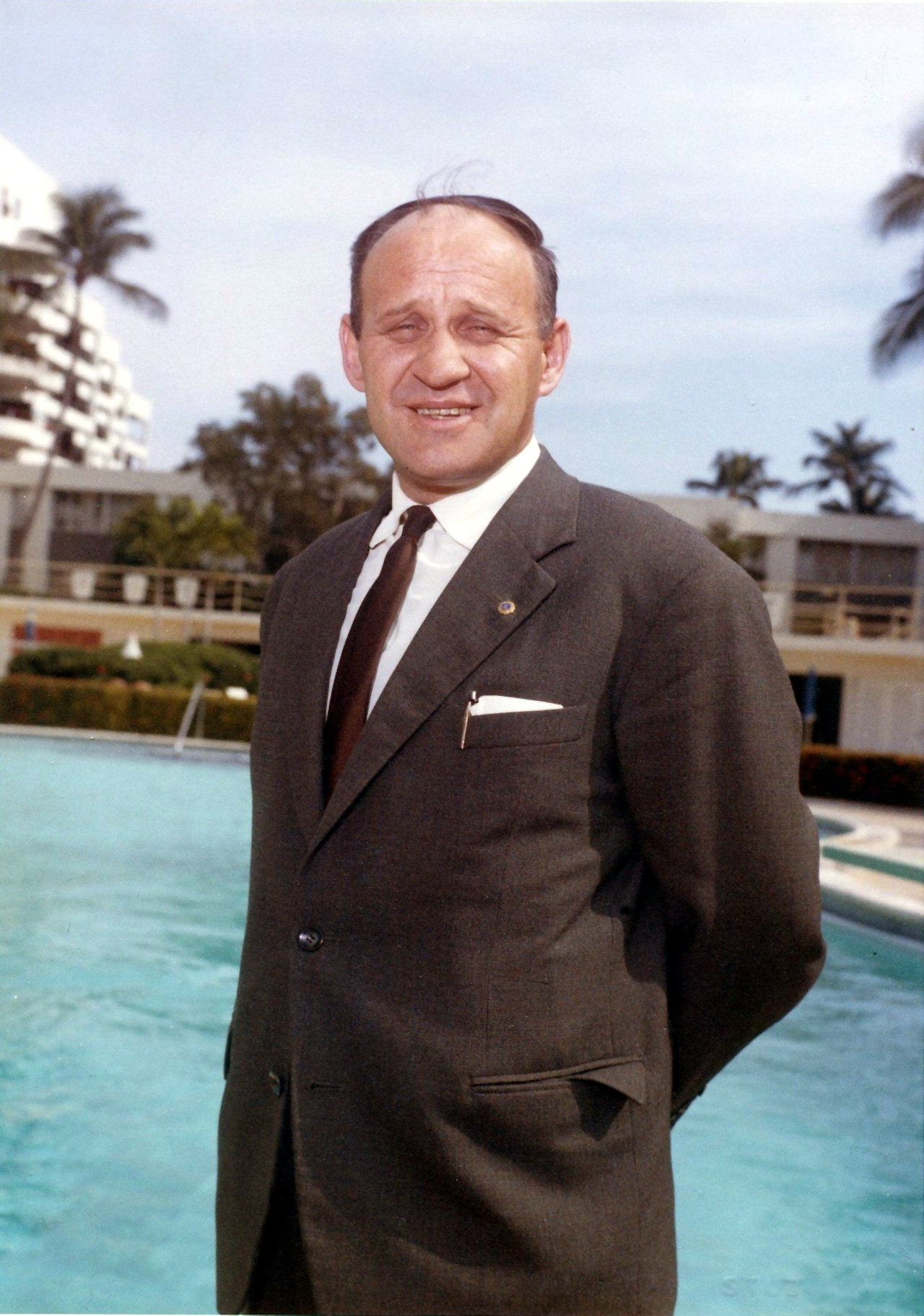
Väinö Linnan seura · Public domain
- Full name
- Väinö Valtteri Linna.
- Born
- 1920. · Urjala.
- Died
- 1992. · Pikonlinna.
- Nationality
- Finland.
- Occupation
- writer.
- Fields
- historical fiction and fiction.
- Known for
- The Unknown Soldier and Under the North Star.
- Honours
- Kalevi Jäntti Award, Nordic Council Literature Prize, Jussi Awards, Aleksis Kivi Award, Grand Cross of the Order of the Lion of Finland and Commander of the Order of the Lion of Finland.
- Languages
- Finnish.
VALÉORINE Encyclopedia
VALÉORINE documentary reading
Documentary summary
Väinö Valtteri Linna (20 December 1920 – 21 April 1992) was a Finnish author and a former soldier who fought in the Continuation War (1941–44). Linna gained literary fame with his third novel, Tuntematon sotilas (The Unknown Soldier, published in 1954), and consolidated his position with the trilogy Täällä Pohjantähden alla (Under the North Star, published in 1959–1963 and translated into English by Richard Impola). Both have been adapted to a film format on several occasions; The Unknown Soldier was first adapted into a film in 1955 and Under the North Star in 1968 as Here, Beneath the North Star, both directed by Edvin Laine.
Admitted source layer · organised and presented by VALÉORINE
Note VALÉORINE
Väinö Linna (1920–1992) was a prose writer and writer, of Finnish nationality. The prose writer was born Väinö Valtteri Linna in Urjala and died in Pikonlinna. Väinö Linna worked in Tampere.
Among the works is Under the North Star. The work spans fiction, fiction literature and historical fiction. Languages used include Finnish. Honours include Aleksis Kivi Award, Jussi Awards and Kalevi Jäntti Award, among others.
Composed from admitted, traceable facts · 26 September 2026
VALÉORINE
Reference Check
Propose documentary evidence for Väinö Linna. A contribution is never written directly as fact: identity, source, rights and evidence gates still decide.
Sign in to contribute
World of VALÉORINE
Documentary connections
Only confirmed graph relationships appear here. Images are shown only when their identity and reuse rights both pass the documentary gate.
Documentary evidence
Documentary basis
Authority files
wikidata · Q311037 · wikipedia · Väinö Linna
In this article
Biography
Biography
The recorded working language is Finnish. Subjects and genres recorded for the work are historical fiction and fiction. Places of work recorded in the authority are Tampere. Works named in the authority record are The Unknown Soldier and Under the North Star. Distinctions recorded are Kalevi Jäntti Award, Nordic Council Literature Prize, Jussi Awards and Aleksis Kivi Award.
Väinö Linna was born in Urjala in the Pirkanmaa region. He was the seventh child of Viktor (Vihtori) Linna (1874–1928) and Johanna Maria (Maija) Linna (née Nyman) (1888–1972). Linna's father, a butcher, died when Linna was only seven years old, thus Linna's mother had to support the entire family by working at a nearby manor. Despite his background, Linna's interest in literature began early on. As a child, Linna loved adventure novels which he borrowed from the local library. The author's education was, however, limited to six years at a public school which he finished in the mid-1930s. After working as a lumberjack and a farm hand at the same manor where his mother had worked, Linna moved to Tampere in 1938. Typical of his generation, the adolescent author-to-be moved from the countryside to a developing city in search of industrial labour which he found at the Finlayson textile mills as a fitter; he would work there from 1938 to 1940 and, after his military service, from 1944 until 1954. In 1940, Linna was conscripted into the army. The Second World War had broken out, and for Linna's part it meant participation in the Continuation War (1941–44). He fought on the eastern front. In addition to being a squad-leader, he wrote notes and observations about his and his unit's experiences. Already at this point Linna knew that writing would be his preferred occupation. However, failure to get the notes published led him to burn them. In spite of rejection, the idea of a novel, which would depict ordinary soldiers' views on war, would later lead him to write The Unknown Soldier. After the war, Linna got married and started writing while working at the mills during the day. Throughout his time at Finlayson, Väinö Linna read avidly. Such authors as Schopenhauer, Dostoyevsky, and Nietzsche gained Linna's respect. Linna later said that Erich Maria Remarque's All Quiet on the Western Front had also had a great influence on him. However, Linna's first two novels Päämäärä and Musta rakkaus sold poorly, though Musta rakkaus did earn him the City of Tampere literary prize in 1948; he also wrote poetry but did not enjoy success with that either. Not until the release of The Unknown Soldier (1954) did he rise to fame. It is evident that at the time there was a distinct social need for a novel that would deal with the war and ordinary people's role in it. A decade after the peace treaty with the Soviet Union many Finns were ready to reminisce, some even in a critical manner. The Unknown Soldier satisfied that need completely, as its characters were unarguably more diverse, realistic yet heroic, than those of earlier Finnish war novels. The book soon became something of a best-seller, as it sold 175,000 copies in only six months – quite a lot for a Finnish novel in the 1950s. Early on, the reception of the book was harsh. In Finland's biggest newspaper, Helsingin Sanomat, the critic Toini Havu argued in her review that Linna did not present his characters in a grand historical and ethical context, which she thought was crucial. Also modernists treated The Unknown Soldier with contempt. At the time Tuomas Anhava referred to The Unknown Soldier as a "boy's book" because of its action-packed storyline. Acceptance by the general public was enough to counter the negative criticism in the end. The novel is now considered both a classic in Finnish literature and a part of the national legacy. In the mid-1950s, he moved to Hämeenkyrö and began to cultivate crops. In 1959, the first part of Under the North Star was released. The book was a success and other parts were to follow. The second part was published in 1960 and the final part in 1963. The third part of the novel was honoured with the Nordic Council's Literature Prize. Other accolades from this period included the Johannes Linnankoski Prize in 1958, the Aleksis Kivi Prize in 1960, and the State Prize for Literature in 1960 and 1961. During this time, Linna was also a member of the board of the Pirkkalaiskirjailijat, the regional authors' association, from 1957 to 1969. In 1964, Linna sold the farm and moved back to Tampere. This time he did not return to Finlayson, as he now could dedicate his life entirely to literature due to the financial success his works had earned him. He was given the honorary title of academician in 1980, having previously received an honorary doctorate from the University of Tampere in 1965 and been made an honorary member of the Finnish Writers' Union in 1970, despite the fact that he had no higher education. In 1984, Väinö Linna had a stroke, which caused him to lose the ability to speak. Some time after that, he was diagnosed with cancer, which tired him out, leading to his death on 21 April 1992.
Literary works
Literary works
• 1947: Päämäärä • 1948: Musta rakkaus • 1949–53: Messias (unfinished) • 1954) Tuntematon sotilas, The Unknown Soldier • 1959–62: Täällä Pohjantähden alla I–III, Under the North Star, translated by Richard Impola • 1967: Oheisia, a collection of essays and speeches • 1990: Murroksia • 2000: Sotaromaani, uncensored version of The Unknown Soldier
Life and career
Dated record
Life and career
The full dated record · 2 entries
1920
Väinö Linna born at Urjala.
1992
Väinö Linna died at Pikonlinna.
Places
Named by the record
Places
Only places the record itself states, plotted where the house gazetteer settles their coordinates. Nothing is inferred from a name or a nationality.
Urjala.
Birth place
Pikonlinna.
Death place
Legacy
Linna's realism of his work has had a profound influence on Finnish social, political and cultural life. His novels have a place in Finland's literary canon, among Kalevala, Seven Brothers and other classics. Many quotations from his works are nowadays Finnish sayings. The opening line of Under the North Star, "In the beginning there were the swamp, the hoe – and Jussi", is recognized by most Finns as well as Rokka's famous exclamation, "Where do you need a real good man, here you have one!", from The Unknown Soldier. Showcasing the value of his legacy, Linna was pictured on the 20 markka banknote which was in use from 1993 to the introduction of the Euro. In addition, both of his major works have been filmed multiple times. In 1995, a square of the same name was named after Väinö Linna in Tampere.
References ==== External links
References ==== External links
*

Grave of Väinö Linna in Tampere, Finland.
M62

Väinö Linna (second from left) with his fellow workers.
Väinö Linnan seura
Notes from the source article
Cited by Wikipedia
Notes from the source article
These works are cited by the source article, in its own numbering. They are recorded as its citations, not as sources VALÉORINE has verified.
- 1.Nummi, Jyrki. Linna, Väinö (1920–1992). 100 Faces from Finland – a Biographical Kaleidoscope. the Biographical Centre of the Finnish Literature Society. 2003–2007.
- 2.Writers in Finland 1945-1980
- 3.Linna Urjalassa. Urjala.
- 4.Liukkonen, Petri. Väinö Linna. Books and Writers (kirjasto.sci.fi). Kuusankoski Public Library.
- 5.Nordic Council Literature Prize.
- 6.Finnish Heritage Agency. Tammerkosken teollisuusmaisema. Valtakunnallisesti merkittävät rakennetut kulttuuriympäristöt RKY. 2009.
- 7.City of Tampere. Raimo Heino: Väinö Linnan muotokuva. Julkiset veistokset ja monumentit Tampereella.
References
Citations
References
Each reference names the institution holding it, so a reader may go to the document itself.
reference work
Secondary witnessreference work
Secondary witness
The Encyclopedia exists whether or not anything is for sale. Corrections are recorded rather than overwritten, and every version of this record is kept. Published 14 August 2026.
Elsewhere in Books
38,661 published records in this field, each with its sources named.
- VaidehiAuthor
- Vaikom Muhammad BasheerAuthor
- Väinö HavasAuthor
- Väinö KirstinäAuthor
- Väinö SiikaniemiAuthor
- VairocanaAuthor
- Vajjala Shiva KumarAuthor
- VajrasattvaAuthor
Best supported in this field
For owners
Own a work by Väinö Linna?
A specialist will read what you send and tell you what the house can establish, what it cannot, and whether the object is suited to sale. There is no charge and no obligation. The object stays with you throughout; nothing is shipped to us unless it is arranged in writing beforehand.