
Traugott Maximilian Eberwein
Traugott Maximilian Eberwein (27 October 1775 – 2 December 1831), was a German composer and conductor, who is attributed with the start of early musical history in Rudolstadt.
Also recorded as Traugott M Eberwein
Traugott Maximilian Eberwein
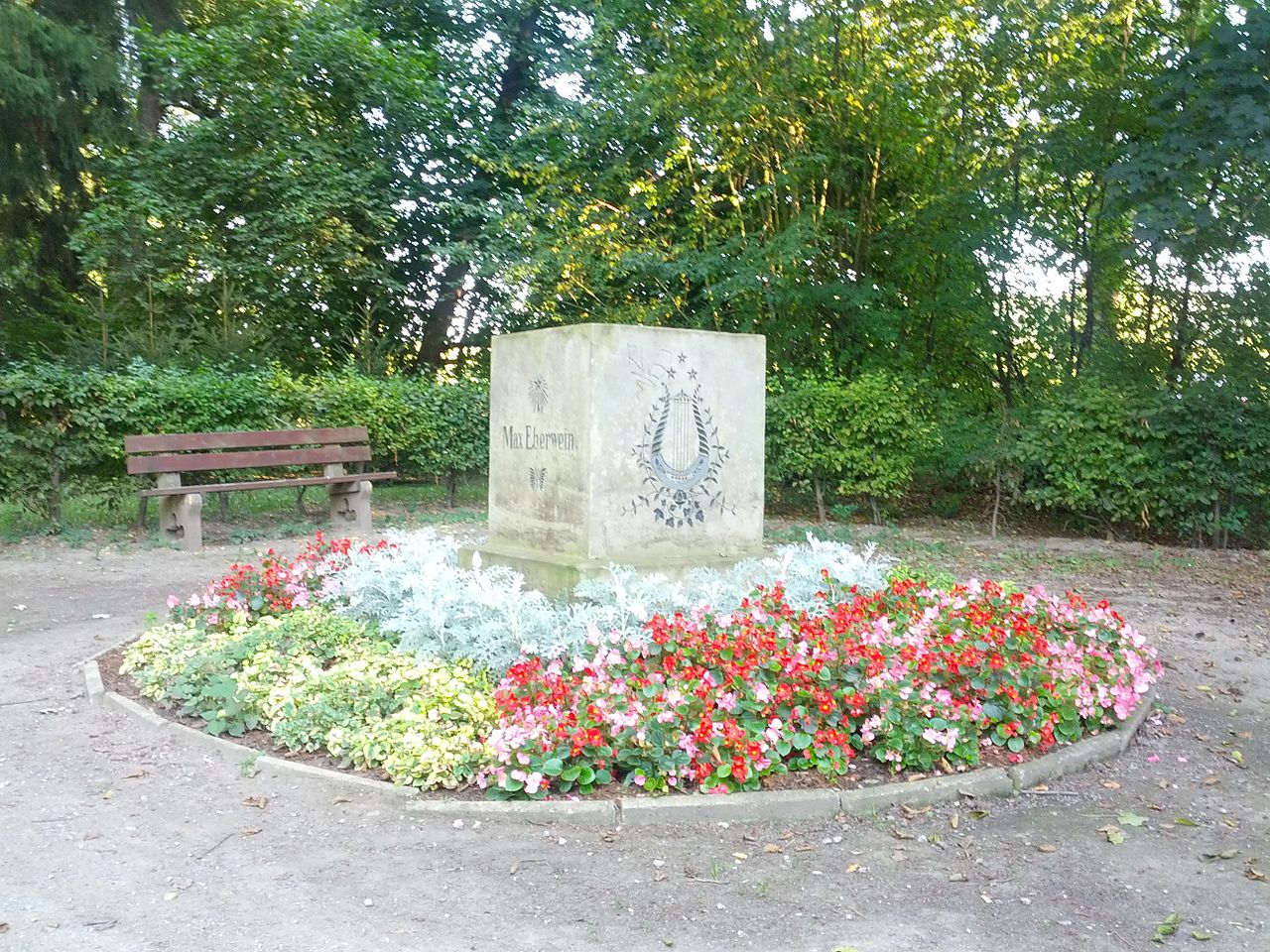
Z thomas · CC BY-SA 3.0
- Born
- 27 October 1775
- Birthplace
- Weimar, Germany
- Died
- 2 December 1831
- Place of death
- Rudolstadt, Germany
- Occupation
- Composer, conductor
- Nationality
- Saxe-Weimar-Eisenach
- Fields
- music
- Languages
- German
VALÉORINE Encyclopedia
VALÉORINE documentary reading
Documentary summary
Traugott Maximilian Eberwein (27 October 1775 – 2 December 1831), was a German composer and conductor, who is attributed with the start of early musical history in Rudolstadt.
Admitted source layer · organised and presented by VALÉORINE
Note VALÉORINE
Traugott Maximilian Eberwein (1775–1831) was a composer, conductor and court chapel master, a national of Saxe-Weimar-Eisenach. The composer was born in Weimar and died in Rudolstadt.
Traugott Maximilian Eberwein worked in Rudolstadt. Activity centred on music. Languages used include German.
Composed from admitted, traceable facts · 26 September 2026
VALÉORINE
Reference Check
Propose documentary evidence for Traugott Maximilian Eberwein. A contribution is never written directly as fact: identity, source, rights and evidence gates still decide.
Sign in to contribute
World of VALÉORINE
Documentary connections
Only confirmed graph relationships appear here. Images are shown only when their identity and reuse rights both pass the documentary gate.
Documentary evidence
Documentary basis
Authority files
wikidata · Q215521 · wikipedia · Traugott Maximilian Eberwein
In this article
Key facts
Key facts
• Born — 27 October 1775 • Birthplace — Weimar, Germany • Died — 2 December 1831 • Place of death — Rudolstadt, Germany • Occupation — Composer, conductor
Family
Family
Eberwein was born into a musical family, his father Alexander Bartholomäus Eberwein (1751-1811) was a court musician and his brother Carl Eberwein was a composer who frequently worked with Johann Wolfgang von Goethe, putting his work into music such as Faust. Eberwein had three children with his wife Catharina Bianchi, Caecilie Eberwein (1800-1800), Julius Eberwein (1802-1870) and Ludwig Eberwein (1805-1884).
Biography
Biography
Eberwein was taught music at an early age by his father, where he learned all sorts of instruments and already started composing music at the age of seven with a Timpani. In 1782, he was already making money for the family by playing music at weddings and funerals. In 1791, after his father thought he gained a basic understanding of music, he stopped teaching him. He later continued getting taught by Johann Matthäus Rempt. Eberwein later went to study musicology and violin and became a pupil of F.L.Æ. Kunzen in Frankfurt, and Ernst Johann Christoph Schick in Mainz. While visiting Johann Christian Eberwein in 1799, he gathered the attention of Louis Frederick II, Prince of Schwarzburg-Rudolstadt which led to him getting invited to his residence, to which he at first politely declined. Once he had returned back to Weimar, he met and later married Catharina Bianchi, the daughter of Andreas Giorgio Maria Bianchi, a wealthy Italian businessman. After his marriage, in 1803 he got the opportunity for a Study trip throughout Italy, where he studied under Fedele Fenaroli in Naples. After his return from the Study trip, he went to Vienna where he visited Joseph Haydn, whom he impressed after showing him some of his work. After this, he also visited other composers such as Ludwig van Beethoven and Antonio Salieri. In 1810, he went back to Vienna to visit Beethoven and Selieri where he then met Anton Reicha. On 18 October 1831, he performed his last public opera, Das befreite Jerusalem, at the Theater Rudolstadt. He died on 2 December 1831 due to an illness.
Operas
Operas
• Piedro und Elvira • Claudine von Villa Bella • Das befreite Jerusalem • Ferdusi • Das goldene Netz
Singspiele
Singspiele
• Die hohle Eiche • Das Storchnest • Der Mond • Die Fischerin • Das Schachtournier
Songs
Songs
• Ergo bibamus (Johann Wolfgang von Goethe) • Der Jahrmarkt zu Plundersweilen (Johann Wolfgang von Goethe)
Other
Other
• Overture in C major • Symphony No. 3 in E major, Op. 84 • Mass in A major, Op. 87
Identity
Identity
Traugott Maximilian Eberwein is recorded with the occupation court chapel master. Recorded as composer, conductor and court chapel master.
Life and career
Dated record
Life and career
The full dated record · 1 entries
1831
Traugott Maximilian Eberwein died on 2 December 1831.
Places
Named by the record
Places
Only places the record itself states, plotted where the house gazetteer settles their coordinates. Nothing is inferred from a name or a nationality.
Weimar.
Birth place
Rudolstadt.
Death place
Primary material
Documents and archives
reference work
- “Traugott Maximilian Eberwein”, English Wikipedia, consulted as further reading
Reputable secondary · Wikipedia
authority record
- Wikidata, structured authority record Q215521: Traugott Maximilian Eberwein
General reference · Wikidata
Notes from the source article
Cited by Wikipedia
Notes from the source article
These works are cited by the source article, in its own numbering. They are recorded as its citations, not as sources VALÉORINE has verified.
- 1.Traugott Maximilian Eberwein. Deutsche Digitale Bibliothek.
- 2.Traugott Maximilian Eberwein (1775–1831). eberwein-archiv.org.
- 3.Schade, Hartmut. Wie Goethe in Weimar den Komponisten Carl Eberwein entdeckte. MDR. 11 November 2021.
- 4.Franz Carl Adelbert Eberwein (1786–1868). eberwein-archiv.org.
- 5.Alexander Bartholomäus Eberwein (1751–1811). eberwein-archiv.org.
- 6.Henkel, Lisa. Das Leben und das Wirken der Hofkomponisten. Eberwein, Erlebach, Gebel und Scheinpflug. in Rudolstadt. docplayer.org.
- 7.Eberwein, Traugott Maximilian. Deutsche Biographie.
Bibliography printed in the source article · 1
- Larsen, Peter (1999). Traugott Maximilian Eberwein (1775-1831), Hofkapelldirektor und Komponist in Rudolstadt.
References
Citations
References
Each reference names the institution holding it, so a reader may go to the document itself.
reference work
Secondary witnessauthority record
General reference
The Encyclopedia exists whether or not anything is for sale. Corrections are recorded rather than overwritten, and every version of this record is kept. Published 17 August 2026.
Elsewhere in Music memorabilia
42,832 published records in this field, each with its sources named.
- TransmatOrganisation
- TransmissionOrganisation
- Transmission CommunicationsOrganisation
- TransparencyOrganisation
- Traugott OchsPerson
- Traum SchallplattenOrganisation
- Trauma RecordsOrganisation
- Travie McCoyPerson
Best supported in this field
For owners
Own a work by Traugott Maximilian Eberwein?
A specialist will read what you send and tell you what the house can establish, what it cannot, and whether the object is suited to sale. There is no charge and no obligation. The object stays with you throughout; nothing is shipped to us unless it is arranged in writing beforehand.