
Tobias Wolff
Tobias Jonathan Ansell Wolff (born June 19, 1945) is an American short story writer, memoirist, novelist, and teacher of creative writing. He is known for his memoirs, particularly This Boy's Life (1989) and In Pharaoh's Army (1994). He has written four short story collections and two novels including The Barracks Thief (1984), which won the PEN/Faulkner Award for Fiction.
Also recorded as Tobias Jonathan Ansell Wolff
Tobias Wolff
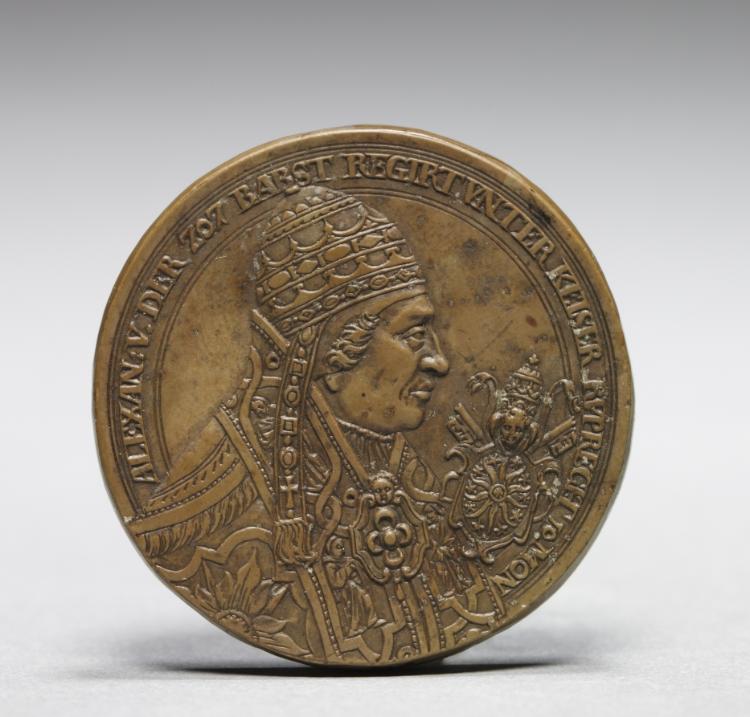
Tobias Wolff · The Cleveland Museum of Art · John L. Severance Fund · CC0
- Name
- Tobias Wolff
- Birth Name
- Tobias Jonathan Ansell Wolff
- Born
- 19 June 1945
- Birthplace
- Birmingham, Alabama, U.S.
- Education
- Hertford College, Oxford (BA) Stanford University (MA)
- Occupation
- Writer
- Spouse
- Catherine Dolores Spohn (m. 1975; 3 children)
- Nationality
- United States.
- Fields
- literature, short story, novel and autobiography.
- Known for
- Old School and This Boy's Life.
- Honours
- PEN/Faulkner Award for Fiction, Guggenheim Fellowship and PEN/Malamud Award.
- Languages
- English.
Reference Check
Propose documentary evidence for Tobias Wolff. A contribution is never written directly as fact: identity, source, rights and evidence gates still decide.
Sign in to contribute
World of VALÉORINE
Documentary connections
Only confirmed graph relationships appear here. Images are shown only when their identity and reuse rights both pass the documentary gate.
Documentary evidence
Documentary basis
Authority files
wikidata · Q495754 · wikipedia · Tobias Wolff
VALÉORINE Encyclopedia
The documentary record
Statements marked “Documentary record” are set in the article beside the passage they confirm. Each is read from the authority records of the institutions named here; select “Prove” to see the record it was read from, where in that record, and when.
Institutions cited
Bibliothèque nationale de France · Deutsche Nationalbibliothek
Complete reading chain (JSON)In this article
Biography
Biography
Wolff received a National Medal of Arts from President Barack Obama in September 2015. His academic career began at Syracuse University (1982–1997). Since 1997, he has taught at Stanford University, where he is the Ward W. and Priscilla B. Woods Professor in the School of Humanities and Sciences.
Tobias Wolff studied at Stanford University and Hertford College. The recorded working language is English. The field of work recorded is literature, short story and novel. Guy de Maupassant is recorded as an influence. Places of work recorded in the authority are Syracuse and Stanford. Employment is recorded with Syracuse University and Stanford University. Works named in the authority record are Old School and This Boy's Life.
Key facts
Key facts
• Name — Tobias Wolff • Birth Name — Tobias Jonathan Ansell Wolff • Born — 19 June 1945 • Birthplace — Birmingham, Alabama, U.S. • Education — Hertford College, Oxford (BA) Stanford University (MA) • Occupation — Writer • Genre — Memoir, short story, novel • Spouse — Catherine Dolores Spohn (m. 1975; 3 children)
Life and career
Life and career
Wolff was born in 1945 in Birmingham, Alabama, the second son of Rosemary (Loftus) from Hartford, Connecticut, and Arthur Samuels Wolff, an aeronautical engineer who was a son of a Jewish doctor and his wife. His father had become Episcopalian. Wolff did not learn about his father's Jewish roots until he was an adult. Wolff was raised and identifies as Catholic, like his mother. His parents separated when Wolff was five and his elder brother Geoffrey was twelve. He lived with his mother in a variety of places, including Seattle and Washington when he was an adolescent. After she remarried, they lived in Newhalem, a small company town in the North Cascade Mountains, where his stepfather, Robert Thompson, worked for Seattle City Light. His father and brother lived on the East Coast during this period. Geoffrey knew nothing about where his brother was until he entered Princeton. As a child, Wolff had a local paper route and was a Boy Scout. After attending Concrete High School in Concrete, also in the North Cascades, Wolff applied to and was accepted by The Hill School, located 35 miles from Philadelphia, Pennsylvania. He had applied under the self-embellished name "Tobias Jonathan von Ansell-Wolff III", adopting part of one of his father's personas, Saunders Ansell-Wolff 3d. Wolff struggled with the academic load, and he coped through substance abuse and "bec[oming] a school wildman"; during his final year, he was expelled. Wolff served in the U.S. Army from 1964 to 1968, when he trained for Special Forces, learned Vietnamese, and served as an adviser in Vietnam. He holds a First Class Honours degree in English from Hertford College, Oxford (1972). After returning to the United States, in 1975, he was awarded a Wallace Stegner Fellowship in Creative Writing at Stanford University, where he earned an M.A. and remained as a lecturer for two years. While continuing to write, Wolff taught at Syracuse University from 1980 to 1997. He published his first short story collection in 1981. At Syracuse he served on the faculty with Raymond Carver and was an instructor in the graduate writing program. Authors who had studied with Wolff as students at Syracuse include Jay McInerney, Tom Perrotta, George Saunders, Alice Sebold, William Tester, Paul Griner, Ken Garcia, Dana C. Kabel, Jan-Marie Spanard, and Paul Watkins. In 1997, Wolff transferred to Stanford, where he is the Ward W. and Priscilla B. Woods Professor in the School of Humanities and Sciences. He has taught classes in English and creative writing. He also served as the director of the Creative Writing Program at Stanford from 2000 to 2002.
Documentary record
Tobias Wolff (born 19 June 1945) is recorded as an author, lecturer and writer. The birth of Tobias Wolff is recorded on 19 June 1945 in Birmingham, Alabama. The Deutsche Nationalbibliothek records Syracuse, New York and Stanford, California. as places of activity.
Writing
Writing
Wolff is widely known for his work in two genres: the short story and the memoir. His first short story collection, In the Garden of the North American Martyrs, was published in 1981. The collection was well received and several of its stories have since been published in a number of anthologies. Its publication coincided with a period in which several American authors who worked almost exclusively in the short story form were receiving wider recognition. As writers such as Wolff, Raymond Carver and Andre Dubus became better known, the United States was said to be having a renaissance of the short story. (Their 20th-century North American version of realism was often labelled as Dirty realism for its gritty veracity.) Wolff repudiated this characterization. In 1994, in the introduction to The Vintage Book of Contemporary American Short Stories, he wrote: Wolff's 1984 novella The Barracks Thief won the PEN/Faulkner Award for Fiction for 1985. Most of the action takes place at Fort Bragg, North Carolina. Three recent paratrooper training graduates are temporarily attached to an airborne infantry company as they await orders to report to Vietnam. Because most of the men in the company fought together in Vietnam, the three newcomers are treated as outsiders and ignored. When money and personal property are discovered missing from the barracks, suspicion falls on the three newcomers. The narrative structure of the book contains several shifts of tone and point of view as the story unfolds. In 1985, Wolff's second short story collection, Back in the World, was published. Several of the stories in this collection, such as "The Missing Person," are significantly longer than the stories in his first collection. Wolff chronicled his early life in two memoirs. This Boy's Life (1989), winner of the Los Angeles Times Book Award for Biography, is devoted to the author's adolescence in Seattle and Newhalem, a remote company town in the North Cascade mountains of Washington. The memoir describes the nomadic and uncertain life Wolff and his mother led after his parents divorced. His mother's subsequent marriage to a man who was revealed as an abusive husband and stepfather deeply affected their lives. In Pharaoh's Army (1994) records Wolff's U.S. Army tour of duty in Vietnam. He published a third collection of stories, The Night in Question, in 1997. His fourth short-story collection, Our Story Begins: New and Selected Stories (2008), includes both new and previously published stories. Whether he is writing fiction or non-fiction, Wolff's prose is characterized by an exploration of personal/biographical and existential terrain. As Wyatt Mason wrote in the London Review of Books, "Typically, his protagonists face an acute moral dilemma, unable to reconcile what they know to be true with what they feel to be true. Duplicity is their great failing, and Wolff's main theme." Elsewhere Wolff said of the personal nature of his work: "I have to be able, with a straight face, to tell myself that something is nonfiction if I say it's nonfiction. That's why, although there are autobiographical elements in some of my stories, I still call them fiction because that's what they are. Even though they may have been set into motion by some catalyst of memory." In 1989, Wolff was chosen as recipient of the Rea Award for the Short Story. Wolff has received the O. Henry Award on three occasions, for the stories "In the Garden of North American Martyrs" (1981), "Next Door" (1982), and "Sister" (1985). In 2008, he was awarded The Story Prize for Our Story Begins.
Adaptations
Adaptations
Some of Wolff's work has been adapted to film. This Boy's Life was adapted as a feature film directed by Michael Caton-Jones in 1993. It starred Leonardo DiCaprio as the teenage Wolff, Robert De Niro as Wolff's abusive step-father Dwight, and Ellen Barkin as Wolff's mother Rosemary. In 2001, Wolff's acclaimed short story "Bullet in the Brain" (from The Night in Question) was adapted as a short film by David Von Ancken and CJ Follini; it starred Tom Noonan and Dean Winters.
Family
Family
Tobias Wolff's older brother is the author Geoffrey Wolff. A decade before Tobias Wolff published This Boy's Life, his brother wrote a memoir of his own about the boys' biological father, entitled The Duke of Deception (in which he alleges his younger brother was named after the Toby Jug). Wolff's mother later settled in Washington, D.C. and married Francis Fowler Hutchins ll. There she became president of the League of Women Voters. Tobias Wolff is married and lives with his wife, Catherine Dolores Spohn, and three children in California.
Novels
Novels
* * *
Edited volumes
Edited volumes
* * * *
Non-fiction
Non-fiction
* *
Short fiction
Short fiction
• |Year — |Title — |First published — |Reprinted/collected — |Notes • 1976 — Smokers — Collected in In the Garden of the North American Martyrs — First published short story. • 1988 — Fortune • 1993 — Memorial • 1995 — Bullet in the Brain — Collected in The Night in Question. Reprinted in • 2007 — Bible — Collected in Our Story Begins. • 2013 — All Ahead of Them
Life and career
Dated record
Life and career
The full dated record · 1 entries
1945
Tobias Wolff born at Birmingham.
Collections
* • (1982) Hunters in the Snow * * * *
Awards and honors
• 1985 PEN/Faulkner Award for Fiction for The Barracks Thief • 1989 Whiting Award for Fiction and Nonfiction • 2006 PEN/Malamud Award (co-winner) • 2008 The Story Prize • 2014 Stone Award for Lifetime Literary Achievement, Oregon State University • 2014 elected to the American Academy of Arts and Letters, • 2015 National Medal of Arts, US National Endowment for the Arts
Text attribution
Licensing
Text attribution
Part of the biographical narrative on this page reuses licensed material. Its origin, revision and licence are recorded here.
The biographical narrative on this page is based on the Wikipedia article Tobias Wolff, revision 1377829198 (EN edition), by its contributors. VALÉORINE has edited that text and built its own documentary record around it. The reused material is available under CC BY-SA 4.0, and this page's reuse of it is offered under the same licence. Everything else on this page — the chronology, the holdings, the evidence, the plates and the connections — is VALÉORINE's own record. Sources and licences.
References
Citations
References
Each reference names the institution holding it, so a reader may go to the document itself.
reference work
Secondary witnessreference work
Secondary witness
The Encyclopedia exists whether or not anything is for sale. Corrections are recorded rather than overwritten, and every version of this record is kept. Published 15 August 2026.
Elsewhere in Books
39,529 published records in this field, each with its sources named.
- Tobias BarretoAuthor
- Tobias BerggrenAuthor
- Tobias SmollettAuthor
- Tobias WitmerAuthor
- Todar KliaštornyAuthor
- Todar MalAuthor
- Todd F. DavisAuthor
- Todd GitlinAuthor
Best supported in this field
For owners
Own a work by Tobias Wolff?
A specialist will read what you send and tell you what the house can establish, what it cannot, and whether the object is suited to sale. There is no charge and no obligation. The object stays with you throughout; nothing is shipped to us unless it is arranged in writing beforehand.