
Tino di Camaino
Illustration — Carità, ca. 1320–24, Museo Bardini, Florence Tino di Camaino (c. 1280 in Siena – c.
Also recorded as di Camaino Tino · Tino ëd Caimano
Tino di Camaino
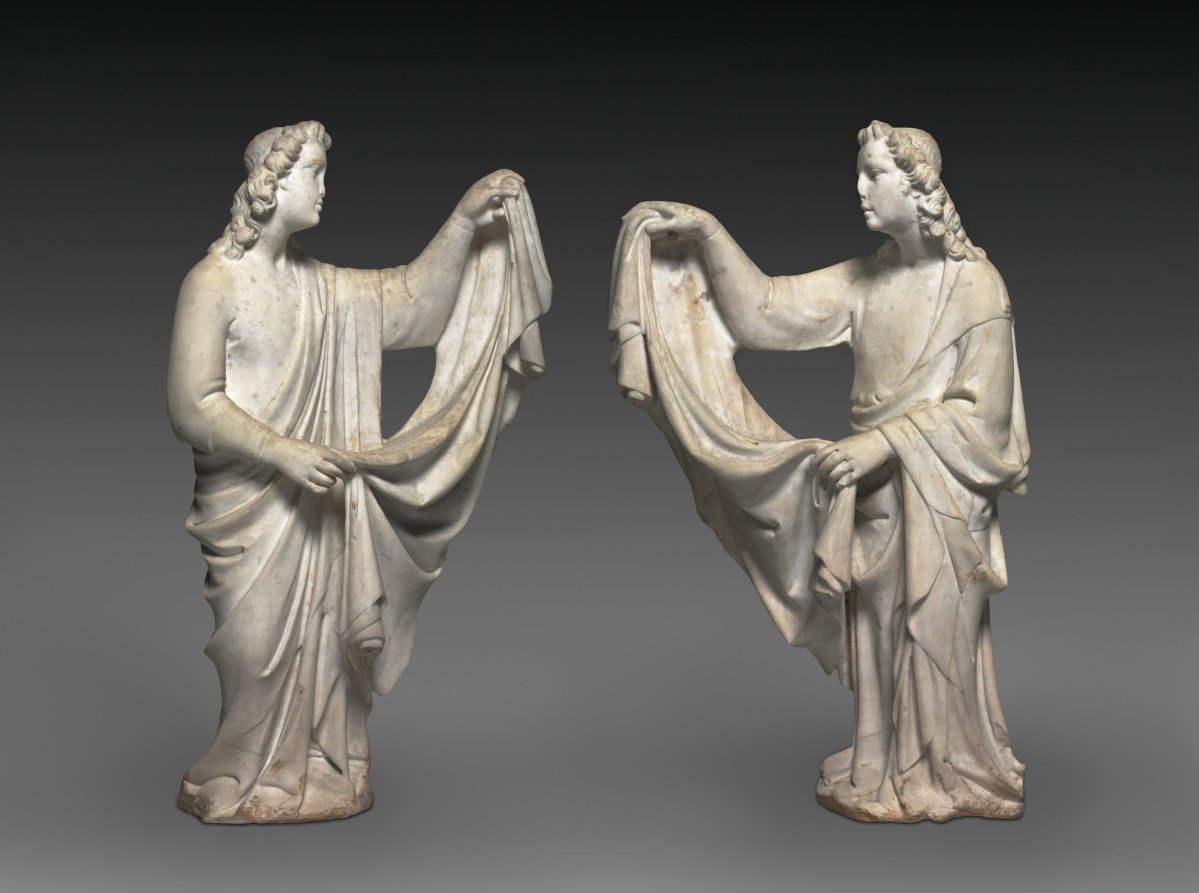
Tino di Camaino · The Cleveland Museum of Art · Gift of the John Huntington Art and Polytechnic Trust · CC0
- Born
- c. 1280. · Siena.
- Nationality
- Republic of Siena.
- Occupation
- sculptor and architect.
- Teachers
- Giovanni Pisano and Camaino di Crescentino.
- Known for
- The Baptism of Christ, Charity, Faith, Angel, Caryatid, Henry VII's tomb and Hope.
- Languages
- Italian.
VALÉORINE Encyclopedia
VALÉORINE documentary reading
Documentary summary
Illustration — Carità, ca. 1320–24, Museo Bardini, Florence Tino di Camaino (c. 1280 in Siena – c.
Admitted source layer · organised and presented by VALÉORINE
Reference Check
Propose documentary evidence for Tino di Camaino. A contribution is never written directly as fact: identity, source, rights and evidence gates still decide.
Sign in to contribute
Documentary evidence
Documentary basis
Authority files
getty · 500004367 · gnd · 7513375-1 · wikidata · Q527261 · wikipedia · Tino di Camaino
In this article
Biography
Biography
1337 in Naples) was an Italian sculptor stylistically succeeding Giovanni Pisano. He is primarily known for his funerary monuments in Pisa, Siena, Florence and Naples.
Training under Giovanni Pisano and Camaino di Crescentino is recorded. The recorded working language is Italian. Places of work recorded in the authority are Siena, Pisa and Florence. Works named in the authority record are The Baptism of Christ, Charity, Faith, Angel, Caryatid and Henry VII's tomb. Work by Tino di Camaino is recorded in the collections of Städel Museum, Museo dell'Opera del Duomo, Museo Bardini, Victoria and Albert Museum and National Gallery.
Born in Siena, the son of architect Camaino di Crescentino, with whom he is documented to have worked with at Siena Cathedral in 1318 (him being almost 40 years old). He was a pupil of Giovanni Pisano, when the façade of the Cathedral of Siena was in progress. Later Tino followed his master to Pisa, where his first known commission he executed by himself was the altarpiece for the pisan patron saint Rainerius around 1305. The altar was originally placed in the Cathedral at the front wall of the right transept. Probably when it became out of fashion, it was moved to the Camposanto, before the Cathedral Museum was founded. For the Pulpit of Sant' Andrea in Pistoia, which Giovanni completed in 1301, Tino "contributed creatively" to the relief panel of The Three Magi. • Illustration — Funerary monument of Bishop Antonio d'Orso, 1323, Florence Cathedral In 1311–12 he built a font for the cathedral with reliefs of the Life of Saint John; only three small fragments are left, now in the Museum Civico. When Giovanni Pisano died in 1914, Tino succeeded him as capomaestro of the cathedral works. In this position he was assigned to build the funerary monument of Emperor Henry VII (Arrigo VII in Italian). In less than six months, Tino and the Cathedral workshop must have executed most of it, since in July 1315 a receipt documents his almost full payment (375 out of 400 lire). The original appearance of the monument is unknown, as it was removed from the apse of the cathedral's choir in 1494 and disassembled, after it had become statically unstable; a part of it was reinstalled in the chapel of Saint Rainerius in the north transept, the rest of it was placed in the Camposanto (like the Rainerius altar), until it entered the Cathedral Museum. The commission of February 1315 probably entailed also an otherwise documented altare dell'imperatore consecrated to St. Bartholomew, which was placed in a small distance in front of the funerary monument of Henry VII. It comprised a statuette of the saint worked out in the round, of which only the torso survived, figures of the Evangelists each attached to a pier, and an unfinished Virgin and Child. The work was not completed due to the fact that Tino left Pisa in July soon after he got paid. It may be, that this was politically motivated, since Pisa was ruled by Guelphs, allied to the Holy Roman Emperor (the Bavarian Louis IV succeeded Henry VII), while Tino returned to Siena, loyal to the Pope. Tino executed several similar monumental tombs in Siena and Florence, including the funerary monument for Cardinal Riccardo Petroni (1314) in Siena Cathedral, and the monumental tomb of Bishop Antonio d'Orso (1323) at Santa Maria del Fiore, whose seated (rather than lying) figure John Pope-Hennessy highlights as one of the most memorable sights of the 14th century. For the condottiere and former Archbishop of Milan Gastone della Torre who died in 1318 on a trip falling from his horse in Florence, Tino created a monumental tomb in Santa Croce. For the Florence Baptistery he executed between around 1320 and 1324 two sculptural groups that were placed above its doors: for the south door a Baptism of Christ of which the upper half of the Christ Blessing and the head of the Baptist survived, while the three Theological Virtues for the east portal are in a similar state (see below). From 1323 he worked in Naples, under King Robert of Anjou. Again he realized several funerary monuments, including those of Catherine of Austria, Duchess of Calabria (1324) in San Lorenzo Maggiore, Marie of Valois, Duchess of Calabria (Santa Chiara, 1331), and Mary, Queen of Hungary in Santa Maria Donnaregina (ca. 1335). Other works are to be found in the church of La Trinità della Cava in Tirreni. the Victoria and Albert Museum in London, and the National Gallery of Art in Washington, among others. Tino di Camaino died in Naples around 1337.
List of works
List of works
All works by Tino di Camaino and his workshop were executed in marble.
In original locations
In original locations
• Funerary monument of Henry VII, sarcophagus with effigy and base (fragment), 1313, apse of Pisa Cathedral, sarcophagus: 223 cm, original total width: ≥350 cm (see also Museo dell'Opera del Duomo, Pisa) • Funerary monument of Cardinal Riccardo Petroni, 1314, Siena Cathedral • Four busts of bishops, quatrefoil in between formerly held reliquaries of San Bartolo, reliefs, polychromed, [?], Sant'Agostino, San Gimignano. • Madonna and Child, statue, polychromed, ca. 1317, Church of the Badia Fiorentina, Florence • Funerary monument of Antonio d'Orso, seated figure on sarcophagus with console, 392 × 305 × 70 cm, 1323, counter-façade of Santa Maria del Fiore, Florence (fragment, see also Museo dell'Opera del Duomo, Florence) • Funerary monument of Catherine of Austria, 1324, San Lorenzo Maggiore, Naples • Madonna and Child between St. Benedict and St. Alferio, presenting [the donor] Abbot Filippo de Haya to the Madonna, and Two groups of pious women and Roman soldiers at the foot of the cross, reliefs, 1329–31, Benedictine Abbey of the Holy Trinity, Cava de' Tirreni, Salerno • Funerary monument of Marie of Valois, 1331, Basilica di Santa Chiara, Naples • Funerary monument of Queen Mary of Hungary, ca. 1335, Santa Maria Donnaregina, Naples
In Italy
In Italy
• Pisa • Museo dell'Opera del Duomo • Altarpiece of Saint Rainerius, reliefs, 1300–06 • Funerary monument of Henry VII, sculptural group and fragments of columns disassambled, 1313 • St. Bartholomew, torso of a statuette in the round, 66 × 20 cm, from the Altar of the Emperor (consecrated to St. Bartholomew) • Evangelists Mark, Luke and John with their symbols, statuettes, each attached to a pillar, probably from the altare dell'imperatore • Museo Civico • Three fragments from the Baptistery with reliefs of the Life of Saint John, 1311–12 • Virgin and Child, unfinished statuette, 79 cm, probably for the altare dell'imperatore • Florence • Cathedral museum of Santa Croce • Funerary monument of Cassone della Torre, after 1318 • Museo dell'Opera del Duomo • Fragments of a Baptism of Christ from above the south door of Florence Baptistery, 1320–24 • Christ Blessing, upper half of figure, 101 × 37.5 × 27 cm • Head of Saint John the Baptist, fragment of lost figure • Fragments of a threepart group of the Theological Virtues from above the east gate of Florence Baptistery, 1320–24: • The Faith, bust (fragment of lost figure), 64 × 45 × 33 cm • The Charity/Love, half figure (fragment), 73 × 64 × 28 cm • The Hope, head (of lost figure), 33,5 × 22 × 23,5 cm • Two Drape-Holding Angels, 1321/23, statues from the funerary monument of Antonio d'Orso, 36.5 × 57.5 cm and 35 × 56.8 cm • Angel with Trumpet, statue, 58 × 21 × 16.5 cm, ca. 1321, since 1380 at the south gate of the nave to the Campanile. • Bargello • Madonna and Child (Sedes sapientiae), statue, 1321 • Museo Bardini • Caritas, three-quarter figure, ca. 1320–24, probably for Florence Baptistery • Cenacolo di Santo Spirito (Fondazione Salvatore Romano) • A Caryatid and an Angel, statues • Turin, Museo Civico • Madonna and Child, statue, ca. 1312–15
Elsewhere
Elsewhere
• Frankfurt, Liebieghaus • Angel as Carrier of a Sarcophagus • Angel with Kneeling Donor • London, Victoria and Albert Museum • Column with Spiral Bands of Acanthus Foliage (and naked boys playing), two pillars believed to be from the tomb of Henry VII, 115.3 and 116.2 × 28 cm, ca. 1315 (73-1882 and 74-1822) • Two Angels Drawing Curtains, pair of statues from a tomb monument, 64 × 43 ×12.5 cm (36 kg) and 63 × 32 ×12 cm (31 kg), ca. 1320 (7566-1861 and 7567-1861) • Virgin and Child, relief, 48 × 37.2 cm, ca. 1330 (A.31-1964) • Paris, Louvre • Saint Benedict, statue, 48.3 × 16 cm, ca. 1330–32, for the Benedictine Abbey of the Holy Trinity in Cava dei Tirreni (RF 4692) • Washington, National Gallery of Art • Madonna and Child with Queen Sancia, Saints, and Angels, relief, 51.4 × 37.8 cm (15 kg), ca. 1335 (1960.5.1)
Gallery of works
Gallery of works
• Illustration — Giovanni Pisano and Tino di Camaino, Dream of the Magi, Pulpit of Sant' Andrea, Pistoia, 1301 • Illustration — Tomb of Saint Rainerius, ca. 1300–06, Pisa • Illustration — Altarpiece of San Ranieri (1305), and statues from the tomb of Henry VII (1313), Pisa • Illustration — Detail of the figure of Henry VII from his tomb, Pisa • Illustration — Monumental tomb of Cardinal Riccardo Petroni, 1314, Siena • Illustration — Madonna and Child, ca. 1312–15, Turin • Illustration — Reliquary of Saint Bartholomew, Sant'Agostino, San Gimignano • Illustration — Monumental tomb of Cassone della Torre, after 1318, Santa Croce Museum, Florence • Illustration — Sedes sapientiae, ca. 1300–30, Bargello, Florence • Illustration — Angel with Tuba, 1321, from the south portal of the nave, Florence Cathedral • Illustration — Funerary monument of Catherine of Austria, 1324, San Lorenzo Maggiore, Naples • Illustration — Monumental tomb of Marie of Valois, 1331, Santa Chiara, Naples • Illustration — Monumental tomb of Queen Mary of Hungary, Santa Maria Donnaregina, Naples • Illustration — Madonna and Child with Queen Sancia, Saints, and Angels, ca. 1335, Washington
Identity
Identity
Tino di Camaino is recorded as sculptor and architect.
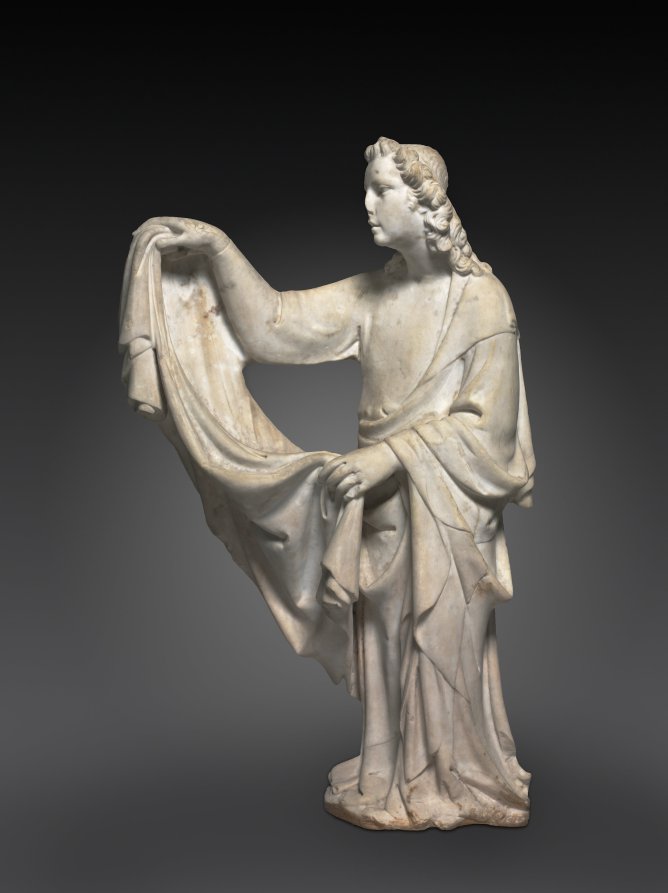
Angel from a Tomb, 1330–50, by Tino di Camaino
Tino di Camaino · The Cleveland Museum of Art · Gift of the John Huntington Art and Polytechnic Trust
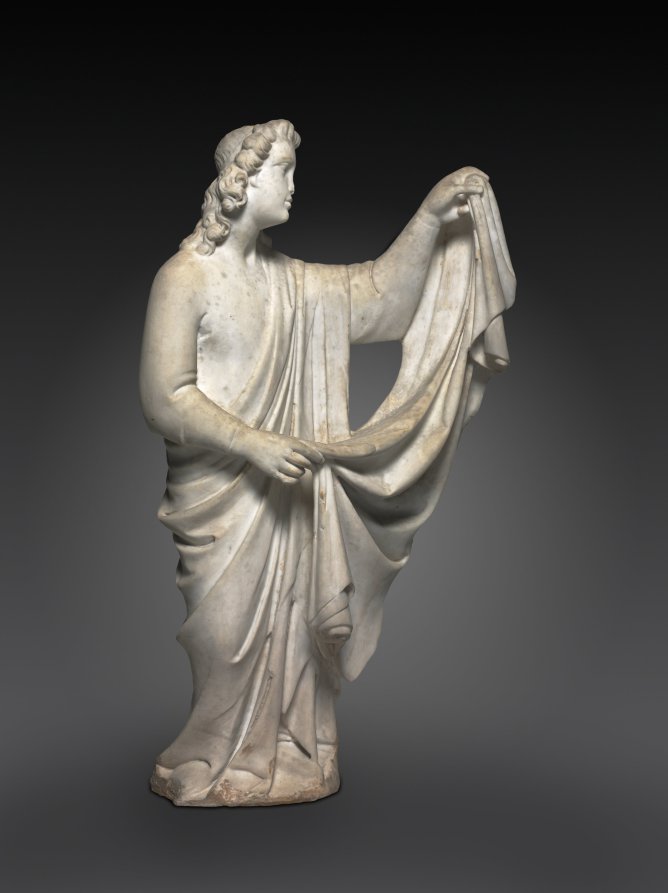
Angel from a Tomb, 1330–50, by Tino di Camaino
Tino di Camaino · The Cleveland Museum of Art · Gift of the John Huntington Art and Polytechnic Trust
Life and career
Dated record
Life and career
The full dated record · 2 entries
1285
Tino di Camaino born at Siena.
1337
Tino di Camaino died at Naples.
Places
Named by the record
Places
Only places the record itself states, plotted where the house gazetteer settles their coordinates. Nothing is inferred from a name or a nationality.
Siena.
Birth place
Naples.
Death place
Reception
Called by Gerd Kreytenberg one of the most important masters of the 14. century, Tino di Camaino was long forgotten and only rediscovered early in the 19th century. Giorgio Vasari had mentioned him in the Vita of Giovanni Pisano in the second edition of his Lives of the Most Excellent Painters, Sculptors, and Architects: But since the quoted works were disassembled and removed from their original locations, his legacy got lost. In 1810 a receipt from July 1315 for the monument of Henry VII was found, and in 1842 his signature was rediscovered on the west wall of Florence Cathedral, where it became clear the tomb of bishop Antonio d'Orso originally stood, before it was moved elsewhere in the cathedral already in 1380. In 1850 it could be proven that in 1322 he had worked on Pisa Baptistery, and in 1854 two documents of payments from 1318 to Tino and his father Camaino were discovered in the archives of Siena Cathedral. And finally in 1863 the funerary monument of Cardinal Riccardo Petroni could be attributed to Tino, that was sufficient to at least outline his œuvre with these major works secured.
Primary material
Documents and archives
authority file
- Gemeinsame Normdatei 7513375-1, Tino, di Camaino.
General reference · Deutsche Nationalbibliothek
- Getty Union List of Artist Names 500004367, Tino di Camaino.
General reference · The Getty Research Institute
reference work
- Wikidata, structured authority record Q527261: Tino di Camaino
Reputable secondary · Wikidata
- “Tino di Camaino”, English Wikipedia, consulted as further reading
Reputable secondary · Wikipedia
scholarly publication
- Giovani Pisano oder Tino di Camaino?, Jahrbuch der Berliner Museen, 1978
Scholarly · Crossref registry · 1978
Literature
Scholarly footprint
A count of publications is evidence of attention, not of standing, and is given here only as a measure.
Notes from the source article
Cited by Wikipedia
Notes from the source article
These works are cited by the source article, in its own numbering. They are recorded as its citations, not as sources VALÉORINE has verified.
- 1.First stated by Kreytenberg 1978, p. 36.
- 2.Tino di Camaino is first documented as capomaestro of Pisa Cathedral on February 12th, 1315. Kreytenberg 1982, p. 350, note 10.
- 3.Kreytenberg 1987, p. 3.
- 4.Kreytenberg 1982, p. 349.
- 5.John Pope-Hennessy. An Introduction to Italian Sculpture, Vol. 1: Italian Gothic Sculpture. Phaidon. 71. 1996.
- 6.Le Cappelle dell'Antica Basilica on the website of Badia di Cava de' Tirreni, 2009.
- 7.Ministero della Cultura. Complesso monumentale della Badia di Cava dei Tirreni. Cultura.gov.it.
- 8.Madonna and Child with Queen Sancia, Saints, and Angels by Tino di Camaino. NGA.gov.
- 9.Kreytenberg 1987, p. 3.
- 10.Kreytenberg 1987, p. 3.
- 11."Arrigo VII". In: Catalogo generale dei Beni Culturali. Soprintendenza Archeologia, belle arti e paesaggio per le province di Pisa e Livorno, Inv. nr. 2014OPAOA00769204_01.
- 12.Measurements taken from Kreytenberg 1982, p. 350, note 17.
- 13.Tino di Camaino, Funerary monument to Antonio d'Orso in the online catalogue of the Cathedral Museum.
- 14.Kreytenberg 1982.
- 15.Kreytenberg 1982, p. 353, images on p. 352.
- 16.Kreytenberg 1982, p. 353, image on p. 352.
- 17.Tino di Camaino, Blessing Christ (Cristo benedicente) in the online catalogue of the museum.
- 18.Tino di Camaino and follower, Heads of St. John the Baptist (San Giovanni Battista [teste )] in the museum's online catalogue. The second head of John the Baptist was part of a group depicting the Preaching of the Baptist above the north gate of the Baptistery, executed by a follower of Tino in the first half of the 1450.
- 19.Tino di Camaino, The Faith (La fede) in the museum's online catalogue.
- 20.Tino di Camaino, The Charity (La carità) in the museum's online catalogue.
- 21.Tino di Camaino, The Hope (La speranza) in the museum's online catalogue.
- 22.Since 2017 on display in the museum. "Il museo dell'Opera del Duomo si arricchisce di tre sculture di Arnolfo di Cambio e Tino da Camaino", GoNews.it (Florence), Empoli, 07 December 2016.
- 23.Tino di Camaino, Angel with trumpet (Angelo tubicino) in the online catalogue of the museum.
- 24.Kreytenberg 1978, appendix, p. 36–38. The Angel figure is compared to another statue of an Angel previously unpublished, of which the head and base were added in the 19th century; Kreytenberg attributed the latter to Tino's workshop.
Bibliography printed in the source article · 11
- Giorgio Vasari. "Giovanni Pisano", in: Lives of the Most Excellent Painters, Sculptors, and Architects. 1568 edition. Translated by Adrienne DeAngelis on the basis of that by Gaston C. DeVere (1912/1915), and edited online in 2011.
- Géza de Francovich. TINO di Camaino. Italian Encyclopedia. Treccani.it. 1937.
- Gert Kreytenberg. Jahrbuch der Berliner Museen. Staatliche Museen zu Berlin – Preußischer Kulturbesitz. 20. 29–38. 1978. 4125742.
- Gert Kreytenberg. Fragments of an Altar of St Bartholomew by Tino di Camaino in Pisa Cathedral. The Burlington Magazine. 124. 951. 349–353. June 1982. 880833.
- Gert Kreytenberg. Die Werke von Tino di Camaino. Liebieghaus Monographie, Frankfurt am Main 1987 (in German).
- F. Aceto. TINO di Camaino. Enciclopedia dell' Arte Medievale. Treccani.it. 2000.
- Carlos Sastre Vázquez. Contemplando una obra maestra de Tino di Camaino. Ruta Cicloturística del Románico Internacional, XXX (2012), pp. 65–69, transcript and scans at Slideshare.net (in Spanish).
- Roberto Bartalini. Tino di Camaino, un riscoperto 'San Giovanni Battista' e i marmi della badia di Cava dei Tirreni. Prospettiva. 173. 46–60. 2019. 26952781.
- Treccani.it. Tino di Camaino. Enciclopedia on line.
- Enzo Carli. Tino di Camaino, scultore. Felice le Monnier, Florence 1934 (in Italian).
- Wilhelm Valentiner. Tino di Camaino. A Sienese Sculptor of the Fourteenth Century. Pegasus Press. 1935.
References
Citations
References
Each reference names the institution holding it, so a reader may go to the document itself.
scholarly publication
Institutional witnessauthority file
Gemeinsame Normdatei 7513375-1, Tino, di Camaino.Deutsche Nationalbibliothek
Secondary witnessauthority file
Getty Union List of Artist Names 500004367, Tino di Camaino.The Getty Research Institute
Secondary witnessreference work
Secondary witnessreference work
Secondary witness
Further particulars
Held on the record
Further particulars
Open the remaining particulars
The authorities additionally record the headings di Camaino Tino and Tino ëd Caimano. His recorded language was Italian. He was the child of Camaino di Crescentino. Work and production. Works recorded as notable number 7: The Baptism of Christ, Charity, Faith, Angel, Caryatid, Henry VII's tomb and Hope. Naming and authority record.
Identity and origins
Recognition and collections
Work by Tino di Camaino is
Städel Museum, Museo dell'Opera del Duomo, Museo Bardini and Victoria and Albert Museum
Angel from a Tomb, dated 1330–50, marble
The Cleveland Museum of Art
Giovani Pisano oder Tino di Camaino?, Jahrbuch der Berliner Museen, 1978
Tino Di Camaino, by W. Valentiner, Parnassus, 1937
The Encyclopedia exists whether or not anything is for sale. Corrections are recorded rather than overwritten, and every version of this record is kept. Published 16 August 2026.
Elsewhere in Sculpture
6,174 published records in this field, each with its sources named.
- Timothy P. SchmalzArtist
- Tina AllenArtist
- Tina GirouardArtist
- TinkebellArtist
- Titia ExArtist
- Tito AngeliniArtist
- Tito SarrocchiArtist
- Titus De VoogdtArtist
Best supported in this field
For owners
Own a work by Tino di Camaino?
A specialist will read what you send and tell you what the house can establish, what it cannot, and whether the object is suited to sale. There is no charge and no obligation. The object stays with you throughout; nothing is shipped to us unless it is arranged in writing beforehand.