
Thomas Hope
Illustration — Portrait of Thomas Hope by William Beechey, 1798 Thomas Hope (30 August 17692 February 1831) was a Dutch-British interior and Regency designer, traveler, author, philosopher, art collector, and partner in the banking firm Hope & Co. He is best known as an early promoter of Greek Revival architecture and for his novel Anastasius. Thomas Hope was born in Amsterdam, he fled to London after the French Revolution spread to the Netherlands, leaving a large part of his art collection behind.
Also recorded as Thomas Hope (1769–1831) · T Hope · Thos Hope Esqtre · Hope Junr
Thomas Hope
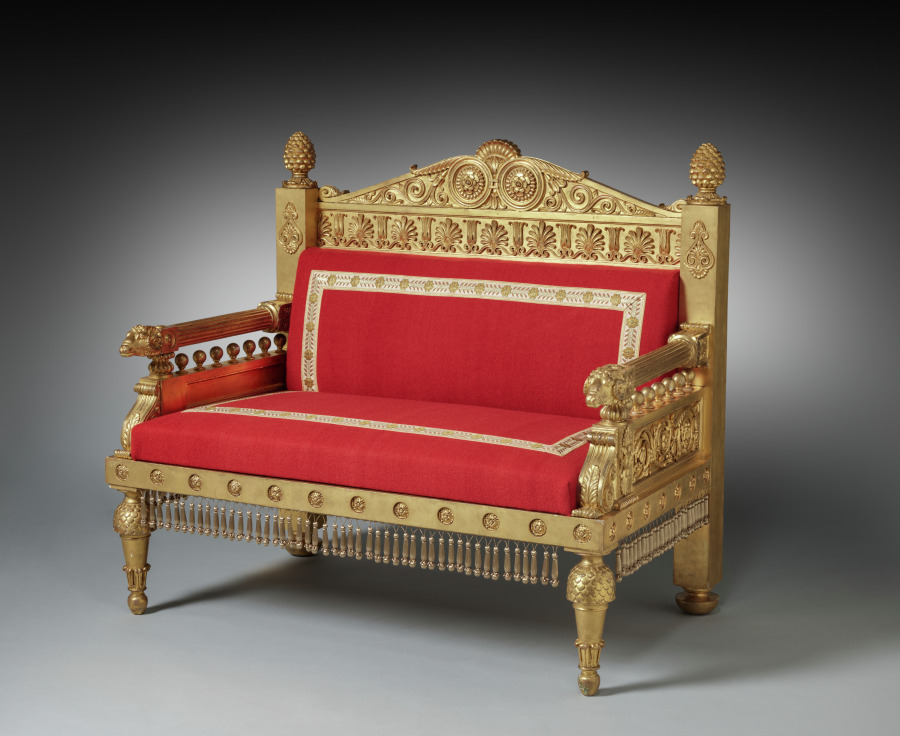
Thomas Hope · The Cleveland Museum of Art · Leonard C. Hanna Jr. Fund · CC0
- Born
- 1769 · Amsterdam.
- Nationality
- United Kingdom of Great Britain and Ireland · Dutch Republic
- Occupation
- architect · painter · writer · novelist · art collector · archaeologist · furniture designer · entrepreneur
- Fields
- architecture · visual arts · painting · drawing
- Honours
- Fellow of the Royal Society
- Languages
- English
VALÉORINE Encyclopedia
VALÉORINE documentary reading
Documentary summary
Illustration — Portrait of Thomas Hope by William Beechey, 1798 Thomas Hope (30 August 17692 February 1831) was a Dutch-British interior and Regency designer, traveler, author, philosopher, art collector, and partner in the banking firm Hope & Co. He is best known as an early promoter of Greek Revival architecture and for his novel Anastasius. Thomas Hope was born in Amsterdam, he fled to London after the French Revolution spread to the Netherlands, leaving a large part of his art collection behind.
Admitted source layer · organised and presented by VALÉORINE
Note VALÉORINE
Thomas Hope (1769–1831) was an archaeologist, architect and art collector, among other activities, of Dutch and British nationality. The archaeologist was born in Amsterdam and died in London.
Thomas Hope was a member of Royal Society and Royal Society of London and worked in Amsterdam and Greater London. Activity centred on architecture, art collection and decoration.
Languages used include English. Works are held at Art Institute of Chicago, Benaki Museum and Detroit Institute of Arts, among others. Honours include Fellow of the Royal Society.
Composed from admitted, traceable facts · 30 September 2026
VALÉORINE
Reference Check
Propose documentary evidence for Thomas Hope. A contribution is never written directly as fact: identity, source, rights and evidence gates still decide.
Sign in to contribute
World of VALÉORINE
Documentary connections
Only confirmed graph relationships appear here. Images are shown only when their identity and reuse rights both pass the documentary gate.

Documentary evidence
Documentary basis
Authority files
wikidata · Q1308730
In this article
Early life and family
Early life and family
Hope worked between 1769 and 1831 across architect, painter, writer, novelist and art collector and 5 further recorded occupations. Every statement below returns to a source shown in the evidence panel; where the record is silent or divided, the article says so instead of resolving it.
The recorded working language is English. The field of work recorded is architecture, visual arts and painting. Places of work recorded in the authority are Greater London and Amsterdam. Work by Thomas Hope is recorded in the collections of Art Institute of Chicago, Minneapolis Institute of Art, Benaki Museum, Detroit Institute of Arts and J. Paul Getty Museum. Distinctions recorded are Fellow of the Royal Society.
• Illustration — Hope Venus (Syracuse Aphrodite) in National Archaeological Museum, Athens The eldest son of Jan Hope, Thomas descended from a branch of an old Scottish family (Quakers) who for several generations were merchant bankers known as the Hopes of Amsterdam, or Hope & Co. He was baptized on 3 September in the English Reformed Church, Amsterdam. He had two brothers, Adrian Elias (1772-1834), an innovative gardener, and Henry Philip (1774-1839), a famous collector of the arts and precious gems. Hope was possibly painted as a boy by Guy Head who visited Amsterdam in 1780. Thomas inherited a love of the arts from his parents. His father spent his final years turning his summer home, Groenendaal Park in Heemstede into a grand park of sculpture which would be open to the public.
Grand tour
Grand tour
• Illustration — Mr. Hope of Amsterdam playing cricket; by Jean-François Sablet in Rome (1792). In 1784, when Thomas was fifteen, his father died unexpectedly in the Hague right after purchasing Bosbeek, the mansion that would later house his large art collection. He shared his art collection as part of the Hope & Co. partnership with his cousin Henry Hope. At the age of eighteen, Thomas began to devote most of his time to the study of the arts, especially classical architecture. During his eight-year grand tour through Europe, Asia and Africa, Thomas became especially interested in architecture and sculpture, collecting a large collection of artifacts that attracted his attention (e.g. the Hope Dionysus). Not long after his mother died in early January 1790, Thomas received the rights and liabilities of a person of full age and was admitted to the board of the Hope company. He owned almost a sixth of the shares, and instantly became a millionaire. Between 1792 and 1794 he and Henry Philip traveled in Italy, buying antiquities (Venus, restored by Antonio Canova). Henry Hope was the executor of their mother's will in June 1794; Thomas received the largest and most expensive mansion on Herengracht. On 24 December 1794 he crashed in the Watergraafsmeer with another chaise. (On 27, the French general Pichegru crossed the Meuse on the ice and moved north.) Within a few weeks, he fled to London to avoid the Batavian Revolution and the French occupation of the Netherlands and never returned.
Escape to London
Escape to London
• Illustration — Villa Welgelegen • Illustration — Hanover Square The Hope brothers, under the protection of their uncle, took 372 paintings with them. Among these were important works by Frans Hals, Peter Paul Rubens, Rembrandt and Sir Anthony van Dyck. The Hopes left their mansions, full of wall decorations, furniture, and heavy statuary. Henry settled at the corner of Harley Street and Cavendish Square, Thomas at Hanover Square. Later in 1795, the brothers went to Rome. In 1802, their younger brother, Adrian Elias, who had been declared insane, would return to live at Groenendaal Park and expand the gardens. The brothers sold the real estate at Keizersgracht and Prinsengracht to John Williams Hope. Henry also sold Villa Welgelegen to this fiduciary, who continued to hold that office until the establishment of the monarchy under Louis Bonaparte in 1806.
Career as an interior decorator
Career as an interior decorator
• Illustration — Thomas Hope's house, 10 Duchess Street, London • Illustration — Interior of Thomas Hope's Picture Gallery, Duchess Street, London In 1799, the Hopes established a residence in London in Duchess Street, off Portland Place, designed by Robert Adam. Thomas remodeled it in an Egyptian style. Experienced from his extensive travel, Thomas Hope enjoyed the cosmopolitan atmosphere of London, while his younger brothers missed their home in the Netherlands. He decorated the mansion in a very elaborate style, from drawings made himself with each room taking on a different style influenced by the countries he had visited. In essence, the combined art collections of Hope & Co., his parents and Henry Hope gave him the opportunity to further research the various art he had studied during his travels. Thomas began to write books on decoration and furniture, the first of its kind. In this eclectic wealthy residence of bachelors, younger brother Henry Philip oversaw the gem collection (acquiring the Hope Diamond and the Hope Pearl), while cousin Henry busied himself with the banking business and the Louisiana Purchase, together with Barings. Thomas Hope did not settle in London, however. He took up his grand tour where he left off, and in 1796 he began his extensive tours of the Ottoman Empire, which included visits to Turkey, Rhodes, Egypt, Syria, and Arabia. He stayed for about a year in Constantinople and produced some 350 drawings depicting the people and places he witnessed, a collection now to be found in the Benaki Museum, Athens. In 1801, he bought a collection of Greek vases from William Hamilton. During these travels, he was given free rein by the Hope & Co. firm to collect many paintings, sculptures, antique objects and books, some of which were destined to be displayed for the public in Amsterdam in the branch offices on Keizersgracht 444, and some of which were destined for his London house in Duchess Street in 1804. During the Treaty of Amiens he started to travel again. In 1803, he ordered Jason with the Golden Fleece, a sculpture by Thorvaldsen in Copenhagen City Hall, included in the semi-official Danish Culture Canon. Thomas Hope first opened his new galleries to the public, on 10 February 1804. The Egyptian Gallery, a private room in the home of Thomas Hope to display his Egyptian antiquities, and illustrated in engravings from his meticulous line drawings in his book Household Furniture (1807), were a prime source for the Regency style of British furnishings.
Marriage and move to Deepdene
Marriage and move to Deepdene
• Illustration — Louisa Hope: bust by Bertel Thorvaldsen (1817) After his marriage to Louisa de la Poer Beresford (daughter of William Beresford, 1st Baron Decies) in 1806, Hope acquired a country seat at Deepdene, near Dorking in Surrey. Here, surrounded by his large collections of paintings, sculptures and antiques, Deepdene became a famous resort of men of letters as well as of people of fashion. Among the luxuries suggested by his fine taste, and provided to his guests, was a miniature library in several languages in each bedroom. He also gave frequent employment to artists, sculptors and craftsmen. Bertel Thorvaldsen, the Danish sculptor, was indebted to him for the early recognition of his talents. He was also a patron to Francis Legatt Chantrey and John Flaxman; it was to his order that the latter illustrated the writings of Dante Alighieri. He developed the gardens in a particular version of picturesque style. Hope was noted for his snobbery and ugliness, one contemporary describing him as "undoubtedly far from the most agreeable man in Europe. He is a little ill-looking man…with an effeminate face and manner." When the French painter Antoine Dubost exhibited a portrait of him titled "Beauty and the Beast", portraying him as a monster offering his wife jewels, it caused a public scandal: the painting was mutilated by Louisa's brother. A further scandal arose in 1810 when Hope took up with a beautiful young Greek sailor, Aide, and attempted to launch him into Society. Hope was the father of Henry Thomas Hope, art patron and politician and Alexander James Beresford Beresford Hope, author and politician.
Writing
Writing
• Illustration — Bust of Thomas Hope at Thorvaldsens Museum. Hope was eager to advance public awareness of historical painting and design and to influence design in the grand houses of Regency London. In pursuit of his scholarly projects, he began sketching furniture, room interiors and costumes, and publishing books with his accompanying scholarly texts. In 1807 Thomas Hope published sketches of his furniture, in a folio volume, titled Household Furniture and Interior Decoration, which had considerable influence and brought about a change in the upholstery and interior decoration of houses. Hope's furniture designs were in the pseudo-classical manner generally called "English Empire". It was sometimes extravagant, and often heavy, but was much more restrained than the wilder and later flights of Thomas Sheraton in this style. In 1809 he published the Costumes of the Ancients, and in 1812 Designs of Modern Costumes, works which display a large amount of antiquarian research. A Historical Essay on Architecture, which featured illustrations based on early Hope drawings, was published posthumously by his family in 1835. Thus Hope became famous in London's aristocratic circles as 'the costume and furniture man'. The sobriquet was regarded as a compliment by his enthusiastic supporters, but for his critics, including Lord Byron, it was a term of ridicule. • 1807: Household Furniture and Interior Decoration. Faksimile-Neuausgabe 1937. • 1809: Costumes of the Ancients. • 1812: Designs of Modern Costumes. • 1819: Anastasius: or, Memoirs of a Greek; Written at the close of the Eighteenth Century. • 1831: Origin and Prospect of Man. • 1835: Historical Essay on Architecture.
Anastasius
Anastasius
• Illustration — Cover of the first edition (1819) • Illustration — The Flemish Picture Gallery, the Mansion of Thomas Hope, Duchess Street, Portland Place section At age fifty, Hope began work on a novel at the suggestion of a few friends. The first edition of Anastasius was complete in 1819 and was published by London publisher John Murray. It received foreign translations into French, German and Flemish. The novel's narrator-hero Anastasius describes his own adventures as a converted Muslim mercenary, Selim, who travels the Ottoman Empire and fights wars among the Turks, Russians and Wahabees. The novel provided details of Islamic music, cuisine, religion, laws, and literature that were unfamiliar to English readers at the time. Hope chose to have Anastasius published anonymously at first. The authorship was at first mistakenly attributed to Lord Byron, who, according to legend, confided to Marguerite, Countess of Blessington, that he wept bitterly on reading it. "To have been the author of Anastasius, I would have given the two poems which brought me the most glory." These events prompted Hope to reveal his identity as author in later editions, adding a map of Anastasius's travels and fine-tuning the text, although his authorship was initially greeted with incredulity by some journals. Soon after Hope's death in 1831, his widow Louisa remarried her cousin William Carr Beresford, 1st Viscount Beresford. His family thereafter embraced conservative values, causing them to authorise the demolition of the writer's legendary London home, disperse his fabled art collection, and distance themselves from his Oriental masterpiece. No substantial collection of Hope's personal papers survived the family indifference and Anastasius, his magnum opus, became a victim of the sanctimonious morality of the Victorian age. Nevertheless, it influenced the later works of William Thackeray, Mark Twain and Herman Melville. More recently, the noted Orientalist Robert Irwin wrote, "this book, one of the most important books of the nineteenth century, should be much more widely read." In addition to his other accomplishments, Hope was the author of an important philosophical work published posthumously, The Origin and Prospect of Man (1831), in which his speculations diverged widely from the social and religious views of the Victorian age. This volume, which has been cited by the philosopher Roger Scruton, was a highly eclectic work and took a global view of the challenges facing humanity. In his obituary published in The Mirror of Literature, Amusement, and Instruction Volume 17, No. 476, Saturday, 12 February 1831, it was written, "We remember the opinion of a writer in the Edinburgh Review, soon after the publication of Anastasius. With a degree of pleasantry and acumen peculiar to northern criticism, he asks, 'Where has Mr. Hope hidden all his eloquence and poetry up to this hour? How is it that he has, all of a sudden, burst out into descriptions which would not disgrace the pen of Tacitus, and displayed a depth of feeling and vigor of imagination which Lord Byron could not excel? We do not shrink from one syllable of this eulogy.'" Hope is commonly known among literary circles as "Anastasius Hope".
Life and work
Life and work
Thomas Hope was born on 30 August 1769 in Amsterdam. Hope held the nationality of United Kingdom of Great Britain and Ireland and Dutch Republic. Married to: Louisa Beresford. Recorded father: Jan Hope. Recorded mother: Philippina Barbara van der Hoeven. Recorded child: Henry Hope, Alexander Beresford Hope and Adrian John Hope. Recorded sibling: Henry Philip Hope. Hope worked as architect, painter, writer and novelist, and the authority record catalogues a further 6 occupations under the same name, among them art collector, archaeologist, furniture designer, entrepreneur, patron of the arts and traveler. Hope worked in Greater London and Amsterdam. Hope worked in English.
Places
Named by the record
Places
Only places the record itself states, plotted where the house gazetteer settles their coordinates. Nothing is inferred from a name or a nationality.
Amsterdam.
Birth place
London.
Death place
Catalogued output
Writings and published texts
These are catalogued publications carrying the name — editions and printings, distinct from the works they contain and from writing about the subject. The 2000s are the densest part of the run, with 6 titles, and that concentration is a fact about what the registers have catalogued rather than a judgement on the work itself.
24 editions carry dates between 1807 and 2007
The run opens with Household furniture and interior decoration and closes with An Essay On The Origin And Prospects Of Man V3
The entries follow Open Library
Household furniture and interior decoration
1807
Costume of the ancients
1809
Anastasius, or, Memoirs of a Greek
1820
An essay on the origin and prospects of man
1831
An historical essay on architecture
1835
Histoire de l'architecture
1839
Historical essay on architecture
1840
Anastasius
1847
The costume of the ancients
1875
The complete catalogue · 23
24 editions carry dates between 1807 and 2007
The run opens with Household furniture and interior decoration and closes with An Essay On The Origin And Prospects Of Man V3
The entries follow Open Library
Household furniture and interior decoration
1807
Costume of the ancients
1809
Anastasius, or, Memoirs of a Greek
1820
An essay on the origin and prospects of man
1831
An historical essay on architecture
1835
Histoire de l'architecture
1839
Historical essay on architecture
1840
Anastasius
1847
The costume of the ancients
1875
Costumes of the Greeks and Romans (formerly titled: Costume of the ancients)
1962
Household furniture and interior decoration, executed from designs by Thomas Hope
1970
Eikones apo tēn Hellada tou 18ou aiōna
1985
Costumes of the Greeks and Romans, 2 Vols. In 1
1985
Pictures from 18th century Greece
1985
Anastasius ou les mémoires d'un grec
1999
Anastasius, or Memoirs of a Greek; Written at the Close of the Eighteenth Century
2001
Minor practicks
2001
Poetic Beginnings
2005
Going to School With Abraham
2005
An Essay On The Origin And Prospects Of Man V3
2007
Death and legacy
• Illustration — Deepdene House (1850) In early 1831, Hope fell ill. He died on 2 February at Duchess Street and was laid to rest on 12 February in the mausoleum at Deepdene. The two mansions Hope created have been lost; that in Duchess Street was demolished by his son in 1851 and Deepdene in 1969. The only complete surviving structure built by Hope is the Deepdene mausoleum. Built in 1818, the structure was the first recorded work at Deepdene. It was permanently sealed in 1957 and buried in 1960. The Mausolea and Monuments Trust has been working with Mole Valley District Council to rescue the structure and is running a campaign to excavate and repair it. The principal elevation was excavated in 2013, with further restoration in 2016.
Authority records
Notes from the source article
Cited by Wikipedia
Notes from the source article
These works are cited by the source article, in its own numbering. They are recorded as its citations, not as sources VALÉORINE has verified.
- 1.Whitley, Art in England 1800-1820, p. 15
- 2.Niemeijer, J. W. "De Kunstverzameling van John Hope (1737—1784)." Nederlands Kunsthistorisch Jaarboek (NKJ) / Netherlands Yearbook for History of Art, vol. 32, 1981, pp. 127–232. JSTOR, http://www.jstor.org/stable/43888535. Accessed 11 Nov. 2022.
- 3.Buitenplaatsen in Nederland - Buitenplaats Groenendaal | Buitenplaatsen in Nederland.
- 4.Ancient Marbles in Naples in the Eighteenth Century: Findings, Collections ... by Eloisa Dodero
- 5.National Gallery of Art. From the Tour: Sir Anthony van Dyck, Object 11 of 15.
- 6.[https://www.thefreelibrary.com/Thomas+Hope%27s+house+in+Duchess+Street%3A+the+interiors+created+by+Hope...-a0114477247 Thomas Hope's house in Duchess Street: the interiors created by Hope to display works of art in his London house were some of the most influential of the Regency age. A fuller story of their evolution can now be told, following the discovery of drawings by Robert Adam and C. H. Tatham.]
- 7.Encyclopedia of the British Novel
- 8.Ancient Marbles in Naples in the Eighteenth Century, p.291-293
- 9.Ancient Marbles in Naples in the Eighteenth Century: Findings, Collections ... by Eloisa Dodero
- 10.Victoria and Albert Museum
- 11.Thomas Hope. Regency Designer - the Art Tribune. 24 December 2022.
- 12.Thomas Hope. Regency Designer - the Art Tribune. 24 December 2022.
- 13.[https://www.thefreelibrary.com/Thomas+Hope%27s+house+in+Duchess+Street%3A+the+interiors+created+by+Hope...-a0114477247 Thomas Hope's house in Duchess Street: the interiors created by Hope to display works of art in his London house were some of the most influential of the Regency age. A fuller story of their evolution can now be told, following the discovery of drawings by Robert Adam and C. H. Tatham]
- 14.Thomas Hope and the Regency style · V&A. Victoria and Albert Museum.
- 15.Riddy, Paula. The Guidebook and the Picturesque: Thomas Hope and the Deepdene. Georgian Group Journal. 24. 159–180. 2016.
- 16.Bryans, Robin. The Dust Has Never Settled: An Autobiography. Honeyford. 151. 1992. 978-0-9519369-0-0.
- 17.Hope, Thomas. A Historical Essay on Architecture. J. Murray. 1835.
- 18.Review of A Historical Essay on Architecture by Thomas Hope. The Quarterly Review. 53. 338–371. April 1835.
- 19.Unpublished Drawings by Thomas Hope and Henry Moses in the Gennadius Library, Athens
- 20.Countess of Blessington, Marguerite. Journal of Conversations with Lord Byron. G. W. Cottrell. 98. 1 January 1859.
- 21.Mole Valley – Surrey's Great Lost Landscape. molevalley.gov.uk. 2012.
- 22.Mausolea & Monuments Trust. Hope Mausoleum. mmtrust.org.uk.
Bibliography printed in the source article · 14
- Hope, Thomas.
- The Beechey Portrait – A Visual Study of "Anastasius" by John Rodenbeck
- Thomas Hope – Triumph, Tragedy, Obverse Worlds by Jerry Nolan
- A Political Study of Anastasius by Ludmilla Kostova
- Hope's Philosophical Excursus by Roger Scruton
- Anastasius – Towards Background and Meaning by John Rodenbeck
- Sándor Baumgarten – Hope's Forgotten Champion by Jerry Nolan
- Catalogue of the valuable library of books on architecture, costume, sculpture, antiquities, etc., formed by Thomas Hope, Esq., author of "The costume of the ancients," "Anastasius, or memoirs of a Greek," etc., etc.; being a portion of the Hope Heirlooms removed from Deepdene, Dorking; the property of Lord Francis Pelham Clinton Hope : which will be sold by auction ... on Wednesday, 25 July 1917 and two following days.
- Bagnall, Alexander. The Deepdene: a landscape rediscovered. Cockerel Press. 2019. 9781909871175.
- Ingram, T. L. A note on Thomas Hope of Deepdene. Burlington Magazine. 927. 427–28. 1980.
- Orbell, John. Hope, Thomas (1769–1831). 2008.
- Watkin, David. Thomas Hope 1769–1831 and the Neo-Classical Idea. John Murray. 1968. 9780719518195.
- Watkin, David. Thomas Hope's house in Duchess Street. Apollo. 159. 505. 2004.
- Watkin. Thomas Hope: Regency designer. Yale University Press. 2008. 9780300124163.
References
Citations
References
Each reference names the institution holding it, so a reader may go to the document itself.
authority record
General reference
The Encyclopedia exists whether or not anything is for sale. Corrections are recorded rather than overwritten, and every version of this record is kept. Published 16 August 2026.
Elsewhere in Design
11,558 published records in this field, each with its sources named.
- Thomas Henry WyattDesigner
- Thomas HerzogDesigner
- Thomas HewetDesigner
- Thomas HoltDesigner
- Thomas HopperDesigner
- Thomas HoughtonDesigner
- Thomas HubkaDesigner
- Thomas IvoryDesigner
Best supported in this field
For owners
Own a work by Thomas Hope?
A specialist will read what you send and tell you what the house can establish, what it cannot, and whether the object is suited to sale. There is no charge and no obligation. The object stays with you throughout; nothing is shipped to us unless it is arranged in writing beforehand.