
Self Portrait
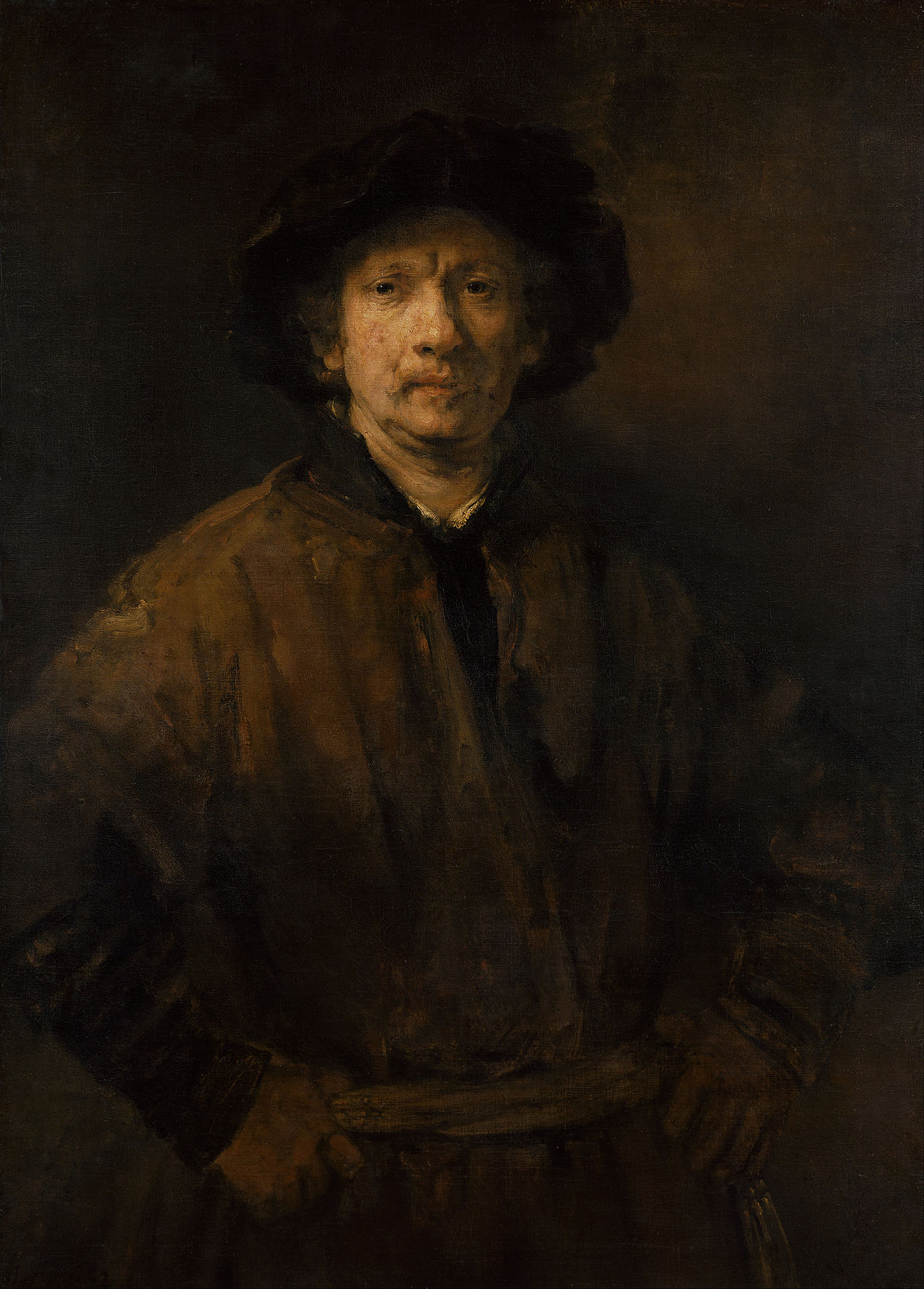
Self Portrait (or The Large Self-Portrait) is an oil-on-canvas painting by the Dutch artist Rembrandt. Painted in 1652, it is one of more than 40 painted self-portraits by Rembrandt, and was the first he had painted since 1645. In composition it is different from his previous self-portraits, depicting the painter in a direct frontal pose, hands on his hips, and with an air of self-confidence.
Also recorded as The Large Self-Portrait
Self Portrait
Rembrandt · dQG9VR8cLvD7EQ at Google Cultural Institute maximum zoom level · Public domain
- Movement
- Baroque painting, Dutch Golden Age painting
- Occupation
- engraver · painter
- Fields
- self-portrait
- Movements
- Dutch Golden Age painting
VALÉORINE Encyclopedia
VALÉORINE documentary reading
Documentary summary
Self Portrait (or The Large Self-Portrait) is an oil-on-canvas painting by the Dutch artist Rembrandt. Painted in 1652, it is one of more than 40 painted self-portraits by Rembrandt, and was the first he had painted since 1645. In composition it is different from his previous self-portraits, depicting the painter in a direct frontal pose, hands on his hips, and with an air of self-confidence.
Admitted source layer · organised and presented by VALÉORINE
Reference Check
Propose documentary evidence for Self Portrait. A contribution is never written directly as fact: identity, source, rights and evidence gates still decide.
Sign in to contribute
Documentary evidence
Documentary basis
Authority files
wikidata · Q7448288
In this article
Biography
Biography
It was painted the year that his financial difficulties began, and breaks with the sumptuous finery he had worn in previous self-portraits. Art historian Christopher White has called it "one of the most magisterial and sombre of these (late) pictures". It is in the Kunsthistorisches Museum in Vienna. • Illustration — Rembrandt. Full-Length Self Portrait, c. Pen and brown ink on brownish paper. The only full-length self-portrait Rembrandt drew on paper, this may have been drawn in preparation for the painted Self Portrait. The freely painted clothing includes a brown robe that was most likely casual working attire, secured with a sash, over a black doublet with an upturned collar. A drawing from c. 1650 shows Rembrandt in much the same pose and attire, and features an inscription, though not by the artist's hand, stating that these were the artist's studio clothes. In the drawing Rembrandt is seen wearing a top hat, while in the painting he wears a black beret derivative of artists' portraits of the 16th century. Following a period of seven years when he painted no self-portraits, focusing instead on landscapes and intimate domestic subjects, the Vienna Self Portrait inaugurated a prolific stretch in which Rembrandt painted an average of one self-portrait a year until his death in 1669. Contrary to the popular understanding that these paintings primarily represented a deeper personal interest in self-depiction, Ernst van de Wetering has proposed that they were painted specifically for connoisseurs who collected self-portraits by prominent artists. Microscopic analysis has revealed that this is not the painted ground layer, which is a similar gray color, but a separate underlayer of paint. This local imprimatura, used in preparation for specific areas of the painting, was also practiced by Vermeer, and its purpose is not fully understood. A strong similarity has been noted to the self-portrait of c. 1655, also in the Vienna Kunsthistorisches Museum. The later work shares the frontal angle, lighting, and informal attire of the larger painting, though the artist's face appears older. A painting of Rembrandt' son Titus van Rijn, by another artist in the style of Rembrandt, duplicates the pose and positioning of the figure in the Self Portrait.

Self Portrait, Rembrandt Harmensz van Rijn, Kunsthistorisches Museum Wien, Gemäldegalerie - Großes Selbstbildnis - GG 411 - Kunsthistorisches Museum
Rembrandt · Kunsthistorisches Museum
Key facts
Key facts
• Title — Self Portrait • Artist — Rembrandt • Year — 1652 • Medium — Oil on canvas • Height Metric — 112.1 • Width Metric — 81 • Metric Unit — cm • Imperial Unit — in • City — Vienna • Museum — Kunsthistorisches Museum • Movement — Baroque painting, Dutch Golden Age painting • Illustration — Rembrandt. Self Portrait, c. 1655. Oil on panel, 48.9 x 40.2 cm. Kunsthistorisches Museum.
Citations
References
Each reference names the institution holding it, so a reader may go to the document itself.
reference work
Secondary witness
The Encyclopedia exists whether or not anything is for sale. Corrections are recorded rather than overwritten, and every version of this record is kept. Published 16 August 2026.
Elsewhere in Prints
4,138 published records in this field, each with its sources named.
- Sebastiano GaleottiEngraver
- Sébastien BourdonEngraver
- Sébastien LeclercEngraver
- Sekino Jun'ichirōEngraver
- Self Portrait with Two CirclesEngraver
- Selwyn ImageEngraver
- Senzeni MaraselaEngraver
- Serge BrignoniEngraver
Best supported in this field
For owners
Own a work by Self Portrait?
A specialist will read what you send and tell you what the house can establish, what it cannot, and whether the object is suited to sale. There is no charge and no obligation. The object stays with you throughout; nothing is shipped to us unless it is arranged in writing beforehand.