
Robert Sayer
Robert Sayer (1725 – 29 January 1794) was a leading publisher and seller of prints, maps, and maritime charts in Georgian Britain. He was based near the Golden Buck on 53 Fleet Street in London.
Also recorded as Robert Sayer, Golden Buck, Fleet Street, London
Robert Sayer
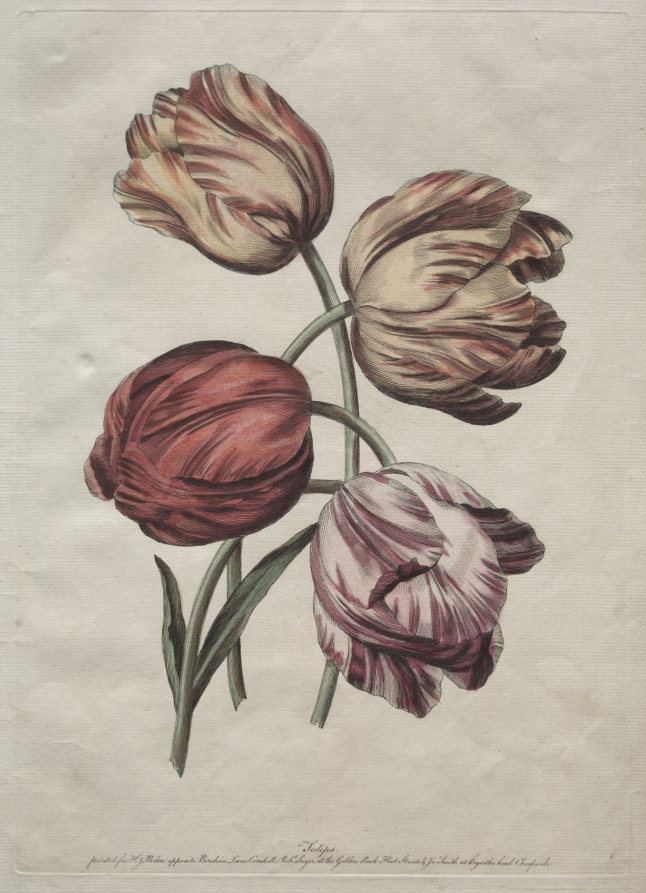
Robert Sayer · The Cleveland Museum of Art · Gift of The Print Club of Cleveland in honor of Mrs. William G. Mather · CC0
- Name
- Robert Sayer
- Born
- 1725
- Birthplace
- England, Great Britain
- Died
- 29 January 1794
- Place of death
- Bath, England, Great Britain
- Occupation
- * Map publisher
- Nationality
- Kingdom of Great Britain
- Languages
- English
VALÉORINE Encyclopedia
VALÉORINE documentary reading
Documentary summary
Robert Sayer (1725 – 29 January 1794) was a leading publisher and seller of prints, maps, and maritime charts in Georgian Britain. He was based near the Golden Buck on 53 Fleet Street in London.
Admitted source layer · organised and presented by VALÉORINE
Note VALÉORINE
Robert Sayer (1725–1794) was a British artist, bookseller and cartographer, among other activities. The artist was born in Sunderland.
Robert Sayer worked for Robert Sayer & Co and was a member of Robert Thomas Sayer Jefferys and Sayer & Bennett. The artist worked in London.
Languages used include English. Works by Robert Sayer are held at Het Scheepvaartmuseum, Musea Brugge and Musée national des beaux-arts du Québec, among others.
Composed from admitted, traceable facts · 26 September 2026
VALÉORINE
Reference Check
Propose documentary evidence for Robert Sayer. A contribution is never written directly as fact: identity, source, rights and evidence gates still decide.
Sign in to contribute
World of VALÉORINE
Documentary connections
Only confirmed graph relationships appear here. Images are shown only when their identity and reuse rights both pass the documentary gate.
Documentary evidence
Documentary basis
Authority files
wikidata · Q15430328 · wikipedia · Robert Sayer
In this article
Biography
Biography
The recorded working language is English. Places of work recorded in the authority are London. Employment is recorded with Robert Sayer & Co. Work by Robert Sayer is recorded in the collections of Musée national des beaux-arts du Québec, Museum De Lakenhal, Smithsonian American Art Museum, Print Collection and Musea Brugge.
Key facts
Key facts
• Name — Robert Sayer • Born — 1725 • Birthplace — England, Great Britain • Died — 29 January 1794 • Place of death — Bath, England, Great Britain • Occupation — * Map publisher • engraver • Harlequinade publisher • Children — James • Illustration — Samuel Boulton's 1787 map of Africa, published by Robert Sayer
Printing Business
Printing Business
Sayer's brother James married the widowed Mary Overton, daughter-in-law of John Overton the print seller. Sayer became her assistant, being called manager of the Golden Buck by 1748, and in this way gradually took over the existing Overton business as a going concern. John Bennett, who began as a servant to Sayer in 1760, and later an apprentice (1765) and a free journeyman (1774), eventually partnered with Sayer with one-third share in the Fleet Street business. The business traded as Sayer & Bennett. In 1781, Bennett was admitted to Dr Thomas Monro's Brook House asylum in Clapton. Sayer would seek to dissolve the partnership in 1785 based on Bennett's mental condition. Bennett later died in 1787. Upon the partnership dissolution, the business was renamed Sayer & Co. or Robert Sayer & Co., probably a reference to his assistants Robert Laurie and James Whittle. Sayer published atlases and other cartographic works, publishing the Mundane System (1774) of Samuel Dunn and the famous North American Pilot (1775), which included important charts made by the great circumnavigator and explorer Captain James Cook. Sayer also had an "almost complete set of copies" of painter William Hograth's plates and sold prints at prices that undercut those of Hogarth's widow and printseller, Jane Hogarth.
The Sayer Family of Richmond painting
The Sayer Family of Richmond painting
Sayer organised the engraving of paintings by some leading artists of the day, most importantly Johan Zoffany RA, and sold prints from the engravings. In this way, he helped to secure Zoffany's international reputation. Sayer and the artist became longstanding friends as well as business associates. In 1781 Zoffany painted Robert Sayer in an important ‘conversation piece’. The Sayer Family of Richmond depicts Robert Sayer, his son, James, from his first marriage, and his second wife, Alice Longfield (née Tilson). Behind the family group is the substantial villa on Richmond Hill overlooking the River Thames, built for Sayer between 1777 and 1780 to the designs of William Eves, a little-known architect and property developer. From 1794, after Robert Sayer's death, the house was the country residence for three years of the Duke of Clarence (later King William IV) and Mrs Jordan, and their three eldest (of ten) children. The third child was born at the house. Having fallen into disrepair, the house was demolished in 1970 when it was unknown that it had been built for Sayer and that it had subsequently been the home of a future king of Great Britain.
Death
Death
On his death, Sayer's business was taken over by Robert Laurie and James Whittle, both of whom had worked for him.
Selected works
Selected works
• Engravings and Prints • Illustration — A New Book of Ornaments, MET DP270225, pre-1753. • Illustration — Hudibras Vanquished by Trulla (Twelve Large Illustrations for Samuel Butler's Hudibras, Plate 5) MET DP826950, Artist, William Hogarth. • Illustration — David Garrick by Charles Spooner, 1761. • Illustration — Ladies Amusement, MET DP285711, 1760. • Illustration — Accurate Map of North America, 1775 (top)
Life and career
Dated record
Life and career
The full dated record · 2 entries
1725
Robert Sayer was born in 1725 at Sunderland.
1794
Robert Sayer died.
Harlequinades and turn-up books
• Illustration — Metamorphosis (a Harlequinades booklet), 1814 by Benjamin Sands • Illustration — Comparison of two of Benjamin Sands' transformation books- Metamorphosis Around 1765, Robert Sayer began experimenting with a novelty format for the juvenile book market, an early forerunner to interactive movable books, according to book historian Peter Haining. The outcome was the creation of the “metamorphoses” format, “a thin book of four sections each with two flaps which folded over, and on each section an interchangeable picture. Beneath those pictures appeared some descriptive lines of verse, and as the reader turned up the flaps in the correct order in the text difference scenes were revealed.” Originally called “metamorphosis”, Sayer would create books featuring the “Harlequins” from popular theater pantomimes. The black and white publications, which were also called Harlequinades or turn-up books, sold for sixpence and the hand-colored ones for one shilling. Sayer published at least fifteen such titles between 1766 and 1772. Theater historian George Speaight noted that Sayers published at least sixteen titles. Titles Sayer printed and published include Harlequin Cherokee; or, The Indian Chiefs in London, published in 1772. Academic Dr. Jacqueline Reid-Walsh has located eleven of Sayer's "harlequinades" in the rare book collections of Cambridge University Library, Cambridge, the Cotsen Children's Library, the Lilly Library in Bloomington, Indiana, the Opie Collection in the Bodleian Library, Oxford, the Osborne Collection in the Toronto Public Library, and the University of California, Los Angeles. By late 1770, Sayer had published four turn-up or metamorphosis books, which became a "craze with children." Rival booksellers, such as Thomas Hughes and George Martin soon copied the "turn-up" format. In the United States, Joseph Rakestraw published "Metamorphosis; or, a Transformation of Pictures, with Poetical Explanations, for the Amusement of Young Persons," by Benjamin Sands.
Primary material
Documents and archives
reference work
- “Robert Sayer”, English Wikipedia, consulted as further reading
Reputable secondary · Wikipedia
authority record
- Wikidata, structured authority record Q15430328: Robert Sayer
General reference · Wikidata
Notes from the source article
Cited by Wikipedia
Notes from the source article
These works are cited by the source article, in its own numbering. They are recorded as its citations, not as sources VALÉORINE has verified.
- 1.Britishmuseum.org. Robert Sayer (Biographical details). 1920-05-18.
- 2.Clayton, Timothy. Overton family.
- 3.Robert Sayer, Collections Online British Museum. www.britishmuseum.org.
- 4.John Bennett, Collections Online British Museum. www.britishmuseum.org.
- 5.Fisher, Susanna. Sayer, Robert.
- 6.Griffiths, Antony. A Checklist of Catalogues of British Print Publishers c. 1650-1830. Print Quarterly. 1. 9–10. 1984. 0265-8305.
- 7.Haining, Peter. Movable books: an illustrated history. 10. 1979. 978-0-450-03949-2.
- 8.Montanaro, Ann R. Pop-up and movable books: a bibliography. Scarecrow Press. xiv. 1993. 978-0-8108-2650-2.
- 9.Speaight, George. Harlequinade Turn-Ups. Theatre Notebook. 45. 2. 70–82. 1991.
- 10.Harlequin Cherokee, or, The Indian chiefs in London. torontopubliclibrary.ca.
- 11.Reid-Walsh, Jacqueline. Eighteenth-Century Flap Books for Children: Allegorical Metamorphosis and Spectacular Transformation. The Princeton University Library Chronicle. 68. 3. 751–790. 2007. 0032-8456.
- 12.Quayle, Eric. The collector's book of children's books. C.N. Potter; distributed by Crown Publishers. 129–130. 1971. 577286008.
- 13.Circle of Johann Zoffany, R.A. sothebys.com.
- 14.David Wilson, Johan Zoffany RA and The Sayer Family of Richmond: A Masterpiece of Conversation, London, 2014
References
Citations
References
Each reference names the institution holding it, so a reader may go to the document itself.
reference work
Secondary witnessauthority record
General reference
Further particulars
Held on the record
Further particulars
Open the remaining particulars
The authorities additionally record the heading Robert Sayer, Golden Buck, Fleet Street, London. His recorded language was English. Recorded as cartographer, publisher, artist, printer and bookseller.
Identity and origins
Recognition and collections
Work by Robert Sayer is
Musée national des beaux-arts du Québec, Museum De Lakenhal, Smithsonian American Art Museum and Print Collection
The Encyclopedia exists whether or not anything is for sale. Corrections are recorded rather than overwritten, and every version of this record is kept. Published 16 August 2026.
Elsewhere in Maps and atlases
1,180 published records in this field, each with its sources named.
- Robert Knox SnedenAuthor
- Robert MordenAuthor
- Robert MoresbyAuthor
- Robert Owen JonesAuthor
- Robert SibbaldAuthor
- Roberto IvensAuthor
- Roderich von ErckertAuthor
- Rodrigo ZamoranoAuthor
Best supported in this field
For owners
Own a work by Robert Sayer?
A specialist will read what you send and tell you what the house can establish, what it cannot, and whether the object is suited to sale. There is no charge and no obligation. The object stays with you throughout; nothing is shipped to us unless it is arranged in writing beforehand.