
Rafael Israelyan
Rafayel "Rafo" Israyelian (– 8 September 1973) was a Soviet Armenian architect. Seen as a follower of Alexander Tamanian, Israyelian designed some of Soviet Armenia's most prominent structures, including the Sardarapat Memorial, the Yerevan Wine Factory and several churches, both in Armenia and abroad, most notably St. Sargis in Yerevan and St.
Also recorded as Israelyan, Rafael
Rafael Israelyan
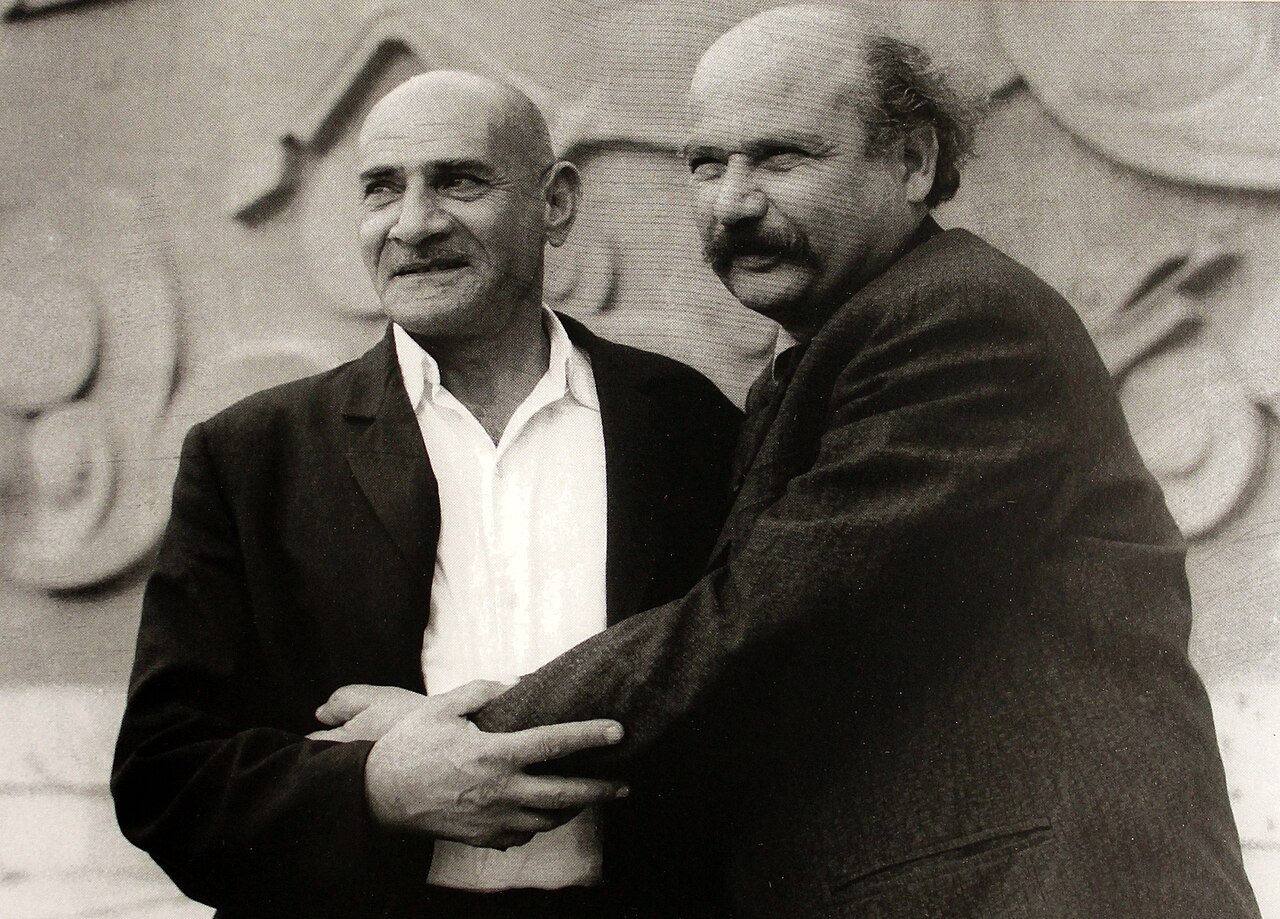
Tzolag Hovsepian · "Familiar Faces" album, Los Angeles, 2013, "Hay gir" publishing house · CC BY-SA 4.0
- Name
- Rafayel Israyelian
- Birthplace
- Tiflis, Russian Empire
- Died
- 8 September 1973
- Place of death
- Yerevan, Soviet Armenia, USSR
- Education
- Ilya Repin Leningrad Institute for Painting, Sculpture and Architecture (1936)
- Occupation
- Architect
- Spouse
- Sofia Muradyan (m. 1934)
- Awards
- List
- Born
- 1908
- Nationality
- Russian Empire · Soviet Union
- Known for
- Sardarapat Memorial · Tomb of the Unknown Soldier, Yerevan · Armenian Genocide Memorial, Yerevan and Gajagortsneri St. · World War II memorial spring in Goris · World War II memorial spring in Sisian
VALÉORINE Encyclopedia
VALÉORINE documentary reading
Documentary summary
Rafayel "Rafo" Israyelian (– 8 September 1973) was a Soviet Armenian architect. Seen as a follower of Alexander Tamanian, Israyelian designed some of Soviet Armenia's most prominent structures, including the Sardarapat Memorial, the Yerevan Wine Factory and several churches, both in Armenia and abroad, most notably St. Sargis in Yerevan and St.
Admitted source layer · organised and presented by VALÉORINE
Note VALÉORINE
No house-authored Note is published until its assertions and sources pass the VALÉORINE evidence contract. The documentary article remains available in full while that enrichment is being consolidated.
Documentary enrichment in progress · no unsupported statement published
Reference Check
Propose documentary evidence for Rafael Israelyan. A contribution is never written directly as fact: identity, source, rights and evidence gates still decide.
Sign in to contribute
Documentary evidence
Evidence Panel
not yet certified
- Identity
- resolved
- Independent source families
- 0
- Admitted assertions
- 0
- Open conflicts
- 0
Authority files
wikidata · Q4204247
In this article
Biography
Biography
Vartan in New York.

Rafayel Israyelian
Tzolag Hovsepian · Wikimedia Commons
Key facts
Key facts
• Name — Rafayel Israyelian • Birthplace — Tiflis, Russian Empire • Died — 8 September 1973 • Place of death — Yerevan, Soviet Armenia, USSR • Education — Ilya Repin Leningrad Institute for Painting, Sculpture and Architecture (1936) • Occupation — Architect • Years Active — 1936–1973 • Notable Works — List • Spouse — Sofia Muradyan (m. 1934) • Children — 2 sons (Vahagn, Areg); 3 daughters • Awards — List • Website — http: www.rafaelisraelyan.com/
Life
Life
Israyelian was born in Tiflis (modern-day Tbilisi, capital of Georgia), then part of the Russian Empire, on to Armenian parents. His father, Sargis, was a philologist and folklorist born in Shusha (Shushi), Karabakh, while his mother, Mariam (née Hakhnazarian) was a teacher, originally from Nakhichevan. • Illustration — Israyelian with long-time collaborator Ara Harutyunyan, a sculptor. He attended an Armenian school in Tiflis and continued his education at the State Academy of Arts of Georgia, from which he graduated in 1928 as an architect. He later moved to Leningrad, where he studied at the Leningrad Institute of Communal Building from 1929 to 1932. He thereafter continued his education at the Ilya Repin Leningrad Institute for Painting, Sculpture and Architecture (formerly the Imperial Academy of Arts) until 1936. Israyelian moved to Yerevan, Soviet Armenia in 1936 and worked at different state-run architectural organizations. He taught at the Yerevan Polytechnic Institute from 1941 to 1963. In 1936–41, Israyelian worked at the Haypetnakhagits (Armenian State Project) Institute for urban planning. He completed a number of projects there, including the retirement home in Nor Kharberd and the dormitory of the Metallurgical Technical College in Yerevan. Israyelian then worked at the Yerevan Polytechnic Institute first as a lab technician, then as an assistant, and after 1947, as an associate professor. From 1942, Israyelian started working in the Committee for the Protection of Monuments of Armenia, whose chairman was academician Hovsep Orbeli. Because of the war, there were no funds for the restoration of the monuments, thus the committee engaged in research instead. During these years Israyelian toured the entire territory of Armenia on foot. At that time, he thoroughly studied the khachkars, drew sketches authored a large volume of research. His research on khachkars was published posthumously in the Etchmiadzin magazine in 1977. It was the first thorough study of khachkars. During World War II, Israyelian also served in an anti-aircraft defense unit based in Yerevan. In 1947, at the conference of young architects held in Moscow, Israyelian's works won the first prize. At that time, he was already working on the Victory Monument the construction of which was completed in 1950. In 1952, after defending a thesis at the Leningrad Academy of Fine Arts, the topic of which was "My architectural works", he received the scientific degree of candidate of architecture. Israyelian was also designing a number of residential houses at the time. In addition to architectural works, he made sketches for applied art, some of which were accepted for wide production. He closely worked with the Armenian Apostolic Church, under Catholicos Vazgen I and was part of the architectural committee of the Mother See of Holy Etchmiadzin from 1956 to 1972. He extensively studied khachkars and his studies were published in Etchmiadzin magazine posthumously in 1977. Israyelian died on September 8, 1973, aged 65, at his Yerevan home, after a long illness.
Family
Family
Israyelian married Sofia Muradyan in 1934. They had two sons and three daughters. His first son, Vahagn (b. 1937), is a geologist and second son, Areg (1939–2001), was an architect, who completed some of his father's unfinished works.
Personality
Personality
Varazdat Harutyunyan wrote that Israyelian had a peculiar character and a "fondness for drinking". Catholicos Vazgen I was "particularly warm" towards him and "highly valued his generous talent". When he became seriously ill, the Catholicos had medicine supplied to him, and when his condition became terminal, he personally visited Israyelian's home. After his death, Vazgen performed a memorial service at Etchmiadzin Cathedral and spoke warmly in his memory.
Style
Style
Israyelian was inspired by traditional Armenian architecture, especially church architecture. He utilized many traditional designs in his projects. His work combined traditional and modern architecture. In this aspect, he is seen as a follower of the neoclassical architect Alexander Tamanian. In the 1960s he revived Tamanian's neo-Armenian style; Israyelian, "while employing the stylistic principles of medieval as well as vernacular Armenian architecture, was able to re-examine its aesthetic through a functional-constructivist prism." Israelyan thus emerged as a leading figure in the reemergence of a national "school" of architecture by the 1970s. As "a politically bold architect of talent", he used his projects "to reassert Armenian traditions of heavy mass, natural stone, small cleancut apertures and bas relief decoration." He also borrowed from the architecture of Mesopotamia (Sumer, Babylon, and Assyria). In their 1986 book on Soviet Armenian architecture, Artsvin Grigoryan and Martin Tovmasyan commended Israelyan's work, namely the Victory Monument and the Museum of Armenian Ethnography. They found the monument to be a masterful resolution of complex scaling challenges and praised the choice of black tuff. The museum, in their view, represented one of the most outstanding works of Soviet Armenian architecture, demonstrating a profound understanding of museum design through its innovative use of natural light. They saw this as a groundbreaking reinterpretation of traditional Armenian architectural elements.
Religious
Religious
Israyelian designed two altars for Etchmiadzin Cathedral, Armenia's mother church: the Main Altar (1958) and the Altar of Descent (1962). From 1969 to 1972 or 1973 the summer residence of the Catholicos of All Armenians, known as Haykashen, was built in Byurakan according to Israyelian's design. The Catholicos often hosted guests at the residency. Israyelian designed several Armenian churches both in Armenia and abroad. In Yerevan he designed reconstructions of two churches: St. Sargis and Saint John the Baptist. Both were completed after Israyelian's death. St. Sargis, which was entirely reconstructed, was completed in 1976. Architect Artsrun Galikyan further contributed to the design after Israyelian's death. The reconstruction of Saint John the Baptist church, designed by Israyelian, was completed in the 1980s. The reconstruction works were further developed by Baghdasar Arzoumanian and engineer Avetik Teknejian. Israyelian designed and co-designed three churches in the Armenian diaspora: Holy Forty Martyrs Church in Milan, Italy (1958), St. Vartan Armenian Cathedral in New York City (1968), and Surp Nerses Shnorhali Cathedral in Montevideo, Uruguay (1968). The church in Milan was co-designed with Armenian-American architect Zareh Sourian, while the church in Montevideo with Varazdat Harutyunyan. St. Vartan is the first Armenian cathedral built in the U.S. It is based on classical Armenian church architecture, namely Saint Hripsime Church in Ejmiatsin. According to some sources, it was designed by Walker O. Cain, however, the Armenian church publication indicates Israyelian as its architect. Varazdat Harutyunyan noted that Israyelian's design was only modified slightly. According to the website dedicated to Israyelian, it was designed by Israyelian, but because he could not travel to the US, its construction was supervised by Édouard Utudjian. • Illustration — Forty Martyrs Church in Milan (1958) • Illustration — Main Altar of Etchmiadzin Cathedral (1958) • Illustration — Altar of Descent of Etchmiadzin (1962) • Illustration — St. Vartan, New York (1968) • Illustration — St. Nerses Shnorhali, Montevideo (1968) • Illustration — Haykashen (1971) • Illustration — St. Sargis, Yerevan (1976, reconstruction) • Illustration — St. John the Baptist (1980s, reconstruction)
Monuments
Monuments
Israyelian designed two structures at Victory Park in Yerevan. The first is the pedestal for the statue of Stalin (removed in 1962), which has served as a museum of "Great Patriotic War" (World War II). It was completed in 1950. It is now also the pedestal of the monument Mother Armenia (erected in 1967). The second is the main entrance to the same park, completed a decade after his death, in 1982. Israyelian designed several popular monuments near prominent landmarks of Armenia. In 1957 "Eagle of Zvartnots", created with Yervand Kochar, near the seventh century Zvartnots Cathedral. In the same year, on a small hill on the road to the temple of Garni, a monument known as Charents Arch was erected. It offers a panoramic view of Mount Ararat. It is often referred to as the "Arch of Ararat". Lines from a Yeghishe Charents poem glorifying the mountain are inscribed into the monument. The "Lion of Geghard" was erected near the monastery of Geghard in 1958. It was sculpted by Ara Harutyunyan. The monument is inspired by the coat of arms of the Proshian noble family found inside Geghard. In 1960 a monument conventionally known as the "Western Entrance of Yerevan" was erected in the outskirts of Yerevan, facing those entering the capital from the west (i.e. from the direction of Vagharshapat/Ejmiatsin). • Illustration — World War II Museum (1950) • Illustration — Eagle of Zvartnots (1957) • Illustration — Arch of Charents (1957) • Illustration — Lion of Geghard (1958) • Illustration — Western Entrance of Yerevan (1960) • Illustration — Monument of friendship of Yerevan and Carrara (1964) • Illustration — Entrance of Victory Park (1982)
Other buildings
Other buildings
Israyelian designed a number of structures and buildings for civic use. They include the Ararat Wine Factory in Yerevan (1937–1961); the Kheres Wine Factory in Oshakan (1950s); the Hrazdan Gorge Aqueduct in Yerevan (1950), with engineer G. Yeghoyan; Government House #2 in Yerevan's Republic Square (1955, with Samvel Safaryan and Varazdat Arevshatyan), the building of the Union of Artists of Armenia in Yerevan (1955–56); the Ethnographic Museum of Armenia near the Sardarapat Memorial (1977–78). His design for Kevork Chavoush Museum in Ashnak village was completed in the 1980s. He also designed restaurants in Yerevan ("Aragil", 1957/1960), Hrazdan ("Tsovinar", 1960), and Vanadzor ("Kars", 1965). Israyelian designed decorative drinking fountains at the courtyards of St. Hripsime (1958), Geghard (1958/59), Etchmiadzin Cathedral (1967), St. Gayane (1972), and in numerous villages and towns around Armenia (1943–46), including Parakar, Karbi, Stepanavan, Sisian, Byurakan, Artik, Goris, Ashtarak, Alaverdi, and Taperakan. He also designed some of the buildings of the Kanaker Aluminium Plant (KanAZ) in 1948–50, a campus of the Yerevan Physics Institute on the slopes of Mount Aragats (1960), a large hotel (pansionat) in Sochi, Russia (1977), several residential buildings in Yerevan and other structures. • Illustration — Hrazdan Aqueduct (1950) • Illustration — Government House #2 (1955) • Illustration — Aragil Restaurant (1957–60) • Illustration — Union of Artists of Armenia (1956) • Illustration — Ararat Wine Factory (1937–1961) • Illustration — Ethnographic Museum of Armenia (1978) • Illustration — Kevork Chavoush Museum (1980s)
Identity
Identity
Rafael Israelyan is recorded as Russian Empire and Soviet Union.
Life and career
Dated record
Life and career
Explore 1908–1975
The full dated record · 16 entries
1908
Rafael Israelyan was born in 1908.
1938
Nalbandyan 37, Yerevan is dated 1938.
1945
World War II memorial spring in Sisian is dated 1945.
1946
World War II memorial spring in Goris is dated 1946.
1946
World war II memorial in Talin is dated 1946.
1957
Charent's Arch is dated 1957.
1957
Aragil is dated 1957.
1958
Lion of Geghard is dated 1958.
1965
Armenian Genocide Memorial, Yerevan, Gajagortsneri St. is dated 1965.
1967
Mother Armenia is dated 1967.
1968
Memorial to the victims of WW2 is dated 1968.
1968
St. Vartan Cathedral is dated 1968.
1970
World War II memorial in Yeghegnadzor is dated 1970.
1970
Tomb of the Unknown Soldier, Yerevan is dated 1970.
1973
Rafael Israelyan died at Yerevan.
1975
Lusaghbyur Monument is dated 1975.
Memorials
Memorials
Israyelian created two memorials dedicated to the victims of the Armenian genocide, when its 50th anniversary was commemorated in 1965. The better known monument is located at Mother See of Holy Etchmiadzin and was inaugurated on April 24, 1965. It features several crosses inspired by traditional khachkars and a sword and shield, symbolizing Armenian self-defense efforts during the genocide. The second memorial is located Yerevan's Erebuni District. The latter was sculpted by Ara Harutyunyan. Israyelian's best-known memorial is the Sardarapat Memorial, near Araks, Armavir, completed in 1968 and inaugurated on May 25 of that year. It is dedicated to the 1918 Battle of Sardarabad, in which the Armenian forces stopped the advantage of Turkish forces towards Yerevan. He also designed memorials dedicated to self-defenses during the Armenian Genocide. The monument to 1915 Defense of Hachn, was erected in Nor Hachn in 1974 and the memorial of Musa Dagh in Musaler in 1976. The latter was sculpted by Ara Harutyunyan. The memorial of the 1918 Battle of Bash-Aparan was erected in Aparan in 1979. In 1967 a memorial designed by Israyelian was erected in the Armenian-populated village of Banants (Bayan) in Azerbaijan dedicated to the villagers killed in World War II. The memorial was demolished around 1990 during the Nagorno-Karabakh conflict. • Illustration — Genocide memorial in Yerevan (1965) • Illustration — Genocide memorial in Ejmiatsin (1965) • Illustration — Sardarapat Memorial (1968) • Illustration — Nor Hachn Memorial (1974) • Illustration — Musa Dagh (Musa Ler) Memorial (1976) • Illustration — Bash-Aparan Memorial (1979)
Legacy and recognition
Legacy and recognition
Martiros Saryan and Artashes Hovsepyan created portraits of Israyelian. Grigor Khanjyan depicted him in the mural Revived Armenia (1999-2000). A street in Yerevan was named after him. In mid-2000s Israyelian's son Vahagn proposed to turn the second floor of Israyelian's house at 9 Saryan St. in Yerevan into a house-museum. The house, designed and built by himself, was demolished in October 2011 to make way for a hotel. The Municipality of Yerevan stated that Israyelian's son, Vahagn, had sold the house earlier and gave formal permission to demolish it. As of 2025, there is no memorial honoring Israyelian, although it was discussed in 2020. His archives have been donated to the National Museum and Institute of Architecture.
Primary material
Documents and archives
authority file
reference work
- Wikidata, structured authority record Q4204247: Rafael Israelyan
Reputable secondary · Wikimedia Foundation
Awards
Israyelian was awarded: • Stalin Prize (1951) • Honored worker of art of the Armenian SSR (1961) • Honored Architect of Armenian SSR (1968) • People's Architect of the USSR (1970) • Military awards • Medal "For the Defence of the Caucasus" • Medal "For the Victory over Germany in the Great Patriotic War 1941–1945"
Notes from the source article
Cited by Wikipedia
Notes from the source article
These works are cited by the source article, in its own numbering. They are recorded as its citations, not as sources VALÉORINE has verified.
- 1.Petrosyan, Sarhat. Բաց նամակ Էդուարդո Էռնեկյանին [An Open Letter to Eduardo Eurnekian]. Hetq. 10 March 2013.
- 2.Կենսագրություն [Biography]. risraelyan.com.
- 3.part 1, part 2
- 4.Tigranyan, E. A. К вопросу об оценке архитектурного наследия А. Таманяна [On the issue of evaluating the architectural heritage of A. Tamanyan]. Lraber Hasarakakan Gitutyunneri. 11. 61–71. 1975.
- 5.Goethe-Institut. Yerevan: Conflicting Modernities.
- 6.Cruickshank. Sir Banister Fletcher's A History of Architecture. Architectural Press. 1441. 1996.
- 7.Architecture + Design, 1988, vol. 5, p. 25 "Rafael Israelyan. He has developed links with the Armenian tradition by drawing upon its origins which are close to ancient Assyrian forms"
- 8.Grigoryan, Artsvin G. Архитекутра Советской Армении [Architecture of Soviet Armenia]. Stroyizdat. 102–103, 180–182. 1986.
- 9.Israyelian, Rafayel. Մեծ եղեռնի հուշարձանի իմ մտահղացումը [My idea for genocide memorial]. Etchmiadzin. 32. 11–12. 1965.
- 10.Armenian National Institute. Memorial in Tokhmakh neighborhood of Yerevan, Armenia. armenian-genocide.org.
- 11.Սարդարաբադի հերոսամարտի հիշատակին նվիրված զբոսայգի-հուշարձանի բացումը. Etchmiadzin. 24. 6. 41–43. 1968.
- 12.Hasratyan, Murad. Վազգեն Ա Ամենայն Հայոց Կաթողիկոսի վերանորոգչական-եկեղեցաշինական գործունեությունը [Reconstructive and Church building activity of Vasken I, Catholicos of All Armenians]. Etchmiadzin. 64. 10. 54. 2008.
- 13.Հայրապետական «Հայկաշէն» ամառանոցային շենքի հիմնարկեքի օրհնություն Բյուրականում [Blessing of the foundation stone of the Patriarchal "Haykashen" summer residence building in Byurakan]. Etchmiadzin. 25. 6. 27–30. 1969.
- 14.Hatitian, Artun. Երևանի ս. Սարգիս վերակառուցված առաջնորդանիստ եկեղեցու նավակատիքն ու օծումը. Etchmiadzin. 33. 10–11. 90. 1976.
- 15.Yerevan Municipality. Սբ. Հովհաննես Մկրտիչ եկեղեցի [St. John the Baptist Church]. yerevan.am.
- 16.Dugan, George. Armenian Patriarch Consecrates Cathedral Here. The New York Times. 29 April 1968.
- 17.Chiesa Apostolica Armena d'Italia. About Us. chiesaarmena.org. 2013.
- 18.Միլանոյի հայոց Սրբոց Քառասնից Մանկանց եկեղեցու օծումը. Etchmiadzin. 12. 40–42.
- 19.Armenian Church Focuses on Schism. The New York Times. 7 May 1973.
- 20.Blau, Eleanor. New Yorkers Reap Harvest of Autumn Fairs. The New York Times. 11 September 1981.
- 21.Eastern Diocese of the Armenian Church of America. May 5 Concert To Honor 50 Years of St. Vartan Cathedral. armenianchurch.us. 1 April 2018.
- 22.23-Karat Gold Leaf; Dome of Armenian Cathedral Is Regilded. The New York Times. 5 December 1993.
- 23.Հայագիտական հրատարակություններ [Publications on Armenian Studies]. Etchmiadzin. 39. 11–12. 1982.
- 24.Նյու-Յորքի Սբ. Վարդան եկեղեցի. rafaelisraelyan.com.
- 25.AM Law Firm. Փորձ է արվում նսեմացնել Երվանդ Քոչարի ստեղծագործական ժառանգությունը. am.am. 11 February 2016.
- 26.The official tourism website of Yerevan city. Monument of Friendship Between Yerevan and Carrara. visityerevan.am.
- 27.Armenian Legal Information System. Հայաստանի Հանրապետության Երևան քաղաքի պատմության և մշակույթի անշարժ հուշարձանների պետակական ցուցակ [List of historical and cultural monuments of Yerevan]. arlis.am. 2 November 2004.
- 28.National Museum-Institute of Architecture of Armenia. Սամվել Սաֆարյան վաստակավոր ճարտարապետ [Samvel Safaryan]. archmuseum.am.
- 29.Gevorgian, A. O. The Great Soviet Encyclopedia. 1979.
- 30.Իսրայելյանը նկարինչների նկարներում. rafaelisraelyan.com.
- 31.Streets of Yerevan of municipal significance. yerevan.am.
- 32.Hakobyan, Gohar. Թանգարանի ոդիսականը. Aravot. 25 June 2004.
- 33.Prominent Armenian architect's house demolished in Yerevan (video). Tert.am. 10 October 2011.
- 34.Երեւանի քաղաքապետարան. Ռաֆայել Իսրայելյանի որդին համաձայնություն է տվել առանձնատան տեղում բազմաֆունկցիոնալ շենքի կառուցմանը. mediamax.am. 11 October 2011.
- 35.Urban Development Committee of the Republic of Armenia. Ժողովրդական ճարտարապետ Ռաֆայել Իսրայելյանի պատվին մայրաքաղաքում հուշարձան տեղադրելու վերաբերյալ քննարկում [Discussion on installing a monument in the capital in honor of People's Architect Rafael Israelyan]. minurban.am. 10 May 2020.
- 36.Abrahamyan, Gohar. The Revered and Overlooked Legacy of Rafayel Israelyan. EVN Report. November 22, 2024.
- 37.В Совете Министров Союза ССР O присуждении Сталинских премий за выдающиеся работы в области науки, изобретательства, литературы и искусства за 1950 год. Sovetskoe iskusstvo. 22. 2. 17 March 1950.
- 38.Указ Президиума Верховного Совета Армянской ССР О присвоении почетнсго звания заслуженного деятеля искусств Армянской ССР агхитекторам Исраеляну P. C., Оганесяну К. Л. Саиняну A. А. Vedomosti Verkhovnogo Soveta Armyanskoy SSR. 5. 1961.
- 39.Указ Президиума Верховного Совета Армянской ССР О присвоении почетного звания заслуженного архитектора Армянской ССР группе архитекторов республики. Vedomosti Verkhovnogo Soveta Armyanskoy SSR. 20. 1968.
- 40.Указ Президиума Верховного Совета СССР О присвоении почетного звавания народного архитектора СССР тт. Бабаханову А. Б., Иофану. Б. М., Исраеляну Р. С., Каменскому В. А., Королю В. А. Курдиани А. Г., Орлову Г. М., Посохину М. В., Приймаку Б. И. и Усейнову М. А. Vedomosti Verkhovnogo Soveta SSSR. 43. 28 October 1970.
- 41.Babayan, L. Soviet Armenian Encyclopedia Volume 4. 419-420. 1978.
- 42.Մահ ճարտարապետ Ռաֆայել Իսրայելյանի (1908-1973). Etchmiadzin. 30. 9. 41–43. 1973.
- 43.Տարեգրություն [Biography]. rafaelisraelyan.com.
- 44.Կառույցների ցանկ [List of buildings]. rafaelisraelyan.com.
- 45.Ryabushin, Alexander. Landmarks of Soviet architecture, 1917-1991. Rizzoli. 74. 1992. 978-3433023341.
- 46.Adalian, Rouben Paul. Historical Dictionary of Armenia. Scarecrow Press. 96. 2010. 978-0-8108-7450-3.
- 47.Կյանքն ու հասարակական գործունեությունը [The Life and Social Activities]. rafaelisraelyan.com.
- 48.Harutyunyan, Varazdat. Ծառայություն գահակալներին [Service to the Enthroned]. Etchmiadzin. 53. 2-3. 128–132. 1995.
References
Citations
References
Each reference names the institution holding it, so a reader may go to the document itself.
authority file
Partially resolvedreference work
Wikidata, structured authority record Q4204247: Rafael IsraelyanWikimedia Foundation
Partially resolved
Further particulars
Held on the record
Further particulars
Open the remaining particulars
The authorities additionally record the heading Israelyan, Rafael. His recorded language was Armenian. 2 children are recorded: Vahagn Israyelyan and Areg Israyelyan. Work and production. Israelyan received State Stalin Prize, 1st degree, Honored Art Worker of the Armenian SSR, Council of Ministers of the Soviet Union Prize and People's Architect of the USSR.
Identity and origins
Recognition and collections
The Encyclopedia exists whether or not anything is for sale. Corrections are recorded rather than overwritten, and every version of this record is kept. Published 14 August 2026.
Elsewhere in Design
11,558 published records in this field, each with its sources named.
- Rafael de La-Hoz CastanysDesigner
- Rafael EsguerraDesigner
- Rafael GuastavinoDesigner
- Rafael Guastavino RoigDesigner
- Rafael Manzano MartosDesigner
- Rafael Marquina y BuenoDesigner
- Rafael Masó i ValentíDesigner
- Rafael Mijares AlcérrecaDesigner
Best supported in this field
For owners
Own a work by Rafael Israelyan?
A specialist will read what you send and tell you what the house can establish, what it cannot, and whether the object is suited to sale. There is no charge and no obligation. The object stays with you throughout; nothing is shipped to us unless it is arranged in writing beforehand.