
Picasso Museum
The Musée Picasso, formerly the Château Grimaldi at Antibes, is built upon the foundations of the ancient Greek town of Antipolis. Antibes is a resort town in the Alpes-Maritimes department in Southeastern France, on the Mediterranean Sea. The castle has been classified as a historical monument since 29 April 1928. • Illustration — Musée Picasso, in Antibes
Picasso Museum
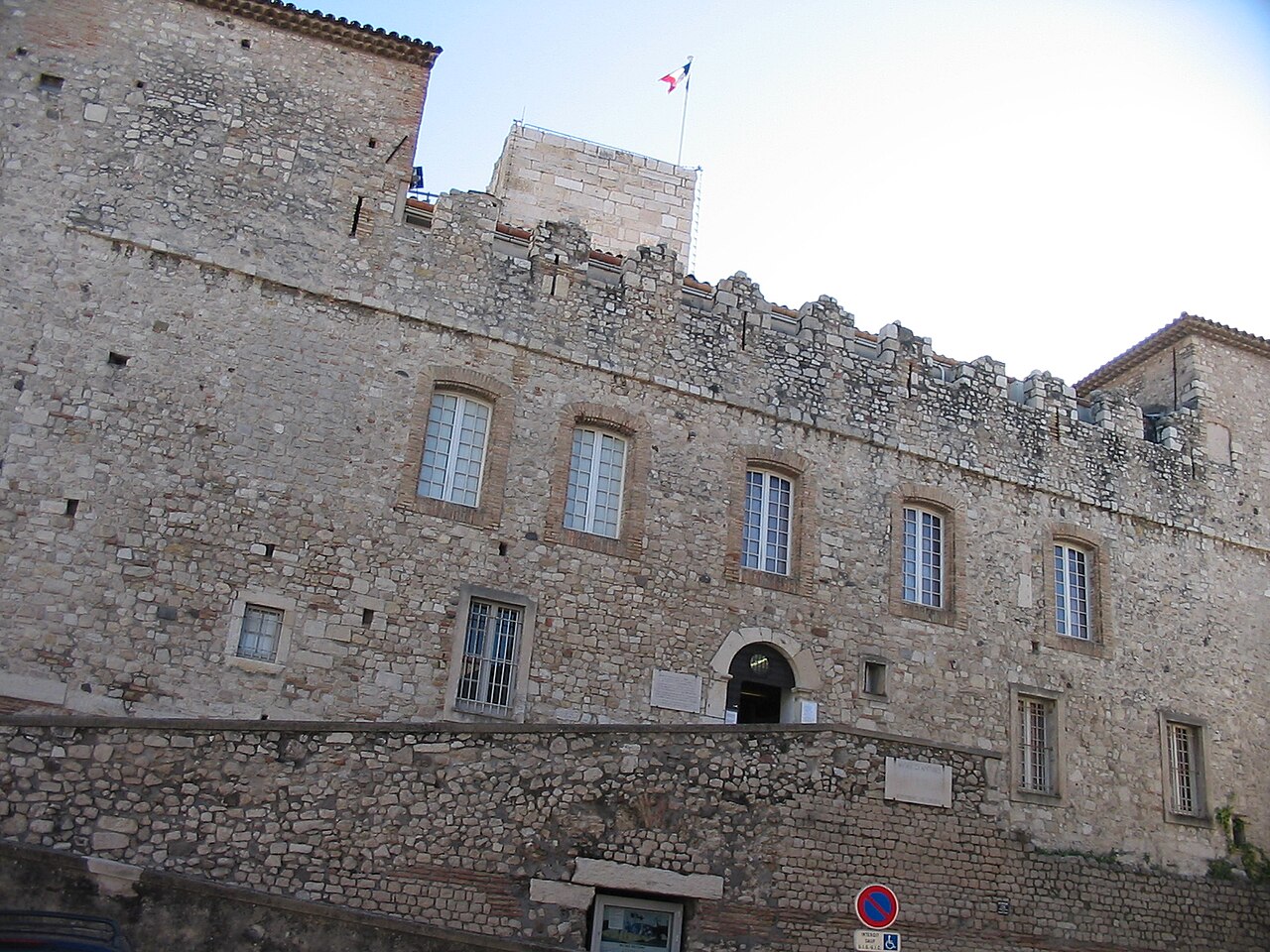
Original uploader was Olivier2000 at fr.wikipedia · CC BY-SA 1.0
- Founded
- 1966
- Headquarters
- Antibes
VALÉORINE Encyclopedia
VALÉORINE documentary reading
Documentary summary
The Musée Picasso, formerly the Château Grimaldi at Antibes, is built upon the foundations of the ancient Greek town of Antipolis. Antibes is a resort town in the Alpes-Maritimes department in Southeastern France, on the Mediterranean Sea. The castle has been classified as a historical monument since 29 April 1928. • Illustration — Musée Picasso, in Antibes
Admitted source layer · organised and presented by VALÉORINE
Reference Check
Propose documentary evidence for Picasso Museum. A contribution is never written directly as fact: identity, source, rights and evidence gates still decide.
Sign in to contribute
World of VALÉORINE
Documentary connections
Only confirmed graph relationships appear here. Images are shown only when their identity and reuse rights both pass the documentary gate.
Documentary evidence
Documentary basis
Authority files
wikidata · Q1368360
In this article
History
History
The Château Grimaldi is built upon the foundations of the ancient Greek town of Antipolis. The château was originally built in the late fourteenth century as the residence of the town's feudal lords Marc and Luc Grimaldi, scions of the famous Grimaldi Dynasty. In the early 17th century, the Grimaldis moved to Monaco and the château was acquired by Henry IV in 1608. It then served as the residence of the local governor for nearly two centuries. During the French Revolution it was seized by the revolutionary authorities and was converted for use as a town hall; it remained in municipal use until the council relocated to a purpose-built Hôtel de Ville in Cours Masséna in 1828. After the Bourbon Restoration, the château was converted into a barracks. • Illustration — The terrace of the museum In 1925, the château was acquired by the City of Antibes and became known as the Grimaldi Museum, and for six months in 1946, it was the home of the famous artist Pablo Picasso. Picasso himself donated works to the museum, altogether 23 paintings and 44 drawings, most notably his paintings La Chèvre (sculpture) and La Joie de vivre. The museum was renamed the Musée Picasso in December 1966. Following her death in 1986, Picasso's second wife Jacqueline bequeathed many works by Picasso to the museum. Two new galleries were established on the ground floor, funded by a donation from the Hans Hartung and Anna-Eva Bergman Foundation, in 2001.
Institutional history
Dated record
Institutional history
Explore 1966
The full dated record · 3 entries
1966
Picasso Museum established.
1966
Picasso Museum is recorded from 1966.
1966
Picasso Museum was established or created on 27 December 1966.
Places
Named by the record
Places
Only places the record itself states, plotted where the house gazetteer settles their coordinates. Nothing is inferred from a name or a nationality.
- France
Notes from the source article
Cited by Wikipedia
Notes from the source article
These works are cited by the source article, in its own numbering. They are recorded as its citations, not as sources VALÉORINE has verified.
- 1.Château des Grimaldi, actuellement musée Picasso. www.pop.culture.gouv.fr.
- 2.Picasso, Pablo. Picasso and Greece. Umberto Allemandi. 24. 2004. 978-8842212713.
- 3.Ollioules, the last refuge of a powerful bishop from the Grimaldi family. Hello Monaco. 28 June 2024.
- 4.Paschetta, Vincent. Riviera, French Riviera Tourist, historical and artistic information guide. FeniXX digital reissue. 91. 1957. 979-1041035526.
- 5.Britannica. 5 Surprisingly Fascinating Forts in France.
- 6.Dukes Global Adventures. Picasso Museum.
- 7.Bérenguier, Raoul. Châteaux des Alpes-Maritimes. FeniXX réédition numérique. 3. 1970. 978-2307336471.
- 8.Carli, Félicien. Antibes: A Short History of Architecture. Éditions due Cardo. 20. 978-2-37786-006-7.
- 9.Keller, Barbara. Orgasmic Days in the South of France. Unlimited Publishing. 101. 2000. 978-0967764962.
- 10.Picasso finds new lease of life in Antibes. The Guardian. 26 May 2009.
- 11.On Picasso's Trail, From Antibes to Avignon. The New York Times. 24 May 2009.
- 12.Picasso Museum Antibes. Facts. Visits. Paris Digest. 2018.
- 13.Just Tour France. Antibes-Juan-les-Pins.
- 14.Antibes Juan Les Pins. Le Musée Picasso.
- 15.Picasso and the art of the deal. The Washington Post. 15 September 1990.
References
Citations
References
Each reference names the institution holding it, so a reader may go to the document itself.
reference work
Secondary witness
The Encyclopedia exists whether or not anything is for sale. Corrections are recorded rather than overwritten, and every version of this record is kept. Published 14 August 2026.
Elsewhere in Institutions
3,152 published records in this field, each with its sources named.
- Philbrook Museum of ArtOrganisation
- Phoenix Art MuseumOrganisation
- Photo ElyséeOrganisation
- Photographic Center of SkopelosOrganisation
- Picture Book Museum, Iwaki CityOrganisation
- Piedmont Arts AssociationOrganisation
- Pier Alessandro Garda Civic MuseumOrganisation
- Pier Arts CentreOrganisation
Best supported in this field
For owners
Own an object connected with Picasso Museum?
A specialist will read what you send and tell you what the house can establish, what it cannot, and whether the object is suited to sale. There is no charge and no obligation. The object stays with you throughout; nothing is shipped to us unless it is arranged in writing beforehand.