
Philip Tilden
Philip Tilden (31 May 1887 – 25 February 1956) was an English architect, active in the early twentieth century, who worked for some of the most prominent members of English society, including Winston Churchill, David Lloyd George, Lord Beaverbrook, Sir Philip Sassoon, Lady Ottoline Morrell and Gordon Selfridge.
Philip Tilden
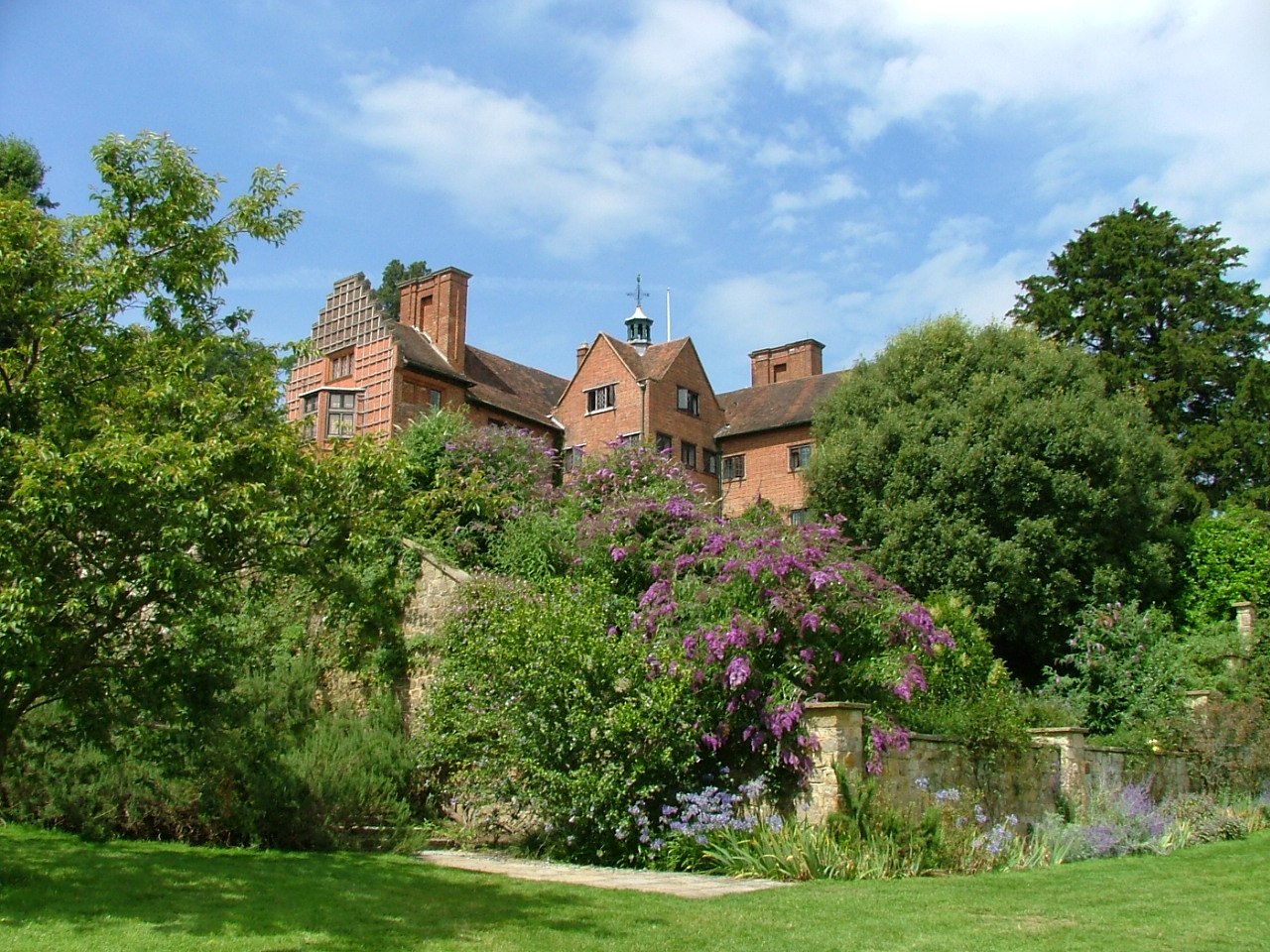
Wikimedia Commons · Public domain
- Name
- Philip Tilden
- Born
- 31 May 1887
- Died
- 25 February 1956
- Nationality
- United Kingdom
- Occupation
- architect
- Education
- Rugby School · Bedales School
- Known for
- Chartwell
- Languages
- English
VALÉORINE Encyclopedia
VALÉORINE documentary reading
Documentary summary
Philip Tilden (31 May 1887 – 25 February 1956) was an English architect, active in the early twentieth century, who worked for some of the most prominent members of English society, including Winston Churchill, David Lloyd George, Lord Beaverbrook, Sir Philip Sassoon, Lady Ottoline Morrell and Gordon Selfridge.
Admitted source layer · organised and presented by VALÉORINE
Reference Check
Propose documentary evidence for Philip Tilden. A contribution is never written directly as fact: identity, source, rights and evidence gates still decide.
Sign in to contribute
World of VALÉORINE
Documentary connections
Only confirmed graph relationships appear here. Images are shown only when their identity and reuse rights both pass the documentary gate.
Documentary evidence
Documentary basis
Authority files
wikidata · Q7184472 · wikipedia · Philip Tilden
In this article
Key facts
Key facts
• Name — Philip Tilden • Born — 31 May 1887 • Died — 25 February 1956 • Significant Buildings — Chartwell, Port Lympne Mansion, Bron-y-de, Churt
Biography
Biography
Tilden was born on 31 May 1887, the son of William Augustus Tilden, a prominent chemist who discovered synthetic rubber. Educated at Bedales and Rugby, Tilden joined the Architectural Association in 1905, leaving in 1908 to become an articled pupil to Thomas Edward Collcutt, with whom he later went into partnership. By 1917, he had established his own practice and for the next twenty years worked almost exclusively for a small circle of rich, interconnected, patrons for whom he designed, or re-constructed, country houses, gardens, chapels and churches, castles and a vast tower that was intended to sit on top of Gordon Selfridge's department store on Oxford Street, London. His best known works, apart from the unexecuted design for the Selfridges tower, were all for politicians: from 1918 to 1923 he designed the Moorish Courtyard, compared by Honor Channon to a "Spanish brothel", and the gardens and swimming pools at Port Lympne for Lloyd George's secretary, Philip Sassoon and may also have worked for Sassoon at Trent Park. Later in 1920s he completely reconstructed Chartwell for Winston Churchill and during the same period built Bron-y-de, at Churt in Surrey, as a country house for David Lloyd George. By the late 1920s, Tilden's career had peaked: near bankruptcy, following some failed speculative developments; combined with a mental breakdown, which James Bettley, his biographer, attributes to Tilden's attempting to reconcile his homosexuality with his marriage to Amalia Broden, a Swedish author; led to his leaving London entirely and moving to Devon. The latter part of his career was spent mainly in the West Country, where he undertook the restoration of a number of, mostly, more important country houses for less socially eminent clients. Examples include the reconstruction of Antony House in Cornwall and of Sydenham House in Devon. Many of Tilden's buildings now enjoy Listed Building status although this is sometimes due to the fame of their owners, or to work that pre-dated Tilden, rather than to his own efforts: examples include Port Lympne Mansion, Grade II* listed as at 29 December 1966; Chartwell, Grade I listed as at 16 January 1975, and Antony House, Grade I listed as at 21 July 1951. In 1954 Tilden published his autobiography, True Remembrances: the memoirs of an architect. Bettley considered it highly unreliable. Philip Tilden died on 25 February 1956 at Shute, Devon. His obituary in The Times, described him as "an architect with a talent for restoring old buildings, though of a somewhat lush and luxurious taste."
List of major works
List of major works
• Allington Castle, Kent, 1917–33, reconstruction for Sir Martin Conway • Antony House, Cornwall, 1945–47, alterations for Sir John Carew Pole • Bron-y-de, Churt, Surrey, 1922–28, house for David Lloyd George, destroyed by fire in 1968 • Chartwell, Kent, 1923–24, alterations for Winston Churchill • Cherkley Court, Leatherhead, Surrey, 1926, alterations for Lord Beaverbrook • Garsington Manor, Oxfordshire, 1925–26, terrace and loggia for Lady Ottoline Morrell • Clouds Hill, Offley, Hertfordshire, 1950, alterations for Lord Lloyd • Long Crendon Manor, Buckinghamshire, 1918–1922, restoration for Laline Hohler • Luscombe Castle, Devon, alterations for Sir Peter Hoare • Luton Hoo, Hertfordshire, 1947, repairs after wartime use • Port Lympne Mansion, Kent, 1918–23, alterations for Sir Philip Sassoon • Prussia Cove, Cornwall, 1911–14, house for T.T. and Brian Behrens • Saltwood Castle, Kent, 1930s, reconstruction for Sir Martin Conway • Shrigley Hall, Cheshire, 1935–38, chapel for the Salesian Brothers
Life and career
Dated record
Life and career
The full dated record · 2 entries
1887
Philip Tilden born.
1956
Philip Tilden died.
Primary material
Documents and archives
Institutional database
- Wikidata, structured authority record Q7184472: Philip Tilden
Scholarly · Wikimedia Foundation
reference work
- “Philip Tilden”, English Wikipedia, consulted as further reading
Reputable secondary · Wikipedia
Citations
References
Each reference names the institution holding it, so a reader may go to the document itself.
Institutional database
Wikidata, structured authority record Q7184472: Philip TildenWikimedia Foundation
Institutional witnessreference work
Secondary witness
The Encyclopedia exists whether or not anything is for sale. Corrections are recorded rather than overwritten, and every version of this record is kept. Published 18 August 2026.
Elsewhere in Design
11,558 published records in this field, each with its sources named.
- Philip PilditchDesigner
- Philip PowellDesigner
- Philip RuhDesigner
- Philip SmidthDesigner
- Philip Trammell ShutzeDesigner
- Philip Van PattenDesigner
- Philip WyattDesigner
- Philipp GerlachDesigner
Best supported in this field
For owners
Own a work by Philip Tilden?
A specialist will read what you send and tell you what the house can establish, what it cannot, and whether the object is suited to sale. There is no charge and no obligation. The object stays with you throughout; nothing is shipped to us unless it is arranged in writing beforehand.