
Mehou
Mehu was an Ancient Egyptian vizier who lived in the Sixth Dynasty. The office of the vizier was the most important one at the royal court. Mehu is mainly known from his monumental mastaba at Saqqara, not far away from the Pyramid of Unas.
Mehou
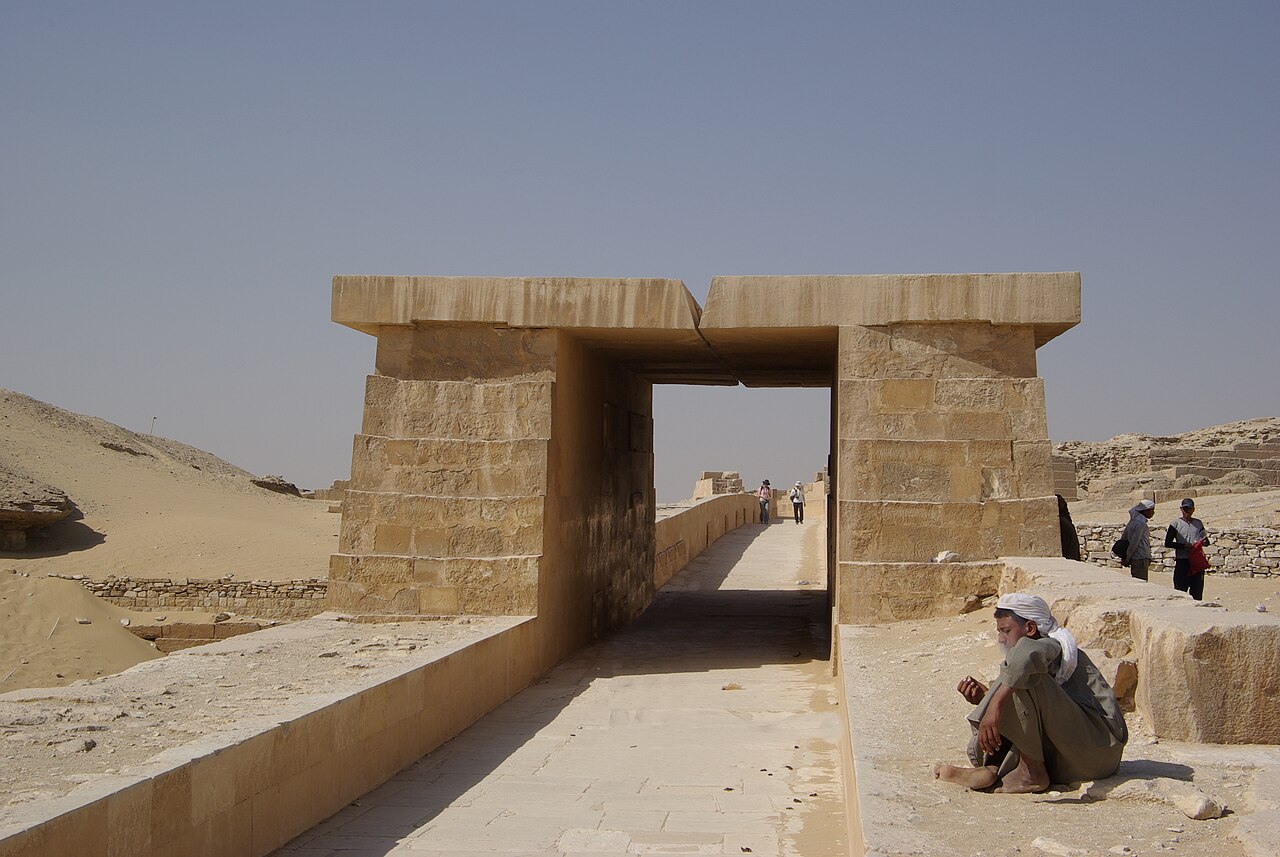
Berthold Werner · CC BY 3.0
- Name
- Mehu
- Born
- 2350
- Occupation
- architect
VALÉORINE Encyclopedia
VALÉORINE documentary reading
Documentary summary
Mehu was an Ancient Egyptian vizier who lived in the Sixth Dynasty. The office of the vizier was the most important one at the royal court. Mehu is mainly known from his monumental mastaba at Saqqara, not far away from the Pyramid of Unas.
Admitted source layer · organised and presented by VALÉORINE
Reference Check
Propose documentary evidence for Mehou. A contribution is never written directly as fact: identity, source, rights and evidence gates still decide.
Sign in to contribute
Documentary evidence
Documentary basis
Authority files
wikidata · Q1917642
In this article
Biography
Biography
The exact dating of Mehu is disputed in Egyptology. Hartwig Altenmüller published the relief decoration of the mastaba and dates him under king Teti. He argues that one of the brothers of Mehu with the name Iynefret is identical to another vizier also named Iynefret, who might date to the early Sixth Dynasty. Furthermore, Mehu carried the title of an overseer of priest at Djed-sut-Teti, that is the pyramid complex of king Teti. Other argue that he dates slightly later under king Pepi I. Mehu's family, in particular his parents, remain unknown but he was very likely from Mendes. Mehu had two wives, Nebet and Neferkaus. Mehu was bearing a high number of important titles. These include the titles of the vizier, but he was also Overseer of the treasuries, overseer of the double granary, overseer of Upper Egypt, and overseer of all royal works. Several sons are mentioned in the tomb. One son was perhaps called Mery, but his name was several times deleted. Another son was Hetepka. Within the mastaba of Mehu there are parts reserved for a vizier called Hetepka. It is possible that he was the son of Mehu, albeit final evidence for this identification is missing. The vizier Hetepka might have been just a member of Mehu's family. Two other known children of Mehu are a daughter called Merut and a further son called Khuy. Mehu served under king Teti, Unas' successor.

Painted limestone relief from a scene of Mehu fishing from Giza, Egypt; Egyptian, Old Kingdom, late Dynasty 5, 2431–2323 B.C.;
Picture taken by Marcus Cyron
Key facts
Key facts
• Name — Mehu • Style — Vizier of Egypt • Burial — Badrshein, Giza, Egypt • Wife — Nebet Neferkaus • Children — Merut Khuy
Life and career
Dated record
Life and career
The full dated record · 1 entries
2350
Mehou born.
Citations
References
Each reference names the institution holding it, so a reader may go to the document itself.
reference work
Secondary witness
The Encyclopedia exists whether or not anything is for sale. Corrections are recorded rather than overwritten, and every version of this record is kept. Published 16 August 2026.
Elsewhere in Design
11,558 published records in this field, each with its sources named.
- Megan EdwardsDesigner
- Megan RuleDesigner
- Mehdi Ali MirzaDesigner
- Mehdi ChamranDesigner
- Meinhard von GerkanDesigner
- Mel StreeterDesigner
- Melchior BerriDesigner
- Melchior HeßlerDesigner
Best supported in this field
For owners
Own a work by Mehou?
A specialist will read what you send and tell you what the house can establish, what it cannot, and whether the object is suited to sale. There is no charge and no obligation. The object stays with you throughout; nothing is shipped to us unless it is arranged in writing beforehand.