
Ludwig Krug
Together with Wenzel Jamnitzer, he is considered among the most important goldsmiths of the 16th century in what is now Germany.
Ludwig Krug
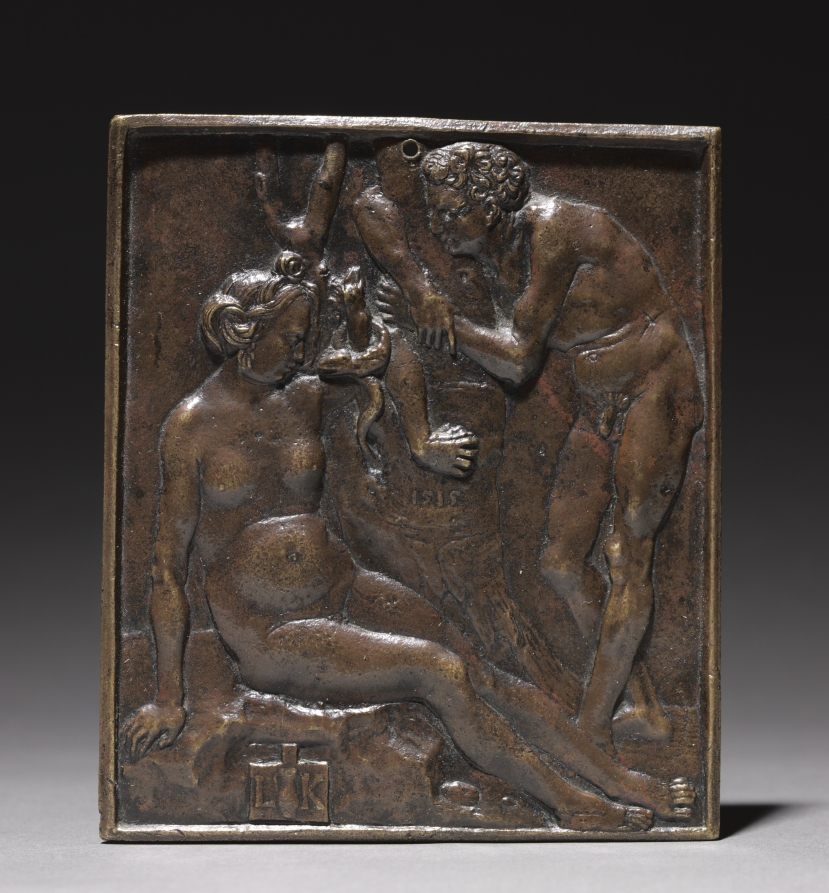
Ludwig Krug · The Cleveland Museum of Art · John L. Severance Fund · CC0
- Name
- Ludwig Krug
- Born
- 1488
- Died
- 1532
- Occupation
- Goldsmith, engraver, and sculptor
- Nationality
- Germany
VALÉORINE Encyclopedia
VALÉORINE documentary reading
Documentary summary
Together with Wenzel Jamnitzer, he is considered among the most important goldsmiths of the 16th century in what is now Germany.
Admitted source layer · organised and presented by VALÉORINE
Reference Check
Propose documentary evidence for Ludwig Krug. A contribution is never written directly as fact: identity, source, rights and evidence gates still decide.
Sign in to contribute
World of VALÉORINE
Documentary connections
Only confirmed graph relationships appear here. Images are shown only when their identity and reuse rights both pass the documentary gate.
Documentary evidence
Documentary basis
Authority files
gnd · 6065696-7 · wikidata · Q18508490 · wikipedia · Ludwig Krug
In this article
Key facts
Key facts
• Name — Ludwig Krug • Born — 1488 • Died — 1532 • Occupation — Goldsmith, engraver, and sculptor
Biography
Biography
There is little information about Krug's life and artistic training. Son of the engraver Hans Krug the Elder, Ludwig Krug mainly worked in the Free Imperial City of Nuremberg, obtaining the title of master goldsmith in 1522. While attribution of his work as a metalworker are controversial due to a lack of signature, there is more certainty about his career as an engraver thanks to the preservation of two woodcuts and sixteen copper engravings on religious subjects. • Illustration — Adam and Eve: The Fall of Man by Krug Krug's prints were developed in a style that, starting from a youthful phase inspired by the models of Albrecht Dürer, Martin Schongauer, and Lucas van Leyden, gradually distanced itself from these artists. In a later creative period, he gravitated towards the decorative models of Augsburg represented by Hans Schwarz, which were characterized by a certain originality and liveliness. Krug's works were characterized by naturalistic design and a mixture of Italian decorative elements of late Gothic art. In the last years of his career, Krug dedicated himself to goldsmithing, evidenced by a preserved illustration of a ciborium from Aschaffenburg depicting Mary and Joseph dated to 1526, as well as an illustration of the lid of a cup depicting the Labours of Hercules. Among his works are mugs at the Germanisches Nationalmuseum, the lid of a cup preserved in the Museum of Fine Arts in Budapest, a golden cup in the treasury of the Basilica of Saint Anthony of Padua, and numerous medals from his time as an engraver at the Nuremberg mint. Krug's Solnhofen Limestone relief depicting Adam and Eve in the fall of man resides at the Bode Museum in Berlin. Krug's version of the fall of man features an ape mimicking Adam eating the apple, which symbolizes the yearning of flesh as the cause of the fall.
Identity
Identity
Ludwig Krug is recorded as artist, engraver, goldsmith, medalist and xylographer. Krug, Ludwig, Oxford Art Online, 2003. Krug, Ludwig or Lukas, Benezit Dictionary of Artists, 2011.
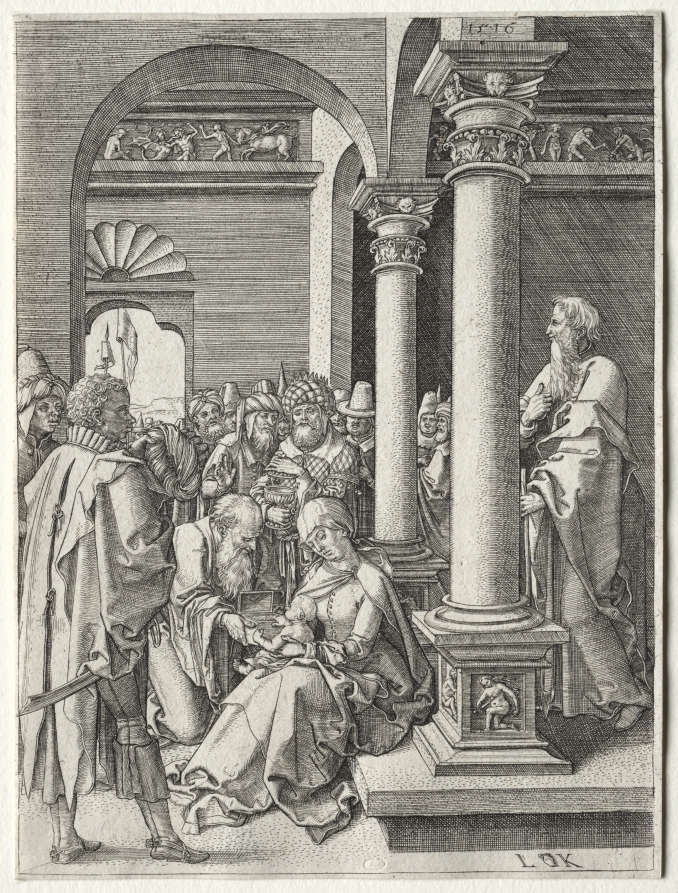
L'Adoration des Rois, 1516, by Ludwig Krug
Ludwig Krug · The Cleveland Museum of Art · Gift of Leonard C. Hanna Jr.
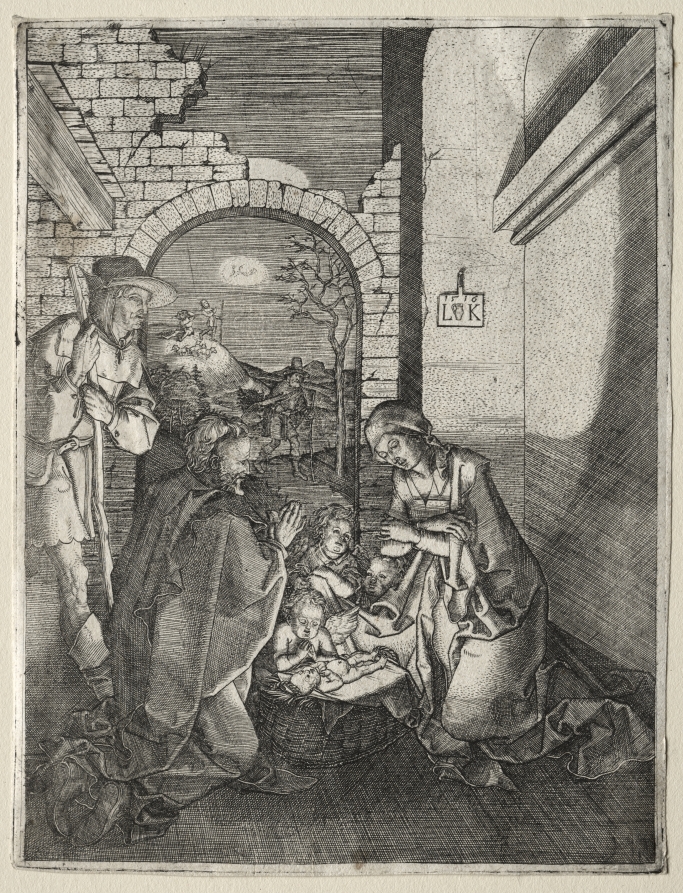
The Nativity, 1516, by Ludwig Krug
Ludwig Krug · The Cleveland Museum of Art · Gift of The Print Club of Cleveland
Life and career
Dated record
Life and career
The full dated record · 2 entries
1488
Ludwig Krug was born in 1488 at Nuremberg.
1532
Ludwig Krug died in 1532 at Nuremberg.
Primary material
Documents and archives
reference work
- Wikidata, structured authority record Q18508490: Ludwig Krug
Reputable secondary · Wikimedia Foundation
- “Ludwig Krug”, English Wikipedia, consulted as further reading
Reputable secondary · Wikipedia
scholarly publication
- Krug, Ludwig or Lukas, Benezit Dictionary of Artists, 2011
Scholarly · Crossref registry · 2011
Literature
Scholarly footprint
A count of publications is evidence of attention, not of standing, and is given here only as a measure.
Notes from the source article
Cited by Wikipedia
Notes from the source article
These works are cited by the source article, in its own numbering. They are recorded as its citations, not as sources VALÉORINE has verified.
- 1.Le Muse, enciclopedia di tutte le arti, 6. 308. 1964.
- 2.Istituto dell'Enciclopedia Italiana. Krug, Ludwig. Treccani.
- 3.Krug, Ludwig. sapere.it. 5 June 2020.
- 4.Krug, Ludwig. deutsche-biographie.de.
- 5.Campbell, Gordon. The Grove Encyclopedia of Decorative Arts. Oxford University Press. 553. 9 November 2006. 978-0-19-518948-3.
- 6.Adam and Eve (The Fall). Google Arts & Culture.
References
Citations
References
Each reference names the institution holding it, so a reader may go to the document itself.
scholarly publication
Krug, Ludwig or Lukas, Benezit Dictionary of Artists, 2011Crossref registry
Institutional witnessreference work
Wikidata, structured authority record Q18508490: Ludwig KrugWikimedia Foundation
Secondary witnessreference work
Secondary witness
The Encyclopedia exists whether or not anything is for sale. Corrections are recorded rather than overwritten, and every version of this record is kept. Published 16 August 2026.
Elsewhere in Silver
384 published records in this field, each with its sources named.
- Louis FeronArtist
- Louis OsmanArtist
- Louis-Alexandre BottéeArtist
- Lucien GaillardArtist
- Ludwig Yehuda WolpertArtist
- Luigi MascelliArtist
- MannigArtist
- Manuel MartinsArtist
Best supported in this field
For owners
Own a work by Ludwig Krug?
A specialist will read what you send and tell you what the house can establish, what it cannot, and whether the object is suited to sale. There is no charge and no obligation. The object stays with you throughout; nothing is shipped to us unless it is arranged in writing beforehand.