
Louis-Philippe Mouchy
Louis-Philippe Mouchy (31 March 1734 – 10 December 1801) was a French sculptor.
Also recorded as Louis Philppe Mouchy · Louis Philippe Mouchy · M. Mouchy · Mouchy
Louis-Philippe Mouchy
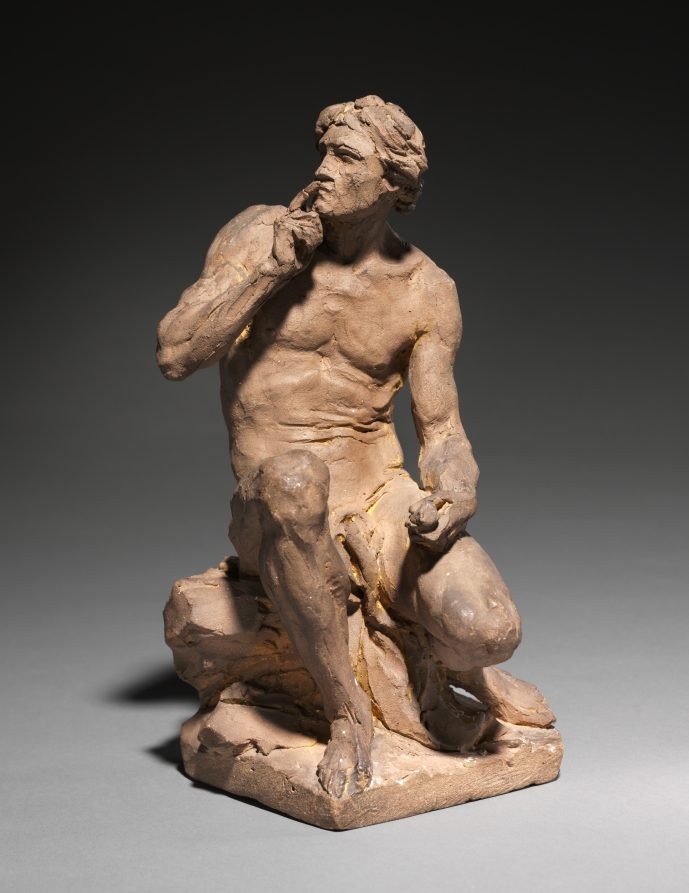
Louis-Philippe Mouchy · The Cleveland Museum of Art · The Thomas L. Fawick Memorial Collection · CC0
- Name
- Louis-Philippe Mouchy
- Born
- 31 March 1734
- Birthplace
- Paris, France
- Died
- 10 December 1801
- Occupation
- Sculptor
- Nationality
- France
- Teachers
- Jean-Baptiste Pigalle
- Languages
- French
VALÉORINE Encyclopedia
VALÉORINE documentary reading
Documentary summary
Louis-Philippe Mouchy (31 March 1734 – 10 December 1801) was a French sculptor.
Admitted source layer · organised and presented by VALÉORINE
Reference Check
Propose documentary evidence for Louis-Philippe Mouchy. A contribution is never written directly as fact: identity, source, rights and evidence gates still decide.
Sign in to contribute
World of VALÉORINE
Documentary connections
Only confirmed graph relationships appear here. Images are shown only when their identity and reuse rights both pass the documentary gate.

Documentary evidence
Documentary basis
Authority files
wikidata · Q3260808 · wikipedia · Louis-Philippe Mouchy
In this article
Key facts
Key facts
• Name — Louis-Philippe Mouchy • Born — 31 March 1734 • Birthplace — Paris, France • Died — 10 December 1801 • Place of death — Paris, France • Occupation — Sculptor
Early years
Early years
Louis-Philippe Mouchy was born in 1734. He was a student of Jean-Baptiste Pigalle, and married Pigalle's niece. Mouchy followed Pigalle's style closely throughout his career. He was given provisional membership of the Académie royale de peinture et de sculpture on 27 September 1766 and was admitted as a full academician on 25 June 1768. His reception piece was Un Berger qui se repose (Shepherd at Rest). Diderot described this work as "a rather literal copy of the first figure one sees to the left when entering the Tuileries from the Pont Royal.
Academician
Academician
Mouchy made a statue of Cupid Carving his Darts from the Club of Hercules from an original by Edmé Bouchardon. The copy was installed in a small round Temple of Love built for Marie Antoinette by Richard Mique in the garden of the Petit Trianon. Mouchy collaborated with Simon-Louis Boizot (1743–1809) on statues for Saint-Sulpice. He was more comfortable with realist work, where the subjects were dressed in 17th century costumes, than with the classical style. His marble seated figure of Harpocrates, an ancient god, was criticized as being "spindly", with a head that did not appear noble. Mouchy was made an assistant professor at the Académie royale, which gave him precedence when the comte d'Angiviller was commissioning statues of prominent Frenchmen for the state after Louis XVI became king in 1774. Only Augustin Pajou received more commissions. Mouchy made busts of Voltaire and Maurice de Saxe for the Marquis de Marigny to decorate his garden. Mouchy accepted a commission from the controller-general, Joseph Marie Terray (1715–78), for a statue of Apollo, representing the Arts. It was to be paired with Pajou's statue of Mercury, representing commerce. After Terray died his collection was auctioned off in January 1779. Neither statue was complete, and they had to be viewed in the sculptors' studios. Mouchy's son-in-law was the painter and engraver Philibert-Louis Debucourt. In the marriage contract Mouchy generously offered to provide a three-room apartment at the Louvre, where Debucourt lived for twelve and a half years. Mouchy died in 1801. • Illustration — Statue of Mary by Pigalle at Saint-Sulpice. The stucco decoration is by Mouchy • Illustration — Seated shepherd, Mouchy's reception piece for the Academy • Illustration — Cupid Carving his Darts from the Club of Hercules • Illustration — Harpocrates, god of silence
Identity
Identity
Louis-Philippe Mouchy is recorded as sculptor.
Life and career
Dated record
Life and career
Explore 1734–1801
The full dated record · 4 entries
1734
Louis-Philippe Mouchy born at Paris.
1779
Apollon ou les Beaux-Arts, Mouchy (Department of Sculptures of the Louvre).
1781
Charles de Sainte-Maure, Mouchy (Institut de France).
1801
Louis-Philippe Mouchy died at Paris.
Primary material
Documents and archives
reference work
- Wikidata, structured authority record Q3260808: Louis-Philippe Mouchy
Reputable secondary · Wikimedia Foundation
- “Louis-Philippe Mouchy”, English Wikipedia, consulted as further reading
Reputable secondary · Wikipedia
authority file
- VIAF cluster 10743293 for Louis-Philippe Mouchy, aggregating national library name authorities.
General reference · OCLC
Literature
Scholarly footprint
A count of publications is evidence of attention, not of standing, and is given here only as a measure.
References
Citations
References
Each reference names the institution holding it, so a reader may go to the document itself.
authority file
Secondary witnessreference work
Wikidata, structured authority record Q3260808: Louis-Philippe MouchyWikimedia Foundation
Secondary witnessreference work
Secondary witness
People, houses and institutions
Knowledge graph
People, houses and institutions
Teachers, collaborators, publishers and institutions recorded against this person, each on a stated basis.
The Encyclopedia exists whether or not anything is for sale. Corrections are recorded rather than overwritten, and every version of this record is kept. Published 16 August 2026.
Elsewhere in Sculpture
6,174 published records in this field, each with its sources named.
- Louis-Joseph DaumasArtist
- Louis-Léon CugnotArtist
- Louis-Léopold ChambardArtist
- Louis-Oscar RotyArtist
- Louis-Pierre DeseineArtist
- Louis-Simon BoizotArtist
- Louis-Victor BougronArtist
- Louise Astoud-TrolleyArtist
Best supported in this field
For owners
Own a work by Louis-Philippe Mouchy?
A specialist will read what you send and tell you what the house can establish, what it cannot, and whether the object is suited to sale. There is no charge and no obligation. The object stays with you throughout; nothing is shipped to us unless it is arranged in writing beforehand.