
Louis de Geer the Elder
Baron Louis Gerard De Geer af Finspång (18 July 181824 September 1896) was a Swedish statesman, lawyer, and writer who served twice as Prime Minister for Justice from 1858 to 1870 and from 1875 to 1876; in 1876, he became the first Prime Minister of Sweden, serving until 1880. De Geer was the principal architect of the 1863–66 representation reform, replacing the Riksdag of the Estates with a bicameral parliament and playing a pivotal role in modernizing Swedish politics.
Louis de Geer the Elder

Uppsala universitetsbibliotek · Public domain
- Name
- Louis Gerard De Geer
- Birth Name
- Louis Gerard De Geer af Finspång
- Born
- 18 July 1818
- Birthplace
- Finspång Castle, Sweden
- Died
- 24 September 1896
- Place of death
- Hanaskog Castle, Sweden
- Spouse
- Caroline Wachtmeister
- Education
- Linköpings Gymnasium
- Occupation
- Politician
- Nationality
- Sweden
- Honours
- Royal Order of the Seraphim · honorary doctorate of Lund University · honorary doctor of the University of Uppsala · Lord of the Realm · Commanders Grand Cross of the Order of the Polar Star · Knight Grand Cross of the Order of St. Olav
- Languages
- Swedish
VALÉORINE Encyclopedia
VALÉORINE documentary reading
Documentary summary
Baron Louis Gerard De Geer af Finspång (18 July 181824 September 1896) was a Swedish statesman, lawyer, and writer who served twice as Prime Minister for Justice from 1858 to 1870 and from 1875 to 1876; in 1876, he became the first Prime Minister of Sweden, serving until 1880. De Geer was the principal architect of the 1863–66 representation reform, replacing the Riksdag of the Estates with a bicameral parliament and playing a pivotal role in modernizing Swedish politics.
Admitted source layer · organised and presented by VALÉORINE
Note VALÉORINE
No house-authored Note is published until its assertions and sources pass the VALÉORINE evidence contract. The documentary article remains available in full while that enrichment is being consolidated.
Documentary enrichment in progress · no unsupported statement published
Reference Check
Propose documentary evidence for Louis de Geer the Elder. A contribution is never written directly as fact: identity, source, rights and evidence gates still decide.
Sign in to contribute
World of VALÉORINE
Documentary connections
Only confirmed graph relationships appear here. Images are shown only when their identity and reuse rights both pass the documentary gate.

Documentary evidence
Evidence Panel
not yet certified
- Identity
- resolved
- Independent source families
- 0
- Admitted assertions
- 0
- Open conflicts
- 0
Authority files
wikidata · Q52950
In this article
Biography
Biography
Louis de Geer the Elder studied at Uppsala University. The recorded working language is Swedish. Places of work recorded in the authority are Stockholm. Residence is recorded at Hanaskog Castle. Employment is recorded with Uppsala University and Lund University. Positions recorded include member of the First Chamber and Prime Minister of Sweden. Distinctions recorded are Royal Order of the Seraphim, honorary doctorate of Lund University, honorary doctor of the University of Uppsala and Lord of the Realm.

Louis de Geer the Elder, Louis De Geer 1818-1896 from Hildebrand Sveriges historia
Wikimedia Commons
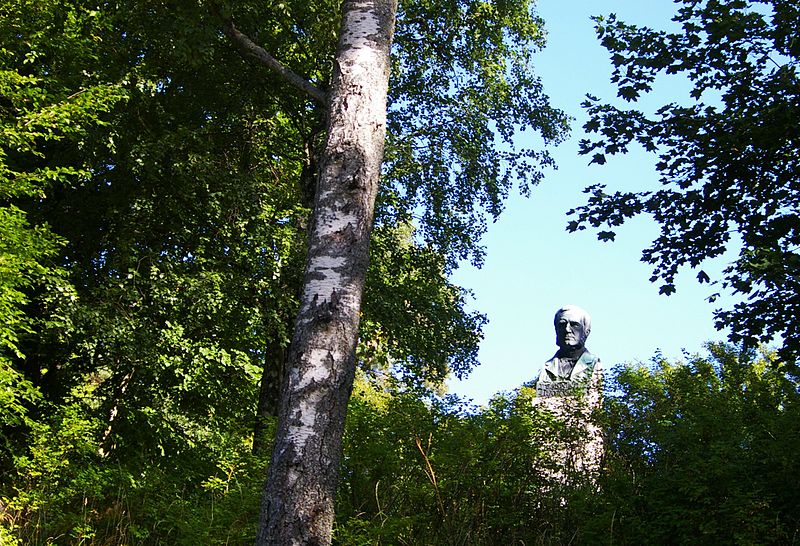
Byst över Louis De Geer i Berga minnespark, Linköping.
Uffe Johansson
Key facts
Key facts
• Honorific Prefix — His Excellency The High Well-born Baron • Name — Louis Gerard De Geer • Office — Prime Minister of Sweden • Term Start — 20 March 1876 • Term End — 19 April 1880 • Monarch — Oscar II • Predecessor — Office established • Successor — Arvid Posse • Order2 — Minister for Justice • Term Start2 — 20 March 1876 • Term End2 — 6 June 1879 • Predecessor2 — Office established • Successor2 — Ludvig Teodor Almqvist • Order3 — Prime Minister for Justice • Term Start3 — 11 May 1875 • Term End3 — 20 March 1876 • Predecessor3 — Edvard Carleson • Successor3 — Himself (as both Prime Minister and Minister for Justice) • Term Start4 — 7 April 1858 • Term End4 — 3 June 1870 • Predecessor4 — Claës Günther • Successor4 — Axel Adlercreutz • Birth Name — Louis Gerard De Geer af Finspång • Born — 18 July 1818 • Birthplace — Finspång Castle, Sweden • Died — 24 September 1896 • Place of death — Hanaskog Castle, Sweden • Party — Independent liberal • Spouse — Caroline Wachtmeister • Children — 6 • Parents — Gerard De Geer Henriette Charlotte Lagerstråle • Education — Linköpings Gymnasium • Alma Mater — Uppsala universitet • Occupation — Politician • lawyer
Biography
Biography
De Geer was born at Finspång Castle in Risinge parish, and was a member of the De Geer family. He was a lawyer, and in 1855 became president of the Göta Court of Appeal, or lord justice for the appellate court of Götaland. From 7 April 1858 to 3 June 1870 he was Prime Minister for Justice and again from 11 May 1875 to 20 March 1876. As a member of the nobility, he took part in the Swedish Riksdag of the Estates from 1851 onwards. From 1867 to 1878 he was the member for Stockholm in the first chamber in the New Riksdag, where he introduced and passed many useful reforms. According to his Minnen ("Memoirs") he considered himself a Liberal, in sympathy with universal suffrage. He never tried, however, to introduce legislation which he deemed impossible to get through the Riksdag.
Architect of the New Riksdag
Architect of the New Riksdag
De Geer's greatest political achievement was the reform of the Swedish representative system. The reforms introduced a bi-cameral elected Riksdag replacing the existing cumbersome and less democratic Riksdag of the Estates, a hangover from the later Medieval period. This measure was accepted by the Riksdag in December 1865, and received the royal sanction on 22 June 1866. For some time after this De Geer enjoyed considerable popularity. He retired from the ministry in 1870, but took office again, as Prime Minister of Justice in 1875.
First Prime Minister
First Prime Minister
In 1876 De Geer became the first Prime Minister of Sweden following a reform where the previous offices of Prime Minister for Justice (which he held at the time) and Prime Minister for Foreign Affairs were changed into Minister for Justice and a Minister for Foreign Affairs. He served until April 1880, when the failure of his repeated efforts to settle the armaments issue again induced him to resign. From 1881 to 1888 he was Chancellor for the Universities of Uppsala and Lund. He was an advocate of free trade and economic liberalism. Some argue that it was De Geer who laid the foundations for the strong economic growth in Sweden from 1870 to 1970.
Literary works
Literary works
Besides several novels and aesthetic essays, De Geer wrote a few political memoirs of supreme merit both as to style and matter, the most notable of which are Minnesteckning öfver A. J. v. Höpken (Stockholm, 1881); Minnesteckning öfver Hans Järta (Stockholm, 1874); Minnesteckning öfver B. B. von Platen (Stockholm, 1886); and his own Minnen (Stockholm, 1892), an autobiography, invaluable as a historical document, in which the political experience and the matured judgments of a lifetime are recorded with singular clearness, sobriety and charm. For example, his explanation of why he, at such a young age, was appointed Prime Minister of Justice, was that in the narrow circles of Swedish nobility at the time, it was difficult to find anyone with at least the mediocre intelligence which was needed for the office.
Personal life
Personal life
In 1848, De Geer married the countess Carolina Lovisa Wachtmeister. They had three sons, of which the eldest, Gerhard Louis De Geer (1854–1935), was prime minister of Sweden from 1920 to 21 and the second was Gerard De Geer (1858–1943), a geologist.
Death
Death
De Geer died on 24 September 1896 at his residence Hanaskog Castle in Scania. He is buried in the cemetery of Kviinge Church. • Illustration — De Geer in a contemporary newspaper caricature, depicted as St George fighting the four-headed dragon of the old four-chamber Riksdag of the Estates. From Emil Hildebrand, Sveriges historia intill tjugonde seklet (1910).
Places
Named by the record
Places
Only places the record itself states, plotted where the house gazetteer settles their coordinates. Nothing is inferred from a name or a nationality.
Hanaskog Castle
Residences
Risinge church parish.
Birth place
Kviinge church parish.
Death place
Membership in academies
De Geer was a member in the Swedish Academy from 1862, on Seat 17. In 1862, he was also elected a member of the Royal Swedish Academy of Sciences.
Citations
References
Each reference names the institution holding it, so a reader may go to the document itself.
authority record
Unverified
The Encyclopedia exists whether or not anything is for sale. Corrections are recorded rather than overwritten, and every version of this record is kept. Published 14 August 2026.
Elsewhere in Books
38,960 published records in this field, each with its sources named.
- Louis de Bussy d'AmboiseAuthor
- Louis de CarnéAuthor
- Louis de FourcaudAuthor
- Louis de FunèsAuthor
- Louis de GramontAuthor
- Louis de LoménieAuthor
- Louis de PaorAuthor
- Louis de Rouvroy, duc de Saint-SimonAuthor
Best supported in this field
For owners
Own a work by Louis de Geer the Elder?
A specialist will read what you send and tell you what the house can establish, what it cannot, and whether the object is suited to sale. There is no charge and no obligation. The object stays with you throughout; nothing is shipped to us unless it is arranged in writing beforehand.