
Leendert van der Cooghen
Leendert van der Cooghen (Haarlem, 9 May 1632 – Haarlem, 18 February 1681) was a Dutch painter, draughtsman and printmaker. An amateur artist of independent means, he left a small oeuvre of which his drawings represent the major portion. Recognised by his fellow artists, he was admitted to the Haarlem Guild of Saint Luke in 1652.
Also recorded as Leendert van der Koogen · Leendert Van Der Cooghen · Leendert van Cooghe · Leendert van der Cooghe
Leendert van der Cooghen
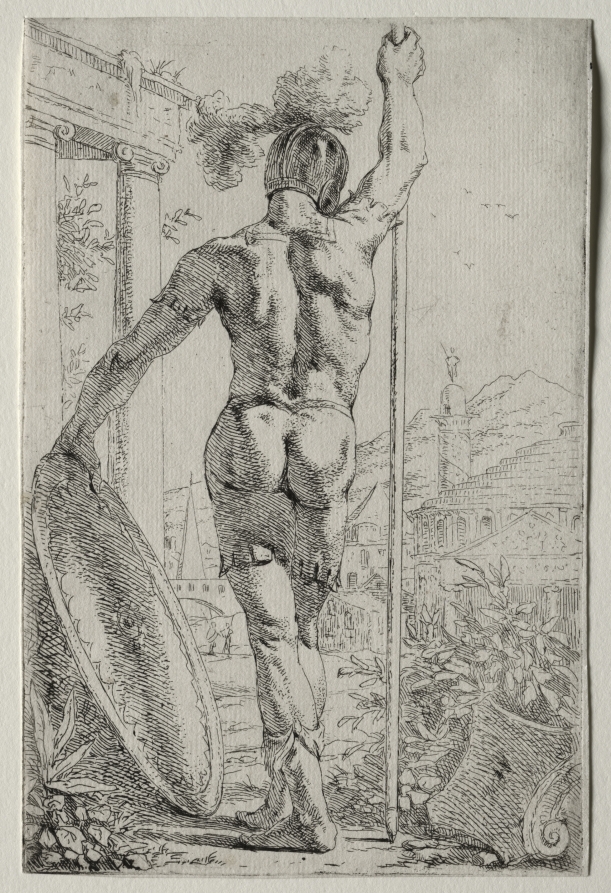
Leendert van der Cooghen · The Cleveland Museum of Art · Gift of Robert M. Light · CC0
- Name
- Leendert van der Cooghen
- Born
- 9 May 1632
- Birthplace
- Haarlem
- Died
- 18 February 1681
- Field
- Painting, drawing and printmaking
- Movement
- Baroque
- Nationality
- Dutch Republic
- Occupation
- painter · artist
- Fields
- painting
- Known for
- Adoration of the Shepherds
- Languages
- Dutch
VALÉORINE Encyclopedia
VALÉORINE documentary reading
Documentary summary
Leendert van der Cooghen (Haarlem, 9 May 1632 – Haarlem, 18 February 1681) was a Dutch painter, draughtsman and printmaker. An amateur artist of independent means, he left a small oeuvre of which his drawings represent the major portion. Recognised by his fellow artists, he was admitted to the Haarlem Guild of Saint Luke in 1652.
Admitted source layer · organised and presented by VALÉORINE
Reference Check
Propose documentary evidence for Leendert van der Cooghen. A contribution is never written directly as fact: identity, source, rights and evidence gates still decide.
Sign in to contribute
Documentary evidence
Documentary basis
Authority files
wikidata · Q926302 · wikipedia · Leendert van der Cooghen
In this article
Biography
Biography
The recorded working language is Dutch. The field of work recorded is painting. Places of work recorded in the authority are Antwerp and Haarlem. Works named in the authority record are Adoration of the Shepherds. Work by Leendert van der Cooghen is recorded in the collections of Museum Boijmans Van Beuningen, Städel Museum, Museum Catharijneconvent, Frans Hals Museum and Mauritshuis.
Key facts
Key facts
• Name — Leendert van der Cooghen • Born — 9 May 1632 • Birthplace — Haarlem • Died — 18 February 1681 • Place of death — Haarlem • Field — Painting, drawing and printmaking • Movement — Baroque
Life
Life
Leendert van der Cooghen was born in Haarlem on 9 May 1632 as the son of the Flemish flax merchant Jacob Adriaensz. van der Cooghen and Agneta Casteleyns Leenaerdtsdochter, from the well-to-do van Beresteyn family in Haarlem. The family was possibly Catholic as in 1648 he joined a Catholic local militia, a so-called schutterij. He is believed to have trained with the Flemish painter Jacob Jordaens, either in Antwerp in the late 1640s, or more likely during Jordaens' presence in the Dutch Republic while working on decorations in the Oranjezaal at the Huis ten Bosch. • Illustration — Constance (Preciosa) abducted by gypsies Around 1650 or 1651 he became a friend of the local artist Cornelis Bega who was about his own age and gave him artistic training. They also shared a studio. He does not seem to have joined Bega when the latter and other young Haarlem artists Dirk Helmbreker, Vincent van der Vinne and Guillam Dubois travelled to Germany and Switzerland in 1650-1651. He seems never to have left his homeland after the 1650s. he was admitted to the Haarlem Guild of Saint Luke in 1652. • Illustration — The Doubting Thomas He befriended the Haarlem painter Vincent van der Vinne. Van der Vinne included a portrait drawing which Leendert made of him in his Vanitas Still Life with a Self-Portrait (1660, Frans Hals Museum). Accompanied by the motto 'Memento Mori' (Latin for 'remember that you [have to] die'), this drawing recurs in another Vanitas still life with a portrait of the painter by van der Vinne dated 1664 (Tajan Paris auction of 9 December 1996, lot 20). As through his mother he was a member of the van Beresteyn family, he was financially independent and was an amateur rather than a professional artist. This was likely the reason for his limited artistic output. As an amateur artist he never had to sell any of his works to make a living and there is no record of him ever having worked on commission. He lived in the inherited family home Ter Goes in the Schagelstraat in Haarlem, together with his sister Catharina. He never married and his bachelor status earned him the nickname 'uncle Leendert'. After an illness, he died on 18 February 1681 and was buried four days later in the Grote Kerk (formerly the St. Bavo's Church) in Haarlem.
General
General
• Illustration — Mars seen from behind The early Dutch biographer Arnold Houbraken stated that van der Cooghen was a painter of landscapes, portraits, and genre pieces. Only about three paintings are attributed to van der Cooghen with certainty, all made in the 1650s. He is best known for his drawings of which about 60 have been identified. The art historian Baukje J. L. Coenen has attributed about 66 drawings to him. Van Cooghen also made 10 etchings in the period 1664-1666.
Identity
Identity
Leendert van der Cooghen is recorded with the occupation visual artist. Recorded as a citizen of Dutch Republic. Established in RKDartists under 18054.
Life and career
Dated record
Life and career
Explore 1632–1681
The full dated record · 4 entries
1632
Leendert van der Cooghen was born on 1 January 1632.
1648
Recorded as work location: Haarlem.
1681
Dies at Haarlem.
1681
Leendert van der Cooghen died on 1 January 1681.
Places
Named by the record
Places
Only places the record itself states, plotted where the house gazetteer settles their coordinates. Nothing is inferred from a name or a nationality.
Leendert van der Cooghen was born in Haarlem.
Birthplace
Leendert van der Cooghen died in Haarlem.
Deathplace
Leendert van der Cooghen was born at Haarlem.
Birth place
Leendert van der Cooghen died at Haarlem.
Death place
Paintings
Paintings
Three paintings are with certainty attributed to van der Cooghen, the Doubting Thomas (signed and dated 1654, Mauritshuis), the Adoration of the shepherds, (signed and dated 1656, Frans Hals Museum) and the Constance (Preciosa) abducted by gypsies (1650s, formerly in the Bailey Art Museum in Charlotteville, Virginia). The latter work was inspired by the story popularised in Cervantes' novella La gitanilla ("The Little Gypsy Girl') first published in 1613. It tells the story of the noble girl Preciosa who is abducted and raised by a Roma family. The nobleman Don Juan falls in love with her and finally her true high birth is discovered. The story was transposed by the Dutch poet Jacob Cats in verse in his Het Spaense Heydinnetje ('The Spanish heathen girl') published in 1637. This theme was very popular in Dutch 17th-century art. While most Dutch painters treated either the moment of Don Juan's first encounter with Preciosa or the revelation of her true identity, van der Cooghen painted the moment in which the girl is abducted by the Roma family. As was common in depictions of the period, he contrasts the white skin of the baby girl with those of the darker skinned Roma. The large figures in his painting of the Doubting Thomas betray the influence of his teacher Jacob Jordaens. The painting is based on the story in the New Testament which recounts of the apostle Thomas who expresses doubts that the person he sees in front of him is truly Jesus who has arisen after his crucifixion and death. Jesus allows him to touch the wound in his side to prove he is really Jesus. This story was popular with Catholics during the Counter Reformation. While Protestants believe that a person can be 'saved' only through faith (sola fide), Roman Catholics liked to go back to this story which highlights how the Jesus character in the story was ready to provide tangible evidence to a doubting person like Thomas.
Drawings
Drawings
• Illustration — Bust of a boy His body of drawings consists mainly of figure and portrait studies and some genre scenes and landscapes. His drawings share similarities with other Haarlem artists of his time such as Bega, Dirk Helmbreker and van der Vinne. Their drawings are characterized by the tight, even hatching, dry handling of the chalk and the unusual lightning. He also usually worked directly from a life model. He favored head-and-shoulders and bust-length formats for his female sitters. His models usually occupy the whole space of the drawing and are rendered in an idealized manner. The sitters typically look at the viewer and are motionless, even when depicted in groups. His hatching is usually in one direction, and is similar to that used in etchings. Van Cooghen added the day, month and year on 46 of his surviving drawings. This has allowed to establish a chronology. His style appears to have moved from a rather static and dry style to a looser and free-er style with bolder strokes and more movement. In his early drawings he used either red or black chalk on paper and rarely combined the two colors in one drawing. From 1654 he used either only black chalk sometimes in conjunction with pen and brown or black ink and wash or pen and ink on their own. He also used wet black chalk or oiled chalk or charcoal. His red and black drawings (all dating to the first half of the 1650s) are close to the Flemish style of his master Jordaens and Jan Cossiers. In his early career he made several copies after Jordaens as well after antique sculptures. He made watercolors but no examples of these are currently identified. Some of his drawings are studies for his prints.
Prints
Prints
His printed oeuvre encompasses no more than ten etchings all dated from 1664 to 1666. The subjects include Christ as a man of sorrows, Saint Sebastian, Saint Bavo with a falcon, four studies of warriors (after Salvator Rosa), a Woman bearing a jug, Bust of a woman and Trictrac players.
Primary material
Documents and archives
reference work
- “Leendert van der Cooghen”, English Wikipedia, consulted as further reading
Reputable secondary · Wikipedia
institutional register
- Wikidata, structured authority record Q926302: Leendert van der Cooghen
General reference · Wikimedia Foundation
Notes from the source article
Cited by Wikipedia
Notes from the source article
These works are cited by the source article, in its own numbering. They are recorded as its citations, not as sources VALÉORINE has verified.
- 1.B.J.L. Coenen, 'The drawings of the Haarlem amateur Leendert van der Cooghen', Master Drawings 43 (2005), p. 5-90
- 2.Leendert van der Cooghen, Seated old man at the Harvard Art Museums
- 3.Leendert van der Cooghen, Saint Bavo with Falcon at the Nicolaes Teeuwisse
- 4.H. van Hall, 'Biografische aantekeningen', Oud-Holland 71 (1956), p. 171-172
- 5.Leendert van der Cooghen at the Netherlands Institute for Art History
- 6.Literally 'remember (that you have) to die', Oxford English Dictionary, Third Edition, June 2001.
- 7.Vincent van der Vinne, Vanitas with a Portrait of the Painter at the Frans Hals Museum
- 8.Leendert vander Koogen biography in Arnold Houbraken, De groote schouburgh der Nederlantsche konstschilders en schilderessen], 1718
- 9.Radmila Mladenova, Patterns of Symbolic Violence The Motif of Gypsy Child-theft across Visual Media, Heidelberg University Publishing, 2019, pp. 51-52
- 10.Leendert van der Cooghen, The Doubting Thomas at the Museum Catharijneconvent
- 11.Leendert van der Cooghen at the [British Museum]
- 12.Cooghen, Leendert van der in: Nieuw Nederlandsch biografisch woordenboek. Deel 6, P.J. Blok, P.C. Molhuysen, 1924, pp. 325-326
References
Citations
References
Each reference names the institution holding it, so a reader may go to the document itself.
reference work
Secondary witnessinstitutional register
Wikidata, structured authority record Q926302: Leendert van der CooghenWikimedia Foundation
General reference
The Encyclopedia exists whether or not anything is for sale. Corrections are recorded rather than overwritten, and every version of this record is kept. Published 17 August 2026.
Elsewhere in Paintings
18,875 published records in this field, each with its sources named.
- Lee WeissArtist
- Leela MukherjeeArtist
- Leena LuostarinenArtist
- Leendert de KoninghArtist
- LeherbArtist
- Leigh McCloskeyArtist
- Leila FaithfullArtist
- Leila T. BaumanArtist
Best supported in this field
For owners
Own a work by Leendert van der Cooghen?
A specialist will read what you send and tell you what the house can establish, what it cannot, and whether the object is suited to sale. There is no charge and no obligation. The object stays with you throughout; nothing is shipped to us unless it is arranged in writing beforehand.