
Jean-François Le Sueur
Jean-François Le Sueur (more commonly Lesueur; lang; 15 February 17606 October 1837) was a French composer, best known for his oratorios and operas.
Also recorded as Jean-François Lesueur
Jean-François Le Sueur

Edme Quenedey des Ricets · This image has been extracted from another file · Public domain
- Name
- Jean-François Le Sueur
- Born
- 15 February 1760
- Birthplace
- Drucat, France
- Died
- 6 October 1837
- Place of death
- Paris, France
- Occupation
- composer
- Known for
- Ossian ou Les bardes
- Nationality
- France
- Fields
- opera · classical music
- Honours
- Knight of the Legion of Honour
- Languages
- French
VALÉORINE Encyclopedia
VALÉORINE documentary reading
Documentary summary
Jean-François Le Sueur (more commonly Lesueur; lang; 15 February 17606 October 1837) was a French composer, best known for his oratorios and operas.
Admitted source layer · organised and presented by VALÉORINE
Note VALÉORINE
Jean-François Le Sueur (1760–1837) was a French composer, conductor and music educator, among other activities. Born in Drucat, the composer died in Paris.
Jean-François Le Sueur worked for Conservatoire de Paris and was a member of Académie des beaux-arts. The composer held the position of chapelmaster.
Genres include classical music and opera. Languages used include French. Jean-François Le Sueur received Knight of the Legion of Honour.
Composed from admitted, traceable facts · 01 October 2026
VALÉORINE
Reference Check
Propose documentary evidence for Jean-François Le Sueur. A contribution is never written directly as fact: identity, source, rights and evidence gates still decide.
Sign in to contribute
World of VALÉORINE
Documentary connections
Only confirmed graph relationships appear here. Images are shown only when their identity and reuse rights both pass the documentary gate.

Documentary evidence
Documentary basis
Authority files
wikidata · Q559659 · wikipedia · Jean-François Le Sueur
In this article
Biography
Biography
Hector Berlioz, Ambroise Thomas and Antoine-François Marmontel are recorded as having studied under Jean-François Le Sueur. The recorded working language is French. Subjects and genres recorded for the work are opera and classical music. Employment is recorded with Conservatoire de Paris. Positions recorded include chapelmaster. Distinctions recorded are Knight of the Legion of Honour.
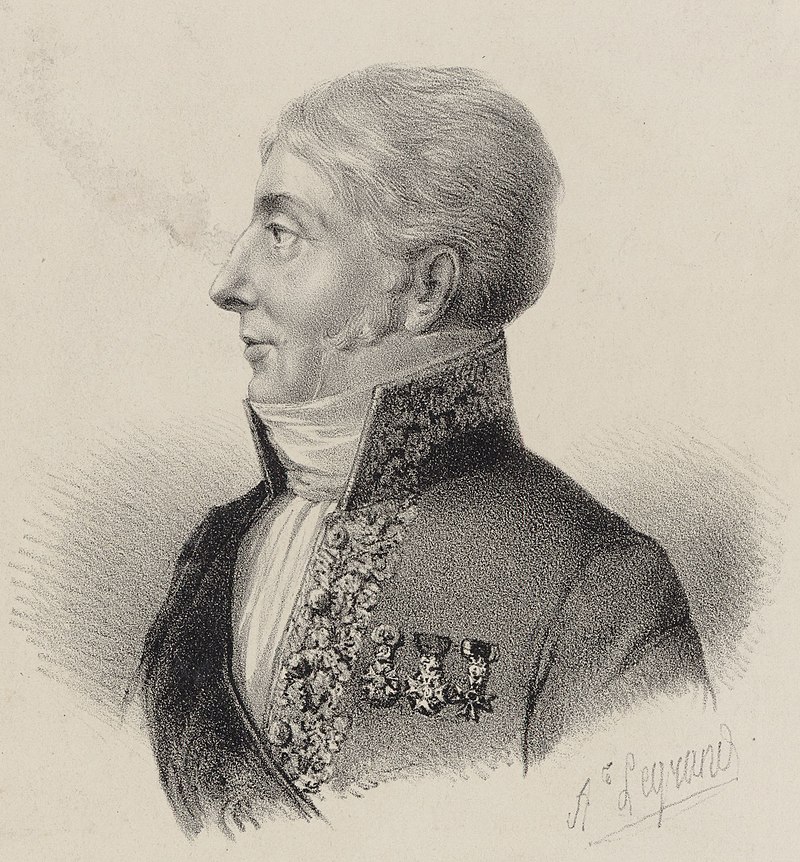
Jean-François Le Sueur, Jean-Francois Lesueur
This file comes from Gallica Digital Library and is available under the digital ID btv1b8421790r

J.F. Le Sueur, membre de l'Institut, surintendant de la musique du roi / Quenedey, d'après le physionotrace
Edme Quenedey des Ricets · This file comes from Gallica Digital Library and is available under the digital ID btv1b8421788p
Key facts
Key facts
• Name — Jean-François Le Sueur • Born — 15 February 1760 • Birthplace — Drucat, France • Died — 6 October 1837 • Place of death — Paris, France • Occupation — composer • Known for — Ossian ou Les bardes
Life
Life
He was born at Plessiel, a hamlet of Drucat near Abbeville, to a long-established family of Picardy, the great-nephew of the painter Eustache Le Sueur. Beginning as a chorister at the collegial church of Abbeville, then at the cathedral of Amiens, where he pursued his music studies, Le Sueur was named chorus master at the cathedral of Sées. He went to Paris to study harmony with the Abbé Nicolas Roze, chorus master at the Saints-Innocents. Le Sueur was named to positions at Dijon (1779), Le Mans (1782), then at Tours (1783) before he succeeded Roze at the Saints-Innocents at Paris. Finally, in 1786, after a competition, he was made music director at Notre-Dame de Paris. For the Feast of the Assumption, he innovated by introducing an orchestra, with great success, and his sacred concerts at the main feasts of the Church filled the cathedral to overflowing but incurred resistance in ecclesiastical circles. He replied by publishing a pamphlet Exposé d'une musique imitative et particulière à chaque solennité (1787). The cathedral chapter decided to reduce its musical budget in a time of financial crisis for France, which constrained Le Sueur to give up the important musical Masses that he specialised in, and to give up his position. He spent some time in London, 1788–92, then returned to revolutionary Paris and gave three successful operas at the Théâtre Feydeau: La Caverne, ou le Repentir (1793), Paul et Virginie, ou le Triomphe de la vertu (1794), which was inspired by the hugely popular novel by Jacques-Henri Bernardin de Saint-Pierre, and the classical Télémaque dans l'île de Calypso, ou le Triomphe de la sagesse (1796). He was named professor at the École de la Garde Nationale, 21 November 1793, then named Inspecteur at the newly founded Conservatoire. In the company of Étienne Nicolas Méhul, Honoré Langlé, François-Joseph Gossec and Charles Simon Catel, he was limited to teaching elementary principles and solfège. Unable to get his operas Ossian, ou Les bardes and La mort d'Adam mounted at the Paris Opéra, Le Sueur published a violent pamphlet, Projet d'un plan général de l'instruction musicale en France, attacking the Conservatoire, its methods and its director, and was discharged, 23 September 1802. Without official appointments, Le Sueur was reduced to poverty when in 1804, Napoleon named him maître de la chapelle at the Tuileries, to replace Giovanni Paisiello. Now he was able to mount his most famous work, Ossian ou Les bardes, with great success at the Opéra and with the Emperor, who made the composer of his favorite opera a Chevalier de la Légion d'honneur. Le Sueur composed the Triumphal March for the coronation of Napoleon, directed a Mass by Paisiello and a Vivat by his former master abbé Roze. In 1813, he was named to the Académie des Beaux-Arts, replacing André Grétry. At the Restoration, he was named composer of the royal chapel and conductor of the orchestra of the Opéra. From the beginning of 1818, he taught composition at the Conservatoire, where over the years he had for pupils Hector Berlioz, Ambroise Thomas, Charles Gounod, Louis Désiré Besozzi and Antoine François Marmontel. He died on 6 October 1837 in Paris.
Oratorios
Oratorios
• Ruth et Noëmi (written by 1811) • Ruth et Booz (written by 1811) • Debbora • Rachel • Oratorio de Noël (Christmas Oratorio) • Three Passion oratorios • Coronation oratorios
Operas
Operas
• Completion — Title — Length — Première — Libretto • 1793 — La caverne — 3 acts — 16 February 1793, Paris, Théâtre Feydeau — Paul Dercy, after Alain-René Lesage's Gil Blas • 1794 — Paul et Virginie ou Le Triomphe de la vertu — 3 acts — 13 January 1794, Paris, Théâtre Feydeau — Alphonse du Congé Dubreuil, after the novel by Jacques-Henri Bernardin de Saint-Pierre • 1796 — Télémaque dans l'île de Calypso ou Le triomphe de la sagesse — 3 acts — 11 May 1796, Paris, Théâtre Feydeau — Paul Dercy • 1804 — Ossian, ou Les bardes — 5 acts — 10 July 1804, Paris, Opéra — Paul Dercy and Jacques-Marie Deschamps • 1807 — L'inauguration du temple de la victoire — 1 act — 2 January 1807, Paris, Opéra — Pierre Baour-Lormian • 1807 — Le triomphe de Trajan [Mostly the work of Persuis] — 3 acts — 23 October 1807, Paris, Opéra — Joseph-Alphonse Esménard • 1809 — La mort d'Adam et son apothéose — 3 acts — 21 March 1809, Paris, Opéra — Nicolas-François Guillard after Friedrich Gottlieb Klopstock • composed 1814-1825 — Alexandre à Babylone — 3 acts — unperformed — Pierre Baour-Lormian
Identity
Identity
Jean-François Le Sueur is recorded as composer, musicologist, music educator and conductor.
Life and career
Dated record
Life and career
The full dated record · 1 entries
1837
Jean-François Le Sueur died in 1837 at Paris.
Places
Named by the record
Places
Only places the record itself states, plotted where the house gazetteer settles their coordinates. Nothing is inferred from a name or a nationality.
Drucat.
Birth place
Paris.
Death place
Notes from the source article
Cited by Wikipedia
Notes from the source article
These works are cited by the source article, in its own numbering. They are recorded as its citations, not as sources VALÉORINE has verified.
Bibliography printed in the source article · 2
- Howard E. Smither A History of the Oratorio, Volume 3: The Oratorio in the Classical Era (University of North Carolina Press, 1977)
- Raoul Rochette., Les Ouvrages de M. Lesueur (Paris. 1839).
References
Citations
References
Each reference names the institution holding it, so a reader may go to the document itself.
reference work
Secondary witnessreference work
Secondary witness
People, houses and institutions
Knowledge graph
People, houses and institutions
Teachers, collaborators, publishers and institutions recorded against this person, each on a stated basis.
Died at
1- ParisPlace
Established from a fact already recorded on a verified source.
Further particulars
Held on the record
Further particulars
Open the remaining particulars
Each of those relationships is stated by the authority record rather than inferred from style.
The Encyclopedia exists whether or not anything is for sale. Corrections are recorded rather than overwritten, and every version of this record is kept. Published 18 August 2026.
Elsewhere in Music memorabilia
42,438 published records in this field, each with its sources named.
- Jean-François DandrieuPerson
- Jean-François HeisserPerson
- Jean-François Jenny-ClarkPerson
- Jean-François LalouettePerson
- Jean-François PaillardPerson
- Jean-François PauzéPerson
- Jean-François ZygelPerson
- Jean-Frédéric EdelmannPerson
Best supported in this field
For owners
Own a work by Jean-François Le Sueur?
A specialist will read what you send and tell you what the house can establish, what it cannot, and whether the object is suited to sale. There is no charge and no obligation. The object stays with you throughout; nothing is shipped to us unless it is arranged in writing beforehand.