
Jean-Baptiste Le Prince
Jean-Baptiste Nicolas Le Prince (September 17, 1734 – September 30, 1781) was an important French etcher and painter. Le Prince first studied painting techniques in his native Metz. He then travelled to Paris around 1750 after being sponsored by Charles Louis Auguste Fouquet de Belle-Isle and became a leading student of the great painter, François Boucher.
Also recorded as Jean Le Prince · Jean Baptiste Leprince · Jean-Baptiste LePrince · Jean Baptiste Le Prince
Jean-Baptiste Le Prince
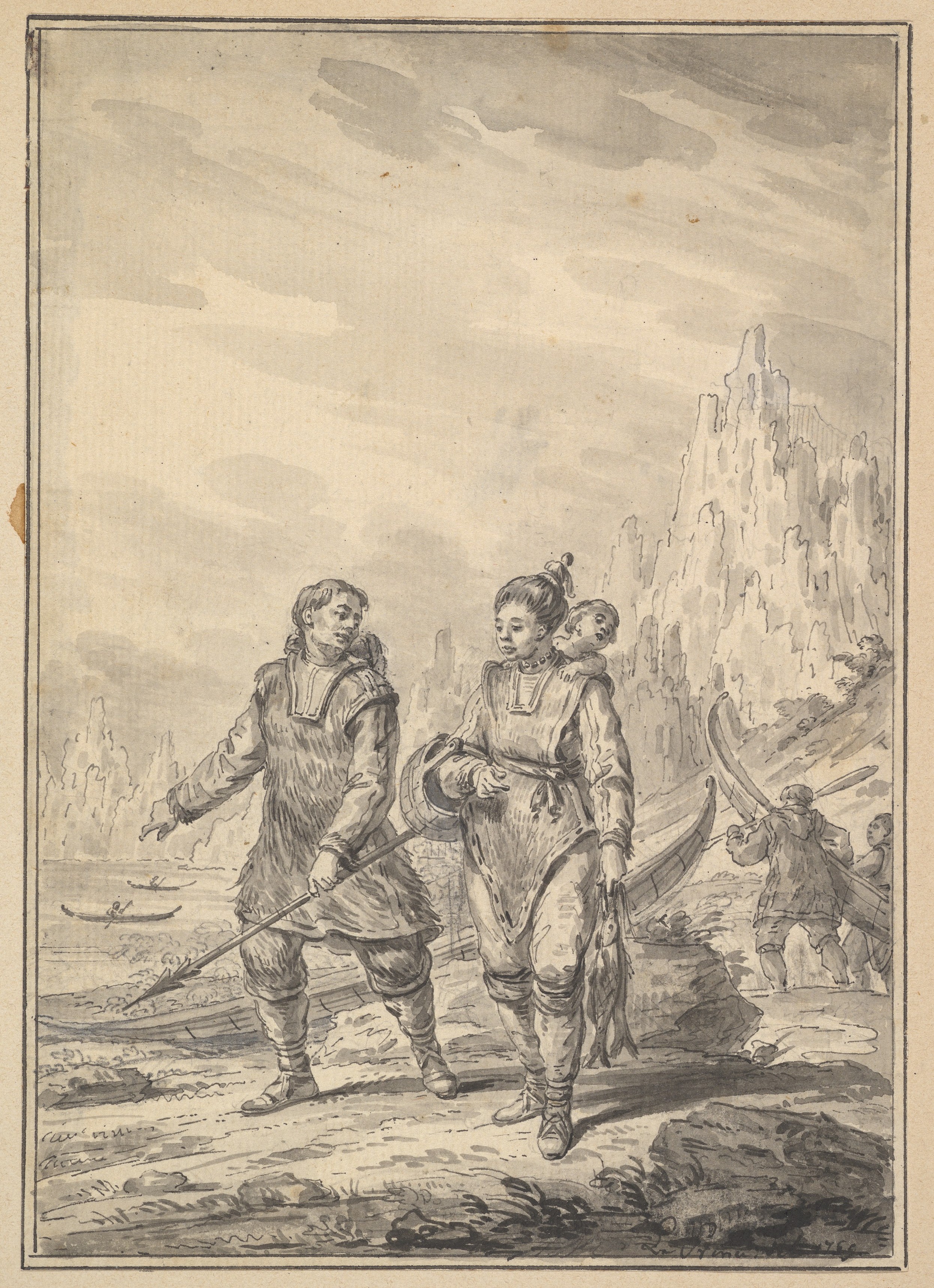
Jean-Baptiste Le Prince · The Metropolitan Museum of Art, New York · Purchase, Guy Wildenstein Gift, 2012 · Public domain (CC0, Met Open Access)
- Name
- Jean-Baptiste Prince
- Born
- 17 September 1734
- Birthplace
- Metz, France
- Died
- 30 September 1781
- Place of death
- Saint-Denis-du-Port, France
- Nationality
- France
- Occupation
- painter · etcher · draftsperson · artist · copper engraver
- Fields
- portrait
- Teachers
- François Boucher
- Known for
- The Cabak and a Tavern outside of Moscow
- Languages
- French
VALÉORINE Encyclopedia
VALÉORINE documentary reading
Documentary summary
Jean-Baptiste Nicolas Le Prince (September 17, 1734 – September 30, 1781) was an important French etcher and painter. Le Prince first studied painting techniques in his native Metz. He then travelled to Paris around 1750 after being sponsored by Charles Louis Auguste Fouquet de Belle-Isle and became a leading student of the great painter, François Boucher.
Admitted source layer · organised and presented by VALÉORINE
Reference Check
Propose documentary evidence for Jean-Baptiste Le Prince. A contribution is never written directly as fact: identity, source, rights and evidence gates still decide.
Sign in to contribute
World of VALÉORINE
Documentary connections
Only confirmed graph relationships appear here. Images are shown only when their identity and reuse rights both pass the documentary gate.
Documentary evidence
Documentary basis
Authority files
wikidata · Q562013 · wikipedia · Jean-Baptiste Le Prince
In this article
Biography
Biography
Le Prince's early paintings in both theme and style are comparable to his master's rococo techniques. He was the half-brother of French author Jeanne-Marie Leprince de Beaumont. In 1758, Le Prince journeyed to Russia to work for Catherine the Great at the Imperial Palace, St. Petersburg, under Francesco Bartolomeo Rastrelli. He remained in Russia for five years and also travelled extensively throughout Finland, Lithuania, and even Siberia. When Le Prince returned to Paris in December 1763, he brought with him an extensive collection of drawings which he employed as the basis for a number of fine paintings and etchings. Le Prince was elected a full member of the Académie de peinture et de sculpture in 1765. Le Prince's graphic art of Russia and its peoples is significant in that he based his compositions entirely upon his own designs, lending a much more realistic portrayal to his views than other eighteenth century contemporaries. He is also credited with being the first artist (in 1768) to introduce aquatint into his etched and engraved plates. He may even have been the inventor of aquatint, the tonal graphic art that would later be so skillfully used by such masters as Goya, Louis-Philibert Debucourt, Delacroix and Thomas Rowlandson.
Training under François Boucher is recorded. Charles Clément Bervic, Jean Baptiste Hilaire and Tavernier de Jonquières are recorded as having studied under Jean-Baptiste Le Prince. The recorded working language is French. Subjects and genres recorded for the work are portrait. Works named in the authority record are The Cabak, a Tavern outside of Moscow. Work by Jean-Baptiste Le Prince is recorded in the collections of Städel Museum, Minneapolis Institute of Art, Art Institute of Chicago, Finnish National Gallery and J. Paul Getty Museum.
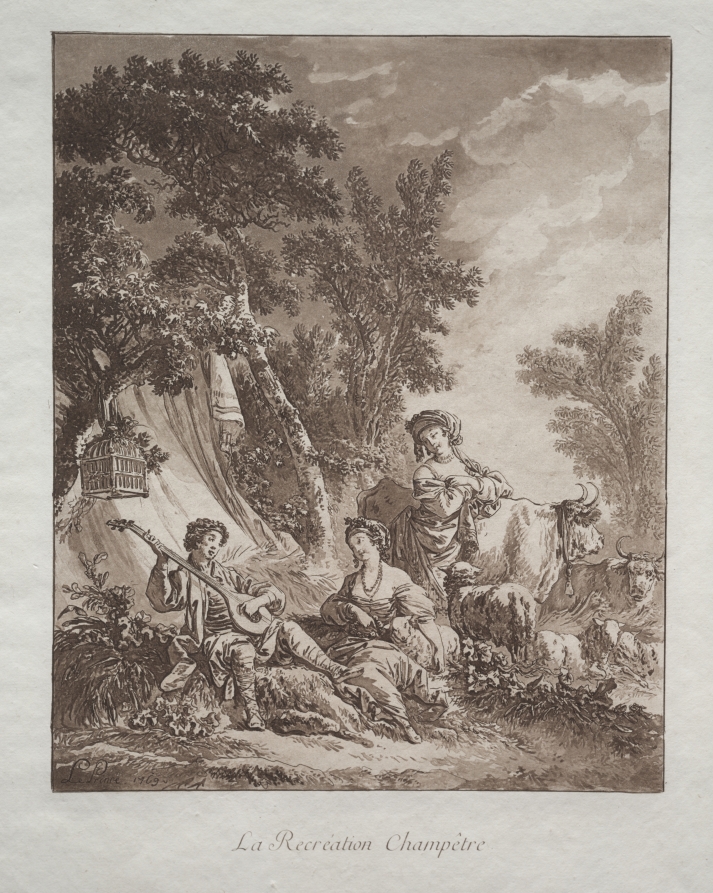
Rural Recreation, 1769, by Jean-Baptiste Le Prince
Jean Baptiste Le Prince · The Cleveland Museum of Art · Gift of The Print Club of Cleveland
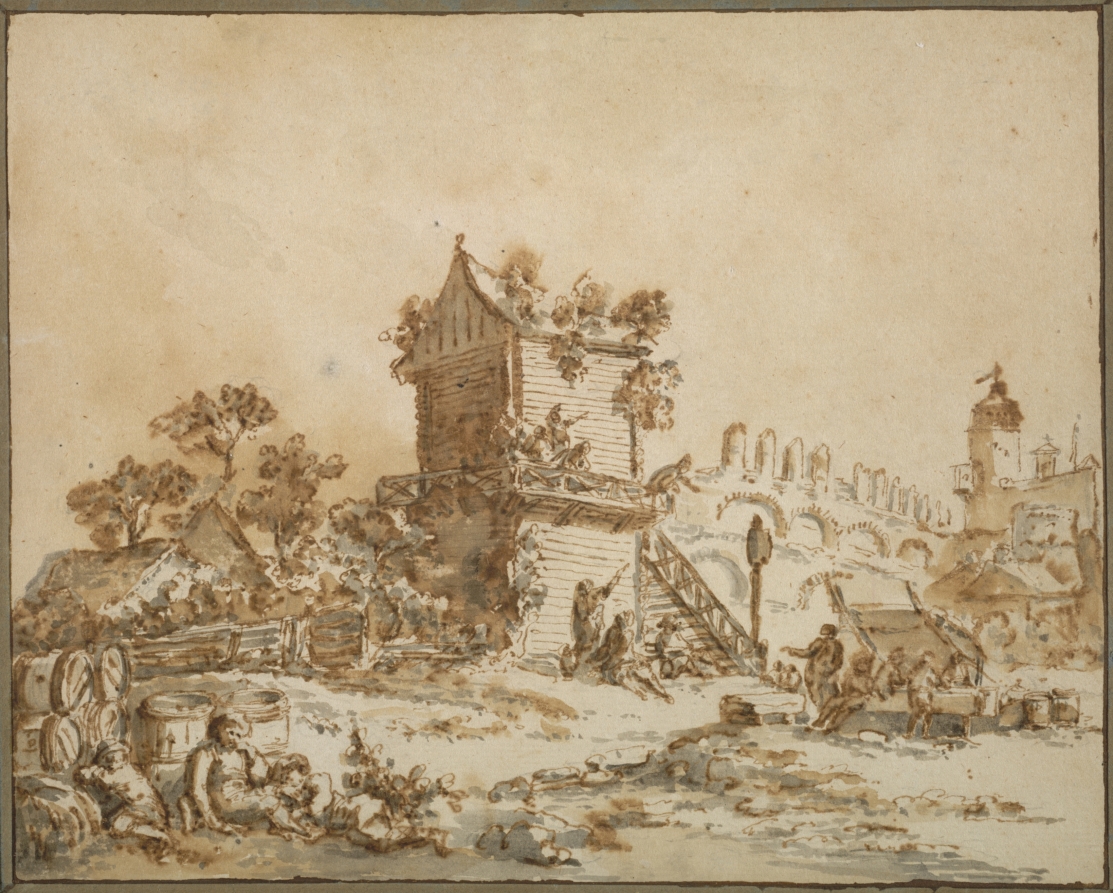
The Moscow Tavern, c. 1773, by Jean-Baptiste Le Prince
Jean Baptiste Le Prince · The Cleveland Museum of Art · Bequest of Muriel Butkin
Key facts
Key facts
• Name — Jean-Baptiste Prince • Born — 17 September 1734 • Birthplace — Metz, France • Died — 30 September 1781 • Place of death — Saint-Denis-du-Port, France • Illustration — Jean-Baptiste Le Prince, The Russian Cradle, oil on canvas, c. 1764–1765, 23 × 29 in. J. Paul Getty Museum, Los Angeles, California
Identity and origins
Identity and origins
The authorities additionally record the headings Jean Le Prince, Jean Baptiste Leprince, Jean-Baptiste LePrince, Jean Baptiste Le Prince and Jean-Baptiste le Prince. His recorded language was French. He was the child of Jean-Baptiste Nicolas Leprince.
Life and career
Dated record
Life and career
Explore 1734–1782
The full dated record · 3 entries
1734
Jean-Baptiste Le Prince born at Metz.
1781
Jean-Baptiste Le Prince died at Lagny-sur-Marne.
1782
Oeuvres de Jean-Baptiste Le Prince, peintre du Roi (1782) is digitised and catalogued by Internet Archive.
Places
Named by the record
Places
Only places the record itself states, plotted where the house gazetteer settles their coordinates. Nothing is inferred from a name or a nationality.
Metz.
Birth place
Lagny-sur-Marne.
Death place
Primary material
Context
The circumstances in which Jean-Baptiste Le Prince stands.
Notes from the source article
Cited by Wikipedia
Notes from the source article
These works are cited by the source article, in its own numbering. They are recorded as its citations, not as sources VALÉORINE has verified.
- 1.Jean-Baptiste Le Prince sur bm.mairie-metz.fr.
- 2.Harvsp Louis Réau, 1921 148-149 id=Réau
- 3.Collection du Louvre : Un Baptême russe
- 4.Roger Portalis, « La gravure en couleurs », dans Gazette des beaux-arts, période, tome 38, 1888, .
- 5.Diderot, Salons, édition de 1876, .
- 6.Saint-Denis-du-Port. 26 juin 2021.
- 7.Exposition au Petit Palais de Paris en mai-juin 1925, Paysage français de Poussin à Corot, au catalogue.
Bibliography printed in the source article · 4
- Jules Hédou. Jean Le Prince et son œuvre, suivi de nombreux documents inédits. Baur et Rapilly. 1879.
- Kimerly Rorschach, Drawings by Jean-Baptiste Le Prince, for the Voyage en Sibérie, with an essay by Carol Jones Neuman, Philadelphie, 1986, (catalogue d’une exposition tenue à Philadelphie, The Rosenbach Museum & Libray, 1986-1987 - Pittsburgh, The Frick Art Museum, 1987 - New York, The Frick Collection 1987).
- Jean-Baptiste Le Prince, catalogue de l’exposition, Metz, musée d’art et d’histoire, 1988.
- Michel Mervaud, Laurent Salomé, Didier Bakhuÿs, Madeleine Pinault-Sorensen, Jean-Baptiste Le Prince, Le Voyage en Russie, catalogue de l'exposition du cabinet des dessins du musée des beaux-arts de Rouen, du au , .
References
Citations
References
Each reference names the institution holding it, so a reader may go to the document itself.
reference work
Secondary witnessreference work
Wikidata, structured authority record Q562013: Jean-Baptiste Le PrinceWikimedia Foundation
Secondary witness
Further particulars
Held on the record
Further particulars
Open the remaining particulars
He trained under François Boucher. Each of those relationships is stated by the authority record rather than inferred from style.
Jean-Baptiste Le Prince is recorded as painter, etcher, draftsperson, artist and copper engraver.
Recognition and collections
Work by Jean-Baptiste Le Prince is
Städel Museum, Minneapolis Institute of Art, Art Institute of Chicago and Finnish National Gallery
The Encyclopedia exists whether or not anything is for sale. Corrections are recorded rather than overwritten, and every version of this record is kept. Published 17 August 2026.
Elsewhere in Paintings
19,261 published records in this field, each with its sources named.
- Jean-Baptiste JeanArtist
- Jean-Baptiste Jules TrayerArtist
- Jean-Baptiste LavastreArtist
- Jean-Baptiste Le PaonArtist
- Jean-Baptiste Louis GrosArtist
- Jean-Baptiste Marie PierreArtist
- Jean-Baptiste MartinArtist
- Jean-Baptiste MauzaisseArtist
Best supported in this field
For owners
Own a work by Jean-Baptiste Le Prince?
A specialist will read what you send and tell you what the house can establish, what it cannot, and whether the object is suited to sale. There is no charge and no obligation. The object stays with you throughout; nothing is shipped to us unless it is arranged in writing beforehand.