
Jacob Huysmans
Illustration — Portrait of Queen Catharine Jacob Huysmans (c. 1633–1696) was a Flemish portrait painter who, after training in his native Antwerp, immigrated to England before the Restoration. He became a feted court painter and attracted the patronage of the Portuguese born queen Catherine of Braganza, a Catholic like himself, of whom he painted several portraits.
Also recorded as Jacob Houseman · Jacob Huysman · Jacob Huisman · Housmans
Jacob Huysmans
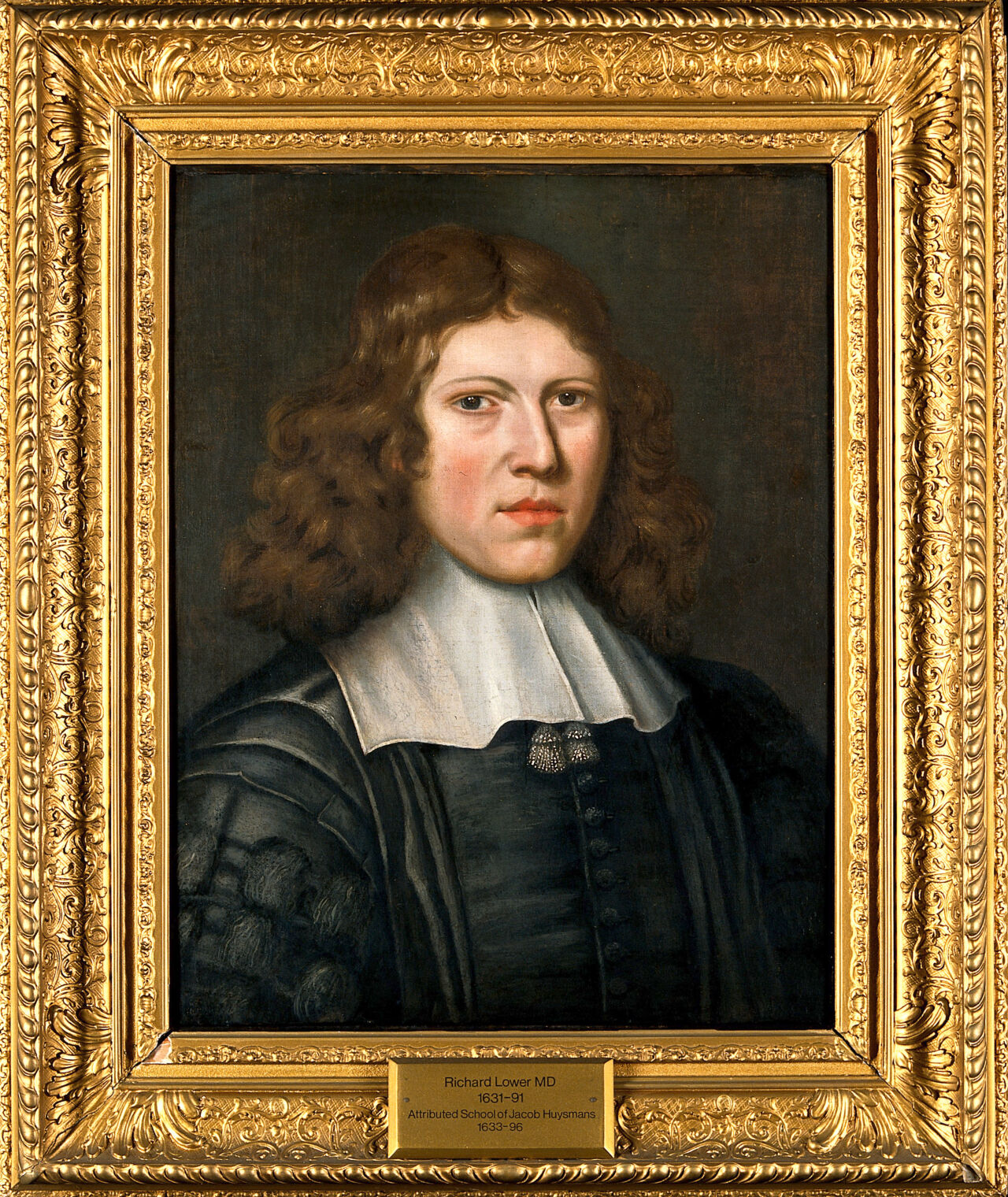
Jacob Huysmans · Wellcome Collection, London · Wellcome Collection · Public Domain Mark
- Born
- 1633 · Antwerp.
- Died
- 1696 · London.
- Nationality
- Habsburg Netherlands
- Occupation
- painter
- Fields
- portrait
- Languages
- English
VALÉORINE Encyclopedia
VALÉORINE documentary reading
Documentary summary
Illustration — Portrait of Queen Catharine Jacob Huysmans (c. 1633–1696) was a Flemish portrait painter who, after training in his native Antwerp, immigrated to England before the Restoration. He became a feted court painter and attracted the patronage of the Portuguese born queen Catherine of Braganza, a Catholic like himself, of whom he painted several portraits.
Admitted source layer · organised and presented by VALÉORINE
Note VALÉORINE
Jacob Huysmans (1633–1696) was a painter, a national of the Habsburg Netherlands. The painter was born in Antwerp and died in London.
The work spans portrait. Languages used include English. Works are held at Dulwich Picture Gallery, Dunham Massey Hall and Frederiksborg Palace, among others.
Composed from admitted, traceable facts · 01 October 2026
VALÉORINE
Reference Check
Propose documentary evidence for Jacob Huysmans. A contribution is never written directly as fact: identity, source, rights and evidence gates still decide.
Sign in to contribute
World of VALÉORINE
Documentary connections
Only confirmed graph relationships appear here. Images are shown only when their identity and reuse rights both pass the documentary gate.

Documentary evidence
Documentary basis
Authority files
wikidata · Q2293923 · wikipedia · Jacob Huysmans
In this article
Life
Life
The recorded working language is English. Subjects and genres recorded for the work are portrait. Work by Jacob Huysmans is recorded in the collections of National Gallery of Victoria, Tate, National Portrait Gallery, Dulwich Picture Gallery and National Library of Wales.
He is believed to have been born in Antwerp. A number of his family members also became artists: he was the uncle of Cornelis and Jan Baptist Huysmans, both landscape painters. Huysmans trained in Antwerp and was a pupil of the history painters Gillis Backereel and Frans Wouters. • Illustration — Edward Henry Lee, 1st Earl of Lichfield, and his wife Charlotte Fitzroy as children Huysmans moved to England, according to some sources before the Restoration in 1660. He is first recorded in England in 1662. Here he first started out as a painter of pastiches in a reduced format of history paintings by Anthony van Dyck. He subsequently was able to establish himself as a portrait painter at the court of Charles II. As a Roman Catholic he was in particular favoured by the Queen Catharine of Braganza, a Catholic from Portugal. The famous diarist Samuel Pepys visited the workshop of Huysman (to whom he referred as 'Hiseman') in Westminster on 26 August 1664 and described Huysmans as a 'picture-drawer... which is said to exceed Lilly (Lely), and indeed there is both of the Queenes and Mayds of Honour (particularly Mrs. Stewart's in a buff doublet like a soldier) as good pictures, I think, as ever I saw.' Queen Catharine as a Shepherdess (c. 1664, British Royal Collection) and the Queen as St Catherine of Alexandria (of which there are various versions) were among the pictures Pepys saw on that occasion. While he spent the majority of his career in London, Huysmans resided for a while in Chichester in Sussex following the Great Fire of London. This may have been to escape the threat of anti-Catholic retaliation prevalent in London at this time. Allegations that Catholics had started the fire were exploited as powerful political propaganda by opponents of pro-Catholic Charles II's court, mostly during the Popish Plot and the exclusion crisis later in Charles' reign. • Illustration — Elizabeth Cornwallis, Mrs Edward Allen (d. 1708), as Diana the Huntress Huysmans died in Jermyn Street, London, in 1696, and was buried in St. James's Church in Piccadilly, a church for which he had painted an altarpiece in the chapel of the Queen.
General
General
Jacob Huysmans was principally a portrait painter. Upon his arrival in England he did, however, rely on his skills as a history painter creating small pastiches of religious and mythological scenes by Anthony van Dyck. Even after having established himself as a portrait painter to the elite, he still painted history subjects and is known to have created religious compositions for his patron Queen Catherine of Braganza. His religious and historical paintings are more sober in style than his portraits. Huysmans influenced David des Granges (1611–1675). Huysmans' style has been described as exuberant, a quality that made it particularly appealing to the Portuguese-born Queen Catherine. His style and handling of paint and application of colour are close to the Italianate Baroque style of Anthony van Dyck. His palette is characterized by the use of high-keyed colours, reddish lights in the flesh tones, and a smooth, glossy finish. Huysmans was particularly skilled in rendering the rich colours and textures of sumptuous clothes worn at the court. He liked showing the interplay of light, colour and contrasting textures, crumpled satin against porcelain skin or glossy ringlets interwoven with jewel-like flowers. Huysmans had a preference for depicting his sitters in costume and with props placed in theatrical settings and including allegorical symbols. The grandeur he bestowed on his sitters evokes the work of the Italian painter Guido Reni and the 17th-century Bolognese school. • Illustration — John Maitland, Duke of Lauderdale Huysmans painted many of his female sitters as shepherdesses with clothing embellished with embroidery and jewellery. He also often depicted female sitters as religious or classical figures. Three renderings of ladies in the role of the Roman goddess Diana by his hand are known: the Lady Elizabeth Pope as Diana (Canons Ashby, Northamptonshire), Elizabeth Cornwallis, Mrs Edward Allen, as Diana the Huntress (National Trust, Hatchlands) and Portrait of an unknown lady as Diana (Tate Britain). These portraits follow a standard format depicting Diana with a hunting spear, together with a few hounds from her hunting pack and sharply delineated drapery. The presentation was aimed to highlight the beauty, purity and chastity of the sitter. The pose of the goddess as well as the greyhounds with star studded collar are likely references to the Virgin Mary who in popular Catholic images of the Immaculate Conception was often depicted with a crown of stars. In a similar pastoral vein are situated some portraits of children by Huysmans. Examples are the Family portrait of three aristocratic children with a sheep decorated with a floral wreath and a dog (At Dorotheum Vienna on 19 April 2016 lot 258) and the Portrait of Edward Henry Lee, 1st Earl of Lichfield, and his wife Charlotte Fitzroy as children (National Gallery of Victoria). The latter work depicts Edward Henry Lee (1663–1716), a Catholic and Charlotte Fitzroy, the illegitimate and preferred daughter of Charles II and his mistress Barbara Villiers. The two had become betrothed as children and Huysmans' painting shows the pair as children. The painting contains hidden allusions to the Catholic faith, which was illegal at the time despite Charles II's religious tolerance. The peacock symbolizes the resurrection of Christ and Christ as a gardener. • Illustration — Frances Stewart, later Duchess of Richmond
Portraits of the Queen
Portraits of the Queen
One of the most important patrons of Huysmans was Queen Catherine of whom he painted many portraits. In 1683, Catherine also commissioned an opulent altarpiece and cupola for her Chapel in St James's Palace in London. The quantity of portraits Huysmans painted of the Queen and her maids of honour suggest that he was her principal painter. Possibly the Queen favored Huysmans to distance herself from her husband's mistress Barbara Villiers, who patronized Lely. His portrait of Queen Catharine as a Shepherdess (c. 1664, British Royal Collection) is one of his most famous paintings, and is the one which Pepys saw in his studio and had caused him to praise Huysmans abundantly. Catherine is depicted in the guise of a shepherdess, sitting by a stream. A sprig of orange blossom in her hair symbolizes love, marriage and fruitfulness. Her left hand rests on the head of a lamb, possibly a symbol of the virtues of innocence, purity and humility. A Cupid is bringing her flowers in a large handkerchief. Other small cupids play among the trees in the background. Another portrait of the Queen seen by Pepys in Huysmans' studio was a depiction of the Queen as Saint Catherine of Alexandria of which various versions exist of which one in the Royal Collection of the United Kingdom. The Queen is portrayed as St. Catherine of Alexandria, with a martyr's palm in her right hand and her left resting upon the broken wheel on which the Catholic saint was martyred. The Queen was born on the feast of St. Catherine and being painted as the saint became a fashionable way for female courtiers to demonstrate respect to the new Queen.
Portrait of John Wilmot, 2nd Earl of Rochester
Portrait of John Wilmot, 2nd Earl of Rochester
• Illustration — Portrait of John Wilmot, 2nd Earl of Rochester Another well-known painting by Huysmans is the Portrait of John Wilmot, 2nd Earl of Rochester, the famous rake, poet and courtier at King Charles II's court (The original auctioned at Sotheby's London on 9 July 2014 lot 42, a copy in the National Portrait Gallery, London). The composition was likely painted not long before Rochester's death. An important variation in the copy of the portrait in the National Portrait Gallery is the addition of red shoulder tabs to his costume which has the effect of 'normalizing' the image. Rochester is believed to have contributed important elements to the design of the composition, in particular, the monkey. Rochester is known to have kept a pet monkey, which he allegedly trained to defecate on people and probably served as the model for the painting. The composition portrays Rochester holding a manuscript in one hand and apparently bestowing the poet's laurels on a monkey with the other. The monkey has torn pages from a book which he is handing back to the poet. Monkeys feature prominently in Rochester's writing in which they serve as a symbol of the folly and presumption of man. The painting could therefore be read as a satirical and self-deprecating depiction of Rochester. Other interpretations of the portrait have been offered. Some art historians have posited that it should be read as a satire on John Dryden, the English poet with whom Rochester had a tense relationship. In this interpretation, Rochester's right hand is seen as removing the laurel rather than bestowing it. When someone is crowned with a laurel it would normally be done using both hands not one hand. The monkey would represent John Dryden who is being 'de-laureled' by Rochester, a threat which Rochester had made in his Allusion to Horace.
Life and career
Dated record
Life and career
The full dated record · 2 entries
1633
Jacob Huysmans was born in 1633 at Antwerp.
1696
Jacob Huysmans died in 1696 at London.
Places
Named by the record
Places
Only places the record itself states, plotted where the house gazetteer settles their coordinates. Nothing is inferred from a name or a nationality.
Antwerp.
Birth place
London.
Death place
Primary material
Documents and archives
reference work
- “Jacob Huysmans”, English Wikipedia, consulted as further reading
Reputable secondary · Wikipedia
authority record
- Wikidata, structured authority record Q2293923: Jacob Huysmans
General reference · Wikidata
Notes from the source article
Cited by Wikipedia
Notes from the source article
These works are cited by the source article, in its own numbering. They are recorded as its citations, not as sources VALÉORINE has verified.
- 1.Also known as: Jacob Houseman, Jacob Huisman, Jacob Huysman
- 2.Oliver Millar. "Huysmans, Jacob." Grove Art Online. Oxford Art Online. Oxford University Press. Web. 2 July 2017
- 3.Jacob Huysmans, Portrait of General Monck at Philip Mould
- 4.Clarissa Campbell Orr, Queenship in Britain, 1660-1837: Royal Patronage, Court Culture, and Dynastic Politics, Manchester University Press, 2002, pp. 60–61
- 5.Jacob Huysmans, Portrait of John Wilmot, 2nd Earl of Rochester at Sotheby's
- 6.The Diary of Samuel Pepys, Friday 26 August 1664
- 7.Porter, Stephen. The great fire of London. Oxford University Press. October 2006.
- 8.Jacob Huysmans, National Dictionary of Biography
- 9.Tabitha Barber, Jacob Huysmans, Portrait of a Lady, as Diana at Tate Britain
- 10.Jacob Huysmans at the Netherlands Institute for Art History
- 11.Jacob Huysmans, Elizabeth Cornwallis, Mrs Edward Allen (d. 1708), as Diana the Huntress at the National Trust
- 12.Jacob Huysmans (Attributed), A family portrait of three aristocratic children with a sheep decorated with a floral wreath and a dog at Dorotheum
- 13.Jacob Huysmans, 'Portrait of Edward Henry Lee, 1st Earl of Lichfield, and his wife Charlotte Fitzroy as children at the National Gallery of Victoria)
- 14.Jacob Huysmans, Queen Catherine as a Shepherdess at the Royal Collection Trust
- 15.Jacob Huysmans, Queen Catherine of Braganza as Saint Catherine of Alexandria at the Royal Collection of the United Kingdom.
- 16.Nicholas Fisher, That Second Bottle: Essays on the Earl of Rochester, Manchester University Press, 15 December 2000, pp. 85–86
References
Citations
References
Each reference names the institution holding it, so a reader may go to the document itself.
reference work
Secondary witnessauthority record
General reference
Further particulars
Held on the record
Further particulars
Open the remaining particulars
The authorities additionally record the headings Jacob Houseman, Jacob Huysman, Jacob Huisman, Housmans and J. His recorded language was English. Recorded as a citizen of Habsburg Netherlands. Recorded with the occupation painter. Classed in the genre portrait.
Identity and origins
The Encyclopedia exists whether or not anything is for sale. Corrections are recorded rather than overwritten, and every version of this record is kept. Published 17 August 2026.
Elsewhere in Paintings
18,623 published records in this field, each with its sources named.
- Jacob GilligArtist
- Jacob GløersenArtist
- Jacob HäggArtist
- Jacob HoefnagelArtist
- Jacob Jan van der MaatenArtist
- Jacob KornerupArtist
- Jacob LevecqArtist
- Jacob LeyssensArtist
Best supported in this field
For owners
Own a work by Jacob Huysmans?
A specialist will read what you send and tell you what the house can establish, what it cannot, and whether the object is suited to sale. There is no charge and no obligation. The object stays with you throughout; nothing is shipped to us unless it is arranged in writing beforehand.