
Giovanni Battista Foggini
Giovanni Battista (Giambattista) Foggini (25 April 1652 – 12 April 1725) was an Italian sculptor active in Florence, renowned mainly for small bronze statuary.
Also recorded as Giovan Battista Foggini · Foggini · Gio Baptista Foggini · J.B. Foggini
Giovanni Battista Foggini
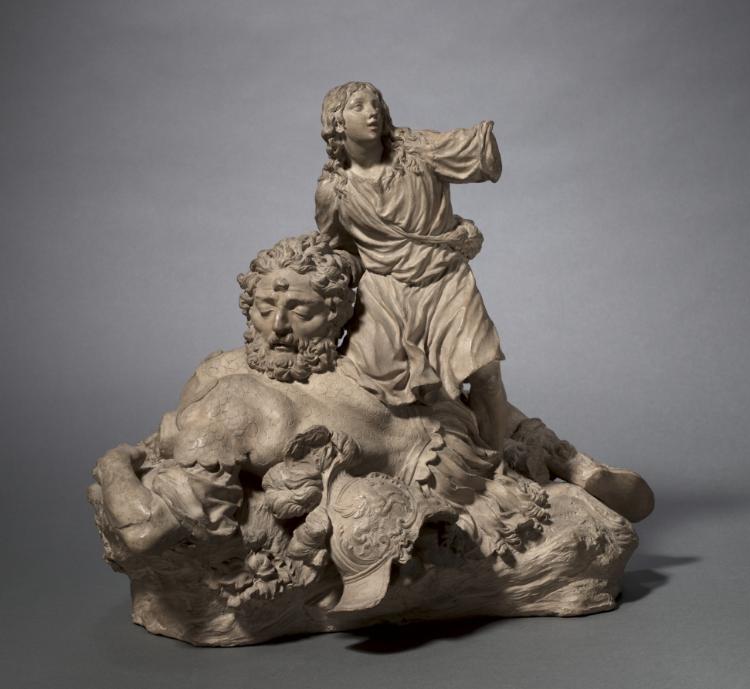
Giovanni Battista Foggini · The Cleveland Museum of Art · Gift of Harold T. Clark in memory of Mrs. William B. Sanders · CC0
- Name
- Giovanni Battista Foggini
- Born
- 25 April 1652
- Birthplace
- Florence, Grand Duchy of Tuscany
- Died
- 12 April 1725
- Known for
- Sculpture
- Movement
- Baroque
- Nationality
- Grand Duchy of Tuscany
- Occupation
- sculptor · architect
- Fields
- art of sculpture
- Teachers
- Ciro Ferri
- Languages
- Italian
VALÉORINE Encyclopedia
VALÉORINE documentary reading
Documentary summary
Giovanni Battista (Giambattista) Foggini (25 April 1652 – 12 April 1725) was an Italian sculptor active in Florence, renowned mainly for small bronze statuary.
Admitted source layer · organised and presented by VALÉORINE
Reference Check
Propose documentary evidence for Giovanni Battista Foggini. A contribution is never written directly as fact: identity, source, rights and evidence gates still decide.
Sign in to contribute
World of VALÉORINE
Documentary connections
Only confirmed graph relationships appear here. Images are shown only when their identity and reuse rights both pass the documentary gate.
Documentary evidence
Documentary basis
Authority files
wikidata · Q1353158 · wikipedia · Giovanni Battista Foggini
In this article
Biography
Biography
Training under Ciro Ferri is recorded. Ferdinando Fuga is recorded as having studied under Giovanni Battista Foggini. The recorded working language is Italian. The field of work recorded is art of sculpture. Places of work recorded in the authority are Florence. Positions recorded include court painter. Works named in the authority record are Bust of Amerigo Vespucci, Cardinal Gian Carlo de' Medici, Portrait of Cosimo III de' Medici and Portrait of Cosimo the 3rd de' Medici. Work by Giovanni Battista Foggini is recorded in the collections of Minneapolis Institute of Art, Museo del Prado, J. Paul Getty Museum, National Gallery of Canada and Victoria and Albert Museum.
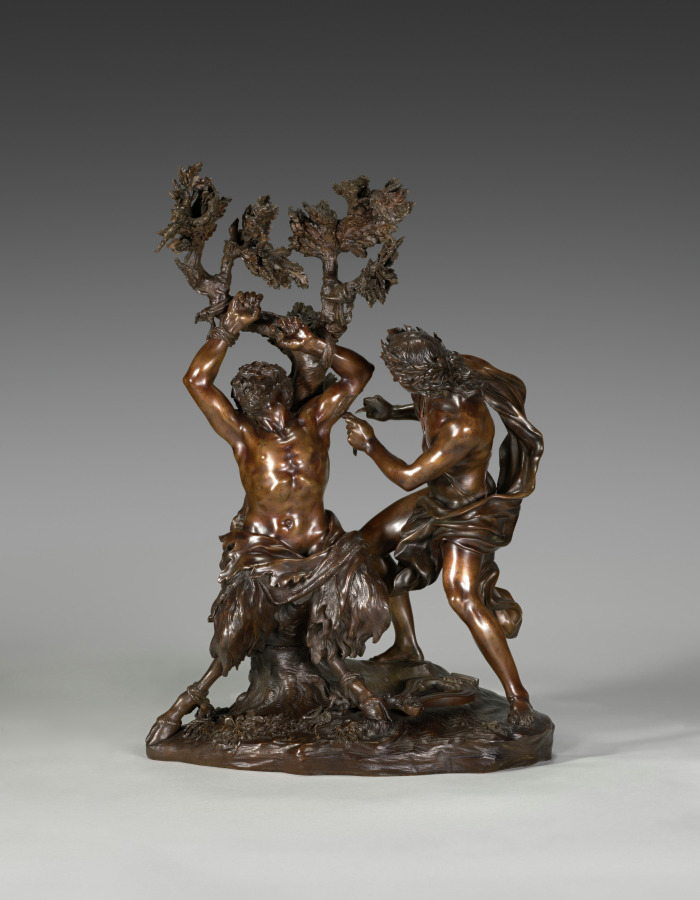
Apollo Flaying Marsyas, c. 1691–1700, by Giovanni Battista Foggini
Giovanni Battista Foggini · The Cleveland Museum of Art · Leonard C. Hanna Jr. Fund
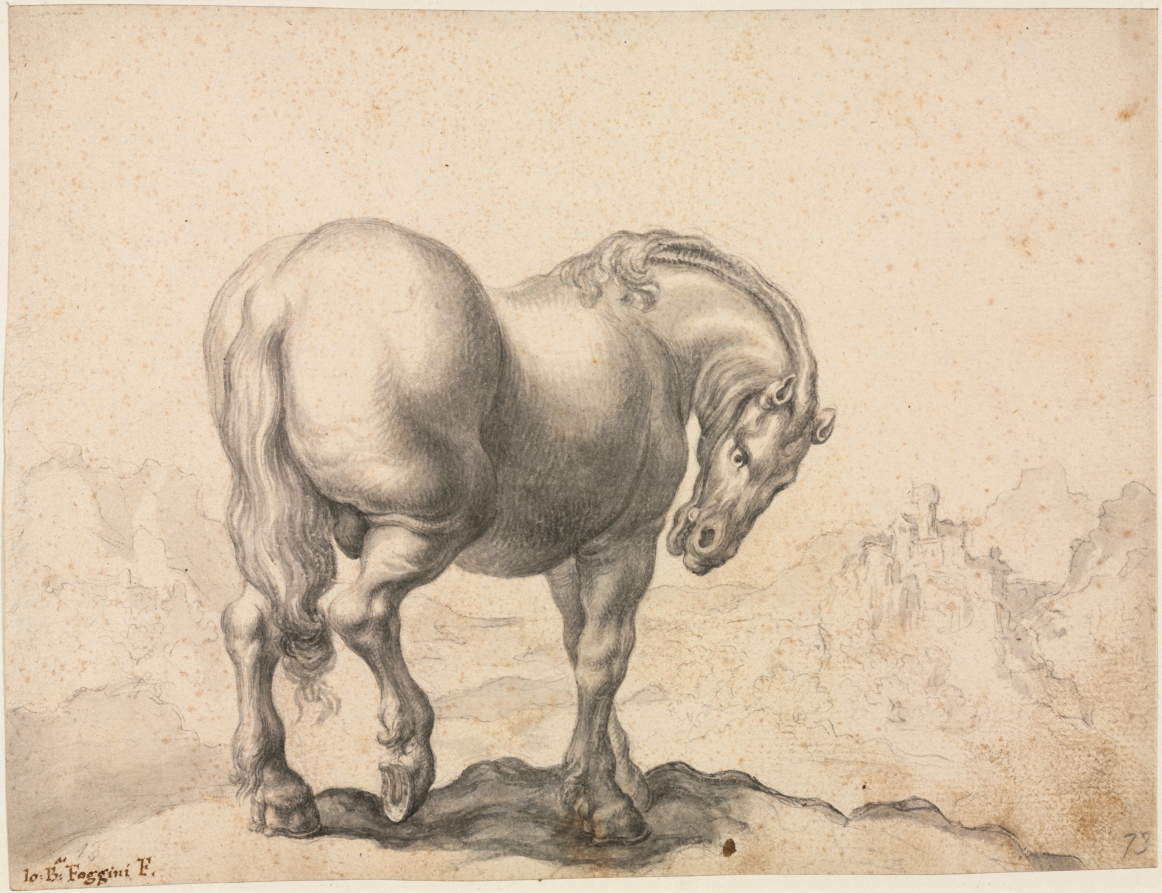
Study of a Stallion, first third 18th century?, by Giovanni Battista Foggini
Giovanni Battista Foggini · The Cleveland Museum of Art · Delia E. Holden Fund
Key facts
Key facts
• Name — Giovanni Battista Foggini • Born — 25 April 1652 • Birthplace — Florence, Grand Duchy of Tuscany • Died — 12 April 1725 • Place of death — Florence, Grand Duchy of Tuscany • Known for — Sculpture • Movement — Baroque
Biography
Biography
Born in Florence, the young Foggini was sent to Rome by the Medici Grand Duke of Tuscany to join the so-called Accademia Fiorentina, and apprentice in the Roman sculptural studio of Ercole Ferrata, a pupil of Algardi. He was also tutored in drawing by the Accademia's first director (1673–86), Ciro Ferri, who was a pupil of Cortona. Returning to Florence in 1676, he became the court sculptor for Cosimo III. After the son of Pietro Tacca, Fernando, died in 1686, the mantle of the premier local sculptor fell to Foggini, who would become the Medici's Architetto Primario e Primo scultore della Casa Serenissima as well as Soprintendente dei Lavori (1687–1725). In 1687, Foggini acquired the foundry in Borgo Pinti that had once belonged to the sculptor Giambologna. This allowed him to specialize in small bronzes, produced mainly and profitably for export. Nearly 400 of Foggini's designs for sculpture, bronze statuettes, furniture and ornaments have survived. Their sculptural quality, the combination of hardstone with mounts which are not merely decorative but often sculptural works of art in their own right, playing a much more dominant role in the total ensemble, characterizes the works made in this period, and distinguishes them from earlier products of the Florentine workshops, or the pieces made by Florentine craftsmen for the Gobelins in Paris. Among his small bronzes David with the Head of Goliath is particularly noteworthy. His adaptation of Pietro Tacca's Moors was the basis of bronze and ceramic reproductions for the connoisseur market well into the 18th century. Many of Foggini’s designs were carved by Giuseppe Antonio Torricelli, and resulted in some of the latter’s best work. In Florence, his masterpieces are his sculptural relief work in the Capella Corsini of the Chiesa del Carmine. The Corsini Chapel was erected by Bartolomeo and Cardinal Neri Corsini in memory of their recently canonized ancestral family member, San Andrea Corsini. Foggini's large marble reliefs depict the saint's life: San Andrea in Glory, The Mass of San Andrea Corsini and The Battle of Anghiari (1685–87). Foggini's works from this period also include the reliefs realized for the Cappella Feroni in the Annunziata. Foggini's pupils included Fernando Fuga, his nephew Filippo della Valle, Balthasar Permoser, Giovacchino Fortini and Giovanni Baratta. Massimiliano Soldani Benzi was a contemporary student with Foggini in Rome and also active in small bronze sculpture. Foggini's many pupils prolonged his style well past the middle of the 18th century and until the advent of Neoclassicism.
Gallery
Gallery
• Illustration — Grand Duke of Tuscany Cosimo III de' Medici - 1683 - Metropolitan Museum of Art, New York City • Illustration — Grand Prince Ferdinando de Medici - Giovanni Battista Foggini - 1683 - Metropolitan Museum of Art - New York City • Illustration — Ferdinando II de' Medici, Grand Duke of Tuscany - 1690 - National Gallery of Art, Washington, DC • Illustration — Bust of Cosimo III de' Medici, 1717-1718 CE. By Giovanni Battista Figgini. Marble, from Italy, Florence. The Victoria and Albert Museum, London • Illustration — Red Marsyas, Florence, Uffizi • Illustration — Bust of Paolo Querini, Pinacoteca Querini Stampalia, Venice • Illustration — Bust of the Archduchess Maria Maddalena of Austria, Florence, Uffizi • Illustration — Allegory of Abundance, Collections of the Cassa di Risparmio di Firenze • Illustration — Satyr, Palazzo Medici Riccardi, Florence • Illustration — Bronze reliefs of Francis Xavier's shrine, Basilica of Bom Jesus, Old Goa • Illustration — Chained captive, Asia by Foggini • Illustration — Chained captive, Africa by Foggini
Life and career
Dated record
Life and career
The full dated record · 2 entries
1652
Giovanni Battista Foggini born at Florence.
1725
Giovanni Battista Foggini died at Florence.
Primary material
Documents and archives
scholarly publication
- AN ACADEMY DRAWING BY CIRO FERRI AND GIOVANNI BATTISTA FOGGINI, Source: Notes in the History of Art, 1982
Scholarly · Crossref registry · 1982
- Giovanni Battista Foggini et la sculpture à Florence à l'époque des derniers Médicis (1670-1737) : la condition sociale de l'artiste et la pratique du dessin
Scholarly · Crossref registry
reference work
- Wikidata, structured authority record Q1353158: Giovanni Battista Foggini
Reputable secondary · Wikimedia Foundation
- “Giovanni Battista Foggini”, English Wikipedia, consulted as further reading
Reputable secondary · Wikipedia
Notes from the source article
Cited by Wikipedia
Notes from the source article
These works are cited by the source article, in its own numbering. They are recorded as its citations, not as sources VALÉORINE has verified.
- 1.Kurt Lankheit, Florentinische Barockplastik, 1962; The Twilight of the Medici: Late Baroque Art in Florence, 1670-1743, (Florence 1974).
- 2.See Foggini's portrait of the duke.
- 3.Cannon-Brookes, p. 778.
- 4.See Web Gallery of Art image.
- 5.An example is in the Cleveland Museum of Art (Frederick Den Broeder and John D. Cooney, "Giovanni Battista Foggini: David with the Head of Goliath", The Bulletin of the Cleveland Museum of Art 54.1 [January 1967:22-26]).
- 6.See Anthea Brook's article in The Slave in European Art: From Renaissance Trophy to Abolitionist Emblem, ed. Elizabeth McGrath and Jean Michel Massing, London (The Warburg Institute) and Turin 2012.
- 7.Died 1373 and canonized in 1629 by Urban VIII.
Bibliography printed in the source article · 3
- Wittkower, Rudolf. Pelican History of Art. Penguin Books. 1993.
- Boucher, Bruce. Italian Baroque Sculpture. 164–66; 188–89. 1998.
- Gli Ultimi Medici, Review by Peter Cannon-Brookes, in The Burlington Magazine, 1974, pp. 777-80.
References
Citations
References
Each reference names the institution holding it, so a reader may go to the document itself.
scholarly publication
AN ACADEMY DRAWING BY CIRO FERRI AND GIOVANNI BATTISTA FOGGINI, Source: Notes in the History of Art, 1982Crossref registry
Institutional witnessscholarly publication
Institutional witnessreference work
Wikidata, structured authority record Q1353158: Giovanni Battista FogginiWikimedia Foundation
Secondary witnessreference work
Secondary witness
Further particulars
Held on the record
Further particulars
Open the remaining particulars
The authorities additionally record the headings Giovan Battista Foggini, Foggini, Gio Baptista Foggini, J.B. Foggini and giovanni baptista foggini. His recorded language was Italian. Formation and teaching. He trained under Ciro Ferri. Each of those relationships is stated by the authority record rather than inferred from style. Foggini worked in art of sculpture. His work is associated with Baroque. Recorded position is court painter. He worked at Florence. Work and production. Works recorded as notable number 4: Bust of Amerigo Vespucci, Cardinal Gian Carlo de' Medici, Portrait of Cosimo III de' Medici and Portrait of Cosimo the 3rd de' Medici.
Identity and origins
Career and activity
Recognition and collections
Work by Giovanni Battista Foggini is
Minneapolis Institute of Art, Museo del Prado, J. Paul Getty Museum and National Gallery of Canada
The Encyclopedia exists whether or not anything is for sale. Corrections are recorded rather than overwritten, and every version of this record is kept. Published 16 August 2026.
Elsewhere in Sculpture
6,174 published records in this field, each with its sources named.
- Giovanni Battista CarboniArtist
- Giovanni Battista CrescenziArtist
- Giovanni Battista CrespiArtist
- Giovanni Battista FiammeriArtist
- Giovanni Battista MainiArtist
- Giovanni Battista MarmiArtist
- Giovanni CasiniArtist
- Giovanni da NolaArtist
Best supported in this field
For owners
Own a work by Giovanni Battista Foggini?
A specialist will read what you send and tell you what the house can establish, what it cannot, and whether the object is suited to sale. There is no charge and no obligation. The object stays with you throughout; nothing is shipped to us unless it is arranged in writing beforehand.