
Finance University under the Government of the Russian Federation
Also recorded as Government of the Russian Federation, Financial University · Financial University under the Government of the Russian Federation
Finance University under the Government of the Russian Federation
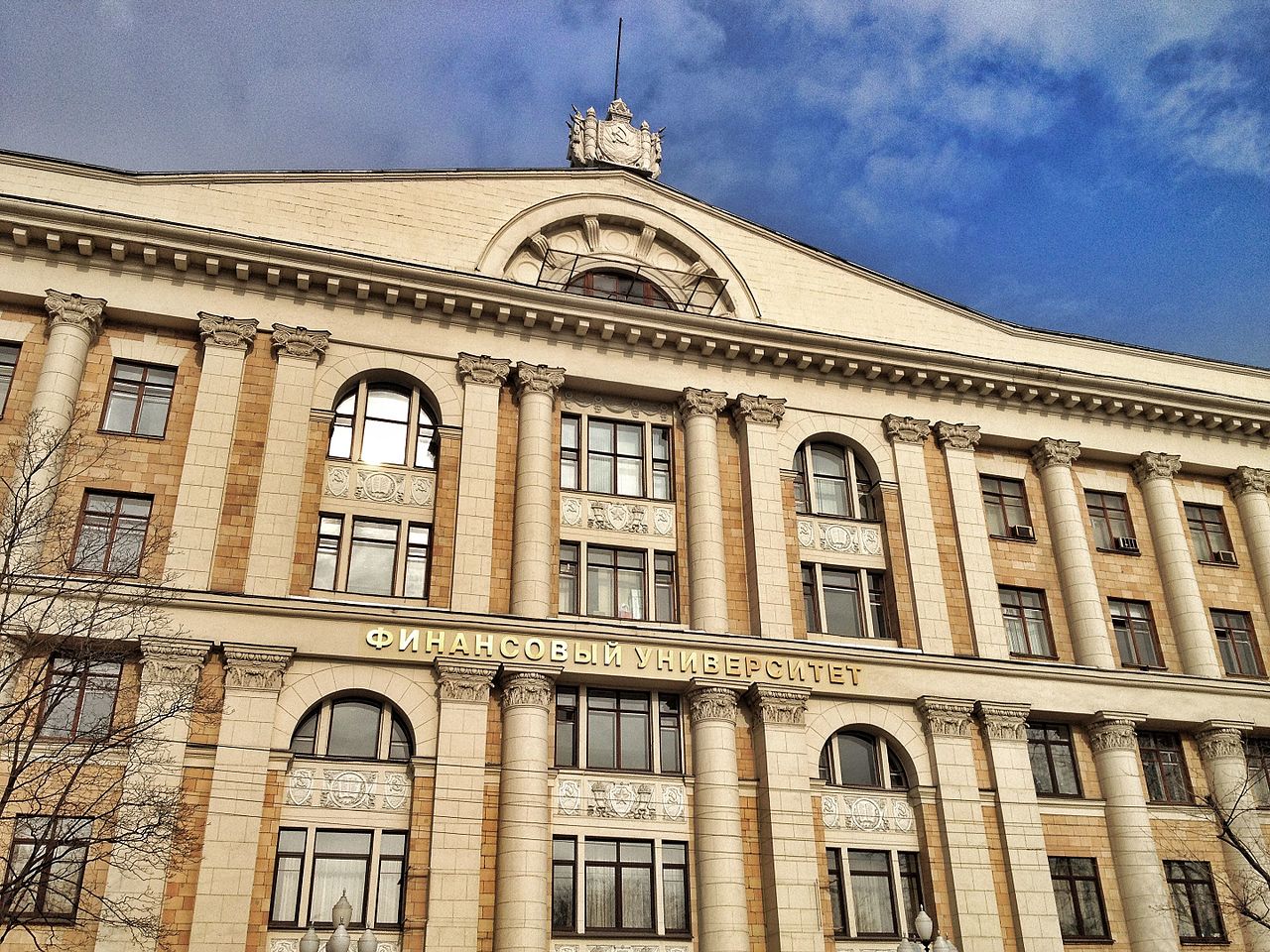
Kukusru · CC BY-SA 4.0
- Name
- Finance University under the Government of the Russian Federation (FinU/FA)
- Founded
- 1919.
- Headquarters
- Moscow.
Reference Check
Propose documentary evidence for Finance University under the Government of the Russian Federation. A contribution is never written directly as fact: identity, source, rights and evidence gates still decide.
Sign in to contribute
World of VALÉORINE
Documentary connections
Only confirmed graph relationships appear here. Images are shown only when their identity and reuse rights both pass the documentary gate.
Documentary evidence
Documentary basis
Authority files
wikidata · Q1416632 · wikipedia · Financial University under the Government of the Russian Federation
In this article
Key facts
Key facts
• Name — Finance University under the Government of the Russian Federation (FinU/FA) • Motto — Ценим прошлое, но основываясь на достигнутом, строим будущее! (Russian) • Motto Eng — We appreciate the past, we look at what we've achieved, and we build the future! • Established — 1919 • Type — Public • Endowment — 268 million RUB (2017) • Rector — Stanislav Prokofiev • President — Mikhail Eskindarov • Faculty — 2,999 • Students — 47,245 (2021/2022) • Undergrad — 35,242 (2021/2022) • Postgrad — 4,103 (2021/2022) • Doctoral — 340 • Address — Leningradsky Prospekt 49 • City — Moscow • Country — Russia • Former Names — Moscow Institute of Economics and Finance, Moscow Finance Institute, State Finance Academy, Finance Academy under the Government of the Russian Federation • Colors — Dark Turquoise • Other Names — FinU, FinUniversity, FinUni, FinUniver, Financial University, (obsolete Finance Academy or FA in colloquial use) • Website — http: www.fa.ru/
Key facts
Key facts
• Qs Eeca — 140 • Qs Eeca Year — 2022 • Qs W — 1001-1200 • Qs W Year — 2026 • The W Year — 2025 • Qs W Economics — 151-200 • Qs W Business — 251-300 • Qs W Accounting — 201-250 • Qs W Social — 368 • The W Social Year — 2025 • Qs W Economics Year — 2024 • Qs W Business Year — 2024 • Qs W Accounting Year — 2024 • Qs W Social Year — 2024 • The W Business Year — 2025 • The W Business — 301-400 • The W Law — 301+ • The W Law Year — 2025 • The W Cs Year — 2025 • The W Cs — 801-1000 • The W Social — 601-800 • The W — 1001-1200 • Forbes N — 9 • Forbes N Year — 2025 • Type — Finance University Finance University under the Government of the Russian Federation (FinU or Finance University, previously FA or Finance Academy; Russian: Финансовый университет при Правительстве Российской Федерации) is a highly prestigious public university located in Moscow, Russia. It has been historically considered as one of elite institutions in the Soviet Union and in Russia, a "Billionaire Factory", as well as one of the oldest Russian universities preparing economists, financiers, philosophers, bankers and financial lawyers. Professor Anton Siluanov, the current Minister of Finance and former First Deputy Prime Minister of Russia, serves as the Dean of the Financial University’s Finance Faculty, from which he graduated in 1985. FinU had several bygone names: • Moscow Institute of Economics and Finance (1919–1946) • Moscow Finance Institute (1946–1990) • State Finance Academy (1991–1992) • Finance Academy under the Government of the Russian Federation (1992–2010) • Illustration — Finance University under the Government of the Russian Federation (FinU) main building Finance University consists of eight faculties, 52 departments, eight scientific institutes, four high schools, two research institutes, 13 centers, 18 training – science laboratories, a business incubator, and a network of 27 regional subsidiaries across Russia.
History
History
History of Financial University started in December 1918 when the People's Finance Commissar decided to create a specialized financial institution of higher education – the first in the history of Russia – Moscow Institute of Economics and Finance. It was opened on 2 March 1919, and its first rector was Dmitry Bogolepov – the Moscow State University graduate, the Deputy People's Finance Commissar of RSFSR. In September 1946, the institute was consolidated with Moscow Credit-Economic Institute training students since 1931. As a result of merger of these two institutions of higher education Moscow Finance Institute was formed, with Nikolai Rovinsky as its rector. It began with two thousand students and four faculties: Finance, Economic, Accounting, Credit, Monetary Economics, International Economic Relations. The Military Department opened later, in 1947. In 1991, Moscow Finance Institute was renamed to "State Finance Academy" and in 1992 Russian president Boris Yeltsin changed its name to the "Finance Academy under the Government of Russian Federation" giving a governmental status to the institution. In 2009, the Finance Academy celebrated 90 years of its history. On 14 July 2010, the Russian Government approved a new Charter for the institution changing its name from the "Finance Academy" into the "Finance University" and made it an official consultative body to the government. On 4 March 2011, KPMG opened its own department at the university to enhance cooperation based on lectures and practical activities covering audit, International Financial Reporting Standards, taxation and corporate finance. In 2011–2012 Financial University finished acquisition of three higher education institutions in Russia: State University of the Russian Ministry of Finance, Tax Academy of the Russian Federation, All-Russian Distance Institute of Finance.
Departments and faculties
Departments and faculties
The system of higher education established at Finance University includes: • a pre-university specialised programme to prepare school pupils for entrance to the university • university programmes (bachelor's degree – certified specialist's degree – master's degree) • post-graduate and doctorate studies • second professional higher education in finance and economics • short-term professional retraining and skill development • MBA, EMBA, DBA, and MPA programmes
Faculties
Faculties
• Higher School of Management • School of Economics and Business • School of Finance • School of Information Technologies and Big Data Analysis • School of International Economics Relations • School of Law • School of Social Science and Mass Communications • School of Taxes, Audit, and Business Analysis
Admissions
Admissions
Admission requirements are among the highest in Russia. In 2024 Finance University received 53 applications per one budget place. According to the latest admission statistics, successful applicant of the year 2024 required to have on average 94 points of the Unified State Examination score in each subject in order to enter the course.
Research profile
Research profile
Finance University carries out research activities. These include both fundamental and applied research in the areas of finance, money circulation and credit, insurance, accounting and audit, business evaluation, international monetary relations; research done for post doctoral and PhD dissertations; development of expert-and-analytical materials requested by the bodies of legislative and executive power; organisation of scientific events (conferences, seminars, "roundtables", etc.).
Elite Status
Elite Status
The Financial University, and its predecessor the Moscow Finance Institute (MFI), holds a unique status among Russian universities. It has federal university status and is included among the privileged consultative bodies of the Russian government, alongside institutions such as MSU, HSE, RANEPA and SPbU. During the Soviet era, the Financial University maintained a restricted admission policy, primarily serving the Soviet elite. Admission was largely limited to individuals with high-level connections within the Communist Party and government structures. Some of its faculties, particularly the International Economic Relations Faculty (MEO), were regarded as equivalent to the Economic Faculty of MGIMO. Graduates from these programs were frequently assigned to foreign offices of Soviet state institutions, including central banks and trade missions. Western scholars have noted that, despite official state rhetoric denying elitism, Soviet higher education exhibited clear hierarchical stratification. Not all faculties of even prestigious institutions like MSU or SPbU were considered elite. While institutions such as Moscow Institute of Physics and Technology (MIPT), National Research Nuclear University (MEPhI), Bauman Moscow State Technical University (Baumanka), and the Mathematics and Physics faculties of MSU were among the most academically rigorous, they were not necessarily at the highest elite level in terms of social mobility and political access. Admission to these programs was exceptionally competitive, but even candidates (especially the Jewish ones) with outstanding academic records often faced insurmountable barriers without the right political or family background. In contrast, universities with strong ties to the nomenklatura, such as MGIMO, MFI, and select faculties of MSU, served as direct pipelines to influential government and financial positions. According to a study by Kryshtanovskaya & White (From Soviet Nomenklatura to Russian Élite, Europe-Asia Studies, 1996), the Moscow Finance Institute was a key supplier of professionals to the financial and business sectors, alongside institutions such as MGIMO and the Law and Economics faculties of MSU. In the post-Soviet era, the Financial University has maintained its prominent role in shaping Russia's economic and financial elite. According to Forbes Russia, it ranks third among the universities producing the highest number of Russian billionaires, closely following MSU and MGIMO. It is also consistently ranked among the most influential universities for elite formation in Russia by RAEX rankings (with others being MSU, SpU, MGIMO and RANEPA).
Review of Business and Economics Studies
Review of Business and Economics Studies
Review of Business and Economics Studies (also known as RoBES) is a quarterly peer-reviewed academic journal covering economics and business. It was established in 2013. It is published by Financial University under the Government of the Russian Federation.
Aim and scope
Aim and scope
The Review of Business and Economics Studies aims to select topics in economics and business science that are of interest for decision-makers in business and government, and connect business and state authorities to academia by delivering deep insights. The Review of Business and Economics Studies defines its scope as covering significant developments in economics and business including macroeconomics, microeconomics, international economics, international finance, international trade, industrial organization, labour economics, political economy, monetary theory, fiscal policy and socioeconomics.
Abstracting and indexing
Abstracting and indexing
The journal is included in the Russian Science Citation Index – a component of the Scientific Electronic Library:ru:eLIBRARY.RU. The journal is abstracted and indexed in: Google Scholar, Research Papers in Economics (RePEc), EconPapers – a service of Research Papers in Economics (RePEc), Scilit, ResearchGate, Scientific Electronic Library Cyberleninka, RoBES is included in the Directory of Open Access Journals. ISSN 2308-944X. eISSN 2587-7089.
Editors-in-Chief
Editors-in-Chief
2023–present: Dr. Pavel S. Seleznev 2013–2022: Dr. Alexander I. Ilyinsky:ru:Ильинский, Александр Иоильевич
Notable papers
Notable papers
According to Google Scholar, the following three papers have been cited most frequently: * * *
Notable alumni
Notable alumni
Among the graduates are:
Academia
Academia
• Alla Gryaznova – economist, former rector and current president of the Finance University • Mikhail Eskindarov – President of the Finance University
Business
Business
• Andrey Akimov – CEO and deputy chairman of board of directors of Gazprombank • Andrey Bokarev – billionaire, chairman of the board of directors of "Kuzbassrazrezugol" Holding Company • Andrey Borodin – billionaire, former CEO of the Bank of Moscow • Andrey Elinson – former Deputy CEO Basic Element, former Managing Partner A1, the Founder of Inweasta • Bella Zlatkis – deputy chairman of management board at Sberbank, former deputy finance minister of Russia • Gennady Soldatenkov – deputy president and chairman of the management board of VTB Bank • Kirill Pisarev – billionaire, co-owner of PIK Group • Mikhail Alekseev – chairman of the management board of UniCredit Bank • Konstantin Kagalovsky – billionaire, former vice-president of Yukos and Bank Menatep • Mikhail Gutseriyev – billionaire, former owner and CEO of Russneft • Mikail Shishkhanov – billionaire, president and CEO of B&N Bank • Mikhail Prokhorov – self-made billionaire and oligarch, the second richest man in Russia according to Forbes • Valeriy Novikov – chief operating officer and member of the executive board of Alfa-Bank • Vasily Titov – first deputy president and chairman of the management board of VTB Bank • Vladimir Dmitriev – chairman of Vnesheconombank • Vladimir Golubkov – chief executive officer of Rosbank
Politics
Politics
• Alexei Navalny – politician, political prisoner, investigative blogger, World Fellow at Yale University's "World Fellows Program, Moscow mayor candidate • Alexander Khloponin – deputy prime minister and presidential plenipotentiary envoy to the North Caucasian Federal District • Anton Drozdov – chairman of the pension fund of the Russian Federation • Anton Siluanov – dean of the Finance Faculty, current finance minister of the Russian Federation • Arseny Zverev – finance minister of the Soviet Government in 1938–1948, and 1948–1960 • Boris Fedorov – economist and reformer, former finance minister and deputy prime minister of Russia • Elena Panina – MP, State Duma of the Russian Federation • Nadezhda Maksimova – MP, State Duma of the Russian Federation • N.K. Sokolov – chairman of the board of the USSR State Bank in 1940 • N.V. Garetovsky – chairman of the board of the USSR State Bank in 1987–1989 • Sergey Shakhray – deputy prime minister of Russia in 1991–1996, Russian constitution author and chief of staff of the accounts chamber of the Russian Federation • Sergei Stepashin – chairman of the accounts chamber of the Russian Federation and former Prime Minister of Russia • Valentin Pavlov – prime minister of the Cabinet of Ministers of the USSR in 1991, minister of finance in 1989–1990 and chairman of the State Committee on Prices in 1986–1989 • Viktor Gerashchenko – banker and former chairman of the Central Bank of Russia and USSR • Vladimir Panskov – finance minister of the Russian Federation in 1994–1996, auditor of the accounts chamber of the Russian Federation in 1997–2006 • Oksana Lut – economist and politician, Minister of Agriculture of Russia since 2024
Sport
Sport
• Svetlana Feofanova – pole vaulter, world champion and holder of silver and bronze medals in 2004 Summer Olympics and 2008 Summer Olympics • Nathalie Péchalat – French ice dancer, the 2009 French national champion and the 2009 Grand Prix Final bronze medalist • Khabib Nurmagomedov –mixed martial artist, former UFC Lightweight champion and a two-time Combat Sambo World Champion.
Fashion
Fashion
• Polli Cannabis - Belarusian model, actress, and TV host.
International cooperation
International cooperation
Before the 2022 Russian invasion of Ukraine and the subsequent severance of academic cooperation with Russia by much of the international community, the Financial University under the Government of the Russian Federation had established numerous agreements with partner institutions in Australia, the United Kingdom, Germany, Spain, China, the United States, the Czech Republic, and other countries. According to its official website, the university claims to have over 160 international partners and membership in 12 international associations and university networks. However, the publicly available list of active partnerships is much smaller and includes: Short-Term and Exchange Programmes: • Zhongnan University of Economics and Law (Wuhan, China) • Jiangxi University of Finance and Economics (Nanchang, China) • Singidunum University (Belgrade, Serbia) Joint Educational Programmes: • International Economics and Business Engineering – Partner: Shandong University of Finance and Economics (China) • International Economics and Trade (with a focus on Chinese economy and language studies) – Partner: Jilin University (China) Specialised Programmes in Finance, IT, and Risk Management: • Software Development Technologies, Data Engineering, Logistics, and Corporate Finance – Partner: Dalian University of Information Technology “NEUSOFT” (China) • Financial Risk Management: Applied Analytics and Banking Technologies – Partner: Vietnam Banking Academy (Vietnam) • Business and Finance in the Social Sector – Target audience: 2nd-year undergraduate students in the “Economics” programme at the National University of Uzbekistan named after M. Ulugbek • International Taxation – Target audience: 2nd-year undergraduate students in the “International Taxation” programme at Tashkent State University of Economics (Fiscal Institute under the State Tax Committee of Uzbekistan) • Finance and Banking, Bachelor of Business Administration (BBA) – Target audience: 2nd-year undergraduate students in the “Business Management” programme at the Financial and Economic University of Mongolia
Other facts
Other facts
Financial University is a member of the Russian Law Journal consortium.
Institutional history
Dated record
Institutional history
The full dated record · 2 entries
1919
Finance University under the Government of the Russian Federation established.
1919
Finance University under the Government of the Russian Federation was established or created on 1 March 1919.
Editorial processes
All submissions undergo a double-blind peer review. The review is carried out by the editorial board members and external experts on behalf of the editorial board. All reviewers must be experts on the subject of the reviewed materials.
Reputation and rankings
The university was ranked 1,001-1,200 globally in 2024 in the QS World University Rankings and 401–450 in Economics and Econometrics (the main area of specialisation). Despite not being highly ranked in international university rankings, the Financial University has gained recognition as one of Russia's leading institutions. Notably, the Department of Engineering at the University of Cambridge, based on internal admission data collected over several years, included the Finance Academy (now the Financial University) among universities in Russia whose degrees were given preferential consideration for admission. At the time, graduate degrees from the Financial University were assessed as being academically comparable to those from leading National Taiwan universities, which were ranked between 68 and 198 in global rankings such as QS World University Rankings and Times Higher Education (THE). Based on the average score of the Unified State Examination in 2024, the university was ranked number 8 overall out of 476 Russian institutions of higher education (with annual admission over 200 students) and number 3 among institutions specialising in social sciences. It also had the 5th highest number of national Olympiad winners and prizewinners admitted without exams (after HSE, ITMO, MIPT and MSU). Integrated ranking of the Russian journal "Finance" put the Financial University as the best higher institution for economics and finance in 2010. The university became the competition winner "Golden Medal "European Quality" in the category of "100 Best Institutions of Higher Education in Russia". Furthermore, according to the ranking of Huazhong University of Science and Technology, the Finance University is placed third among top 100 Russia's institutions of higher education. The Financial University was also ranked among 32 best business schools in the world (1st in Russia and 16th in Europe) in 2013 by the "Ranking Web of World Business Schools".
Context
Primary material
Context
The circumstances in which Finance University under the Government of the Russian Federation stands. Recorded at coordinates 55.8007, 37.5293. Established or created on 1 March 1919. Federation lies within Northern Administrative Okrug. Recorded as open-access publisher. Federation lies within Khoroshyovsky District. Federation has its headquarters at Moscow. Situated in Russia.
Documents and archives
Primary material
Documents and archives
institutional register
- Internet Archive holdings naming Finance University under the Government of the Russian Federation
General reference · Internet Archive
- Wikidata, structured authority record Q1416632: Finance University under the Government of the Russian Federation
General reference · Wikimedia Foundation
reference work
- “Financial University under the Government of the Russian Federation”, English Wikipedia, consulted as further reading
Reputable secondary · Wikipedia
Notes from the source article
Cited by Wikipedia
Notes from the source article
These works are cited by the source article, in its own numbering. They are recorded as its citations, not as sources VALÉORINE has verified.
- 1.Эндаумент-фонд Финансового университета при правительстве РФ. endowment.fa.ru.
- 2.Елена Березина. Назван новый ректор Финансового университета при Правительстве РФ. Российская газета. 2021-10-15.
- 3.Financial University. Financial University: Facts and Figures.
- 5.Общие сведения (General information).
- 6.Financial University under the Government of the Russian Federation. Colors.
- 7.QS World University Rankings-Emerging Europe & Central Asia.
- 8.QS World University Rankings. 6 November 2025.
- 9.THES World Rankings. THES. 4 October 2024.
- 10.Financial University under the Government of the Russian Federation. Top Universities.
- 11.THES Business Rankings. THES. 15 January 2025.
- 12.THES Law Rankings. THES. 15 January 2025.
- 13.THES CS Rankings. THES. 15 January 2025.
- 14.THES Social Rankings. THES. 15 January 2025.
- 15.Forbes National Nankings. Forbes.
- 16.McAuley, A. N. D. Privilege in the Soviet Union: A Study of Elite Life-Styles under Communism. International Affairs. 54. 4. 680–681. 1978-10-01. 0020-5850.
- 17.Формирование элит: топ-5 вузов России (2024 г.). raex-rr.com.
- 18.Кузницы миллиардеров: где учились 200 самых богатых бизнесменов России. Forbes.ru. 2013-05-06.
- 19.En.fa.ru. Financial University.
- 20.Финансовый университет при Правительстве РФ Основные сведения. www.fa.ru.
- 21.Financial University. History of the Financial University.
- 22.The Russian Government. Consultative Bodies of the Russian Government.
- 23.KPMG. KPMG chairs in Moscow Universities.
- 24.Финансовый университет при Правительстве РФ Университет в цифрах. www.fa.ru.
- 25.МОНИТОРИНГ КАЧЕСТВА ПРИЕМА В ВУЗЫ. ege.hse.ru.
- 26.National Taiwan University (NTU). Times Higher Education (THE). 2024-07-02.
- 27.Finance Magazine. Best HEIs in Russia for Finance & Economics.
- 28.Cybermetrics Lab. Ranking Web of Business Schools.
- 29.Official Website of the Government of the Russian Federation / The Russian Government. archive.government.ru.
- 30.McAuley, A. N. D. Privilege in the Soviet Union: A Study of Elite Life-Styles under Communism. International Affairs. 54. 4. 680–681. 1978-10-01. 0020-5850.
- 31.Дискриминации при поступлении в высшие учебные заведения Советского Союза. Радио Свобода. 2006-01-15.
- 32.Kryshtanovskaya, Olga. From Soviet Nomenklatura to Russian Élite. Europe-Asia Studies. 48. 5. 711–733. 1996-07-01. 0966-8136.
- 33.Формирование элит: топ-5 вузов России (2024 г.). raex-rr.com.
- 34.RoBES: aim and scope. Review of Business and Economics Studies.
- 35.RoBES at eLibrary.ru. eLibrary.
- 36.RoBES at Google Scholar. Google Scholar/.
- 37.RoBES at Research Papers in Economics (RePEc). Research Papers in Economics (RePEc).
- 38.Review of Business and Economics Studies. ReREc.
- 39.RoBES at Scilit. Scilit.
- 40.RoBES at ResearchGate. ResearchGate.
- 41.RoBES at Scientific Electronic Library Cyberleninka. Cyberleninka.ru.
- 42.RoBES at Directory of Open Access Journals. doaj.org.
- 43.RoBES: editorial policies. Review of Business and Economics Studies.
- 44.Seleznev P.S. profile at eLibrary.ru. eLibrary.ru/.
- 45.Seleznev P.S. profile at Google Scholar. Google Scholar.
- 46.Ilyinsky A.I. profile at eLibrary.ru. eLibrary.ru/.
- 47.Виола Егикова. Воистину королева финансов!. Hse.ru. 2007-12-25.
- 48.Мария Лисицына. Ректор Финансового университета объявил об отставке. RBC.ru. 2021-10-01.
- 49.TASS. Акимов, Андрей Игоревич.
- 50.The World's Billionaires: Andrei Bokarev. Forbes.
- 51.The World's Billionaires: Andrei Borodin. Forbes.
- 52.Andrey Elinson Departs A1 For His Own Investment Venture Inweasta. Litigation Finance Journal. 2023-10-30.
- 53.Inweasta, led by former A1 executive Andrey Elinson, expands in Dubai. gulfnews.com. 2023-11-20.
- 54.Bloomberg Businessweek. Sberbank (SBER:RTS).
- 55.Bank of Russia. June 2016.
- 56.#160 Kirill Pisarev. Forbes.com. 2008-02-11.
- 57.Unicreditbank.ru. Mikhail Yuryevich Alekseev – AO UniCredit Bank.
- 58.A native son and the Bank of New York scandal. June 2016.
- 59.Gutseriev Michael Biography.
- 60.Binbank.ru. B&N Bank.
- 61.RBC.ru. Михаилу Прохорову предложили стать деканом в Финансовом университете. 2020-04-28.
- 62.Alfabank.com. Executive Board. 2012-03-05.
- 63.Bank of Russia. June 2016.
- 64.Vnesheconombank's chairman Dmitriev Vladimir Alexandrovich.
- 65.russiabankingnews.com. ww5.russiabankingnews.com.
- 66.navalny.ru. Биография Алексея Навального. 2013-05-14.
- 67.Мария Кокорева, Владислав Гордеев. Хлопонин стал советником ректора Финансового университета. RBC.ru. 2018-11-26.
- 68.п≤я│я┌п╬я─п╦я▐ п÷п╓п═. www.pfrf.ru. 2014-12-29.
- 69.Management of the Ministry Anton Germanovich Siluanov.
- 70.Interfax.ru. Университет о себе.
- 71.Ria.ru. Борис Григорьевич Федоров. Биографическая справка. 2008-11-20.
- 72.Komitet2.km.duma.gov.ru. Комитет Государственной Думы по промышленности —.
- 73.Максимова Надежда Сергеевна.
- 74.Cbr.ru. Bank of Russia Today | Bank of Russia Today | Bank of Russia.
- 75.Ach.gov.ru. Счетная палата Российской Федерации.
- 76.Ippnou.ru. Биография: Пансков Владимир Георгиевич. 2004-10-20.
- 77.Новости, Р. И. А. Биография Оксаны Лут. РИА Новости. 2024-05-15.
- 78.Financial University. en-105.fa.ru.
- 79.Финансовый университет при Правительстве РФ Совместные образовательные программы. www.fa.ru. 2020-02-12.
References
Citations
References
Each reference names the institution holding it, so a reader may go to the document itself.
institutional register
Internet Archive holdings naming Finance University under the Government of the Russian FederationInternet Archive
Secondary witnessreference work
Secondary witnessinstitutional register
Wikidata, structured authority record Q1416632: Finance University under the Government of the Russian FederationWikimedia Foundation
General reference
The Encyclopedia exists whether or not anything is for sale. Corrections are recorded rather than overwritten, and every version of this record is kept. Published 17 August 2026.
Elsewhere in Publishers and printers
5,459 published records in this field, each with its sources named.
- Fiction Collective TwoOrganisation
- Fiction HouseOrganisation
- Field Museum of Natural HistoryOrganisation
- Fifth EstateOrganisation
- Financial Supervisory AuthorityOrganisation
- Fine Art SocietyOrganisation
- Finix ComicsOrganisation
- Finnish Academy of Science and LettersOrganisation
Best supported in this field
For owners
Own an object connected with Finance University under the Government of the Russian Federation?
A specialist will read what you send and tell you what the house can establish, what it cannot, and whether the object is suited to sale. There is no charge and no obligation. The object stays with you throughout; nothing is shipped to us unless it is arranged in writing beforehand.