
Félix Bonfils
Maison Bonfils was a French family-run company producing and selling photography and photographic products from Beirut (then in Ottoman Syria, now in Lebanon) from 1867 until 1918, from 1878 on renamed "F. Bonfils et Cie". The Bonfils ran the first and, in their time, most successful photographic studio in the city. Maison Bonfils produced studio portraits, staged biblical scenes, landscapes, and panoramic photographs.
Also recorded as Felix Bonfils · Paul Félix Bonfils · Paul-Felix Bonfils · Paul-Félix Bonfils
Félix Bonfils
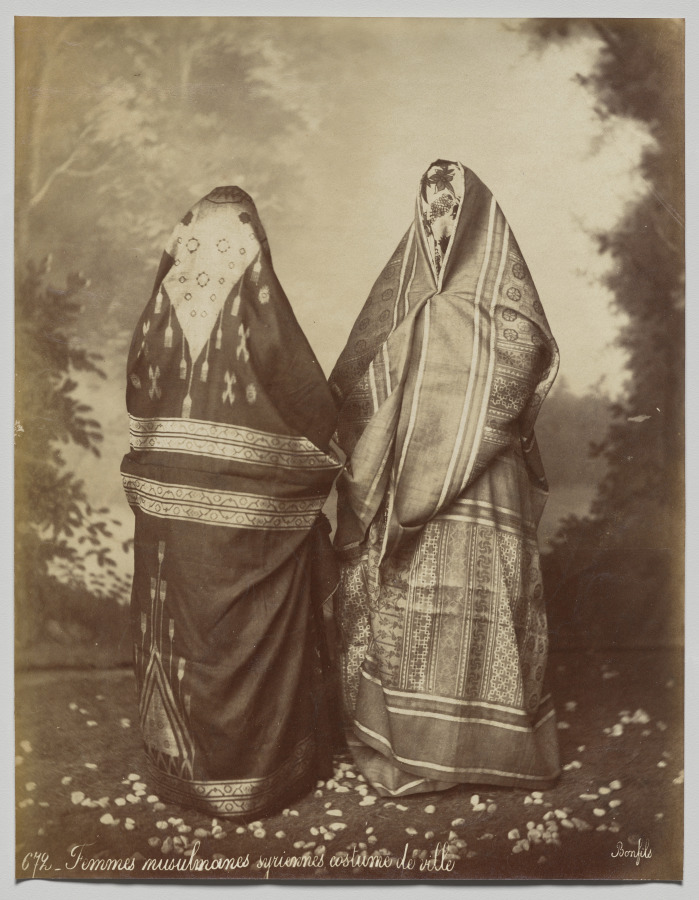
Félix Bonfils · The Cleveland Museum of Art · Gift of William and Margaret Lipscomb · CC0
- Born
- 1831 · Saint-Hippolyte-du-Fort.
- Died
- 1885 · Alès.
- Nationality
- France
- Occupation
- photographer · bookbinder · writer
- Fields
- photography
- Languages
- French
VALÉORINE Encyclopedia
VALÉORINE documentary reading
Documentary summary
Maison Bonfils was a French family-run company producing and selling photography and photographic products from Beirut (then in Ottoman Syria, now in Lebanon) from 1867 until 1918, from 1878 on renamed "F. Bonfils et Cie". The Bonfils ran the first and, in their time, most successful photographic studio in the city. Maison Bonfils produced studio portraits, staged biblical scenes, landscapes, and panoramic photographs.
Admitted source layer · organised and presented by VALÉORINE
Note VALÉORINE
Félix Bonfils (1831–1885) was a French bookbinder, photographer and writer. Born in Saint-Hippolyte-du-Fort, the bookbinder died in Alès.
Félix Bonfils was a member of Maison Bonfils and lived in Alès and Beirut. The bookbinder was active in photography.
Languages used include French. Works by Félix Bonfils are held at Art Institute of Chicago, Middle East Photograph Archive (University of Chicago) and Minneapolis Institute of Art, among others.
Composed from admitted, traceable facts · 26 September 2026
VALÉORINE
Reference Check
Propose documentary evidence for Félix Bonfils. A contribution is never written directly as fact: identity, source, rights and evidence gates still decide.
Sign in to contribute
World of VALÉORINE
Documentary connections
Only confirmed graph relationships appear here. Images are shown only when their identity and reuse rights both pass the documentary gate.
Documentary evidence
Documentary basis
Authority files
wikidata · Q2915801 · wikipedia · Félix Bonfils
In this article
Félix and Lydie Bonfils
Félix and Lydie Bonfils
The recorded working language is French. The field of work recorded is photography. Residence is recorded at Beirut and Alès. Work by Félix Bonfils is recorded in the collections of Minneapolis Institute of Art, Art Institute of Chicago, The Nelson-Atkins Museum of Art, National Gallery of Canada and National Museum of World Cultures.
Félix Bonfils, a French photographer, married Marie-Lydie Cabanis in 1857. The couple, together with their son Adrien, moved to Beirut in 1867 where they opened a photographic studio called "Maison Bonfils", on what later became rue Georges-Picot. Maison Bonfils produced thousands of photographs of the Middle East. Bonfils worked with both his wife and his son. They photographed landscapes, portraits, posed scenes with subjects dressed up in Middle Eastern regalia, and also stories from the Bible. Félix Bonfils took photographs in Ottoman Syria (in today's Lebanon, Israel & Palestine, Syria), the Khedivate of Egypt, Greece and Constantinople (now Istanbul), producing the vast majority of his work, while his wife and son were also involved in photography produced by the studio. As few are signed, it is difficult to identify who is responsible for individual photographs. Lydie is thought to have taken some of the studio portraits, especially those of Middle Eastern women, who were more inclined to pose for a female photographer. In 1876, Félix returned to Alès to have compiled collections of their photographs published. In 1878, when the name of the studio was changed to "F. Bonfils et Cie", Adrien was back in Beirut after completing his studies in France and took more responsibility for photography, including landscape. Félix again travelled to Alès to establish a collotype printing factory in 1880, and died there in 1885.
Lydie & Adrien Bonfils
Lydie & Adrien Bonfils
Adrien remained at the studio until the early 1900s, when he left to open a hotel in Brummana. With the assistance of fellow photographer Abraham Guiragossian, Lydie continued to manage the studio after the departure of Adrien. In 1907, she published a collection of photographs in the "Catalogue général des vues photographiques de l’Orient". Maison Bonfils was one of the most prolific studios in the Middle East in the late 19th century. After Félix's death, the studio continued to produce photographs by the Bonfils family, first under Adrien's management, then Lydie's, until her death in 1918. Lydie expanded the business, opening studios in Cairo and Alexandria, with connections to a New York agency. The Bonfils also employed an unknown number of assistants. When the Ottoman Empire entered the First World War on the side of the Central Powers, Lydie was evacuated with her family to Cairo, where she later died.
A. Guiragossian
A. Guiragossian
After Lydie Bonfils's death, Guiragossian purchased the company and its archives, henceforth signing his photographs "Lydie Bonfils photographe, Beyrouth (Syrie) successeur A. Guiragossian." Guiragossian had arrived in Beirut in 1888 and studied there under the photographer Garabed Krikorian. He had become, according to some researchers, a co-owner of the studio and one of its main photographers since 1909. As single owner, starting from 1918, he continued to work both as a photographer, and as a publisher of albums and postcards using the classical old Bonfils images. He ran the business at least until the end of 1932, perhaps even until 1938, which places the Bonfils-Guiragossian photographic company among the longest surviving ones in the area of the former Ottoman Empire.
Key facts
Key facts
• Name — Félix Bonfils • Birth Name — Félix Adrien Bonfils • Born — 8 March 1831 • Birthplace — Saint-Hippolyte-du-Fort, France • Died — 9 April 1885 • Place of death — Alès, France • Spouse — Marie-Lydie Cabanis (m. 1857) • Occupation — Photographer and publisher • Years Active — 1867– • Known for — early Middle East photography Félix Adrien Bonfils (8 March 1831 – 1885) was a French photographer and writer who was active in the Middle East. He was one of the first commercial photographers to produce images of the Middle East on a large scale and amongst the first to employ a new method of colour photography, developed in 1880.
Life and career
Life and career
Bonfils was born in Saint-Hippolyte-du-Fort and died in Alès. As a young man he worked as a bookbinder. In 1860, he joined General d'Hautpoul's expedition to the Levant, organised by France following the massacre of Christians in the civil conflict between Christians and Druze in Mount Lebanon and Damascus. On his return to France, it is thought that Bonfils was taught the heliogravure printing process by Abel Niépce de Saint-Victor and opened a printing office in Alès in 1864. Soon after returning from Lebanon, he became a photographer. In 1857, he married Marie-Lydie Cabanis. When his son, Adrien, fell ill, Bonfils remembered the green hills around Beirut and sent him there to recover, accompanied by his mother. The family moved to Beirut in 1867 where they opened a photographic studio called "Maison Bonfils". Maison Bonfils produced thousands of photographs of the Middle East. Bonfils worked with both his wife and his son. Their studio became "F. Bonfils et Cie" in 1878. They photographed landscapes, portraits, posed scenes with subjects dressed up in Middle Eastern regalia, and also stories from the Bible. Bonfils took photographs in Lebanon, Egypt, Palestine, Syria, Greece, Cyprus and Constantinople (now Istanbul). While Bonfils produced the vast majority of his work, his wife, Lydie, and son Adrien were also involved in photography produced by the studio. As few are signed, it is difficult to identify who is responsible for individual photographs. Lydie is thought to have taken some of the studio portraits, especially those of Middle Eastern women, who were more inclined to pose for a female photographer. Adrien became more involved in the landscape photography at age 17, when Félix returned to Alès to have compiled collections of their photographs published and then to open a collotype printing factory. Félix died in Alès on 9 April 1885. Bonfils was amongst the first photographers to employ the new technique of Photochrom, a photographic colour printing technique, developed in 1880. Maison Bonfils was one of the most prolific studios in the Middle East in the late 19th-century. After Félix's death, the studio continued to produce photographs by the Bonfils family, first under Adrien's management, then Lydie's, until her death in 1918.
Work
Work
• Illustration — Cover of Souvenirs d'Orient, 1878 by Félix Bonfils After settling in the Near East, Félix Bonfils took some panoramic photographs of Constantinople and Damascus. His work became well known among tourists that travelled to those countries because they bought photographs as souvenirs. In 1872 he published the album Architecture antique (by Ducher press) after presenting some of his pictures to the Société française de photographie. He later re-opened a studio in Alès (France) from which he would publish Souvenirs d'Orient; his best-known work.
Key facts
Key facts
• Name — Marie-Lydie Cabanis Bonfils • Other Names — Lydie Bonfils, Lydia Bonfils • Born — 21 March 1837 • Birthplace — Congénies, France • Died — 1918 • Occupation — Photographer and publisher • Known for — early Middle East photography • Spouse — Félix Adrien Bonfils (m. 1857; died 1885) • Children — 2 Marie-Lydie Bonfils, née Cabanis, (1837–1918) was the first professional woman photographer in the Middle East. Originally from France, she was active in Lebanon and neighbouring areas of the Ottoman Empire in the late 19th and the early 20th centuries. Lydie and her husband, Félix Bonfils, established "Maison Bonfils", the first and, at the time, most successful photographic studio in Beirut.
Early and family life
Early and family life
Lydie married Félix Bonfils on 27 August 1857 in Crespian. Their children, Félicité-Sophie and Paul Félix Adrien (known as Adrien), were born in 1858 and 1861 respectively in Saint-Hippolyte-du-Fort. Félix was originally a bookbinder but, when France intervened in the 1860 civil war between Christians and Druze in the Middle East, he was a part of the military expedition. Lydie was enamoured by the tales of Lebanon Félix told on his return. When Adrien became dangerously ill with whooping cough, it was thought that a change in climate would cause him to improve. So, it was decided that Lydie would take Adrien to Beirut to recover, due to Félix's fond memories of Lebanon and Lydie's desire to see the area. The trip was a great success and, in 1867, the whole family moved from France to Beirut.
Career
Career
Once in Beirut, the Bonfils opened a photographic studio, "Maison Bonfils", located on the rue George Picot. Maison Bonfils produced studio portraits, staged biblical scenes, landscapes, and panoramic photographs. Lydie was heavily involved in administrative duties, which expanded when the business opened studios in Cairo and Alexandria, with connections to a New York agency. She was also involved in preparing the albumen for prints. This involved separating the egg white from the yolk, which could be a lengthy and unpleasant process. According to Adrien's son, Roger Bonfils, when she was boarding the evacuation ship to leave Beirut in 1916, Lydie exclaimed, "I don't want to smell another egg again!". Although the early photographs from Maison Bonfils have been generally attributed to Félix alone, the involvement of Lydie and Adrien in the photography side of the business is now recognised. They also had an unidentified number of assistants. Photographers in the area found it difficult to find people willing to be photographed, partly due to local religious and cultural concerns about photography, and this applied particularly to women. As a woman, Lydie is said to have been a more acceptable photographer for Middle Eastern women. As the region was thought to be too dangerous for Lydie to take photographs outside of the studio, her work was likely limited to studio portraits. However, there is may be evidence that she was responsible for some landscape photographs, as English clergyman Samuel Manning cites "Madame Bonfils of Beyrout" as a photographic source for the illustrations of Palestine in his 1874 book. Lydie ran the studio in Félix's absence when he returned to Alès in 1876 to publish compilations of his photographs. In 1878, the name of the studio was changed to "F. Bonfils et Cie". Adrien, now back in Beirut after completing his studies in France, took more responsibility for photography during this time. Félix again travelled to Alès to establish a collotype printing factory in 1880 and died there in 1885. Adrien remained at the studio until the early 1900s, when he left to open a hotel in Brummana. With the assistance of fellow photographer Abraham Guiragossian, Lydie continued to manage the studio after the departure of Adrien. In 1907, Lydie published a collection of photographs from the studio in the Catalogue général des vues photographiques de l’Orient. Lydie's career was halted by the Ottoman Empire entering the First World War. She was evacuated with her family to Cairo, where she died and was buried in 1918. After Lydie's death, Guiragossian purchased Maison Bonfils and the Bonfils' archives. Lydie's connection to the studio remained, however, as he signed his photographs, "Lydie Bonfils photographe, Beyrouth (Syrie) successeur A. Guiragossian."
L’Orient des Bonfils (1867–1918)
L’Orient des Bonfils (1867–1918)
On 11 May 2017, the heirs of the Bonfils-Saalmüller family donated a number of archives with historical photographs by Félix, Marie-Lydie and Adrien Bonfils to the library of Egyptology at the Collège de France in Paris. These photographs and accompanying art historical text were published in 2022 as L’Orient des Bonfils (1867–1918). Les archives Bonfils de la bibliothèque d’égyptologie du Collège de France. In addition to the commercial print version of 865 pages with 461 black-and-white or colorized photographs, this book was also made available for free download as a contribution to Digital Humanities and for wide consultation on the Internet.
Digitisation and online access
Digitisation and online access
In 2013, the Bonfils' archive has been digitised in a project between the British Library's Endangered Archives Programme and the Jafet Memorial Library of the American University of Beirut. The collection is available online at the Endangered Archives Programme website. More digitised images are available online in connection with the L’Orient des Bonfils (1867–1918) book project.
Identity and origins
Identity and origins
His recorded language was French. He married Lydia Bonfils. One child is recorded: Adrien Bonfils.
Identity
Identity
Félix Bonfils is recorded with the occupation architectural photographer. Established in Bibliothèque nationale de France under 10300986q. Established in Library of Congress under n87127847. Recorded as photographer, bookbinder and writer. Established in RKDartists under 226121. Established in FAST under 207055. Recognition and collections.
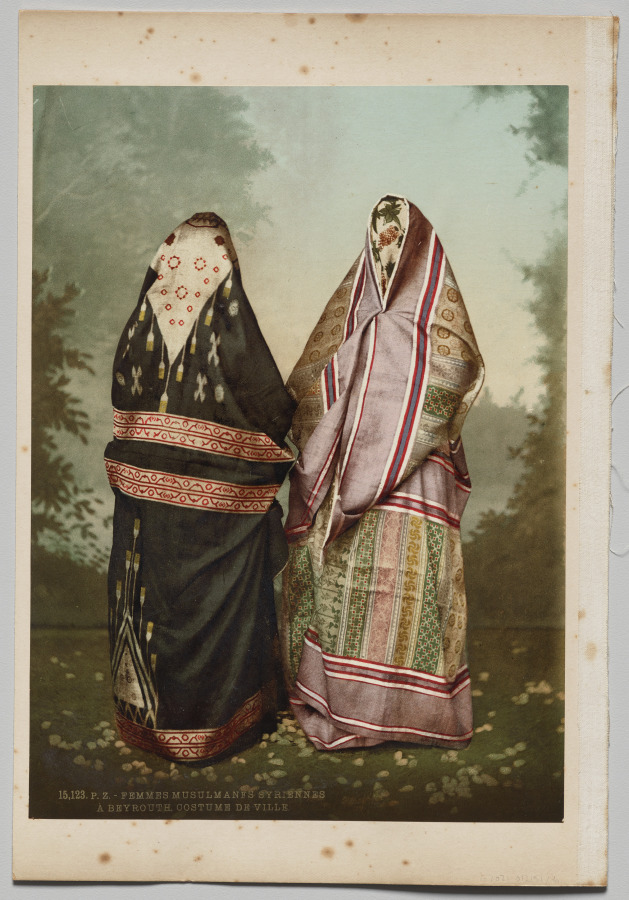
Femmes musulmanes Syriennes à Beyrouth, Costume de Ville (Two Women), c. 1880s, by Félix Bonfils
Félix Bonfils · The Cleveland Museum of Art · Gift of William and Margaret Lipscomb
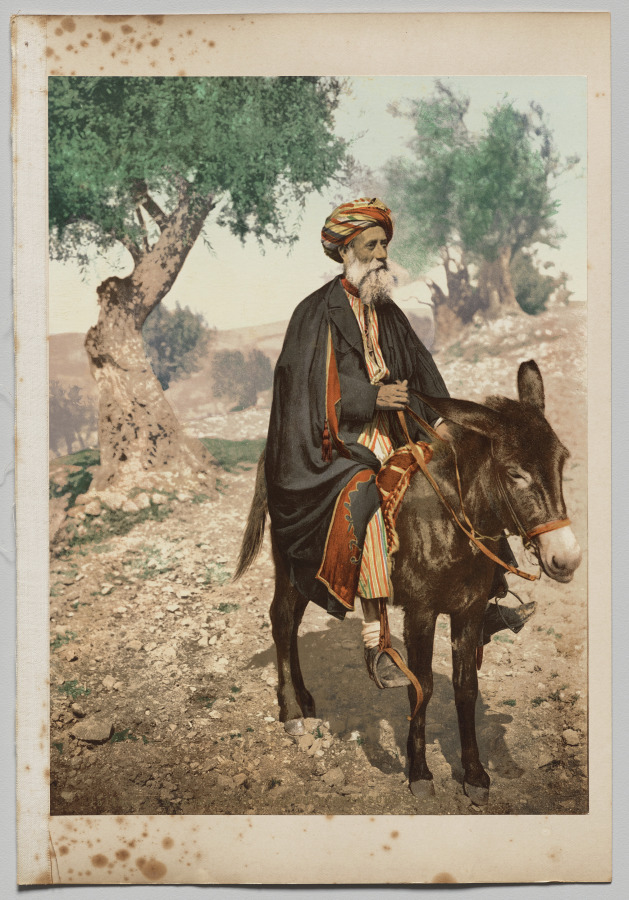
Femmes musulmanes Syriennes à Beyrouth, Costume de Ville (Man on a Donkey), c. 1880s, by Félix Bonfils
Félix Bonfils · The Cleveland Museum of Art · Gift of William and Margaret Lipscomb
Life and career
Dated record
Life and career
The full dated record · 2 entries
1831
Félix Bonfils born at Saint-Hippolyte-du-Fort.
1885
Félix Bonfils died on 1 January 1885.
Places
Named by the record
Places
Only places the record itself states, plotted where the house gazetteer settles their coordinates. Nothing is inferred from a name or a nationality.
Beirut and Alès
Residences
Saint-Hippolyte-du-Fort.
Birth place
Alès.
Death place
Select list of publications
• Bonfils, F., Architecture antique: Égypte, Grèce, Asie Mineure, 1872 • Bonfils, F., Catalogue de vues photographiques de l'Orient, 1876 • Bonfils, F., Souvenirs d'Orient, 1878 • Bonfils, F. (with Adrien & Lydie Bonfils), Photographs of the Middle East, circa 1860s–1900s
Selected photographs from Maison Bonfils
• Illustration — Bedouin violin players, c. 1880 • Illustration — Guardian of the Tomb and his family, c.1880 • Illustration — Women of Siloé, Palestine, c. 1880 • Illustration — Road to Bethlehem, c. 1880 • Illustration — Arab man with a pipe, 1880s • Illustration — Well of St. Mary, Nazareth, 1880s, F. Bonfils • Illustration — Bedouin chief of Palmyra, photochrom, 1880s • Illustration — Bedouin mothers carrying their children, photochrom, 1880s • Illustration — Chief of the Bedouin shepherds, 1880s • Illustration — Woman from Nablus, between 1867 and 1885 • Illustration — Baalbek panorama, 1870 • Illustration — Temple of Jupiter, Baalbek, Syria, Mougins Museum of Classical Art • Illustration — Temple at Luxor, 1867 • Illustration — Partially excavated Sphinx, between 1867 and 1899
Selected list of institutions holding works by F. Bonfils
Selected list of institutions holding works by F. Bonfils
• Brooklyn Museum • Canadian Centre for Architecture • Collège de France, Library of Egyptology • Fine Arts Museums of San Francisco • Fred Jones Jr. Museum of Art, University of Oklahoma • Harvard University Fine Arts Library • J. Paul Getty Museum • Minneapolis Institute of Arts • Nelson-Atkins Museum of Art • Sursock Museum, with digital copies of this collection held in the Jafet Library of the American University of Beirut and the British Library Endangered Archives Programme. • University of Michigan Museum of Art • University of Tennessee, Knoxville • Victoria and Albert Museum • Virginia Museum of Fine Arts
Documents and archives
Primary material
Documents and archives
reference work
- “Félix Bonfils”, English Wikipedia, consulted as further reading
Reputable secondary · Wikipedia
institutional register
- Wikidata, structured authority record Q2915801: Félix Bonfils
General reference · Wikimedia Foundation
Notes from the source article
Cited by Wikipedia
Notes from the source article
These works are cited by the source article, in its own numbering. They are recorded as its citations, not as sources VALÉORINE has verified.
- 1.Galstyan, Vigen (2018). Abraham Guiragossian (1871–1956 | 1880–1930s), at the Database of Armenian Photo-Media Practitioners, Lusadaran Armenian Photography Foundation Yerevan with the Ministry of Culture of the Republic of Armenia. Accessed 8 December 2023.
- 2.Hannavy, John. Encyclopedia of Nineteenth-Century Photography. 173–174. 2013.
- 3.Chemali, Yasmine. The Good Woman named Bonfils. British Library: Endangered Archives Programme. 7 March 2014.
- 4.World Digital Library. Aerial Panoramic View of Beirut. 1867.
- 5.Szegedy-Maszak, Andrew. The Genius of Félix Bonfils. Archaeology. 54. 3. May–June 2001.
- 6.Gavin, Carney E. S. Bonfils and the early photography of the Near East. Harvard Library Bulletin. XXVI. 4. 461. 1978.
- 7.Farbige Reise, Paris bibliothèques, 2009, p. 41
- 8.Vogelsang-Eastwood, G., For Modesty's Sake? Barjesteh, Meeuwes & Company, 1996, p. 163
- 9.Rockett, William H. The Bonfils Story. Saudi Aramco World. 34. 6. 1983.
- 10.Collections.si.edu. Collections Search Center, Smithsonian Institution.
- 11.The Fouad Debbas Collection: assessment and digitisation of a precious private collection. Photographs from Maison Bonfils (1867-1910s), Beirut, Lebanon (EAP644). British Library Endangered Archives Programme. 6 September 2017.
- 12.Gavin, Carney E. S. Bonfils and the early photography of the Near East. Harvard Library Bulletin. XXVI. 4. 449. 1978.
- 13.Gavin, Carney E. S. Bonfils and the early photography of the Near East. Harvard Library Bulletin. XXVI. 4. 460–461. 1978.
- 14.Aerial Panoramic View of Beirut. World Digital Library. 1867.
- 15.Bonfils, Roger. Des pionniers de la photographie, Souvenirs de Famille. The Fouad Debbas Collection. December 1979.
- 16.Hannavy, John. Encyclopedia of Nineteenth-Century Photography. Routledge. 174. 2008.
- 17.Scène naar het bijbelverhaal over de barmhartige Samaritaan, Nablus, Palestina (1867–1883). Netherlands Museum Catalogue.
- 18.Catalogue des vues photographiques de l'Orient.
- 19.Click Click: The Repetition of Photo-Graphic Subject Matter in the 19th Century. Sursock Museum. 3 November 2017 – 5 February 2018.
- 20.Gavin, Carney E. S. Bonfils and the early photography of the Near East. Harvard Library Bulletin. XXVI. 4. 445–446. 1978.
- 21.Manning, Samuel. "Those Holy Fields": Palestine, Illustrated by Pen and Pencil. Religious Tract Society. 6. 1874.
- 22.Rockett, William H. The Bonfils Story. Saudi Aramco World. 34. 6. 1983.
- 23.Gavin, Carney E. S. Bonfils and the early photography of the Near East. Harvard Library Bulletin. XXVI. 4. 461. 1978.
- 24.Bonfils, Marie-Lydie. Catalogue général des vues photographiques de l'Orient : Basse et Haute Egypte, Nubie, Palestine, Phénicie, Moab, Syrie, Côte d'Asie, les Sept églises d'Asie, Caramanie, Anatolie, îles de Chypre, de Rhodes, de Pathmos, de Syra, Athènes, Macédoine, Constantinople. Agencies in Jerusalem. 1907.
- 25.Arnaudiès, Alain. L'Orient des Bonfils (1867–1918). Les archives Bonfils de la bibliothèque d'égyptologie du Collège de France. Soleb. 4. 2022.
- 26.Brooklyn Museum. brooklynmuseum.org.
- 27.Canadian Centre for Architecture (CCA). Search. cca.qc.ca.
- 28.Felix Bonfils. FAMSF Search the Collections. 2018-09-21.
- 29.Felix Bonfils. ou.edu.
- 30.Middle East and Islamic Photographs. Harvard Library.
- 31.Félix Bonfils (French, 1831 – 1885) (Getty Museum). The J. Paul Getty in Los Angeles.
- 32.Tyr., Vue générale, Palestine, Félix Bonfils ^ Minneapolis Institute of Art. collections.artsmia.org.
- 33.Central aisle of the hypostyle hall, Karnak, Egypt. art.nelson-atkins.org.
- 34.The Fouad Debbas Collection. Sursock Museum.
- 35.The Fouad Debbas Collection: assessment and digitisation of a precious private collection. Photographs from Maison Bonfils (1867-1910s), Beirut, Lebanon (EAP644). British Library Endangered Archives Programme. 6 September 2017.
- 36.Exchange Search: artist:"Felix Bonfils". exchange.umma.umich.edu.
- 37.Karnak Ruines du temples Amonphis. Digital Collections.
- 38.Museum, Victoria and Albert. Photograph Felix Bonfils V&A Explore The Collections. Victoria and Albert Museum: Explore the Collections.
- 39.Charette transportant des femmes arabes (Primary Title) – (2014.220). Virginia Museum of Fine Arts.
Bibliography printed in the source article · 2
- Carney, G., The Image of the East: Nineteenth-Century Near-Eastern Photographs by Bonfils, [From the Collection of the Harvard Semitic Museum], Chicago/London. University of Chicago Press, 1982
- Arnaudiès, Alain. L'Orient des Bonfils (1867–1918). Les archives Bonfils de la bibliothèque d'égyptologie du Collège de France. Soleb. 865. 2022. 978-2-918157-52-6.
References
Citations
References
Each reference names the institution holding it, so a reader may go to the document itself.
reference work
Secondary witnessinstitutional register
Wikidata, structured authority record Q2915801: Félix BonfilsWikimedia Foundation
General reference
The Encyclopedia exists whether or not anything is for sale. Corrections are recorded rather than overwritten, and every version of this record is kept. Published 17 August 2026.
Elsewhere in Photography
11,393 published records in this field, each with its sources named.
- Felicia AbbanPhotographer
- Felicity CloakePhotographer
- Feliks KarkPhotographer
- Felipe DanaPhotographer
- Felix GmelinPhotographer
- Félix González-TorresPhotographer
- Félix LaureanoPhotographer
- Felix MarianoPhotographer
Best supported in this field
For owners
Own a work by Félix Bonfils?
A specialist will read what you send and tell you what the house can establish, what it cannot, and whether the object is suited to sale. There is no charge and no obligation. The object stays with you throughout; nothing is shipped to us unless it is arranged in writing beforehand.