
Enoch Mankayi Sontonga
Enoch Mankayi Sontonga (c. 1873 – 18 April 1905) was a South African composer, who is best known for writing the Xhosa hymn "Nkosi Sikelel' iAfrika" ("God Bless Africa"), which, in abbreviated version, has been sung as the first half of the national anthem of South Africa since 1994. Previously, it had been the official anthem of the African National Congress since 1925.
Enoch Mankayi Sontonga

Lysippos · CC BY-SA 3.0
- Name
- Enoch Mankayi Sontonga
- Born
- 1873
- Died
- 18 April 1905
- Birthplace
- Uitenhage, Cape Colony
- Place of death
- Johannesburg, Transvaal Colony
- Occupation
- Music composer, Teacher, Choirmaster, Poet
- Nationality
- South Africa
- Known for
- Mungu ibariki Afrika · national anthem of Mzansi · Stand and Sing of Zambia and Proud and Free
- Languages
- English
VALÉORINE Encyclopedia
VALÉORINE documentary reading
Documentary summary
Enoch Mankayi Sontonga (c. 1873 – 18 April 1905) was a South African composer, who is best known for writing the Xhosa hymn "Nkosi Sikelel' iAfrika" ("God Bless Africa"), which, in abbreviated version, has been sung as the first half of the national anthem of South Africa since 1994. Previously, it had been the official anthem of the African National Congress since 1925.
Admitted source layer · organised and presented by VALÉORINE
Note VALÉORINE
Enoch Mankayi Sontonga (1873–1905) was a composer, poet and songwriter, of South African nationality. The composer was born in Uitenhage and died in Johannesburg.
Among the works are Mungu ibariki Afrika, national anthem of Mzansi and Stand and Sing of Zambia, Proud and Free. Languages used include English.
Composed from admitted, traceable facts · 26 September 2026
VALÉORINE
Reference Check
Propose documentary evidence for Enoch Mankayi Sontonga. A contribution is never written directly as fact: identity, source, rights and evidence gates still decide.
Sign in to contribute
World of VALÉORINE
Documentary connections
Only confirmed graph relationships appear here. Images are shown only when their identity and reuse rights both pass the documentary gate.
Documentary evidence
Evidence Panel
not yet certified
- Identity
- resolved
- Independent source families
- 0
- Admitted assertions
- 0
- Open conflicts
- 0
Authority files
wikidata · Q983169
In this article
Biography
Biography
This song was first adopted by Tanganyika as the national anthem, as a translated Swahili version, in 1961 following independence from Great Britain. In 1964, Zambia also adopted it as its national anthem, followed by Botswana and Zimbabwe (who translated into Shona, "Ishe Komborera Afrika") from 1980 until 1994. South Africa adopted it as its national anthem in 1994.
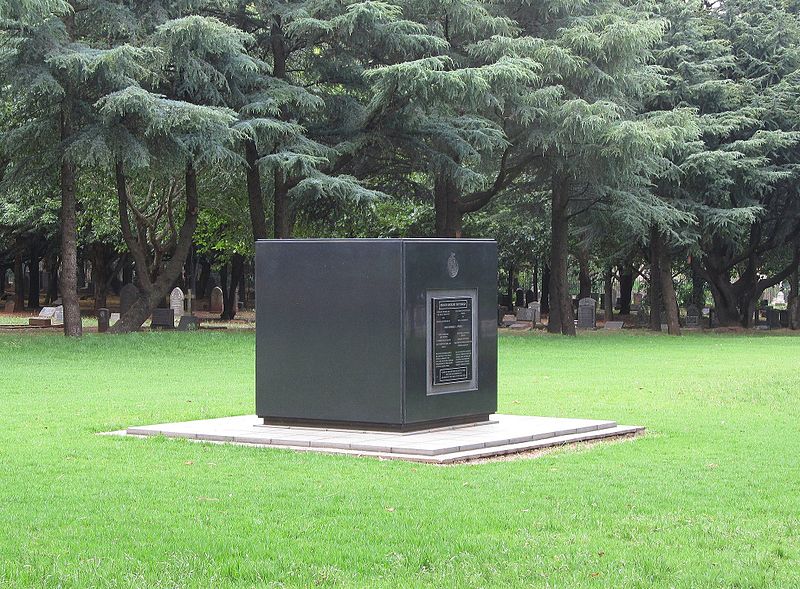
The gravesite of Enoch Mankayi Sontonga In Braamfontein Cemetery, Johannesburg
Steamhunter
Key facts
Key facts
• Name — Enoch Mankayi Sontonga • Born — 1873 • Died — 18 April 1905 • Birthplace — Uitenhage, Cape Colony • Place of death — Johannesburg, Transvaal Colony • Occupation — Music composer, Teacher, Choirmaster, Poet
Early life and education
Early life and education
Sontonga, a Xhosa, was born in the city of Uitenhage in the Eastern Cape Colony. He trained as a teacher at the Lovedale Institution and subsequently worked as a teacher and choirmaster at the Methodist Mission school in Nancefield, near Johannesburg for eight years.
Career
Career
The first verse and chorus of "Nkosi Sikelel' iAfrika" was composed in 1897 and it was originally intended to be a school anthem. Some sources say he wrote the tune the same year. It was first sung in public in 1899 at the ordination of Reverend Mboweni, who was the first Tsonga Methodist minister. Later, the Xhosa poet Samuel Mqhayi wrote a further seven verses. Sontonga died on 18 April 1905 of gastroenteritis and a perforated appendix, a common cause of death at the time due to unsafe drinking water.
Personal life
Personal life
Sontonga married Diana Mgqibisa, the daughter of a minister in the African Methodist Episcopal Church, and they had a son. Mgqibisa died in 1939.
Life and career
Dated record
Life and career
The full dated record · 2 entries
1873
Enoch Mankayi Sontonga born at Uitenhage.
1905
Enoch Mankayi Sontonga died at Johannesburg.
Places
Named by the record
Places
Only places the record itself states, plotted where the house gazetteer settles their coordinates. Nothing is inferred from a name or a nationality.
Uitenhage.
Birth place
Johannesburg.
Death place
Legacy
The song started to be more well known after John Langalibalele Dube's Ohlange Institute's choir used it. They played it at the South African Native National Congress meeting in 1912. It was sung after the closing prayer and the ANC adopted it as its official closing anthem in 1925. It was recorded in London as "Nkosi sikelel' iAfrika" in 1923 and it was published by the Lovedale Press in 1927. For many years, the site of Sontonga's grave was unknown, but it was finally located in the "Native Christian" section of the Braamfontein cemetery in the early-1990s. One of the reasons why the location of his grave remained a mystery is that it was listed under the name "Enoch" and not by his surname "Sontonga". On 24 September 1996, Sontonga's grave was declared a national monument and a memorial on the site was unveiled by then-President Nelson Mandela. At the same ceremony, the South African Order of Meritorious Service (Gold) was bestowed on Enoch Sontonga posthumously.
Notes from the source article
Cited by Wikipedia
Notes from the source article
These works are cited by the source article, in its own numbering. They are recorded as its citations, not as sources VALÉORINE has verified.
References
Citations
References
Each reference names the institution holding it, so a reader may go to the document itself.
reference work
Wikidata, structured authority record Q983169: Enoch Mankayi SontongaWikimedia Foundation
Partially resolved
Further particulars
Held on the record
Further particulars
Open the remaining particulars
Work and production. Works recorded as notable number 3: Mungu ibariki Afrika, national anthem of Mzansi and Stand and Sing of Zambia, Proud and Free.
The Encyclopedia exists whether or not anything is for sale. Corrections are recorded rather than overwritten, and every version of this record is kept. Published 14 August 2026.
Elsewhere in Books
38,960 published records in this field, each with its sources named.
- Ennio Quirino ViscontiAuthor
- EnniusAuthor
- Eno KalleAuthor
- Eno RaudAuthor
- Enoch PowellAuthor
- Enric Casasses i FigueresAuthor
- Enric Roig i MasrieraAuthor
- Enric Valor i VivesAuthor
Best supported in this field
For owners
Own a work by Enoch Mankayi Sontonga?
A specialist will read what you send and tell you what the house can establish, what it cannot, and whether the object is suited to sale. There is no charge and no obligation. The object stays with you throughout; nothing is shipped to us unless it is arranged in writing beforehand.