
Cristoforo di Geremia
Cristoforo di Geremia (1410–1476) of Mantua was a Renaissance sculptor, goldsmith, and medallist. He worked in Rome beginning sometime around 1456 and was active until 1476. He is most famous for his bronze medallion work under Pope Paul II. Cristoforo did a number of medals and jewellery for royal and noble commissions.
Cristoforo di Geremia
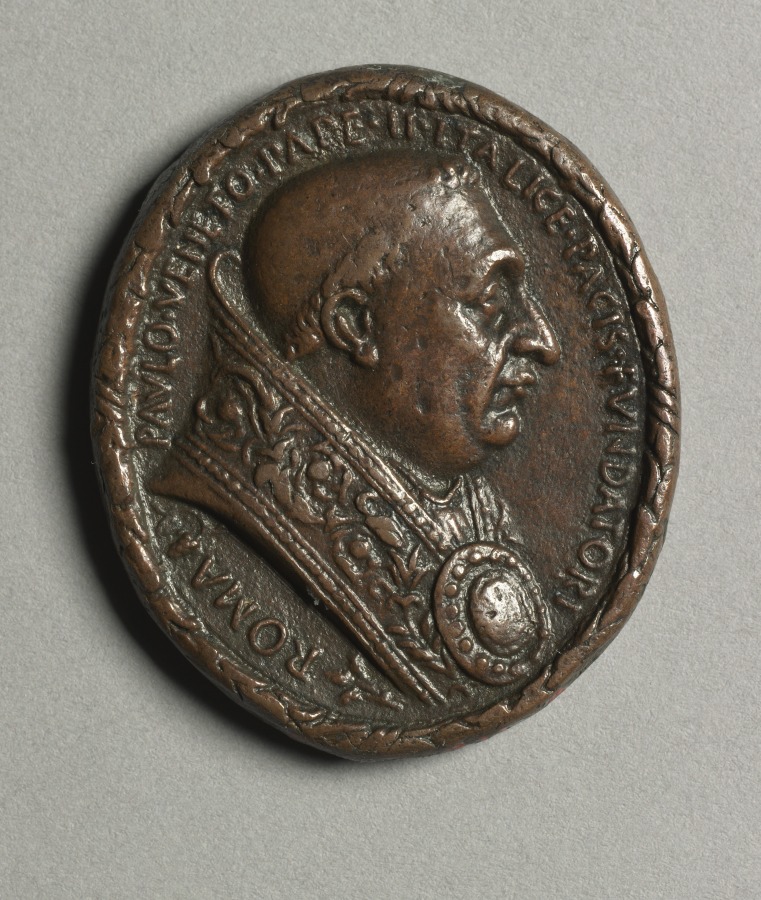
Cristoforo di Geremia · The Cleveland Museum of Art · Gift of Kelvin Smith in memory of Kenall Kelley · CC0
- Born
- 1410
VALÉORINE Encyclopedia
VALÉORINE documentary reading
Documentary summary
Cristoforo di Geremia (1410–1476) of Mantua was a Renaissance sculptor, goldsmith, and medallist. He worked in Rome beginning sometime around 1456 and was active until 1476. He is most famous for his bronze medallion work under Pope Paul II. Cristoforo did a number of medals and jewellery for royal and noble commissions.
Admitted source layer · organised and presented by VALÉORINE
Note VALÉORINE
Cristoforo di Geremia (1410–1476) was a medalist, painter and sculptor. The medalist was born in Mantua and died in Rome. Cristoforo di Geremia worked in Florence, Mantua and Rome.
Composed from admitted, traceable facts · 26 September 2026
VALÉORINE
Reference Check
Propose documentary evidence for Cristoforo di Geremia. A contribution is never written directly as fact: identity, source, rights and evidence gates still decide.
Sign in to contribute
Documentary evidence
Documentary basis
Authority files
getty · 500093135 · gnd · 123011760 · wikidata · Q5186491 · wikipedia · Cristoforo di Geremia
In this article
Life
Life
Cristoforo di Geremia's date of birth is unknown. He was most likely the son of Geremia di Nicolino dei Geremei, a Mantuan goldsmith whose name was prevalent in documents from Mantua between the years of 1438 and 1480. Cristoforo di Geremia died at the age of 46, while at what was considered the peak of his professional career. Cristoforo di Geremia studied at the Mantuan school and was most influenced by Mantegna, who was a mentor to Cristoforo. Many of Mantegna's techniques are seen in Cristoforo's work. Although very little is known about his early professional career, it is known that Cristoforo was very interested in the art of antiquity. Many of his works contain various nuances gathered from ancient Roman coins.
Early works in Rome
Early works in Rome
Cristoforo di Geremia arrived in Rome around 1456. He spent the majority of his life in Rome, but his teachings from the Mantuan school were the most influential on his work. Cristoforo worked independently until 1461, when he was employed by Cardinal Lodovico Trevisan, a known admirer and collector of ancient art. With Cardinal Trevisan as his patron, Cristoforo travelled with the commander of the papal troops to Perugia in 1461 and to Florence in 1462. During this time, Cristoforo di Geremia was also employed by the Gonzaga family. He stayed as a guest for a month with Lodovico at the Gonzaga court. Upon his departure, he gifted his hosts four antique busts. Cristoforo also produced a characterized portrait of Lodovico Trevisan in medallion form. The medallion shows Cristoforo's passion for the art of antiquity through the construction of the profile of Trevisan. The medal is similar to the busts of a late Roman emperor. The reverse of Trevisan's medal is also indicative of Roman ties based on other coins of that period. It is rumoured that in 1466, Cristoforo made jewellery for Borso d'Este, Duke of Ferrara.
Under the papacy
Under the papacy
After Trevisan died in 1465, Cristoforo was employed by the papal court. Pope Paul II employed Cristoforo di Geremia as his primary medallist. Pope Paul II is considered the first pontiff to realize the potential of medals as an instrument of the state and for personal propaganda. Because of this, he had more medals produced than any other 15th-century Pope. While in service to the Pope, Cristoforo primarily produced variations of two different medals. The first was oval-shaped and made to commemorate his pontification and political shrewdness. The second medal was circular and was produced to recognize his various campaigns at the Palazzo San Marco. One side has Pope Paul II's profile. The inscription on it reads "PAVLO VENETO PAPE II - ITALICE PACIS FVNDATORI - ROMA", which translates to "Pope Paul II Venetian - Founder of the Peace of Italy - Rome". The back shows Pope Paul II's coat of arms, from his status as the Venetian cardinal Pietro Barbo, and includes a rampant lion, the papal keys, and a tiara. The medal was produced in conjunction with the pope's announcement of peace in the Basilica of San Marco on April 25, 1468. Versions of the medal were most likely distributed to notable attendees of the event, as well as sent to secular rulers of the peninsula. As with many of Cristoforo's works, this papal medal has components inspired by antiquity. There is evidence that the profile side of the medal resembles the denarius of Emperor Hadrian. The inscription assimilates Pope Paul II to Augustus stemming from the inherently imperial nature of the peace proclamation in 1468. One of the most prominent commissions that brought Cristoforo fame was the restoration of the equestrian statue of Marcus Aurelius in 1468. In 1469, he was commissioned to make medals for the restoration of the Palazzo Venezia. The pope strategically employed Cristoforo to use the antique concepts he was known for, but had him also cater to Pope Paul II's liking. Under the papacy, Cristoforo made a plethora of medals for Pope Paul II. Pope Paul II often buried medals in the foundations of buildings he was restoring. Many of these medals have since been recovered and attributed to Cristoforo di Geremia, despite the lack of a signature.
Signed works
Signed works
There are two surviving medals signed by Cristoforo di Geremia. The first shows Constantine the Great on the front and a pseudo-classical group on the back. Although the intended meaning of the back is unknown, some attribute the representation to the Constantinian Peace of the Church. Others argue that the two figures and the inscription are the deliberate imitation of a Roman coin, the inspiration deriving from a sestertius of Plotina when Cristoforo was making his medal of Constantine. The two figures, the Emperor and the Church are clasping hands. The second signed medal from Cristoforo di Geremia shows Alfonso V of Aragon, King of Naples. It features Alfonso V's bust and was probably inspired by Pisanello's work on Alfonso V. The back of the medal shows Alfonso enthroned and crowned by Bellona and Mars. Cristoforo di Geremia was superseded by his nephew, the medallist Lysippus the Younger, who, along with other artists, borrowed figures and compositions from Cristoforo.
Works
Works
• Work — Year — Work Type — Front — Back • Lodovico Trevisan — 1461-1465 — Bronze Medal — — • Pope Paul II — Bronze Medal — — • Constantine the Great — 1468 — Bronze Medal — — • Alfonso V of Aragon — Bronze Medal — — n/a • Cardinal Guillaume d'Estouteville — 1461-1481 — Bronze Medal — — • Sacrifice to Priapus — ca. 1470 — Plaquette — —
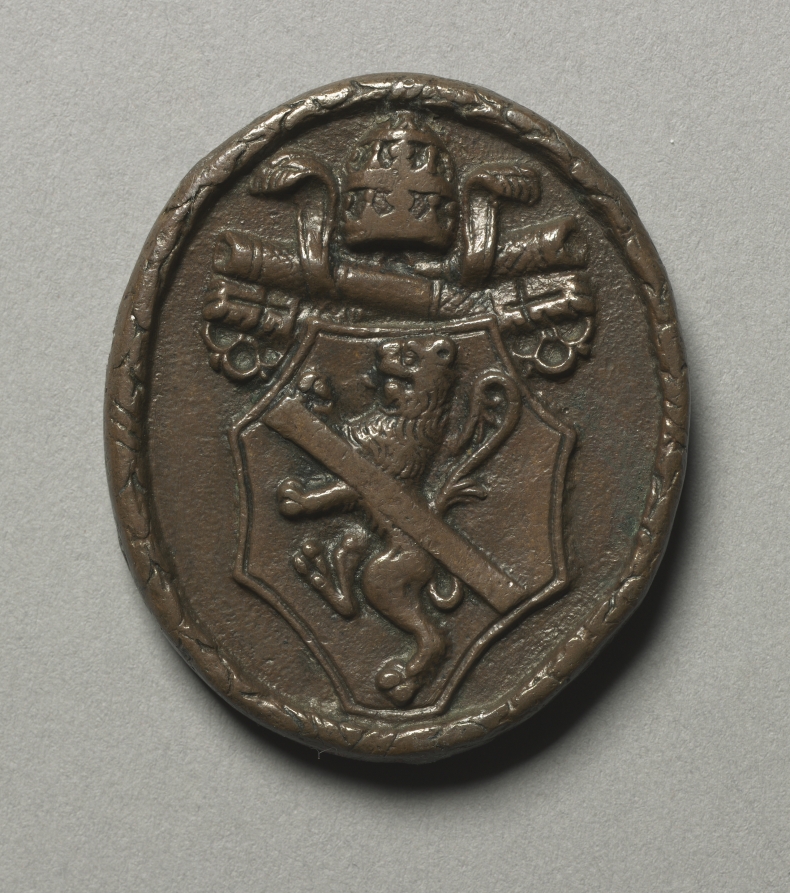
Portrait of Pope Paul II Barbo (reverse), c. 1468, by Cristoforo di Geremia
Cristoforo di Geremia · The Cleveland Museum of Art · Gift of Kelvin Smith in memory of Kenall Kelley
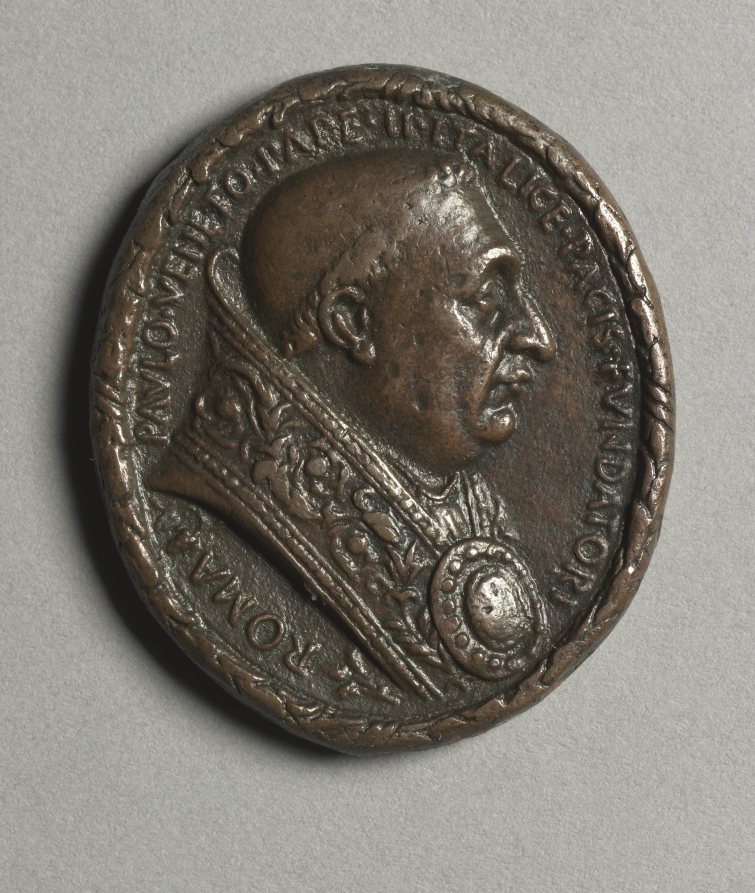
Portrait of Pope Paul II Barbo (obverse), c. 1468, by Cristoforo di Geremia
Cristoforo di Geremia · The Cleveland Museum of Art · Gift of Kelvin Smith in memory of Kenall Kelley
Primary material
Documents and archives
authority file
- Gemeinsame Normdatei 123011760, Cristoforo, di Geremia.
General reference · Deutsche Nationalbibliothek
- Getty Union List of Artist Names 500093135, Cristoforo di Geremia.
General reference · The Getty Research Institute
reference work
- “Cristoforo di Geremia”, English Wikipedia, consulted as further reading
Reputable secondary · Wikipedia
authority record
- Wikidata, structured authority record Q5186491: Cristoforo di Geremia
General reference · Wikidata
Notes from the source article
Cited by Wikipedia
Notes from the source article
These works are cited by the source article, in its own numbering. They are recorded as its citations, not as sources VALÉORINE has verified.
- 1.Scher, Stephen K. Cristoforo di Geremia. Oxford Art Online. 31 March 2000.
- 2.Cristoforo di Geremia. www.nga.gov.
- 3.Shchukina, Yevgenia. The Currency of Fame: Portrait Medals of the Renaissance. The Frick Collection. 119. 1994.
- 4.De Winter, Patrick M. “Recent Accessions of Italian Renaissance Decorative Arts, Part I: Incorporating Notes on the Sculptor Severo Da Ravenna.” The Bulletin of the Cleveland Museum of Art, vol. 73, no. 3, 1986, pp. 74–138., www.jstor.org/stable/25159934.
- 5.Hill, Sir George. Medals of the Renaissance. British Museum Publications Limited. 68–70. 1978.
References
Citations
References
Each reference names the institution holding it, so a reader may go to the document itself.
authority file
Gemeinsame Normdatei 123011760, Cristoforo, di Geremia.Deutsche Nationalbibliothek
Secondary witnessauthority file
Getty Union List of Artist Names 500093135, Cristoforo di Geremia.The Getty Research Institute
Secondary witnessreference work
Secondary witnessauthority record
General reference
The Encyclopedia exists whether or not anything is for sale. Corrections are recorded rather than overwritten, and every version of this record is kept. Published 17 August 2026.
Elsewhere in Sculpture
6,174 published records in this field, each with its sources named.
- Crispen ChakanyukaArtist
- Cristina CórdovaArtist
- Cristina GálvezArtist
- Cristina IglesiasArtist
- CritiusArtist
- Cy TwomblyArtist
- Cydra VauxArtist
- Cynthia Plaster CasterArtist
Best supported in this field
For owners
Own a work by Cristoforo di Geremia?
A specialist will read what you send and tell you what the house can establish, what it cannot, and whether the object is suited to sale. There is no charge and no obligation. The object stays with you throughout; nothing is shipped to us unless it is arranged in writing beforehand.