
Count Ferdinand Ernst Gabriel von Waldstein
Illustration — Count von Waldstein, about 1800 Count Ferdinand Ernst Joseph Gabriel von Waldstein und Wartenberg (24 March 1762 – 26 May 1823) was a Czech and German nobleman and patron of the arts. A member of the Bohemian House of Waldstein (Valdštejn) and an early patron of Ludwig van Beethoven, his political and military roles included the office of a Geheimrat in Bonn, commander (Komtur) of the Teutonic Order, and (briefly) colonel of a light infantry regiment that he had raised. One of Beethoven's piano sonatas is named after him.
Also recorded as Count Ferdinand Ernst Joseph Gabriel von Waldstein und Wartenberg
Count Ferdinand Ernst Gabriel von Waldstein

Wikimedia Commons · Public domain
- Born
- 1762 · Vienna.
- Died
- 1823 · Vienna.
- Nationality
- Austrian Empire
- Occupation
- patron of the arts · military personnel · composer · lieutenant general
- Languages
- German
VALÉORINE Encyclopedia
VALÉORINE documentary reading
Documentary summary
Illustration — Count von Waldstein, about 1800 Count Ferdinand Ernst Joseph Gabriel von Waldstein und Wartenberg (24 March 1762 – 26 May 1823) was a Czech and German nobleman and patron of the arts. A member of the Bohemian House of Waldstein (Valdštejn) and an early patron of Ludwig van Beethoven, his political and military roles included the office of a Geheimrat in Bonn, commander (Komtur) of the Teutonic Order, and (briefly) colonel of a light infantry regiment that he had raised. One of Beethoven's piano sonatas is named after him.
Admitted source layer · organised and presented by VALÉORINE
Note VALÉORINE
Count Ferdinand Ernst Gabriel von Waldstein (1762–1823) was an Austrian composer, lieutenant general and military personnel, among other activities. The composer was born and died in Vienna. Count Ferdinand Ernst Gabriel von Waldstein held the position of Geheimrat and worked in Bonn. Languages used include German.
Composed from admitted, traceable facts · 26 September 2026
VALÉORINE
Reference Check
Propose documentary evidence for Count Ferdinand Ernst Gabriel von Waldstein. A contribution is never written directly as fact: identity, source, rights and evidence gates still decide.
Sign in to contribute
World of VALÉORINE
Documentary connections
Only confirmed graph relationships appear here. Images are shown only when their identity and reuse rights both pass the documentary gate.
Documentary evidence
Documentary basis
Authority files
wikidata · Q472851 · wikipedia · Count Ferdinand Ernst Gabriel von Waldstein
In this article
Life
Life
Waldstein was born in Vienna, Austria, the son of Count Emanuel Philibert von Waldstein-Wartenberg (1731–1775) and his wife, Princess Maria Anna Theresa of Liechtenstein (1738-1814). One of 11 children, his older brothers included Franz de Paula Adam von Waldstein[1] and Josef Karl von Waldstein (1755-1814), who was an enthusiast of Kabbalah and employer of Giacomo Casanova.[2] His sister Marie-Anne Waldstein (1763-1808) became a famous painter in Spain.[3] In 1787 he joined the Teutonic Knights and became a novice in Ellingen. Living in Bonn from early 1788 onwards, Waldstein received, on 17 June that year, the knighthood of the Order by its Grand Master Archduke Maximilian Francis of Austria, the Elector of Cologne. He was admitted to electoral court in Bonn and one year later became Geheimrat ("privy councillor") of the Order and a member of its Staatskonferenz. As a gift of Maximilian Francis, he received a knightly estate in Godesberg and became, after submitting his quarters of nobility, a member of the Cologne Landstände in 1793. From 1788 to 1792, Ferdinand was sent on various diplomatic missions. In 1792, he received the Komtur office of the Order at Virnsberg Castle in Franconia. By early 1794, he was in the entourage of Elector Maximilian Francis, who had fled to Vienna from the invading French forces during the War of the First Coalition. He became obsessed with the idea of defeating the French, broke up with the Elector and squandered all his money raising an army.[4] On 3 June 1795, Ferdinand sealed a contract with Britain on creating a "Mergentheim Regiment". Recruited mainly in the principality of Waldeck and Pyrmont, his regiment arrived in the Isle of Wight, England in 1796. "Waldstein's Light Infantry" was well below its target strength of 1,200 men. While Adjutant Schmitt returned to Germany to continue recruiting, about 800 were sent to the West Indies in 1797. Many died of fever, and at the end of the year or early in 1798 the remaining enlisted men were drafted into the British 60th Regiment of Foot.[5] Many of the officers were offered and accepted British Army commissions.[9] Waldstein was not among them, and it appears that his brief military career ended when his unit was dissolved.[11] Waldstein's Light Infantry never saw action, but it did help the local militia to put out a fire in a biscuit bakery on the Isle of Wight.[12] For the next few years, Waldstein spent much of his time in London, although he returned to Germany from time to time. On 23 July 1797, Maximilian Francis wrote, "For over a year neither the order nor his creditors have heard anything from Ferdinand von Waldstein, I wish him much money and intelligence". While in London, he took part in amateur theatricals (for select invited audiences), and is reported to have given creditable performances.[13] From 1809, Ferdinand lived in Vienna or on his Bohemian estates. He withdrew from the Order in 1811. On 9 May 1812, Ferdinand married the wealthy Countess Isabella Rzewuska and organised numerous festivities on the sidelines of the Vienna Congress. After several unfortunate financial transactions, however, he became impoverished, and died in 1823 in Vienna.
Patron
Patron
• Illustration — Waldstein's entry in Beethoven's friendship book Waldstein, a fairly good pianist and composer, took an active part in the public life of Bonn. In the literary circles of professor Eulogius Schneider he noticed the young Ludwig van Beethoven around 1790 and he became one of his early patrons. Beethoven's Ritterballet, WoO 1, first performed on 6 March 1791, was attributed to Waldstein until it was discovered later that Beethoven had ghost-written it for his patron.[14] In 1791/92 Beethoven finished a score entitled Eight variations for piano four hands on a theme by Count Waldstein. It was Waldstein who recommended young Beethoven to Joseph Haydn and arranged a scholarship for him. His entry in Beethoven's friendship book on the composer's departure for Vienna in November 1792 remains famous: Dear Beethoven! You go to realise a long-desired wish: the genius of Mozart is still in mourning and weeps for the death of its disciple. (...) By incessant application, receive Mozart's spirit from Haydn's hands. In 1804 Beethoven dedicated his Sonata No. 21 in C major, Op. 53, known as the Waldstein, to him.[15] However, it seems that both men hardly had contact with one another at that time. Beethoven dedicated no other work to Waldstein.[16]
Identity and origins
Identity and origins
The authorities additionally record the heading Count Ferdinand Ernst Joseph Gabriel von Waldstein und Wartenberg. His recorded language was German. He married Isabela Marie Rzewuská.
Identity
Identity
Count Ferdinand Ernst Gabriel von Waldstein is recorded with the occupation patron of the arts. Recorded as patron of the arts, military personnel, composer and lieutenant general.
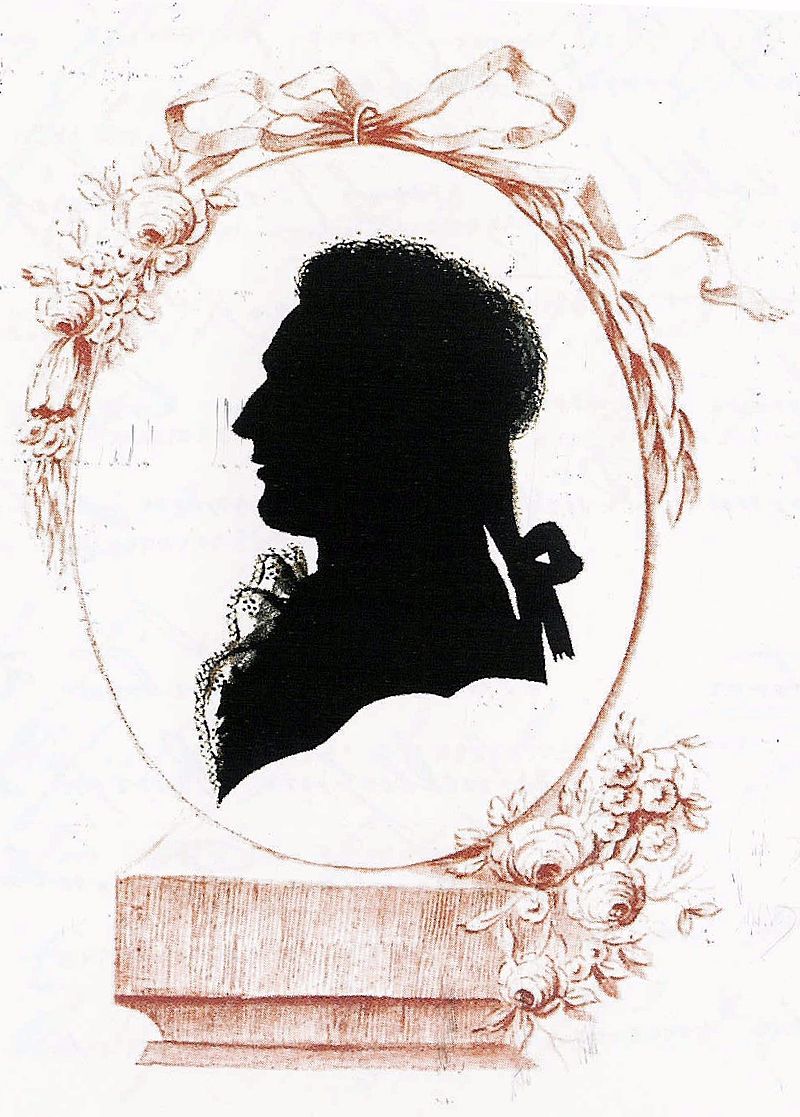
Count Ferdinand Ernst Gabriel von Waldstein, WALDST3

Ferdinand Ernst Joseph Gabriel Count von Waldstein und Wartenberg (1762–1823)
Czech painter and lithographer František Šír (Schir) (* February 4, 1804, Nové Město na Moravě[– June 3, 1864, Prague) and Czech portraitist and painter of historical genres Antonín Machek (* October · Graphic collection of the Royal Canonry of Premonstratensians at Strahov – inventory number GS 7102
Life and career
Dated record
Life and career
The full dated record · 1 entries
1823
Count Ferdinand Ernst Gabriel von Waldstein died at Vienna.
Primary material
Documents and archives
reference work
- Wikidata, structured authority record Q472851: Count Ferdinand Ernst Gabriel von Waldstein
Reputable secondary · Wikidata
- “Count Ferdinand Ernst Gabriel von Waldstein”, English Wikipedia, consulted as further reading
Reputable secondary · Wikipedia
authority file
Notes from the source article
Cited by Wikipedia
Notes from the source article
These works are cited by the source article, in its own numbering. They are recorded as its citations, not as sources VALÉORINE has verified.
- 1.Maria Anna Theresia von Liechtenstein, prinzessin von und zu Liechtenstein. 15 October 1738.
- 2.Beethoven Bookshelf.
- 3.Früh, Martin. Der vorletzte Ritter. Graf Ferdinand von Waldstein und seine Aufnahme in die Landstände des Erzstiftes Köln. Eine Nachlese zum Beethoven-Jahr 2020. Annalen des Historischen Vereins für den Niederrhein. 226. 177-218. 2023. 0341-289X.
- 4.Suchet, John. Beethoven's patrons - Count Waldstein.
- 5.Chartrand, René: Émigré and Foreign Troops in British Service (1) 1793-1802
- 6.The Hampshire Telegraph and Portsmouth Gazette, 31 Jan 1803, page 4: Trial of Henrik Johan Schmitt
- 7.Wallace, Nesbit Willoughby: A regimental chronicle and list of officers of the 60th, or the King's Royal Rifle Corps, formerly the 62nd, or the Royal American Regiment of Foot (1879)
- 8.Wallace gives the date of draft into the 60th as 30 Dec 1797, Chartrand gives it as 1.4.1798 [sic]. Commissioning of the officers began in January.
- 9.The London Gazette, 20 January 1798 and subsequent editions
- 10.Annual List of Officers of the Army and Marines (available from National Archives)
- 11.Statements that Waldstein held various general ranks in the British Army have been much copied and mis-copied, one even claiming that he was a field marshal. (By 1806, the UK had only three field marshals -- two of the king's sons and the elderly Marquess Townsend. Even the future Duke of Wellington would not get there for some years more.) Official records indicate that Waldstein was never an officer in the British Army at all, of any rank, nor is there evidence of military experience or achievement that would have gained him a general rank had he continued his military pursuits. Under British Army practice at that time, an officer who was colonel of a regiment only by virtue of having raised it, not having progressed through the lower officer ranks, had only temporary rank, was ineligible for promotion, and could not serve at that rank outside his own regiment. Waldstein's was a foreign regiment, now-disbanded. If Waldstein had joined the British army, he would have had to join as a junior officer, and foreign officers were prohibited by statute from rising above the rank of lieutenant-colonel.
- 12.Hampshire Chronicle, 4 Feb 1797, Page 4, Newport, Isle of Wight
- 13.The Morning Post: Twickenham Theatricals, 12 Jan 1802, and again 3 January 1803
- 14.www.beethoven-haus-bonn.de, Digital Archives: Music for a Knights' ballet WoO 1
- 15.Beach, David. Analysis Symposium: Beethoven: Sonata, Op. 53. Journal of Music Theory. 13. 2. 186–217. Winter 1969. 10.2307/842986.
- 16.Thayer's Life of Beethoven, revised and edited by Elliot Forbes. Princeton University Press (1967).
References
Citations
References
Each reference names the institution holding it, so a reader may go to the document itself.
authority file
Secondary witnessreference work
Secondary witnessreference work
“Count Ferdinand Ernst Gabriel von Waldstein”, English Wikipedia, consulted as further readingWikipedia
Secondary witness
The Encyclopedia exists whether or not anything is for sale. Corrections are recorded rather than overwritten, and every version of this record is kept. Published 14 August 2026.
Elsewhere in Music memorabilia
42,307 published records in this field, each with its sources named.
- Costin MiereanuPerson
- Cotillion RecordsOrganisation
- Coumba GawloPerson
- Count BasiePerson
- Count of St. GermainPerson
- Count Your Lucky Stars RecordsOrganisation
- Counter Intuitive RecordsOrganisation
- Country Joe McDonaldPerson
Best supported in this field
For owners
Own a work by Count Ferdinand Ernst Gabriel von Waldstein?
A specialist will read what you send and tell you what the house can establish, what it cannot, and whether the object is suited to sale. There is no charge and no obligation. The object stays with you throughout; nothing is shipped to us unless it is arranged in writing beforehand.